
Background
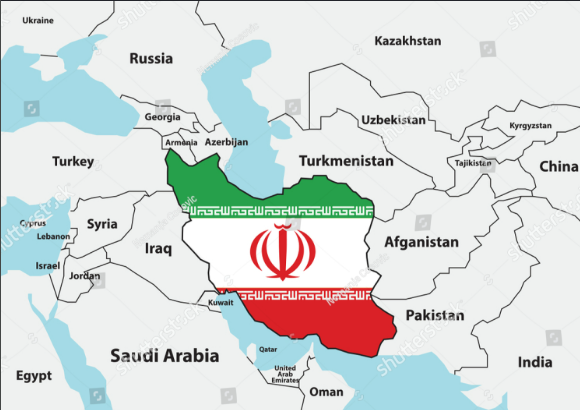
Zbigniew Brzezinski, a grand master of US imperial strategy in the Cold War, put forward some of the most insightful analysis for us to understand America’s war on Iran. In his 1997 book The Grand Chessboard, Brzezinski identified Iran as one of the “critically important geopolitical pivots” in what he called the “Eurasian Balkans”—a region of power vacuum and power suction stretching from Central Asia to the Persian Gulf. Brzezinski wrote “Iran dominates the eastern shoreline of the Persian Gulf, while its independence, irrespective of current Iranian hostility toward the United States, acts as a barrier to any long-term Russian threat to American interests in the Persian Gulf region.” Back in 1997, Iran was simultaneously a threat to US interests and a geopolitical buffer against Russian expansion. Brzezinski never thought that US policy makers would be so unwise as to push Iran toward Russia that directly contradicts US strategic interest, against any strategic logic. Brzezinski’s most prescient warning appears in The Grand Chessboard, “Potentially, the most dangerous scenario would be a grand coalition of China, Russia, and perhaps Iran, an ‘antihegemonic’ coalition united not by ideology but by complementary grievances… Averting this contingency… will require a display of U.S. geostrategic skill on the western, eastern, and southern perimeters of Eurasia simultaneously.” “The three grand imperatives of imperial geostrategy are to prevent collusion and maintain security dependence among the vassals, to keep tributaries pliant and protected, and to keep the barbarians from coming together.” “Henceforth, the United States may have to determine how to cope with regional coalitions that seek to push America out of Eurasia, thereby threatening America’s status as a global power. “— Zbigniew Brzezinski.
Fast forward 30 years, the current reality is –
- China and Russia have formed a “no limits partnership”
- Iran joined the Shanghai Cooperation Organization (SCO) in 2022
- The three countries conduct regular joint naval exercises in the Persian Gulf
- Iran supplies drones to Russia for the Ukraine war
- China and Russia provide diplomatic, materiel, and intelligence support for Iran in its war against the US and Israel
Brzezinski’s warning has materialized. One high-profile Chinese commentator noted, “Trump’s war against Iran may be the stupidest strategic mistake in American history” because it accelerates this anti-hegemonic coalition.
In a 2012 interview about his book Strategic Vision on the Charlie Rose show: “He advocated deterrence over preventive war, arguing that starting a war to prevent nuclear acquisition “will certainly plunge the region into protracted and unpredictable hostilities”. This contrasts sharply with current Israeli and US strategy of regime change through assassination and unprovoked war – exactly the kind of escalation Brzezinski warned against. In Strategic Vision, Brzezinski diagnosed the fundamental problem facing the US: “By 2025, the US could lose its position as the world’s dominant power, leading to a more chaotic and conflict-ridden international system”. For all his foresight, he skipped forecasting the US itself would be the source of global chaos and conflicts. Back in 2012, Brzezinski attributed the potential decline to US militarism (wars in Iraq and Afghanistan), unilateralism (vastly worsened under Trump), the 2008 financial crisis, and polarized domestic politics (also vastly worsened since then). He noted, “Unless we overcome the currently paralyzing divisions within our own society… the United States will find it difficult to set its house in order and to play a constructive world role”. How prescient. These failures taught Brzezinski that military solutions to Iranian problems are usually catastrophic. His later advocacy for engagement and deterrence reflects this hard-won wisdom – wisdom ignored by US policymakers. In fact, successive US administrations since 2012 have pursued the polar opposite of Brzezinski’s recommendations:
– Rather than preventing China-Russia-Iran alignment, US sanctions and hostilities toward all three have pushed Beijing, Moscow, and Tehran closer, despite the lack of any ideological alignments beyond anti-US hegemony
– Instead of maintaining “geopolitical skill” on all Eurasian fronts, the US has overreached and is provoking a three-front confrontation in Ukraine, Iran, and Taiwan
– Instead of multilateral engagements, the US has pursued an aggressive unilateral “America First” policy and an even deeper “Israel first” posture in its Middle Eastern policies
In the end, Brzezinski’s warnings are unheeded. The current crisis validates his prophecy and suggests that without a course correction, the “strategic vision” of American decline will become self-fulfilling.
One of Brzezinski’s most prophetic concepts in the book is the “global political awakening”. He argues that for the first time in history, the entire world’s population is politically conscious and reachable through the press and social media. This means that traditional “imperial” maneuvers (like the 1953 coup in All the Shah’s Men) are no longer possible because the local population will inevitably resist and mobilize against the imperialists and neo-colonialism. We are seeing this clearly in the Iran war. Despite the mass protests of economic hardship and corruption, the Iranian population has rallied around the flag and resisted capitulation under intense US and Israel bombing rampage. Brzezinski posited that Iran prefers a balance between East and West. However, by using military force in 2026, the West effectively forced Tehran to abandon that balance and seek a “security guarantee” from Beijing and Moscow, fulfilling Brzezinski’s nightmare of a unified, anti-Western Eurasian bloc. As the US wages war on Iran, China is following Brzezinski’s predicted script: keeping a low profile while securing long-term energy contracts and security arrangements in the Persian Gulf. China’s deepening involvement in Iranian oil infrastructure (like the Alborz platform) is the physical manifestation of the “Eurasian integration” Brzezinski was worried about. China is turning Iran from a “geopolitical pivot” into a “Chinese bridgehead.” China also gains from American exhaustion. The depletion of US arsenal further weakens its position along China’s shores. Brzezinski specifically used the year 2025 as the tipping point in his book. He argued that if by this time the U.S. had not revitalized its domestic economy and fixed its “ignorant garrison-state mentality,” it would lose its role as the global arbiter. Reading this today, the current conflict looks less like a localized war and more like the “post-America scramble” he predicted – a chaotic period where regional powers like Iran and global powers like China test the crumbling foundations of the old-world order that favors the US and its vassals. Iran’s historical experience as a crossroads civilization (the “Eurasian land bridge”) taught it that direct conflict with superior powers is suicidal. Instead, Iran has built a network of proxies reflecting ancient Persian diplomatic traditions, including Hezbollah in Lebanon, Hamas in Gaza, Houthis in Yemen, and Shiite Militias in Iraq/Syria. These proxies provide Iran with buffer space and multiple points of leverage against its opponents. Iran has long held a “No East, No West” Doctrine. This reflects Iran’s historical position between competing empires (Roman/Parthian, British/Russian, US/Soviet). Today, Iran maintains ties with Russia and China while maintaining an independent posture, demonstrating continuity with its non-alignment tradition. This pillar of strategy may become less tenable as reconciliation with the West seems out of the question for now.
The Funeral
Indeed, the funeral ceremony in Tehran is turning out to be an extraordinary event of a kind the world has never witnessed in a spontaneous outpouring of respect and sorrow. It carries immense political symbolism. Such state funerals are international events where diplomacy tends to be in attendance. The event in Tehran is taking place against an extraordinary backdrop of power dynamics—both inside Iran and regionally as well as internationally. And in Tehran too, it wouldn’t have gone unnoticed that the western nations were completely absent from the funeral ceremonies. Over 100 nations sent high-level delegations to the ceremonies. A who’s who of the Global South was represented. Russia sent the number two in government, Medvedev, as Putin’s personal envoy. The funeral of Khamenei was the largest recorded funeral in history-more than 40 million Iranians were in the streets paying homage, supported by another 15 million in Iraq and millions more in Pakistan. The 2nd– largest funeral in history was the funeral of Khomeini back in 1989. This had the effect of uniting the people behind their government. All CIA/MI6/Mossad tricks to create a color revolution in Iran failed. Just as the CIA/MI6 effort to create civilian discontent amongst the Russia people, due to Ukrainian drone attacks on the civilian economy, failed. The Russia people are mad- not at Putin-but at the West. The population is fully behind Putin, urging him to act “more boldly” against the West in Ukraine. Iran, China and Russia are old civilizational states. All three are working together to evict the US from Central and Eastern Eurasia. Iran has a strong support from Russia, China and Iran. All three help Iran with material and military support. Iran ditched the American GPS system for China’s Beidou navigation system. This helped to improve Iran’s targeting, by increasing accuracy from 3 meters to 5 cms! Both Russia and China are also helping Iran with ISR, and other intelligence help. Supplies of all kinds are reaching Iran through Pakistan, China (via rail) and Russia via rail and the Caspian Sea. All three supporters of Iran know full well that were Iran to fall, then it would free up US military resources to focus and target them. Furthermore, Iran is helping to de-militarize the West at a rate that will deplete the US arsenal before it can focus on China.
1 The War of Economic Corridors
From east to west and north to south, these corridors interlock virtually all major players across Eurasia. China’s New Silk Roads/BRI advances through a multiplicity of corridors from Iran at the center of Eurasian integration. But it is Iran’s ultra-strategic geography that has positioned it since the Ancient Silk Roads as the definitive crossroads between east and west; a role rekindled by the New Silk Roads/BRI launched by Xi Jinping in 2013. One of its crucial vectors, included in the 25-year, $400 billion signed in 2021, is the BRI-integrated China-Iran overland corridor. It is essential for bypassing American maritime dominance, the decades-long sanctions barrage on the Islamic Republic, and sensitive chokepoints such as the Strait of Malacca, the Strait of Hormuz, and the Suez Canal. The first freight train from Xian, China’s former imperial capital, arrived at Aprin’s dry port in Iran, located 20 km from Tehran, which was inaugurated only three years ago in May. This marked the official start of this corridor, cutting transit times from up to 40 days by sea to a maximum of 15 days by land. Aprin is a dry port: an inland intermodal terminal, directly linked by road/rail to seaports, in the Caspian or in the Persian Gulf. That means massive Chinese shipments can quickly access global maritime routes.


China-Iran fits into the broader east-west corridor, which, before the war, aimed to connect Xinjiang via Central Asia to Iran, Turkey, and further on to the Persian Gulf, Africa, and even Europe. Of course, China could also profit from the rail corridor to receive Iranian oil, instead of relying on the Iranian ghost fleet, although the logistical challenges remain significant. The China-Iran railway is already recalibrating the importance of the China-Pakistan Economic Corridor. Moreover, the Iranian port of Char Bahar, part of what could be considered, at least before the war, as the Indian Silk Road, is in direct competition with the Pakistani/BRI port of Gwadar in the Arabian Sea, only around 80 kilometers away. That brings us once again to Iran’s unrivaled role in Eurasian connectivity. Iran sits at the privileged intersection of two key transportation corridors: the Chinese-driven east-west vector and the INSTC, which links three BRICS members – Russia, Iran, and India. What Tehran had been doing, up to the war, was to deftly align its multi-vector policy with both powers, China and India, and both corridors. Considering India’s alignment with Israel the decapitation strike on Iran on 28 February, things may radically change further on down the road.
INSTC collides with IMEC
The INSTC can be succinctly described as the north-to-south vector of Eurasia integration, linking Russia, Iran, and India, and crisscrossing the Chinese New Silk Roads, which move from east to west across Central Asia. Here, we once again the profound interconnection of the key trans-Eurasian corridors. The China-Iran railway, part of the China-Central Asia-Turkey-Europe corridor, links to the INSTC in Iran, which is crucially backed by Russia. At the same time, both stand in stark opposition to IMEC, the misnamed India-Middle East-Europe corridor, which is actually the Israel-Middle East-India-Europe corridor. The key objective of IMEC, an offspring of Trump is to turn Israel into a strategic hub for trade/energy flows in West Asia. It should be interpreted as the collective west’s late response to the BRI: yet another American project to “contain” China and, more recently, Iran as a member of the INSTC. Most of all, IMEC is a transportation corridor designed to bypass the top three vectors of genuine Eurasian integration: BRICS members China, Russia, and Iran. The war on Iran, however, is inflicting a serious reality check on IMEC. The port of Haifa has been seriously damaged by Iranian missiles. Riyadh and Abu Dhabi are in direct conflict over how to adapt to a post-American Persian Gulf in which Iran will be the dominant power. For all practical purposes, IMEC is now in deep coma. Take some provisional results of the war. Nearly 1,100 km of tracks are “missing” from the railway from Fujairah in the UAE to Haifa; 745 km are “missing” from Jebel Ali in Dubai to Haifa; and 630 km are “missing” from the railway from Abu Dhabi to Haifa. That leaves IMEC looking even more fragile in the aftermath of the war. Several of the corridor’s potential nodes and surrounding infrastructure were also hit by Iranian missile strikes. And that may not be over yet. It’s not an accident that the U.S. bombed several nodes of the INSTC: the port of Bandar Anzali, Isfahan, the port of Bandar Abbas, the port of Chabahar. As well as one stretch of the China-Iran railway, part of BRI, and financed by China. This is a war against Iran, against China, against BRICS, against Eurasia integration. Yet Eurasia integration simply refuses to be derailed.
2 Russia & China Have Iran’s Back
China and Russia, together with Iran’s own indigenous capabilities, have used this period to refurbish and harden their war‑fighting tool kits across missiles, drones, air defense, and supporting systems. They are far better positioned to absorb and respond to pressure than they were a decade ago, and they are in no mood to accept Trump’s more egregious demands. That reality is understood in Riyadh, Doha, and Islamabad, and it further reduces the appetite to become the front-line staging ground for a maximalist U.S. approach. Iran has taken delivery by sea of a substantial shipment of CM‑302 supersonic anti‑ship cruise missiles from China, along with a large consignment of very advanced radar equipment from Russia. These systems are already on Iranian soil. In combination, they materially enhance Iran’s ability not only to defend its own airspace and coastline, but also to conduct offensive operations against major surface combatants, including large warships and carrier groups. The CM‑302 is designed as a “carrier‑killer” class weapon: high‑speed, sea‑skimming, and optimized for attacking large naval targets in congested waters. Paired with upgraded long‑range and over‑the‑horizon radar from Russia, Iran’s kill chain—from detection and tracking to targeting and engagement—becomes markedly more robust. The result is a far more credible anti‑access/area‑denial posture in and around the Gulf and Strait of Hormuz than even a year ago. In practical terms, this means that Trump and his military planners would have to undertake a serious double‑think before contemplating major operations against Iran, especially any concept that relies heavily on carrier strike groups operating in relatively confined waters. The cost, risk, and uncertainty associated with a large‑scale offensive have all increased. On the eve of Medvedev’s visit, Russia has completed the production of the first batch of 20 Su-35 “Super Flanker” fighter aircraft ordered by Iran. Iran had ordered 48 Su-35 fighters in total, per a defense deal with Iran two years earlier. Reportedly, Russia is expediting the deliveries to Iran that could begin in 2026.Iran’s air force has long relied on ageing Western-made aircraft acquired before the 1979 revolution. Although Iran has developed one of the region’s strongest missile arsenals, its domestic aviation capabilities remain comparatively weak. the arrival of Sukhoi Su-35 fighters could significantly strengthen Iran’s air power and expand its ability to conduct long-range operations. Iran’s strategic importance for Russia has become critical. Russia simply cannot allow Iran’s capitulation.
3 Beyond Iran and the Middle East: Energy Dominance Over Asia
Control of the Middle East would allow the US to throttle energy exports to both China and the rest of Asia, placing pressure on China to scramble to replace up to half of its total energy imports and place the rest of Asia under increased energy dependence on the US itself. The US continues to disrupt maritime shipping elsewhere around the globe through a blockade on Cuba and continued interdiction operations targeting Russian energy exports via European naval operations as well as maritime drone strikes on Russian ships to be organized and overseen by the US intelligence community and military. The US demonstrated the ability to not only seize ships anywhere between the Strait of Hormuz in the Persian Gulf and the Strait of Malacca in the Asia-Pacific, but also the ability to target and disable ships using anti-shipping missiles fired by US warships and missiles fired by US warplanes operating across the region, but just beyond the reach of Iran’s anti-air and anti-ship capabilities. The US created enough disruption to force nations across Asia to sign long-term contracts for US LNG exports otherwise inexplicably built up over recent years for demand that didn’t yet exist. But the US stopped short of creating a catastrophic collapse or crisis that would prompt nations into taking emergency measures that might enable them to protect themselves not only against the disruption of energy exports from the Middle East, but also America’s attempts to exploit them. Thus, the US is conducting a “controlled demolition” of both the Middle East’s capacity to supply Asia with energy and the economies of Asia depending on this energy, causing enough damage to gradually shift dependency away from the region and toward the US, without triggering a unified front against the US itself and its upending of global stability.
If the US Can’t Rise to Meet the Multipolar World, it will Drag it Down to Its Level
Although the US has nowhere near enough energy production capacity to replace the region’s energy exports — just as it has nowhere near enough energy to meet all of Europe’s needs — reducing overall access to energy for both Europe and Asia and the subsequent deindustrialization that is following fulfills Washington’s most immediate challenge: how to maintain primacy over a world rapidly outpacing the US in terms of industry, innovation, and military power. By throttling access to energy for Europe, Asia, and other regions of the world, the US is hoping to create artificial energy scarcity, triggering an inevitable process of economic reversal, deindustrialization, and overall geopolitical anemia worldwide. The US is incapable of competing with just China alone head-to-head fairly and in open markets, falling behind in virtually all metrics despite aggressive tariffs, sanctions, bans, and information operations all aimed at giving the US an advantage over China. Its ability to compete and maintain dominance over the entire world — all factors being equal — is a fantasy. Thus, more aggressive means are being pursued through dividing and weakening others, thus avoiding the necessity of competition altogether. As long as the rising multipolar world continues allowing the US to target and undermine nations one-by-one without creating a unified front against the disruptive, predatory geopolitics of the US, the US will continue to successfully manage the size and power of the multipolar world and eventually isolate and contain the core nations driving its nascent emergence in the first place. The US depends on the fact that no single nation — except perhaps China — can challenge the US. As long as the US maintains its subversion, coercion, and aggression just below the threshold of posing a global threat – focusing on individual states while carefully avoiding escalation with others — the nations of the world will fall short of the unified effort required to fully and finally neutralize the threat US pursuit of primacy poses to the world collectively. The result is a US that will continue to enjoy dominance simply because of insufficient action by the collective world. Only time will tell if the rest of the world is prepared for the effort and energy required for this transition, or if complacency and short-sightedness prevail, allowing the US to persist in its pursuit of power and profit at the cost of not only the world abroad, but also the vast majority of Americans at home. Iran is only one of several metrics indicating the vector sum of this overall struggle.

The US war on Iran — at face value — appears to be a catastrophic tactical and strategic US failure demonstrating the limits of its military power and further exposing the limits of its military-industrial capacity. However, just as with its still-ongoing proxy war on Russia in Ukraine, its inability to overwhelm targeted nations with outright military power distracts from the many ways the US is still advancing its geopolitical objectives by other means. In Ukraine, the US has categorically failed in defeating Russian forces through its support of its Ukrainian proxies. However, it has used the war to lock Russia into an expensive, prolonged, high-intensity conflict that has demonstrably compromised Russian interests beyond Europe — especially regarding the 2024 collapse of Syria. While the US does indeed face growing challenges in terms of its military power and its military industrial base, it is pursuing full-spectrum dominance using multi-domain warfare — spanning not just military force but economic and financial force. The war has also succeeded in cutting Europe off from cheap, reliable, and plentiful Russian energy and is placing Europe under increasing and likely irreversible energy dependence on the United States. This energy dependence on the US obviously benefits US-based energy corporations financially but also enhances Washington’s strategic leverage or even outright control over Europe. This control is being used to successfully create a united front across Europe against Russia. In a similar manner, the US is using its war on Iran to strangle energy exports from the entire Middle East to Asia to decouple Asia from cheap, reliable, plentiful gas and oil and place it under US energy dependence, thus providing the US strategic leverage over Asia to create a similar united front against China. By the early 2030s, the US is expected to double its LNG export capacity, making it capable of meeting the demands of key Asian proxies, including South Korea and Japan, as well as the island province of Taiwan — but again, only if cheaper and more reliable alternatives remain off the market. This means that while the US is essentially placing the cart before the horse, it is ensuring that when the horse finally arrives, conditions are ideal for the US and the US alone to benefit. In addition to the US political capture of these Asian proxies, the presence of US military forces on their territory, and now the imposition of energy dependence upon them, nations like Japan, South Korea, and the Philippines will be shaped into military industrial outposts of US power in the region, helping minimize the “tyranny of distance” the US is faced with when provoking war with China on the other side of the planet from where the US is actually located.
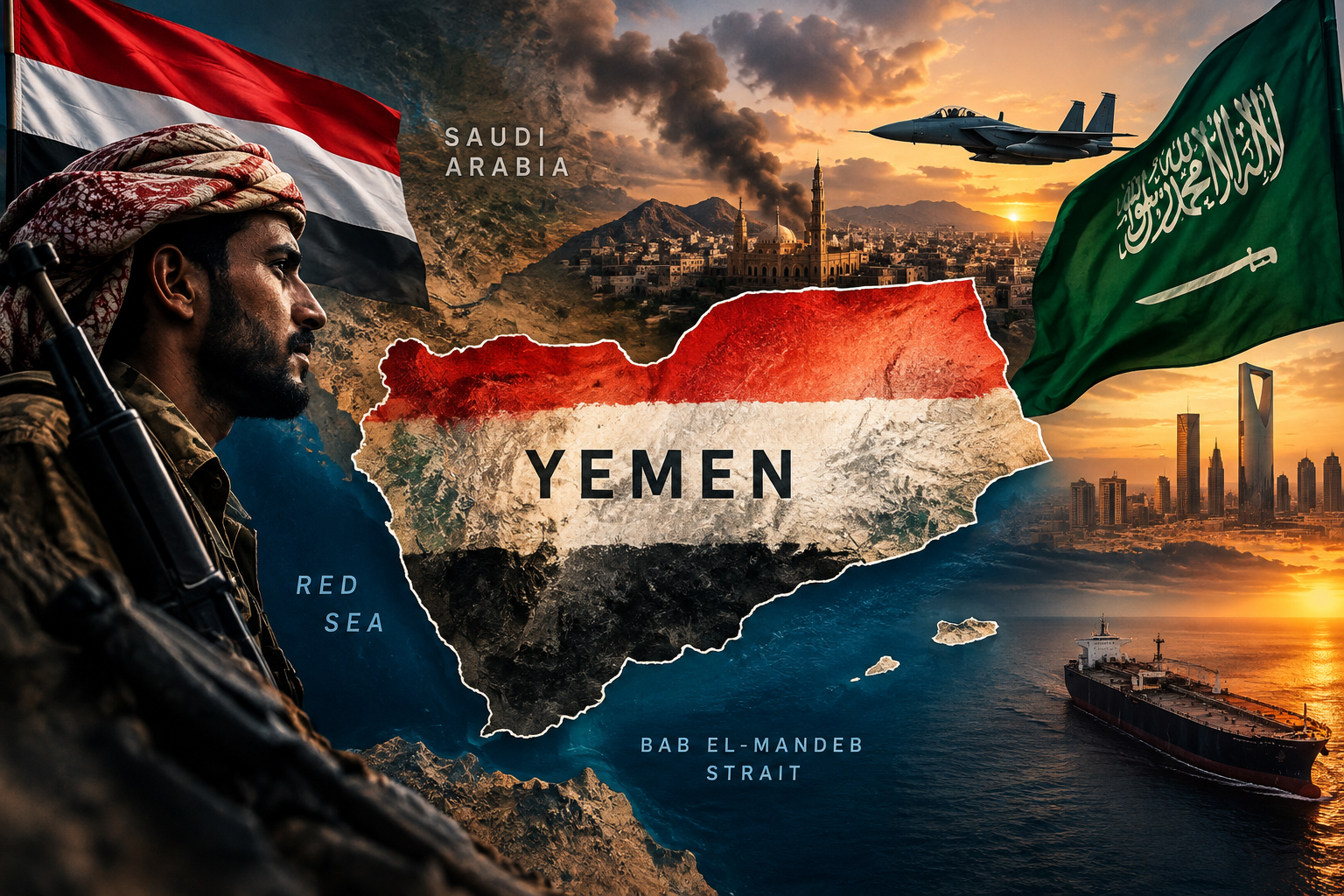
All of these preparations are taking place ahead of what the US sees as an inevitable confrontation with China itself – which is ultimately the priority driving US conflict against Russia, Iran, Venezuela, and many other nations in the first place, all as a means of first isolating and containing China before confronting it directly. The prospect of US war around the globe continuously escalating in the near to intermediate future is inevitable because the wars taking place now are being fought specifically to prepare for a future confrontation with China itself. For this reason, the prospects of the US arriving at any sort of “peace” deal with Russia or Iran are near zero. Thus, US policymakers are fully aware that Iranian support for organizations like Hezbollah in Lebanon, Ansar Allah in Yemen, or the PMF in Iraq is defensive in nature. This also means that US policymakers are keenly aware that in order to isolate and undermine Iran itself, it needs to undermine or completely eliminate this strategic depth Iran has created across the region first. And this is precisely what has driven US policy in the region regarding Iran for at least the past 26 years, including US war, occupation, and proxy war in Lebanon, Yemen, and Iraq, as well as Syria. Throughout the 21st century, the US has either attacked these Iranian allies directly or through its network of proxies in the region, including Israel and extremist groups, via Washington’s Persian Gulf and Turkish proxies. A look at a map of the region from 2000 to 2026 shows the US slowly enveloping and eliminating Iran’s alliance network and now waging direct war against Iran itself. This reality is likely why Iran insisted any ceasefire between the US and Iran must also include ceasefires against Iran’s network of allies in the region — specifically Hezbollah in Lebanon. This is also likely why when the US, through Israel, continued waging a war of aggression against Hezbollah in Lebanon, Iran suspended the MOU. Anything less would equate to providing the US with a frozen front against Iran — allowing the US to rearm and reorganize its forces and strategies — while continuing to erode Iran’s regional asymmetric defense strategy, ultimately giving the US an additional advantage ahead of what is inevitable, larger-scale hostilities provoked by the US against Iran in the near to intermediate future. While much discussion of the US war of aggression against Iran has focused on regional-specific factors including the myth the US is fighting Iran on “behalf of Israel,” there are far more realistic and important global factors that have led to the war and will unfold because of it. The war on Iran is part of a decades-spanning US project to assume complete control over the Middle East and the oil and gas that is produced and exported from the region. This is not as a means of taking the energy for the United States’ own use, but to establish and enhance a US monopoly over energy production and exports from the US itself and from the nations and regions the US is assuming control over. This includes most recently Venezuela in Latin America. The early 2026 US war of aggression against the Venezuelan state, kidnapping of the Venezuelan president, and the taking hostage of the remaining Venezuelan government led to the almost immediate cutting of Venezuelan oil exports to China and the distribution of Venezuelan oil wealth to US corporations. A similar war of aggression by the US against Russia through Ukraine is also quickly expanding into a war directly against Russian energy production, storage, and export infrastructure through the use of drones that is actually overseen by the CIA.
Isolating China, Controlling Asia
Together with the war on Iran, a clear, global pattern emerges of what is the deliberate US disruption, destruction, and even shutting down of energy exports to Asia in general, but to China specifically. While the US was likely also attempting to quickly topple the Iranian government to enhance its control over the region and further isolate both Russia and China, a much wider and more global-focused objective was to cut off energy not just from Iran to Asia and specifically China, but from the entire Middle East to Asia and China. Just as the US had previously done to Europe through its instigation of war with Russia in Ukraine, the destruction of the Nord Stream pipelines, and the implementation of sanctions on all other energy imports from Russia – and now including the striking of Russian energy production, storage, export facilities and actual tankers carrying Russian energy exports – all of this forcing Europe into energy dependence on US exports – the US is now pursuing a similar policy targeting China and the rest of Asia by deliberately disrupting access to Middle East energy exports. The war on Iran has led to the close regulation of maritime traffic through the Strait of Hormuz by Iran, followed by a US-imposed blockade primarily targeting ships exporting energy from Iran to China. While US claims ofcompletely controlling maritime traffic to and from Iran is false, the US blockade has turned back or seized at least half of all maritime traffic attempting to leave Iran onward mainly to China. We’re seeing the ending of an era, not a decline, but an abrupt change. And this change is not stemming from without: The ending of the American power did not result from any foreign civil war or other war against American dominance. The end came from the United States itself in trying to juxtapose its interest as hegemon against that of every other country”. In order to preserve America’s power, Washington turned to trying to impose a series of choke points on the entire world economy “through controlling oil — because everybody needs it”. But oil is one of its principal dimensions — as is the connected dollar hegemony. The Rockefeller Empire clearly wants to consolidate global energy control in order for the U.S. to determine who may have access to energy, and those whose energy supply will be squeezed to constrain competition potential (i.e. China). The tariff policy is effectively a polite way to say, ‘we will use tariffs, or an energy squeeze, or a financial squeeze to create disruption to your economies, unless you agree to join the U.S.-led ‘network’ ’Neither tariff nor energy-choke policies have been without their set-backs, however, not least because Iran has refused to comply, and continues to provide oil to China and other Iranian allies.
Our next article is called IRAN-FROM MOU TO WAR”.
I look forward to receive more if these meaningful analysis of the Great US failure to subdue Iran.