1 From War to MOU
2 From MOU to War
3 Data Center attacks
4 Iran imposes a new equation
5 Stealing Iran’s money
6 Iran-Oman Hormuz deal
7 The US blockade
8 False flags & the Abu Dhabi bribe
9 Re-building the Gulf states energy infrastructure
10 The last US move against Iran foiled
11 Going nuclear
12 Conclusion
Introduction
There has been a flood of info regarding all of the above. It gets very confusing. To provide clarity, we have described these events in a way that is simple, and leaving out all the bullshit, lies and fake news. It is important to detail the war that America lost, so publicly and in such a humiliating manner by an “overlooked “3rd rated player. Shocking but true. Read, understand its implications and please share this article with as many people and groups as is possible. It is historic beyond words.
1 From War to MOU
April 7: On April 7–8 Trump announced on social media that he had agreed to a two-week ceasefire brokered by Moments later, Iranian officials confirmed that Khamenei had approved the ceasefire after a last-minute nudge by China. Iran’s National Security Council confirmed the agreement, casting it as a victory. Direct negotiations took place in Pakistan, on April 11–12 between U.S. Vice Pres. and Iranian parliament speaker —the highest-level direct engagement between the United States and Iran. But, when those talks failed to produce an agreement, Trump ordered the US Nay to begin a blockade of Hormuz to prevent any shipping transiting Iranian ports. No deadline was set for the extension of the 2-week ceasefire, and proposals put forward by either side to end the war were met with rejections in the weeks ahead. What was agreed by Iran on 7 April is not a ceasefire per se, but rather a brief cessation in military actions in order to provide the space in which to test whether meaningful political discussion with the US is possible or not. The conflict also saw the resumption of hostilities between Israel and Iran’s close ally in which had been observing a fragile ceasefire since 2024. Despite the ceasefire, which required the disarmament of Hezbollah and the withdrawal of the IDF from southern Lebanon, Hezbollah had been seeking to restore its military and the IDF had continued to strike targets in southern Lebanon almost daily. After the opening wave of attacks on Iran on February 28, the IDF conducted air strikes on Hezbollah’s infrastructure and warned the militant group against getting involved in the conflict with Iran on March 2, Hezbollah launched missiles and drones into Israel, prompting an escalation in Israeli air strikes that reached north to southern A drone believed to have been launched by Hezbollah also struck a base in northern Israel used by the British. In the following days, Israel issued sweeping evacuation orders across southern Lebanon, displacing more than 1.1 million by late March. A limited invasion began on March 17. On March 24, Israeli Defense Minister Katz announced plans for the IDF to occupy southern Lebanon up to the Litani River, a territory that Israel occupied in 1982 until Hezbollah drove them out in 2000.
April 8: Israel launched its invasion of Lebanon since the start of the fighting, with more than 100 airstrikes in the space of just 10 minutes targeting Hezbollah. Israel said the U.S.-Iran cease-fire did not include Lebanon. After the United States and Iran announced their ceasefire in early April, there was disagreement among the parties on whether Lebanon was included. Just hours after the announcement the IDF conducted a blitz across Lebanon that killed hundreds of people and wounded more than 1,000 others, straining the ceasefire between the United States and Iran. The United States then pushed Israel to lower the temperature and engage in negotiations to end the conflict in Lebanon. On April 14 the United States hosted the highest-level engagement between Israel and Lebanon since 1993 and, on April 16, Trump announced a 10-day ceasefire between Israel and Hezbollah that was set to begin the following day. A week later the formal ceasefire was extended by three weeks, although Israel and Hezbollah traded frequent fire during that period. Commitments to a ceasefire were repeatedly renewed, but few signs indicated that an end to the hostilities was in sight. On May 30, IDF ground forces crossed north of the Litani River.
Global Economic Impact and the Strait of Hormuz
The February 40-day war had immediate impacts on global travel and trade. Flights in and out of the Middle East came to a near-complete stop, stranding residents, expatriates, and tourists alike, even as Iran struck the region’s most crowded cities and luxury hotels. When one of the world’s busiest airports was damaged by strikes during the second day of the conflict, it temporarily halted all flights and reopened in only a limited a few days later. Shipping lines rerouted to avoid the war. Although commercial traffic through the Strait of Hormuz dropped more than 90 percent after the outbreak of conflict, Iran’s attacks on traffic in March caused a further decline. It then selectively approved the transit of some ships, including some Iranian ships, some ships belonging to countries that negotiated safe passage with Iran, and some ships that were willing to pay Iran a hefty toll. The disruption of oil flows quickly led to fuel shortages and rationing in parts of Asia, which rely heavily on oil supplied through the Strait of Hormuz, as well as a sharp increase in price in the global oil market. Prices surged from about $70 per barrel just before the war to an average of $103 per barrel in March. While the increase was disruptive for much of the global economy, the surge led to a windfall for Iran, which in March saw an average boost in oil revenue of nearly $25 million per day, and Russia, which saw an average increase of about $150 million per day in the same period. That windfall for Iran was disrupted, however, when on April 13 the U.S. Navy began preventing ships that had docked at Iranian ports from passing through the strait. The U.S. blockade threatened to strain Iran’s economy as it prevented the import of staple goods and Iran’s storage for exports was set to reach capacity in May, potentially forcing reductions in oil production that could be costly to reverse.
On May 4 U.S. forces undertook an operation to guide vessels stranded in the Persian Gulf through the Strait. Two U.S.-flagged commercial vessels passed through the strait, but the operation was reportedly met with deadly confrontations between U.S. and Iranian forces. Iran also struck multiple oil infrastructure targets in the United Arab Emirates. On May 5 Iran announced the formation of the Persian Gulf Strait Authority (PGSA), which attempted to establish protocols for transit through the strait and a toll regime. On 8 May, Iran’s military announced that the US violated the ceasefire following Washington’s attack on two Iranian ships and heavy airstrikes along the country’s coast. US forces also targeted another vessel as it was entering the Strait of Hormuz opposite the UAE port of al-Fujairah. In addition, the UAE has also struck an oil refinery in Laan, in Iran on May 8th. Iran then issued a warning to the UAE,” The Emiratis must take advantage of the vacuum period of the ceasefire because Iran still has unfinished business with them,” accusing the UAE of seeking to raise the level of tensions in the region in coordination with “Israel”, and that “Their issue has become an existential issue ,and they themselves are aware of that, so they are trying to maintain tension between Iran, America, and the Zionist entity as much as possible, – – – the Emiratis and the Zionists are instigating to drag Trump back into the war.” Regarding US naval forces, Iranian MP Khezrian asserted, “The Americans have realized since last night (May 8th) that the display of their naval blockade will from now on be met with a military response by Iran. No one can carry out a military action against our ships without a response – – last night was the first time during the ceasefire period that US destroyers were directly targeted – – – let the Americans know from now on that the sovereignty of Iran in the Gulf and Oman Sea is established over its territorial waters and waters outside its territorial borders, in order to ensure the security of its ships and boats – -from now on, the Americans must deploy several escort vessels for their destroyers so that if one of them is sunk, they can at least rescue their forces and pull them out.” The Iranian military said the attack involved eight cruise missiles and 24 one-way attack drones fired at 3 US destroyers, achieving direct hits. The 3 destroyers then fled the Straits. Of the 3 aircraft carriers, one is on the way back to the US. That leaves just 2 on station. Over the past few days, the US has flown multiple planes carrying military supplies and equipment to Israel. This means that these talks are meant to buy time, until the next round. We went from “no deal except unconditional surrender” to a truce based on Iran’s maximalist demands. US now knows blockade will be met with military force. Reality bites hard.
Cracks in the Ceasefire
Tensions ebbed and flowed throughout the duration of the ceasefire reached by the United States and Iran, although it largely held. Attacks took place, infrequently and with restraint, while negotiations reportedly came close in May to producing a memorandum of understanding that would lead to the war’s end. Among the clearest obstacles, however, was the ongoing conflict in Lebanon. Iran continued to press for an end to Israeli attacks in Lebanon as a condition for any lasting end to the war with the United States and Israel. Iran repeatedly reiterated it was ready to ditch the already comatose “ceasefire” if Israel proceeded with its threat of bombing Dahiyeh, the Shi’ite-majority suburb of southern Beirut. June 1. Seven hours after Netanyahu ordered a strike on Beirut, Trump called him. “You’re fucking crazy. You’d be in prison if it weren’t for me.” “I’m saving your ass. Everybody hates you now. Everybody hates Israel.” The bombing of southern Beirut on June 6 was perpetrated once again at a critical moment in the negotiations, as pointed out by Mohammad Mokhber, a top advisor to Leader Mojtaba Khamenei and a member of Iran’s Expediency Council: “By bombing Lebanon during the presence of the mediator in Iran [he was referring to Asim Munir], the enemy set the negotiating table on fire for the third time to shout about the repeated violations of the ceasefire in all areas. We speak to the violators with the language of ‘power’; the axis of resistance is a unified body, and they will definitely receive a heavy and painful price for this aggression in the field.” After the IDF struck southern Beirut on June 7, days after the latest ceasefire in the Lebanon conflict, Iran launched waves of missiles toward Israel and prompted retaliation from Israel. Renewed IDF strikes in the Beirut area on June 11 prompted Iran to respond once more, but Trump’s intervention prevented the retaliation taking place so that a memorandum of understanding could move forward. Confronted by Trump, Bibi was forced to back down. For only a few days. Trump desperately needs an MoU and an extended ceasefire to be marketed as “Victory”.
June 8. Netanyahu approved a “massive” strike on Iran at 4:30 in the afternoon. Aircraft were being prepped. Trump phoned and it was cancelled mid-preparation, causing considerable confusion in the IDF command. Trump’s retelling: “I said, ‘Bibi, you better be careful, or you will be on your own very soon.’” For his part, Trump appears to be finally growing exasperated with Netanyahu’s defiance, admitting to an interviewer that he yelled and cursed Bibi out in a phone call telling him “You’re fu*king crazy!” To the Financial Times, days later: “I call the shots. I call all the shots. He doesn’t call the shots.” The Israeli bombing of southern Beirut led to a frankly surrealist spectacle: the Trump administration scrambling after the Pakistani mediator in Tehran, begging him to intercede with the Iranians for de-escalation. Trump who wanted to destroy Iranian civilization had to ask Pakistan to salvage what could still be salvaged. That means that with Iran setting the terms of escalation and raising its deterrence potential, and with Trump left with no cards at all, the only possible solution lies with diplomacy via Islamabad. Then Iran sent a message to Trump: ‘If the Israeli threats from last week to flatten the Beirut southern suburb of Dahiyeh had been executed, then Iran would have stricken northern Israel hard with its missiles. ‘It was a ceasefire for all – or no ceasefire’. Trump chose the ceasefire, and subsequent to his call with Netanyahu, announced that it was in effect.
To Axios on July 4: “We get along very good. He knows who the boss is.” In the same piece, a U.S. official summarizing the mood inside Trump’s circle: “Bibi was wrong about everything.” Lebanon is certain to remain a point of contention. It is not a matter of if, but when, the next crisis will strike. Israel will not let the matter stand. Iran will not let matters stand either. Mediators have informed the Americans that Iran considers an end to the war on Lebanon, withdrawal of Israeli forces, and a withdrawal from Hormuz, to be binding conditions — before discussing other issues. The US has long been lax, never expecting anyone to dare strike its bases directly. The US had coasted on its aura of “invincibility” for so long that its core had been hollowed out; by the time Iran struck, the once “feared” US was a shell of its former self, and its bases were vaporized with little effort. The US has finally capitulated in its disastrously failed war against Iran, reportedly drafting a memorandum of understanding which is highly favorable to Iran. And this happened while the same actors all put on a “bold face” of courage and defiance against Iran, when in reality they were terrified of the looming consequences. In short, Iran called Trump’s bluff and won. Trump tried to pretend that the US could play the long game in “blockading” Iran until storage at Kharg and elsewhere began to overflow—but instead, it was the US that was edging toward economic catastrophe and Trump was finally forced to blink when he realized that Iran wasn’t going to lose this game of chicken. The prevailing narrative is now that Iran has gained the ultimate trump card, arguably bigger than obtaining nuclear weapons: the ability to control the Strait of Hormuz at will from this point forward: In effect, Iran emerges with far more power, while the US emerges weakened beyond measure. Recall that virtually every US base in the region was either flattened or cleared out by Iranian strikes.
Everything You’ve Been Told About The US-Israel-Iran War Is Wrong!
The ceasefire was never the real war. Behind the broken truce between the US, Israel and Iran lies a far bigger fight – one that will decide who controls the world’s oil, its most dangerous shipping lane, and the balance of power for generations. Iran knows something the other two players already understand too: it cannot win a conventional, head-on military confrontation against America and Israel. Not even close. So instead of fighting a war it cannot win, Iran is playing an entirely different game – one built on calculated risk instead of raw firepower. Israel isn’t fighting for a ceasefire. America isn’t fighting for peace. Iran isn’t fighting to win. Here’s the real endgame across a 30-km stretch of water that could reshape the global economy. Behind the broken truce between the US, Israel and Iran lies a far bigger fight-one that will decide who controls the world’s oil, its most dangerous shipping lane, and the balance of power for a generation. Three nations are technically fighting the same war. Unofficially, they are not even fighting for the same thing. But the reason this war keeps reigniting has almost nothing to do with what is being shown to you. Every prolonged conflict runs on two layers. The first is for the public. The second layer is the real operation underneath, the actual contest that the narrative seeks to obscure. Three nations, Three endgames. Track this conflict from the moment it reignited on February 28th through where it stands today, and one thing becomes unmistakable > These 3 nations are not fighting for the same outcome. They are not even playing the same game. Israel wants total decimation. Not a truce. Not a managed rivalry. The permanent dismantling of Iran’s ability to threaten the region ever again – as part of the Greater Israel Project. Israel is fighting to permanently rewrite the security map of the entire Middle East- it has essentially zero interest in giving Iran any pause that might let it recover. Israel is relentless because it’s trying to build the Greater Israel project. It is the ideological engine driving Israel’s strategy. This means taking over the land from the Nile in Egypt to the Euphrates in Iraq. This is the missing piece that explains everything. The war on Iran is not an end in itself. It is a critical step in a larger project of regional domination. Weaken Iran, dismantle the “Axis of Resistance”, and the part is cleared for the next phase: pressurizing Saudi Arabia into the Abrahamic Accords, isolate Turkey, and legitimize Israel’s hegemonic project. Israel’s strategy is not defensive. It is expansionist. And the war on Iran is just one chapter in a much larger story. America wants a commercial empire, a deal extracted through force, that hands it a dominant foothold in the global oil trade. America’s real prize is an oil empire. The US is using pressure to reshape the industry itself. The strikes, the sanctions and naval pressure -these are not just military tools. They are a pressure campaign designed to force a commercial deal into existence, one that hands America a dominant economic footprint inside the global oil trade. And this is not the first time Washington has run this exact playbook. It ran it just a few months earlier- in Venezuela.
On 29 January, 2026, just a month after the US kidnapped Maduro and his wife in a coup, The US Treasury Office issued licenses for US firms to engage in Venezuela’s oil industry; by so doing, it legally cleared the way for Rockefeller companies to take over its oil trade. Iran wants survival -bought with leverage. Not triumph. Just enough bargaining power to stay standing. Three different finish lines. One shared battlefield. That operation taught American strategists something they have now applied directly here: If the real goal is to fully neutralize the oil power of both Russia and Iran, you cannot start with Russia. You have to break Iran first. Here are why sequencing matters so much. While Washington’s attention and firepower stay locked onto Iran, it has simultaneously kept Ukraine engaged on a separate front- applying steady, wearing pressure on Russia without needing to open a second full-scale confrontation of its own. Ukraine keeps pin-pricking Moscow, absorbing its attention, while America finishes what it started with Iran. This was never really a war about nuclear enrichment programs or ceasefires. It is a war about who ends up controlling the global oil flows, and its pricing mechanisms. Iran has no intention of sinking an American warship. That would be close to suicidal, inviting a response it could not survive. Iran is not trying to win this war outright. It is trying to make its threats credible enough to be worth bargaining with. Instead, its entire strategy hinges on one narrow stretch of water: the Strait of Hormuz. Before the war, roughly 100 to 300 commercial ships passed through it each day. Between February 28 and May 31, only 607 shipped passed through – an average of 7 a day.
Iran’s goal is simple, and quietly devastating- making that passage just dangerous enough that global trade and the world economy feel real pain. Not close it completely. Not trigger all-=out war. Just enough sustained danger to keep the entire global economy on edge, indefinitely. The Strait is the only genuine card Iran has left to play. Nearly everything else has been sanctioned, degraded, or bombed. This chokepoint remains untouched- and Iran is treating it as a strategic shield: protection purchased through fear rather than firepower. Russian Security Council Deputy Chairman Dmitri Medvedev put it bluntly on July 4th: Iran’s influence over the Strait of Hormuz gives it leverage comparable to a “nuclear weapon”. This is exactly why Iran keeps attacking commercial ships passing through. Every attack sends global maritime insurance spiking, because insurers will not cover a ship sailing into danger without charging drastically more to offset that risk. The result is elegant, in a brutal way: Iran successfully weaponizes global economic pain, turning what looks like a regional military dispute into something that shows up in a fuel and food prices on the other side of the planet. Squeeze one leverage point, and the other simply absorbs the squeeze. That is the trade nobody is talking about – and it is the single fact that makes sense of almost every Iranian move in this war. The world you see is “managed”. This is the crack in the management.
The entire endgame of this conflict comes down to a single narrow stretch of water. The Straight was never built for war. It is naturally restrictive – shallow in places, and scattered with small islands that make navigation difficult even in peacetime. Massie oil tankers cannot simply spread out and pick whatever path feels safest. Geography alone funnels them into narrow, defined channels, with the usual usable shipping lanes only a few kilometers wide in each direction. Within that narrow passage, there are effectively two options – and each side wants tankers funneled through a different one. Iran wants ships through the northern passage, hugging its own territorial waters. Every ship that sails that route sails under Iran’s shadow, quietly reinforcing Iran’s grip over the Straight, deal or no deal. America is pushing for the southern route, closer to the Gulf of Oman. The US has expanded the southern route to accommodate two-way traffic. Shift shipping traffic that way, and US and UAE influence over the passage grows relatively stronger – precisely at Irean’s expense. This is playing out in real time, right now. Iran has warned that any UIS involvement in determining Straight navigation would trigger a” forceful response”. So, who wins? Nobody knows yet. This new security map – the one Israel, America and Iran are all quietly racing to draw before the other two can – does not have a declared winner. Not yet. This war is about oil, transportation corridors and the Petro-dollar. The US is spending billions on this venture, with little to show for it. Three nations. Three endgames. One battlefield. The war you are watching on your screen is the performance. The war underneath- the one that will determine who controls the world’s oil, its most dangerous shipping lane, and the balance of power for a generation – is still being fought. And it is far from over.
Memorandum of Understanding
On June 14 the United States and Iran had finalized a memorandum of understanding. Minutes later Trump announced the immediate lifting of the US blockade of ships in the Strait of Hormuz that had docked at Iranian ports. The memorandum included the cessation of hostilities in Lebanon, an end to Iranian restrictions on the Strait of Hormuz and a reduction of U.S. military assets from the region, as well as relief of sanctions on Iran and an economic commitment to a reconstruction and development plan for Iran. The deal, which was signed on June 17 by Trump and Iran’s Pezeskhian set a 60-day timeline for an agreement to resolve issues. Shortly after, Iran warned ships it would only guarantee safe passage only under the routes established by Iran, and threatened ships that refused to abide by the new rules. The US knew that Iran wanted to charge tolls in order to exit the Strait. This toll fees would be paid in Yuan or Rubles. But what gave David Rockefeller Jnr, multiple cardiac events were the newsfrom his CIA that the Iranians ALSO WANTED THE CARGO PAID IN YUAN/RUBLES!!! This would be a game-changer. Just this one fact alone meant that the US now has no other option but to take Iran “OFF THE BOARD”, permanently. We shall explain what this means and its implications in our next article, titled “RIP-PETRO-DOLLAR “. Were it to go ahead, this would mean the end of Rockefeller’s Petro-dollar racket and the literal end of the American Empire- not in a few months or years, but within weeks!! Instructions went out from David Rockefeller Jnr to – “ignore the MOU, prepare for another round of war-but it must be brutal and savage, worse than before. And, ignore Iran’s rules regarding Hormuz- you must go and re-arrange this matter such that we can safely ignore Iran”. The disagreement between the United States and Iran came to a head on July 6 and 7, when the IRGC struck three ships as they were passing through the strait along the Omani coast, a route that was recommended by the United States. On July 7, as the U.S. forces stepped up its attacks on Iranian assets, Trump said that he considered the truce to be over. Over the following week, U.S. forces hit about 140 targets with more than 300 strikes. On July 14 the U.S. Navy reimposed its blockade on ships passing through Iranian ports. And on July 15, the Vice President of the United States went on Joe Rogan and alleged a “very discreet, extremely well-funded campaign” to derail the Iran talks — “some people within their system we know beyond a shadow of a doubt who are manipulating and trying to change American public opinion to keep the war going on indefinitely.” Vance argued Israel should be treated as a “normal ally.” Ben Caspit, in Maariv, delivered the epitaph: “We’ve lost America. Thank you, Bibi.” Amit Segal put it plainly on Israeli television: “The Americans are making it clear to the Israelis they are the ones who are running the war.” Washington is now managing Israel as a variable in a wider strategic equation rather than treating the alliance as an end in itself. Many US soldiers were killed during strikes on a US base in Jordan on July 17, further escalating the renewed hostilities. On July 18, Iran suspended its commitments under the MOU. The US has finally capitulated in its disastrously failed war against Iran, drafting a memorandum of understanding which is highly favorable to the Iran.
The Deal That Was
In the spring of 2026, the world watched as the United States and Iran signed a Memorandum of Understanding (MOU) in Islamabad, brokered with the quiet assistance of Pakistan and advisable role from Russia and China. The document, dated June 2026, was meant to be a bridge over troubled waters. It declared the immediate and permanent termination of military operations on all fronts, including in Lebanon, and committed both nations to refrain from the threat or use of force against each other. Most critically, it addressed the Strait of Hormuz, the chokepoint through which roughly one-fifth of global crude oil had flowed before the war began on February 28, 2026. The agreement stipulated that the United States would begin removing its naval blockade within 30 days, while Iran would use its “best efforts” to ensure safe passage of commercial vessels through the strait with no charge for 60 days. For a brief moment, oil markets exhaled. But the ink had barely dried before the first fissures appeared.
Iran Rushes to Ship Oil While It Can
Iran was prepared for a surge in shipments as soon as the U.S. lifted the blockade. Three days after the memorandum was signed, at least three supertankers, carrying a total of 6 million barrels of Iranian crude, moved to transit Hormuz. On June 20, the volumes of Iranian crude transiting the S Hormuz were the most Iranian oil openly making its way out of the key Iranian oil port at Kharg Island and into the Strait of Hormuz in a day since the war began on February 28, The surge in Iranian shipments out of the Gulf and into waters near the Malacca and Singapore Straits gives Iran a lifeline to boost its exports that had suffered from the U.S. blockade in the past two months. , Iran has exported 50 million barrels of crude oil since the US-imposed blockade was lifted two weeks ago. This equates to 1.66 million barrels per day for June 2026. Ghalibaf also admitted that the U.S. blockade effectively choked off all Iranian oil shipments in May and early June, saying that “By contrast, during the previous 50 to nearly 60 days, we were genuinely unable to export even a single barrel of oil – The price of Iranian oil is 20% higher than before the MoU was signed.”
2 From MOU to War – AGAIN (for the 5th time)
The Route Dispute
The disagreement centered on a single question: who controls the passage? Under international law, only Iran and Oman hold sovereign rights along the strait’s coastlines, making any unilateral control assertions diplomatically contentious. The tension escalated when the United States began facilitating the passage of tankers from South Korea, Japan, and other Western-aligned nations through the Omani side, effectively bypassing Iranian coordination. Iranian officials issued multiple warnings. The warnings went unheeded. Iranian officials repeatedly warned vessels against using an alternative route overseen or coordinated by U.S. military monitors, routes that Washington had established outside Tehran’s direct authority. Ships heading north on the Iranian side were told they must register with Tehran. Those heading south were to coordinate with Oman and the United States. However, prior to the blockade and toll imposed by Iran in the Strait of Hormuz preceding the MOU, the alternative Omani route was not operational. The United States contacted Oman to seek permission for utilizing and controlling the Omani side of the Strait of Hormuz. To demonstrate control and assert authority before the international community, the United States granted access to Western-aligned vessels and tankers to transit via Omani waterways, effectively bypassing the Iranian-designated shipping lanes. This decision violated the terms of the MOU as interpreted by Iran. Subsequently, Iranian forces launched attacks on the tanker vessels as they crossed the strait, disabling or sinking several ships. This represented a significant setback for the U.S. Navy, demonstrating an inability to protect commercial shipping or exercise asserted control over the Strait of Hormuz. Iran’s Islamic Revolutionary Guard Corps (IRGC) announced on July 8 that it hit dozens of United States military facilities in Kuwait and Bahrain overnight in response to American strikes that targeted Iran. “In an initial response to this aggression, the IRGC Navy and Aerospace Force carried out a joint missile and drone operation, striking 85 key U.S. military facilities” in the two countries.
The Tankers and the Trigger
When the US Navy, in co-ordination with Qatar and Oman, tried to slip a convoy of four vessels through the Strait of Hormuz, via Omani waters, on Tuesday night — rather than pass via Iran’s officially approved route — Trump may have imagined (or been told) that with the massive funeral for the late Supreme Leader Ali Khamenei under way, that Iran would not react as the US Navy attempted to force open an American corridor. Trump however, misread the Iranian jibe — Hormuz is its ‘atomic weapon’. Iran will not relinquish it. On July 15th, 2026, the first tankers began crossing through the Omani route without Iranian clearance. Iran responded directly to Trump’s challenge to Iranian control of the Strait by striking two vessels with missiles and a third with an armed drone. A fourth Qatari-owned tanker, laden with liquefied natural gas, was set ablaze, forcing its crew to abandon the stricken vessel. These Iranian ripostes provoked Trump against Iranian targets; to reimpose sanctions on the Islamic Republic’s oil exports; and to revoke the MoU framework he had signed with what he called the “Iranian scum” — this ending the ceasefire.
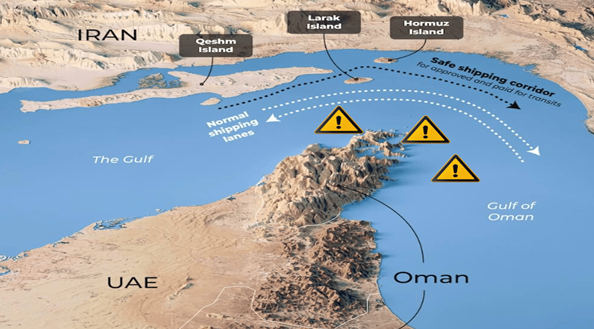
The United States responded within hours. U.S. announced strikes on “Iranian command centers, air defense sites, missile and drone capabilities, and coastal surveillance facilities,” including targets in Bandar Abbas, Qeshm Island, Chabahar, and around Tehran itself. The strikes extended into Semnan province, home to Iran’s ballistic missile production and space program. Ten days have seen the US hammer southern Iran with hundreds of strikes night after night. The strategy seems to be to shut down the economy by cutting off Iran’s largest commercial port and primary maritime gateway — Shahid Rajaee — from the rest of the country. Located in the city of Bandar Abbas, the vast Shahid Rajaee port complex — whose quays stretch over 5 miles — handles over 85% of Iran’s shipping container traffic and, crucially, over half of its oil trade.
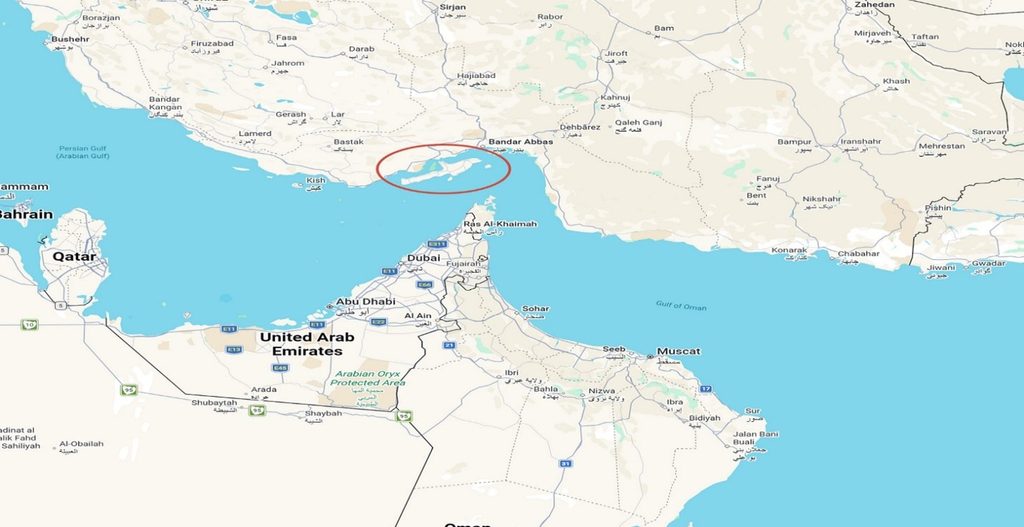
Which explains why the US has concentrated its firepower on critical roads, tunnels, bridges, rail freight hubs and over 100 telecommunication towers in an attempt to sever Bandar Abbas and the wider Hormozgan province from the rest of Iran. In addition, the Darkhovin nuclear power plant — under construction — and the Iranshahr airport, alongside other civilian infrastructure — telecoms, industrial parks, quays — across Iran’s southern coast have been hit. But perhaps of more import, is that Iran’s largest island in the Persian Gulf — Qeshm Island — has been pummeled by repeated missile strikes; recall that its water desalination plant was previously hit. That it lies barely a mile from the Iranian mainland opposite Bandar Abbas at the mouth of the Strait of Hormuz, where the Gulf of Oman narrows into the Persian Gulf, tells you immediately about its strategic value. Little wonder, then, that speculation has intensified around Washington’s plans for a ground operation on Qeshm. If so, it is difficult to see how even a limited ground operation or raid could be carried out without a prohibitive butcher’s bill, particularly given that Iran could strike any invading US force from deep within its hinterland. With these strikes, the US plan aimed to potentially lock out Bandar Abbas from neighboring regions. Now we see the Iranians have already unblocked many of the tunnels and are repairing the bridges as well. t should also be noted, that one likely vector of a potential “ground operation” plan for the US would not be to seize Bandar Abbas itself, but rather cut off Bandar Abbas in order to isolate nearby Qeshm island. Qeshm is likely entirely supplied by the Bandar Abbas region, and thus cutting off that region from itself being resupplied from the outside would isolate Qeshm, making it vulnerable for the taking. Iran responded directly to Trump’s challenge to Iranian control of the Strait by striking two vessels with missiles and a third with an armed drone. A fourth Qatari-owned tanker, laden with liquefied natural gas, was set ablaze, forcing its crew to abandon the stricken vessel. These Iranian ripostes provoked Trump against Iranian targets; to reimpose sanctions on the Islamic Republic’s oil exports; and to revoke the MoU framework he had signed with what he called the “Iranian scum” — this ending the ceasefire.
The Eviction Begins
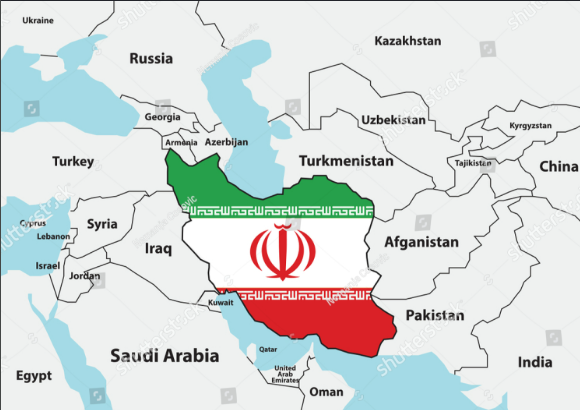
Iran’s retaliation was not limited to the strait. It was systematic, widespread, and aimed at the very architecture of the U.S. military presence in the Middle East. On July 16, 2026, Iran launched missiles and drones against U.S. military bases in Jordan, Kuwait, and Bahrain.
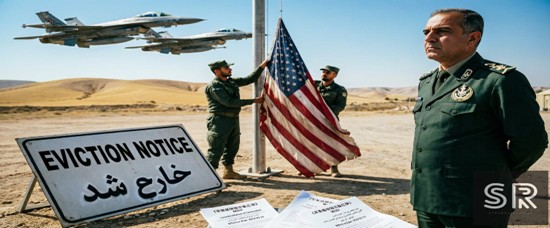
The damage is extensive. Iran had inflicted damage “far worse than publicly acknowledged,” hitting dozens of targets including warehouses, command headquarters, aircraft hangars, satellite communications infrastructure, runways, high-end radar systems, and dozens of aircraft. The cost of repairs was expected to run into the billions of dollars and will take many years to setup.
The Relocation
As the strikes continued, the Pentagon began a quiet but significant reassessment of its military posture. U.S. officials were relocating military functions, moving command facilities underground, and reducing America’s footprint in parts of the Gulf. The evacuations had actually begun before the July escalation. Prior to March 2026 conflicts, the U.S. had evacuated most personnel from bases in Kuwait, Saudi Arabia, Bahrain, Qatar, the United Arab Emirates, Oman, and Iraq. The Al-Udeid Air Base in Qatar, a quarter-century American presence, was largely emptied.
At least 17 distinct U.S. military sites across seven countries (Bahrain, UAE, Qatar, Kuwait, Jordan, Iraq, Syria) have been attacked, evacuated, or had personnel and hardware relocated. Saudi Arabia’s Prince Sultan Air Base was additionally targeted by Iranian missiles. The most symbolically significant evacuation was Al-Tanf, Syria, fully vacated in February 2026 and later claimed as destroyed by the IRGC. The most strategically consequential relocation is the concentration of U.S. refueling aircraft at Ben Gurion Airport in Israel, which analysts view as a precursor that could draw Israel directly into the conflict if Iran targets those facilities. American bombers and military aircraft were relocated across the region. This shift carried its own risks. As launching pads in Jordan, Bahrain, Kuwait, and Iraq came under unsustainable Iranian drone and ballistic missile attack, Israel will soon become the main remaining viable staging ground for operations against Iran. Iranian officials warned that if U.S. aircraft launched strikes from Israeli territory, Iran would have no choice but to target Israeli bases, a development Israel had thus far sought to avoid. The actual casualty count is “far more” than the Pentagon has publicly admitted, describing a “casualty cover-up.”
The Infrastructure War
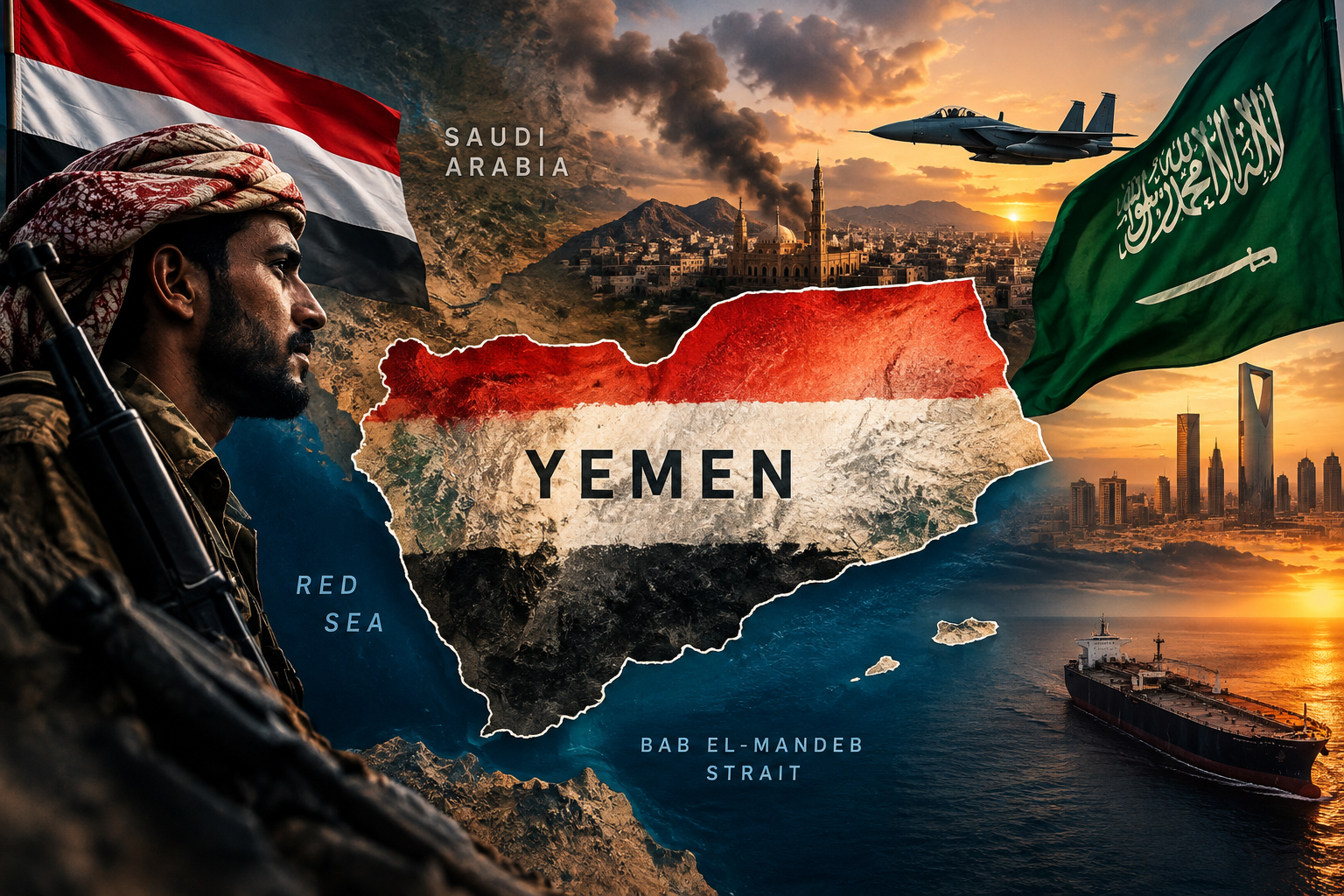
The conflict expanded beyond military targets. Iran began striking critical infrastructure across the region, including desalination plants, water processing facilities, and electrical grids in Kuwait. The disruption extends beyond Hormuz. Yemen’s Iran-backed Houthi militia announced a naval blockade against Saudi Arabian ports on July 20, threatening vessels loading or discharging cargo in the kingdom. The Bab el-Mandeb Strait, the Red Sea gateway that carries approximately 6.2 million barrels daily, now faces potential closure as well. Saudi Arabia had already absorbed weeks of Iranian attacks on its energy infrastructure. The Manifa and Khurais production facilities were affected, cutting the kingdom’s production capacity by 600,000 barrels per day. A pumping station on the vital east-west Petroline pipeline was hit, reducing pumping capacity by 700,000 barrels per day. Refineries in Jubail, Ras Tanura, Yanbu, and Riyadh were targeted, directly impacting exports of refined products. The Petroline, Saudi Arabia’s 750-mile network connecting the Gulf to the Red Sea, had become the kingdom’s economic lifeline after the Strait of Hormuz was choked off. U.S. military stockpiles are running low after months of sustained operations. Iran, meanwhile, was climbing the escalation ladder, matching and exceeding American strikes with each wave. With no ceasefire on the horizon and both sides blaming the other and threatening to go up the escalation ladder.
Hyperinflation and Slow Supply Chain. The world had not yet experienced the full economic shock of the conflict because many countries had tapped into strategic petroleum and gas reserves, and because oil had continued flowing from Russia and Saudi Arabia through alternate routes. But those reserves were depleting. The window to restock after the Islamabad MOU was signed had proven insufficient. Now, that Iran blocked the Bab-el-Mandeb through its Houthi allies, the oil supply issue becomes more important. The ripple effects through fertilizer, transport, and food prices would trigger a global inflationary spiral.
The Iran-Israel Showdown. If Israeli bases became the primary launchpad for strikes on Iran, Iranian doctrine dictated that those bases must be targeted. Israeli officials had thus far resisted full participation in the anti-Iran campaign, but geography and military necessity were pulling the region toward a confrontation that would dwarf the exchanges and firepower that will make of February and March 2026 conflict a child’s play.
Regional Fragmentation. The collapse of state authority across multiple theaters was already visible. Lebanese factions were fracturing along sectarian lines, with tensions rising between the Lebanese army and Hezbollah. Saudi Arabia will be prepared to attack the Houthi of Yemen to protect its export routes. Iranian-backed Shia paramilitaries are positioning near Kuwait’s borders, which could mean potential invasion. Iraqi Kurdish factions were calculating which side offered the highest bid for their loyalty. While the world grappled with inflation and slow supply chain paralysis, and scarcity of aviation fuel, the Middle East’s post-colonial borders are straining under the pressure of proxy armies, sectarian militias, and collapsing state institutions.
The story continues in Part 2