
The story continues from Part 1.
Yemen Strikes West to the Red Sea Islands
From Mokha to Bab al-Mandab: YAF’s Strategic Advance Takes Shape
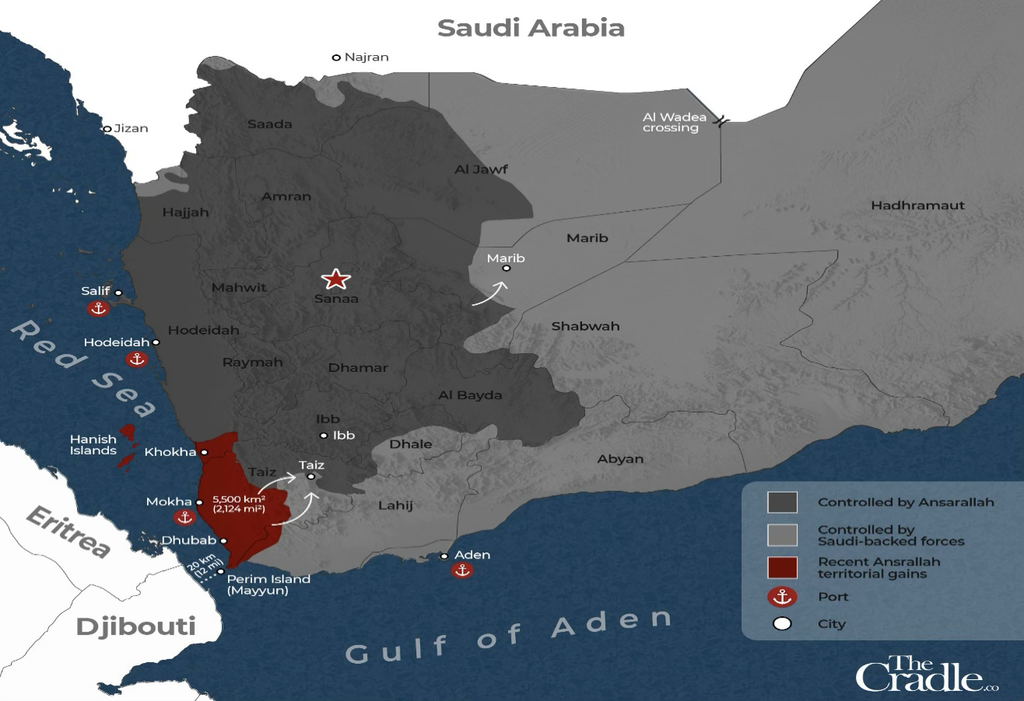
What changed hands this month was a stretch of coastline that sits astride one of the world’s most important maritime choke points — a position that took a Saudi-Emirati coalition close to three years to build the first time around, and that Sanaa has now retaken in a matter of days.
Bab al-Mandab, Arabic for the “Gate of Tears”, connects the Red Sea with the Gulf of Aden and the Indian Ocean, making it one of the world’s most critical maritime choke points. Whoever commands Bab el-Mandeb holds decisive leverage over the trade routes linking Asia, the Arab world, and Europe.
Commanding those coastlines starts with commanding the port that sits closest to them. That is what makes Mokha, rather than any other point on Yemen’s western coast, the city worth fighting over.
Long before it was a military prize, al-Mokha was the reason the word “mocha” exists at all. From the 16th to the early 18th century, the port was the dominant hub of the world’s coffee trade, exporting beans grown in Yemen’s cooler highlands and carried down to the coast by caravan.
Yemen is the birthplace of coffee.
The city and port of al-Mokha sit roughly 75 kilometres north of the narrowest passage of Bab al-Mandab. Consolidating control over Mokha and the surrounding coastal districts gives Sanaa solid territorial depth along the western coast, extending its reach south from Hodeida and removing what had been the principal base of forces aligned with the Saudi-backed government.
Territorial depth is only the first layer of what changed on September 10. The second is what that depth actually gives the YAF control of.
Control of al-Mokha and the coastal districts around it grants the YAF immediate coastal radar oversight, launch positions, and monitoring vantage points over the shipping lanes running through Bab al-Mandab.
What the YAF took control of on the ground was not empty coastline. Mokha’s port was rehabilitated by the UAE, and its airport runway, along with military camps including Khalid Camp Base and Jabal al-Nar Camp — the command headquarters for forces on the western coast — had served for years as the operational backbone of a Saudi-Emirati-backed military presence.
Oil tankers are the most visible traffic through Bab al-Mandab, but they are far from the only cargo that makes the strait matter.
Beneath the surface, roughly 15 to 17 subsea fibre-optic cable systems carry a substantial share of the data traffic connecting Europe, East Africa, the Middle East and South Asia, making the strait a crucial node for global digital communications as much as for shipping.
With Bab al-Mandab now in the hands of Sanaa and the Strait of Hormuz under Tehran’s control, the Axis of Resistance gains more leverage in facing Western imperialist agendas in the region.
The two chokepoints do not hand Iran and Yemen a single, unified command over the flow of West Asian energy, but they give aligned forces complementary pressure points on both maritime gateways serving the Arabian Peninsula, at a moment when Saudi Arabia has increasingly rerouted its own crude exports through the Red Sea to avoid the risks at Hormuz.
The Saudi-Emirati coalition-backed forces took Bab al-Mandab and Mayyun Island in October 2015, seven months after the start of the Saudi war.
Mokha did not fall until January 2017, some 22 months later, in an operation known as “Golden Spear”, while Houthi forces did not reach the outskirts of Hodeida until June 2018, more than three years into the war. The push stalled there after the Stockholm Agreement froze the front in December 2018.
The Houthis retained Hodeida.
The UAE turned Mokha into the principal base of the UAE’s “National Resistance Forces”, growing the force from an initial nucleus of roughly 3,000 fighters to about 20,000, while stationing its own officers there, paying salaries, supplying weapons and vehicles, and rehabilitating the port itself.
On Mayyun Island, construction on a military runway began in late 2016, was abandoned, then resumed years later. By 2021, satellite imagery showed a completed 1.85-kilometre runway with three hangars, and the UAE sought a 20-year lease over the island.
Saudi Arabia picked up much of the financing after the UAE’s drawdown, continuing to pay the “National Resistance Forces” and fund reconstruction projects in the area.
The entry of the Houthis into the western coastal areas was widely welcomed by local residents, and the operation was described as an internal one aimed at restoring Yemeni sovereignty over Yemeni territory.
Retired Brigadier General Ali Abi Raad, a strategic military expert, said that the Saudi/Emirati coalition’s defeat was the product of a fundamentally divided force, describing the roughly 30,000 fighters and the “Giants Brigades” as a patchwork of Salafist, jihadist, and mercenary elements with Arab and Western nationalities among them, and no single unified command.
The collapse also exposed the weakness of the Saudi coalition’s military structure.
The anti-Houthi camp was never a single army. The National Resistance, Giants Brigades, Nation’s Shield and Taiz formations have different command structures, political loyalties and foreign patrons.
Years of Saudi and Emirati involvement produced a coalition capable of holding territory, but not necessarily one capable of conducting a unified defence when several fronts failed simultaneously.
The Presidential Leadership Council also appeared to be deeply divided, with competing factions pursuing different political and military priorities. The defeat deepened that fracture.
The crucial point is not that the factions suddenly began fighting each other in open combat. Rather, the battle revealed a more damaging problem: the groups that were supposed to form one defensive system did not possess a sufficiently integrated command to absorb a rapid Houthi breakthrough.
That matters because the Houthis did not defeat one army. They defeated the mechanism through which several armies were supposed to reinforce one another.
The Houthis, by contrast, are described as having built their campaign over two full years since the start of their operations in solidarity with Gaza, developing domestically manufactured missiles and drones that gave them a decisive edge.
The Houthis themselves provided their most comprehensive account on September 11.
Their military spokesman, Brig. Gen. Yahya Saree, said the operation had driven Saudi-backed forces from six districts in Taiz and Hodeida covering roughly 5,400 square kilometres.
He said seven military formations comprising 38 brigades and around 100,000 mercenaries had been attacked and claimed that hundreds of mercenaries had been killed, wounded or captured.
The statement also said Houthi forces had freed prisoners held by the proxy army and had carried out 32 operations against Saudi aircraft, allegedly bringing down nine.
Saudi Arabia’s Response
The Saudi response has exposed another vulnerability.
Riyadh entered the crisis with nominally strong external backing, but when the situation deteriorated, most of that support remained political.
In practical terms, Saudi Arabia has faced the battle largely through its own forces and the Yemeni formations it already supports.
That gap between diplomatic solidarity and military action may be one of the most consequential lessons of the offensive. The Saudi-led coalition that fought in Yemen for years no longer exists in its old form.
The UAE has reduced its direct role, Pakistan is reluctant to turn a new defence pact into an immediate war commitment, Turkey is prioritising diplomacy, and the U.S. is unwilling to open another direct front while concentrating on Iran.
Riyadh therefore has allies, but not an immediately available coalition capable of simply restoring the old balance by force.
The Houthis now have a much stronger position along Yemen’s Red Sea coast and at the entrance to Bab el-Mandeb.
That changes their military options.
From positions near the strait, they can monitor and threaten maritime traffic with missiles, drones and other systems while making any future Saudi or Yemeni ground offensive considerably more difficult.
The group has already said that most shipping will remain safe, but that Saudi vessels remain subject to its blockade, effectively turning the waterway into another instrument of pressure against Riyadh.
The political value may be even greater.
The Houthis had spent years presenting themselves as a movement capable of surviving Saudi military pressure. They can now portray themselves as having defeated a Saudi-backed coalition on one of the most strategically important fronts in Yemen.
That enhances their domestic standing, strengthens their bargaining position and gives them a powerful argument in any future negotiations: territorial facts have changed, and the group now controls assets that cannot easily be ignored.
Meanwhile, for the Houthis, after years of surviving pressure, now they finally possess something they have rarely enjoyed at this scale:
Initiative.
The Wider Middle Eastern War
The war across the Middle East gets reported as separate pressures on the United States.
The Houthis in Yemen.
The fight over Hormuz.
The strikes on Saudi oil.
The standoff with Iran.
Put them on one map and they stop looking separate.
Iran and its allies are raising the cost and the exposure of the American position across the whole region at once, on fronts that feed each other.
One of those fronts has barely been covered, and over time it may matter more than any single strike.
Iran Is Collecting American Weapons
Iran is not only fighting American weapons.
It is collecting them.
A destroyed weapon is gone. A captured one gets taken apart and copied.
That is the difference, and it is the part the administration has real reason to worry about.
A recovered system is a live blueprint. Its materials, its design, its guidance — all of it can be studied and reproduced.
Iran is unusually ready to do this because it has spent forty years under sanctions building a domestic arms industry for exactly this purpose: to make what it was denied.
Its drone and missile programmes already run heavily on reverse-engineered foreign technology. Hand that industry an intact American system and you have handed it a shortcut — years of American research and development, captured off a battlefield at a fraction of what it cost to invent.
Over time, every American system lost in this war becomes a potential Iranian system in the next one, deployed against Iran’s neighbours and against the Central Command units posted across the region.
Iran’s forward network is not just bleeding CENTCOM through attrition. It is harvesting American technology off the battlefield and feeding it into an industry built to copy, cheapen, and mass-produce.
That is what makes this phase more dangerous than the strike-by-strike coverage lets on.
Missiles run out.
Captured knowledge does not.
It stays, and it comes back built cheaper and in greater numbers.
The Gulf states and the American forces in the region are not only facing the Iranian and Houthi weapons that exist today. They are facing the next generation of them, informed by American designs pulled out of the sand and the seawater.
Captured Surveillance and Radar Systems
The Yemeni Army (AnsarAllah) announced that it had captured advanced maritime surveillance systems and coastal radar equipment that it says had been supplied to the region by the United States, Israel, and the United Arab Emirates.
The captured equipment includes:
- Thales CoastWatcher 100 (France): An AI-based coastal surveillance system designed to integrate sensor data and automatically analyse suspicious maritime activity at ranges exceeding 150 nautical miles.
- Hensoldt Spexer / Kelvin Hughes SharpEye (Germany): A maritime radar capable of filtering sea clutter and detecting small targets, including fast attack boats, inflatable boats, and floating naval mines, even in rough sea conditions.
- ELM-2226 ACSR Mobile Coastal Radar (Israel): A coastal radar manufactured by Israel’s ELTA Systems, described as having Low Probability of Intercept (LPI) capabilities designed to reduce detection by electronic warfare systems.
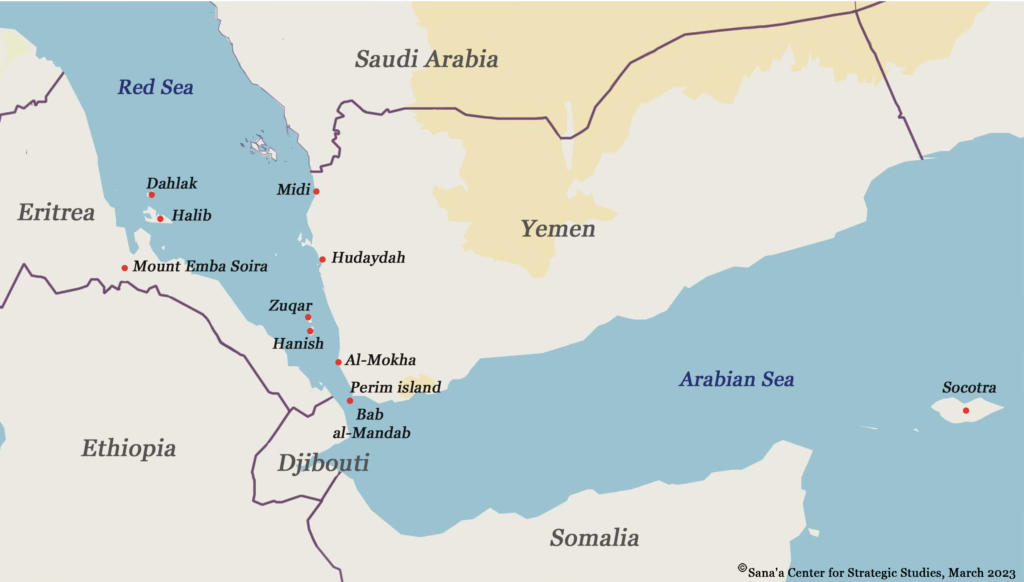
- Blue Whale submerged sensor systems: Underwater sensor systems reportedly deployed around the Hanish and Zuqar islands.
- Long-range EO/IR thermal camera systems: Electro-optical and infrared surveillance systems equipped with laser range-finding capabilities for identifying vessels and monitoring coastal movements during nighttime operations.
Besides the above, Ansarullah have captured large numbers of military vehicles, ammunition and more.
They scored a huge booty.
The War Reaches Saudi Arabia
Sanaa answered by targeting bases, airports, and other critical sites across Jizan, Najran, and Asir — territories once owned by Yemen.
The strikes reached King Khalid Air Base in Khamis Mushait, King Fahd Air Base in Taif, the airports of Abha and Jizan, and Aramco-linked facilities.
The Yemeni leadership cast the campaign in the language it has used throughout the renewed confrontation:
“Siege for siege” and “escalation for escalation.”
On the eastern front, Sanaa’s forces targeted two nodes connecting Saudi territory with eastern Yemen.
Pressure around Marib coincided with attacks on Jawf, while strikes on supply routes and rear bases further burdened the forces defending the approaches from the east.
Ansarullah regularly attacks Saudi military build-ups and energy sites, as well as the fuel depots at Riyadh airport.
The Islands Take-Over
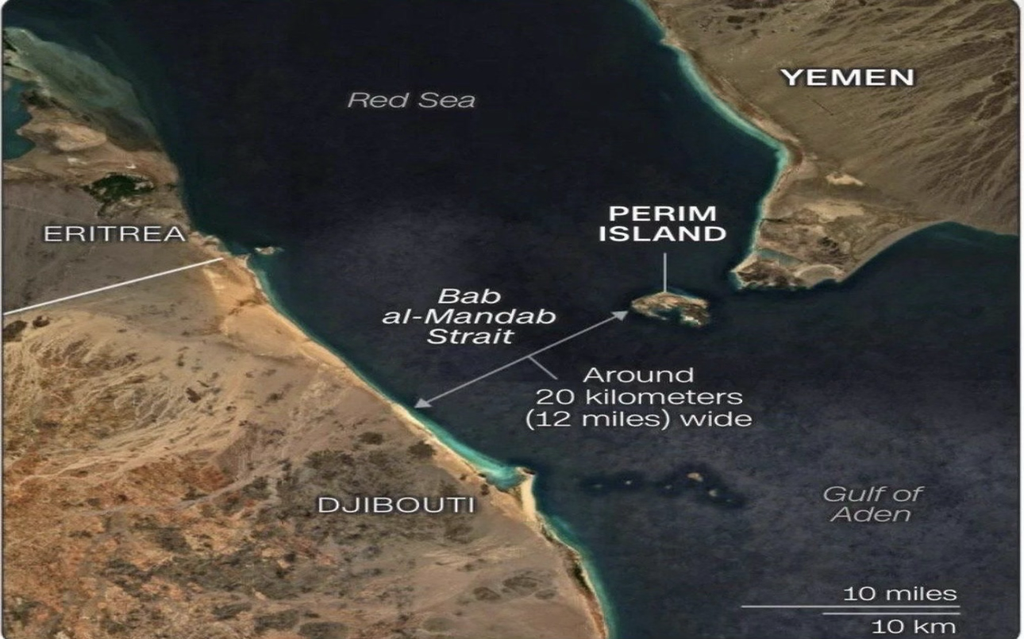
The Coast Reopens Under Sanaa
Sanaa’s forces say the operation began west of Taiz and ran for roughly a week before expelling Saudi-backed formations from broad stretches of the coast.
The speed of the attack left the Saudi coalition with little time to establish a second line, while the movement’s control of inland junctions made an orderly withdrawal increasingly difficult.
After consolidating its gains, Sanaa reopened roads that years of war had closed.
It also announced a general amnesty for fighters who laid down their weapons, followed by an amnesty of prisoners, and the surrender of units on Greater and Lesser Hanish and Jabal Zuqar.
The reopening of the routes also served a military purpose, allowing Sanaa to move forces and supplies across a coastal system that had previously been divided by coalition positions.
The captured infrastructure reveals the scale of the coastal system that fell.
It includes command and operations centres, the Saudi headquarters in Mokha, Mokha Airport, Emirati-built airfields and military runways, naval bases, coastguard positions, and several camps.
The YAF also took radar and surveillance sites, air-defence positions, Mayyun’s runway, and installations on the islands opposite the coast.
The YAF took Mayyun, also known as the island in the centre of the strait that divides the shipping passage into two channels.
Its western shore lies roughly 20 kilometres from the African coast.
Possession of the island places Yemeni forces inside the waterway itself, astride one of the most important maritime links between the Red Sea and the Gulf of Aden.
The advance continued across the offshore chain.
Sanaa seized Zuqar and consolidated control over Greater and Lesser Hanish, extending its military presence from the mainland into the Red Sea.
The result is an arc running from Hodeida through Mokha and Dhubab to Mayyun, Zuqar, and the Hanish islands.
For years, this same geography served as one of the Saudi–Emirati coalition’s most valuable military holdings in Yemen.
Its loss now places the coalition’s former coastal infrastructure in the hands of its principal enemy.
A force positioned around its channels can shape vessel movements, insurance premiums, freight costs, and supply schedules without formally closing the passage.
The strait can serve as leverage if the US or Israel attacks another state within the Axis.
Footage showed Saudi and Emirati vehicles and weapons abandoned across the front, among them tanks, artillery, hundreds of armed vehicles, and Kornet and TOW missiles.
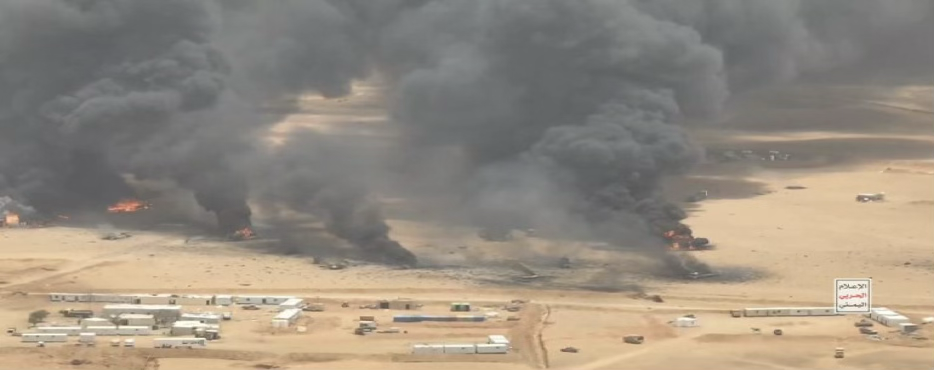
The March Toward Marib
With the western coast largely secured, attention has shifted to Marib.
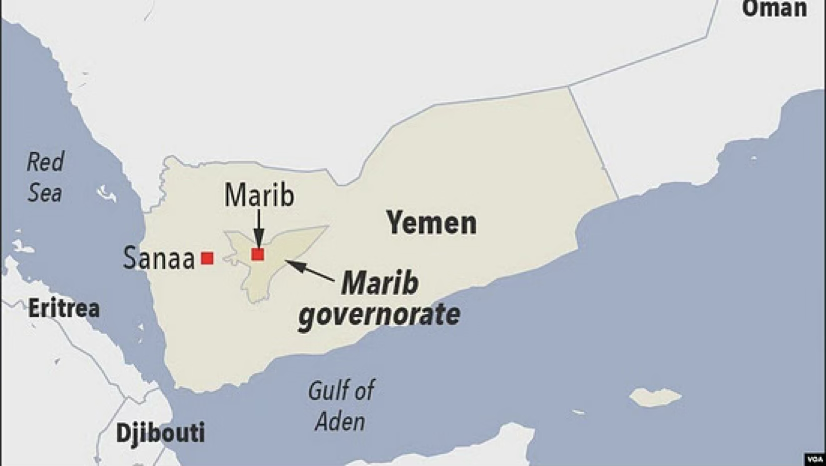
The province remains the main military and political centre for Saudi forces in northern Yemen and sits beside the country’s most important oil and gas infrastructure, including the Marib–Jawf fields, the Safer complex, and Marib refinery.
Its capture would remove Riyadh’s largest remaining forward base from the northern war and deprive the Saudis of the hub from which it has managed fronts stretching from Jawf to Shabwa.
It would also open an eastern line for Sanaa toward the energy-producing districts and the Saudi border.
Yemen’s leadership intends to continue what it calls the liberation of the country and the removal of Saudi-backed forces.
In that sequence, Marib is the next destination in the campaign to complete Sanaa’s control over the northern governorates.
Yemen has oil reserves of some 3 billion barrels. Its current production sits at around 15,000 barrels per day. Its past peak production reached some 400,000 barrels per day in the early 2000s, before the war brought this down.
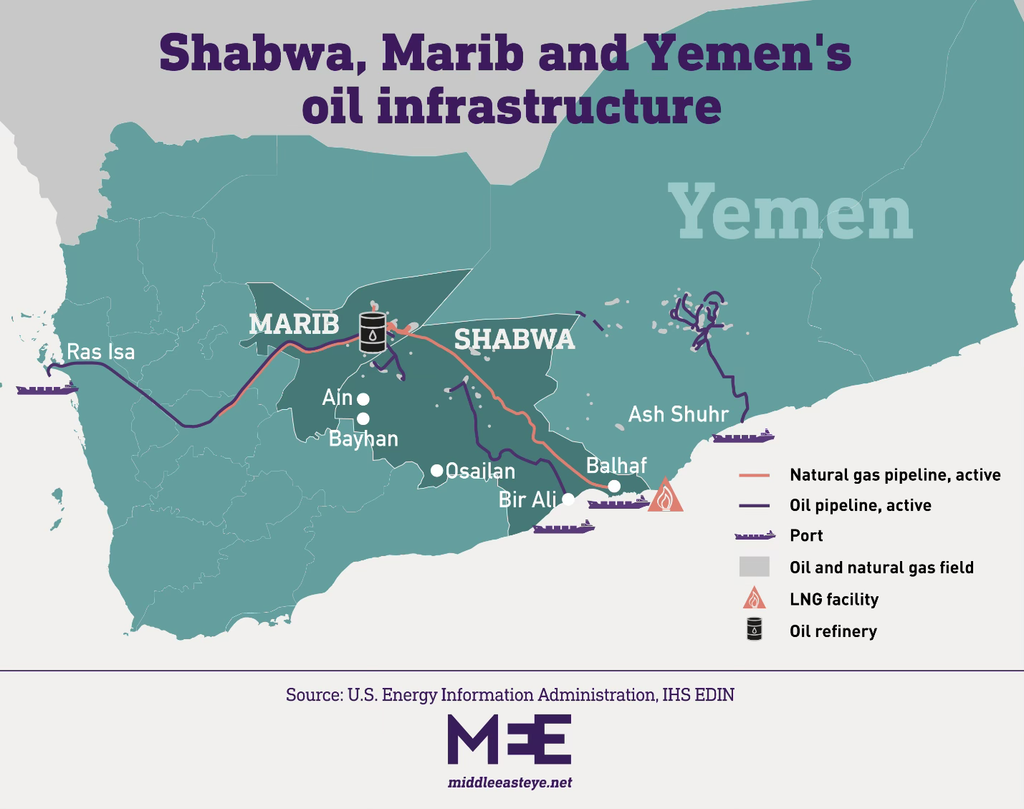
The next phase will pursue the liberation project.
Sanaa will accept no foreign military presence on Yemeni soil and will confront any new Saudi buildup.
Continued war and siege will drive the cost still higher for Saudi Arabia.
The latest escalation could have been avoided had Riyadh accepted the roadmap agreement, while the strikes inside the kingdom and the recapture of Mokha Airport came as a direct answer to the renewed war.
Saudi Arabia must now pay the political and economic price of the conflict, rather than continue trying to settle it on the battlefield.
In just 36 hours, the military architecture established by the Saudi-led coalition along Yemen’s western coast since the start of its 2015 war collapsed in succession.
This has been, undoubtedly, the most brilliant military plan executed in the 21st century.
Yemen Has a Rich Target Bank to Strike at Saudi Assets
This strategic reality demands an examination of the target bank that Yemen has at its disposal — a catalogue of Saudi infrastructure whose disruption could impose unacceptable costs on Riyadh.
Eastern Province Energy Heartland
The foundation of Saudi Arabia’s economic and military power lies in the Eastern Province, where the world’s most concentrated network of hydrocarbon infrastructure has been developed over decades.
The coastal concentration of infrastructure means that a relatively limited number of strikes could achieve disproportionate effects by targeting the nodes through which Saudi Arabia’s economic lifeblood flows.
Aviation Infrastructure as a Strategic Target
Water and Power Infrastructure
Saudi Arabia’s dependence on seawater desalination for its municipal, industrial, and agricultural water supply represents a critical vulnerability that Yemeni forces could potentially exploit.
The destruction or disruption of even a single major desalination plant could create a humanitarian crisis affecting millions of Saudi citizens and residents.
The disruption of electricity supply would affect not only civilian life but also the operation of oil-processing facilities, desalination plants, airports, and military installations, creating cascading failures throughout the economy.
Industrial Cities and Economic Diversification Projects
The targeting of these projects would demonstrate that the Saudi government’s ambitious development plans cannot be insulated from the consequences of its military aggression.
Pipelines and Internal Logistics Network
The railway network, including the North-South Railway and Haramain High-Speed Railway, supports the movement of goods, passengers, and military logistics across the kingdom.
The disruption of rail transport would complicate the deployment of forces and equipment while imposing costs on the civilian economy.
The road network, while extensive and redundant, includes bridges, tunnels, and other choke points whose damage could disrupt the movement of military supplies and personnel.
The internal logistics network that supports Saudi Arabia’s military aggression against Yemen includes supply depots, ammunition storage facilities, and maintenance centres located throughout the kingdom.
The targeting of these facilities would degrade Saudi Arabia’s ability to sustain its offensive operations while imposing direct costs on its war-fighting capability.
The comprehensive target bank that Yemen has established represents a strategic deterrent whose credibility is reinforced by the demonstrated capability to strike high-value assets with precision.
The maritime blockade on Saudi shipping through Bab el-Mandab, coordinated with Iranian control over the Strait of Hormuz, represents a dual-pronged strategy that could effectively sever Saudi Arabia’s energy exports and essential imports simultaneously.
The Ansarullah movement has declared a siege-for-siege policy, matching the restrictions and military pressure imposed on Yemen with corresponding measures against Saudi Arabia.
The economic consequences of Yemen’s retaliation would be devastating for Saudi Arabia and the global economy.
The closure of Bab el-Mandab would send oil prices soaring to $200 per barrel, triggering inflationary pressures worldwide and potentially tipping vulnerable economies into recession.
The combined closure of both Bab el-Mandab and the Strait of Hormuz would sever two of the world’s most critical energy arteries, creating a global transportation crisis of catastrophic proportions.
The Saudis would bear the primary burden of these consequences, as their export-dependent economy would be paralysed by the inability to ship oil or import essential goods.
The target bank they have assembled represents a strategic reality that the Saudis ignore at their peril.
We don’t see how Saudi Arabia can prevail in this showdown.
We don’t see how they will do any better than the US and Israel have done in their misguided war with a virtually impregnable Iran.
Houthis are clearly in the driver’s seat, and nothing short of a massive ground invasion is going to change that.
And — the fact is — Trump is not going to launch a ground invasion.
So, how does this end?
If conventional weapons are not going to do the trick, then they’ll probably resort to more lethal alternatives.
And that is something that should concern us all.
Yemen has survived 12 years of bombing on its infrastructure and people.
Because it is a poor country, it does not have modern infrastructure. Thus, it provides a poor target bank for the Saudis/US/Israeli militaries.
Whatever valuable targets there are in Yemen have long been bombed by the West.
AnsarAllah’s Unperceived Advantages Against Saudi Arabia
AnsarAllah enjoys many unperceived advantages in its conflict against the “wealthy”, westernised Saudi Kingdom.
AnsarAllah responded to the breach of the truce with an asymmetric move that seized the west coast of Yemen — some 5,400 square kilometres taken in 11 days — the key ports and the main strategic islands in the Red Sea.
These actions were well planned and grounded in the experience of the Peninsula’s unique geography and societal make-up.
A quick glance at the map will show that Saudi and Yemen are situated in a “box” — the centre of which is desert, with its sides comprised of rugged mountain ridges sloping downwards to the Red Sea.
AnsarAllah now holds the highlands above the Red Sea approaches and has also seized the key Red Sea islands that control access to the Bab al-Mandab Strait.
In some respects, the geography mirrors the rocky hillside Iranian terrain that frames Hormuz.
This geographic reality suggests that Saudi air power will not dislodge agile mountain tribesmen from their mountain redoubt.
AnsarAllah, in any case, fights asymmetrically.
Having been at war for over a decade, they fight as they “flit” from place to place, and their military infrastructure is buried — in a practice similar to that of Iran.
They now control the Bab al-Mandab Strait with artillery, thus saving their more sophisticated drones and missiles for other purposes.
In short, Saudi or Western air power will avail little.
There are no obvious targets; AnsarAllah fighters are like mirages moving hither and thither.
Plus, like Iran, Yemen will build concealed dugouts in the mountains overlooking Bab el-Mandab and target any hostile ships in the sea.
The initial Saudi offensive against AnsarAllah was a debacle; with no central command, no plan and unprepared logistics, the assault collapsed.
Houthi attacks and strikes now seem to be focused on Jizan and Najran Provinces — currently part of Saudi Arabia.
These are two of three rich, fertile Yemeni provinces seized by Saudi Arabia in the 1930s.
Undoubtedly, Yemen wants them back.
The US Threatens to Attack Yemen
On the 13th, at the American embassy in Muscat, arranged by Oman, days after the group seized Yemen’s Red Sea coastline, a meeting took place between US representatives and the Houthi delegation.
The Houthis informed American officials that they don’t intend to attack US vessels and remain committed to the ceasefire deal reached with Washington in May 2025.
There were also reports that the Houthis pledged not to target Israeli or other commercial ships, even though all of this was originally tied to Gaza.
In other words, the Houthis are telling Washington, in writing, that everyone gets a pass except Saudi Arabia.
This is a bilateral war with Riyadh that the Houthis are actively insulating from becoming anything broader.
It was a brilliant strategy:
“Divide your enemies, such that only one enemy is attacked, while the others stay on the sidelines.”
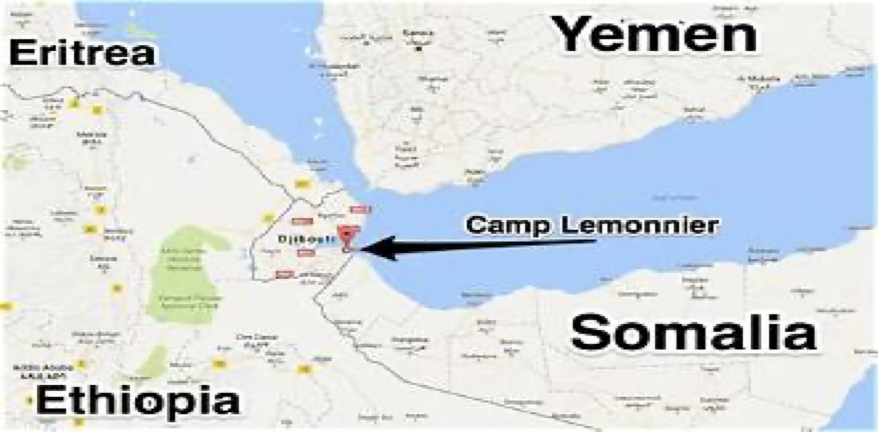
Then Trump threatened to attack the Houthis again, at which point the Houthis warned Trump that if the US attacks Yemen, then the first target will be the super-strategic base in Djibouti known as Camp Lemonnier.
From this base, the US conducts ISR on the entirety of the Horn of Africa, as well as conducting near-daily airstrikes on Somalia.
For the Pentagon, holding onto the base is more important than attacking Yemen, in a futile attempt to change the equation.
Trump backed off.
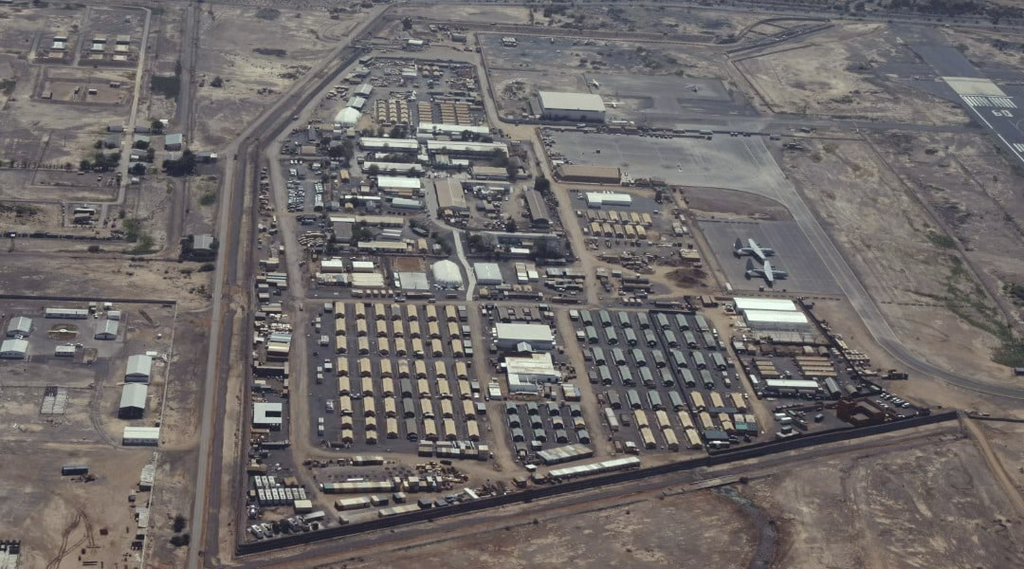
Camp Lemonnier, Djibouti.
2 thoughts on “Yemen’s Liberation Begins (Part 2 of a 4-part Series)”