The Wildberries Attacks
After weaving another impressive made-for-TV spectacle by hitting Russian retail chain Wildberries with his patented kerosene drones, Zelensky was stupefied to discover that Russia was able to strike back thrice as hard. Thus, an escalation spiral ensues. And as we’ve seen in Iran, when a nation is not able to inflict a military defeat on its foe, the only relevant option is to begin harming civilian interests in an attempt to topple the political order via social pressure and societal discontent. In reality, Russia continues to move forward in key areas on the frontline with Zelensky’s patented kerosene diversions not doing much to halt the advance. Reports also indicate that many of the Russian refineries struck weeks and months ago are now being brought back into operation, with Russia’s fuel issues improving in many regions. The same goes for the “Crimea isolation” operation, which failed with Russia already having created redundant roadways and repaired damage to allow normal traffic and cargo flows to resume. Now as of this writing, Ukraine has hit another Wildberries warehouse, the third so far. What is the point of this sudden targeted campaign? Why has Ukraine switched from hitting refineries to what is effectively Russia’s “Amazon”? We can only assume it has to do with the fact that the strikes on refineries did not produce the expected result.
Refineries with a combined processing capacity of about 40 million tons of oil per year have returned to fuel sales on the St. Petersburg Exchange after scheduled and emergency repairs. Some of the large refineries, which account for more than 45 million tons of processing annually, have not yet resumed participating in the trades. Russia’s state oil and gas revenue, which accounts for around a fifth of total budget income, is seen rising by 60% in July from the same month a year ago thanks to the increase in global oil prices. Having failed to stop Russia’s military, having failed to impact the Russian economy, it seems Ukraine is now going for the lowest hanging fruit of cheap attempts to incite civil unrest against Putin. But the danger, as always, is that instead he will ignite more fury against Ukraine amongst Russians, hardening—rather than dissipating—their resolve. The Wildberries offensive has, by some estimates, caused around $1.3 billion in economic damage to Russia, exclusively in terms of its impact on the domestic retail activities of Wildberries and those online retailers it supported. It had zero impact on either Russia’s ability to wage war, or the determination on the part of the Russian government and Russian population to wage war.It has caused Russia’s new reactive-based counterstrike strategy, which has devastated Ukraine’s drone-based defense industrial base, to expand its target deck to include Ukrainian analogs to Wildberries. Russia is now on track to destroy all major commercial logistics centers in Ukraine, actions which, when combined with its ongoing destruction of Ukrainian thermal power plants and gas distribution stations, will leave Ukraine without electricity and heat in the coming winter—and no supplies.
Ukraine, in short, will become uninhabitable. Unlivable. Ukraine is being squeezed on every axis simultaneously — its fuel network dismantled from the air, its front line compressed from the north, and its strategic depth eroded from the center. At this pace, the question facing Kyiv is no longer how to hold the line, but which lines are still worth holding. The European powers face civilizational exhaustion: demographic collapse, energy deindustrialization, and the progressive loss of productive capacity to Asian competitors. Ukraine with Russia, like the US with Iran, gambled and lost. To lose the game with Iran is to face short-term embarrassment. To lose against Russia is to die. Ukraine is already marked for death. Ukraine started this war, egged on by the US and Europe. Russia will finish it on its own terms. Europe has no defense against conventional and hypersonic missiles. The damage to its economy will be devastating. NATO, EU and E3 leaders are taking Europe down a path to be ready for war by 2030. In the light of European bellicosity, Russia could decide to start this sooner. If so, the US would be unwilling to fight Russia on Europe’s behalf. Unable to defend itself against Russia’s conventional ballistic/hypersonic missiles, Europe would suffer a rapid defeat and very high military losses. Even after suing for peace, destruction of Europe’s energy system would plunge Europe into economic crisis.
“Go Bolder!“
Last week, Putin gave a speech to the Russian Duma. He told them that he just finished pinning medals on soldiers, when one of them told him to “get more bolder”. So, Putin asked the Duma if he should become more boulder in destroying Ukraine. The answer was a resounding yes. When asked a second time, the answer was even louder. Putin got his answer and mandate from the Russian people. Now, see how Russia begins a new campaign of grinding Ukraine down. Putin had no problem slowing down the battlefield aspect of the war in order to balance the economic and social aspects of the broader struggle for the long haul, betting on the fact that Europe would not be able to outlast Russia politically and economically. Now that the economy is very stable, Putin has increased the volume and lethality of attacks on Ukraine. The intensity of Russian strikes on Ukrainian rear areas continues to grow. On the night of July 19, Russian forces struck the factory and warehouses of UKRTAC, a major Ukrainian manufacturer of military equipment including body armor for the armed forces. The company’s development director called the attack ‘the greatest tragedy in the company’s history.’ Virtually all defense plants in Kyiv have now been hit. The country’s largest logistics center was completely destroyed by fire — a complex comprising two warehouses totaling more than 80,000 square meters. Russian forces, meanwhile, continue their systematic offensive across multiple sectors. A more aggressive start to the summer campaign had been anticipated, but several factors held it back. Ukrainian medium-range strike drones have severely disrupted Russian logistics, making large-scale force concentration difficult. As a result, Russian command has avoided major offensive operations – with the exception of the capture of Konstiantinovka – while continuing to maintain the initiative through numerous tactical advances across the front. Taken together, the picture that emerges is one of a conflict entering a grinding but consequential phase: Ukraine’s defense industrial base is being steadily dismantled from the air, while Russian ground forces methodically chip away at the front, exploiting local opportunities as they arise. These strikes were a direct response to Ukraine’s escalating attacks on the Russian-controlled Crimean Peninsula and on shipping in the Black Sea. The energy sector is the second priority. Russian-guided drones are destroying gas stations and fuel depots daily across regions bordering Russia. Serious fuel shortages have already emerged in the Kharkiv, Sumy, and Chernihiv oblasts, where lines of hundreds of vehicles have formed at gas stations. If the strikes continue, major regional centers risk grinding to a near standstill. Even fuel depots meant to serve the retail fuel network are being demolished on a daily basis. It appears that the Russian leadership held back from this escalatory threshold for as long as possible. Kyiv first launched systematic, large-scale strikes against Russia’s fuel sector, triggering real fuel shortages on Russian soil. Moscow is evidently determined to return the favor — and then some — with the goal of paralyzing life in the border regions and major urban centers. Cities like Kharkiv, Chernihiv, Sumy, and Dnipro are the logistical pillars on which the entire Ukrainian military effort rests. By targeting these cities, Russian command hopes to break the Ukrainian army not on the battlefield but from within through logistical collapse.
Today, no one in the US or EU cares about that Ukraine is not far from bankruptcy, they are even not interested in having Ukraine join NATO and that is because it was really never about Ukraine. Ukraine is to only fulfill one purpose: to separate Russia from Europe, to prevent Russia from trading with European countries, but above all – to get rid of Europe’s energy dependence on Russia. The reported likely reassignment of General Sergey Surovikin, who at one time was commander of Moscow’s war effort in Ukraine, would signal a massive offensive going forward. The had previously served in Chechnya and Syria during conflicts that had overtones of proxy wars similar to Ukraine.
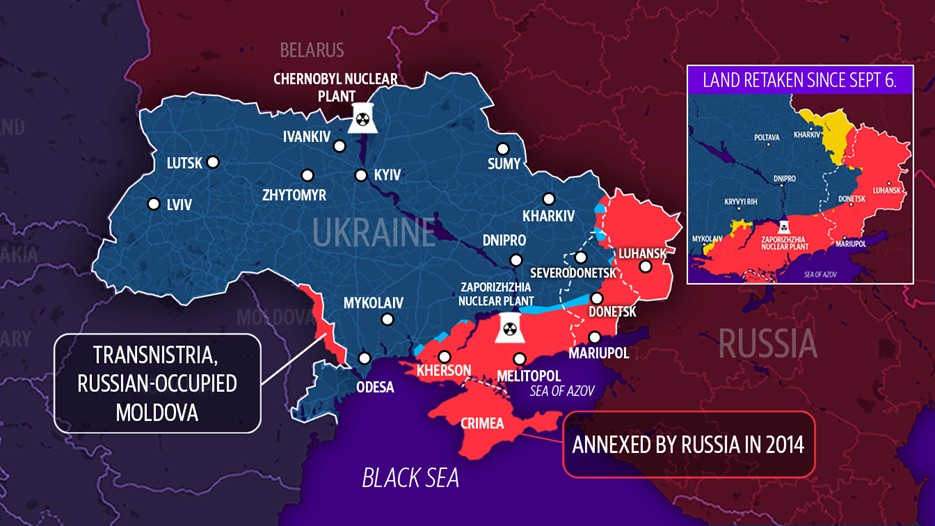
Military Situation In Ukraine On July 19, 2026
- Russian strikes destroyed targets in Sumy, Kharkiv, Zaporizhzhia, Dnipropetrovsk, Kherson, Kyiv, Odesa, Chernihiv, Poltava, Mykolaiv, and the DPR.
- According to the Ukrainian Air Force, on the night of July 18, Russian forces attacked Ukraine with 10 Zirkon hypersonic anti-ship missiles, 25 Iskander-M ballistic missiles, three Oniks anti-ship missiles, three Kh-59/69 air-launched missiles, and 125 UAVs;
- Russian forces struck Radioniks LLC (producer of missile control systems and MiG-29 components), and 5 other key plants in the Kyiv region;
- Russian forces struck a large rear supply depot in the Dnipropetrovsk region;
- Russian forces struck an energy facility in Snihirevka, Mykolaiv region;
- Russian forces struck workshops of enterprises and a railway locomotive near Volnyansk in the Zaporizhzhia region;
- Russian forces struck a UAV workshop, a fuel depot, a military warehouse, five fuel tanks, and cargo vessels in the Odesa and Yuzhny ports;
- Russian forces struck two vessels north of Zmiinyi Island, used by the AFU for UAV and drone boat launches;
- Russian forces struck the energy systems in Chernihiv;
- Russian forces struck a gas processing plant near Andriivka in the Kharkiv region;
- Ukrainian losses amounted to approximately 1,500 troops over the past 24 hours.
Military Situation in Ukraine And Ukrainian Attacks On Russian Territory On July 22.
- Russian strikes destroyed targets in Sumy, Kharkiv, Zaporizhzhia, Dnipropetrovsk, Cherkasy, Kherson, Odesa, Kyiv, Mykolaiv, Chernihiv, Zhytomyr, Poltava and the DPR;
- According to the Ukrainian Air Force, on the night of July 22, Russian forces attacked Ukraine with 216 UAVs, one Iskander-M ballistic missile, and three Kh-59/69 guided air-launched missiles;
- Russian forces struck port infrastructure, fuel tanks, and a Nova Poshta logistics center in Odesa;
- Russian forces struck two vessels in the Black Sea and a Neptune-2 battery near Kovalivka;
- Russian forces struck a 330 kV substation in the settlement of Zarudye in the Sumy region;
- Russian forces struck two gas stations in Dnipropetrovsk region;
- Russian forces struck Shebelinka gas processing plant in Kharkiv region;
- Ukrainian losses amounted to approximately 1,270 troops over the past 24 hours.
- During the past night, Russian air defenses destroyed 242 Ukrainian drones in the rear regions;
- Russian air defenses intercepted UAVs in the Belgorod, Bryansk, Kaluga, Kursk, Leningrad, Novgorod, Orel, Pskov, Rostov, Ryazan, Smolensk, Tver, Tula, Moscow, Krasnodar, Stavropol, Republic of Crimea, waters of the Sea of Azov and the Black Sea;
- Ukrainian drones struck an oil depot in Armavir and a Wildberries logistics center in Krasnodar, Krasnodar Krai;
- Ukrainian drones struck a Wildberries logistics center in Nevinnomyssk, Stavropol Krai;
- Ukrainian forces attacked Shebekinsky district in Belgorod. Two civilians were killed;
- Ukrainian drones struck power supply facilities in Crimea.
We see from these daily reports just how much Ukraine is losing daily. Besides hard to replace equipment and fuel, Ukraine is losing soldiers at the rate of around 10,000 EVERY WEEK!
Top general reveals details of Russian capture of key Ukrainian stronghold-Konstaniinovka
Kiev lost some 13,500 troops in its failed attempt to defend Konstaninovka, Moscow’s operations chief has said earlier this month. This report below is for July 2026. Kostantinovka was Ukraine’s “most fortified” stronghold, guarded by some 15,500 troops, most of whom have been eliminated during the Russian operation to capture the city, Colonel General Sergey Rudskoy who is the head of operations at the Russian General Staff, said that throughout several weeks of intense fighting for the strategic city, the Ukrainian military lost around 13,500 troops, 14 tanks, 283 armored fighting vehicles, 1,400 cars, 200 field artillery guns and eight multiple rocket launch systems. Why is Konstantinovka important? The general described Konstantinovka as “a major industrial and logistics hub, which is the key to the last remaining stronghold of the Kiev regime in Donbass – the Kramatorsk-Slavyansk agglomeration. Overall, Konstantinovka was the most fortified and echeloned area in the Ukrainian military’s defense belt.” The government in Kiev, which understood the strategic value of Konstantinovka, had started creating an extensive defense system in and around the city back in 2014.The fortifications around the city consisted of two defense lines, which included more than 150 km of trenches and anti-tank ditches with three rows of artificial obstacles and mine fields. Inside Konstantinovka itself, Kiev’s troops prepared more than 80 obstacle areas and over 50 fortified defense hubs, located at a train station, a technical college, 12 school buildings, 25 kindergartens and ten factories. The city had been guarded by 45 Ukrainian battalions, equipped with various Western-supplied arms, including heavy weaponry.“Despite all the measures taken by the Ukrainian military’s command, the Ukrainian units failed to hold on to the city under pressure from the Russian troops,” the operation’s chief stressed.
6 Why doesn’t Russia “attack Europe” in Response?
There are many possible reasons, but one of the more likely ones is that Russia is confident of its ability to finish off Ukraine without needing to escalate toward WWIII. The Russian MOD’s internal figures presumably see Ukraine collapsing long before Russia is immiserated to the point of needing some “desperate” nuclear strike or attack against NATO. Russia will avoid attacking Europe. To do so, would mean falling into the trap set by London and the US, by exercising Article 5 of NATO, that if “one country is attacked, then all of NATO would come to its aid. Secondly, Europe is collapsing on itself without Russia doing a thing. Were Russia to attack, the Rothschild media would turbo-charge propaganda to unite its populations against Russia. For Putin, it’s wiser to let the populations turn on their governments than turn on Russia. NATO wants every member-state to turn into a war economy, with each nation paying a hefty 5% of GDP to host US bases used to attack the proverbial “existential threats” to the Empire: Russia, Iran, China. Follow the money. There’s no money. None of these member-states can possibly meet the 5% threshold of GDP for weapons. None of them are stupid enough to believe they need to go to war against China. They are absolutely clueless on how to react to the massive strategic defeat Iran inflicted on the US. Today the drone campaign has failed to accomplish its goals. Kiev is trying to manage a collapsing front and needs manpower and equipment to hold the line. Expect Ukraine to continue failing on both fronts—the drone campaign and on the frontline. These developments have brought two major developments out of Russia: Firstly, senior Kremlin aides, notably Yuri Ushakov, Putin’s spokesman, have been saying over the past week the ‘spirt’ of the Anchorage summit, and its concomitant understandings, “have effectively collapsed” — “The U.S. abandoned them”. Moscow no longer expects those commitments to be honored and the conflict will be decided through military means. Lavrov went further, describing the Alaska meeting as an American “ploy” designed to buy time for Ukraine to rebuild and rearm its military — essentially likening them to the Minsk Accords that similarly were mounted as a deceit. Deputy Foreign Minister Sergei Ryabkov said: “We also see Washington’s line moving closer to the most rabid anti-Russian policies pursued by the U.S.’s closest European allies – namely, the UK and France”. This represents a huge strategic shift. Russia no longer seeks a relationship with Washington, though contact with DC will continue.
Today Russia has reached a decision point in its conflict with the collective West.
The Pentagon defines the term “decision point” as “a geographic place, specific key event, critical factor, or function that, when acted upon, allows commanders to gain a marked advantage over an adversary or contribute materially to achieving success.” The more curious thing is Russia’s attitude towards the United States. It was the United States which served as the architect of policies which have been in place for decades designed to weaken Russia and undermine to the point of collapse the government of Russia. And yet Russia continued to hold out hope that the United States—especially under the second iteration of the Trump administration—could somehow serve as a force of rational stability when it came to managing both Europe and Ukraine. The Anchorage Summit of August 2025 was the culminating moment of this conceptualization, manifesting itself into the so-called “Spirit of Anchorage”. Within months, however, it became clear that the “Spirit of Alaska” was another deception designed to buy time to build up Ukrainian military capability by lulling Russia into a false belief that a negotiated peace was possible. But the United States, like Europe, never intended for the Ukrainian conflict to end in anything other than a strategic Russian defeat. The Russian leadership has now come to embrace—however belatedly—this uncomfortable reality. The ultimate question that now confronts Moscow is how to act on this realization. Russia finds itself in a situation where it enjoys considerable strategic advantages over Ukraine and its Western partners across a broad spectrum of disciplines—diplomatic, economic, military, and social. Russia, despite the concerted efforts of the West, is not isolated. Just the opposite, in fact. In many ways, Russia enjoys a stronger geopolitical posture today that it did before the initiation of the Special Military Operation if for no other reason that the conflict has exposed the nefarious nature of the so-called “rules-based international order”, imposed by the 2 families. The Russian economy has withstood the challenges posed by economic sanctions and direct military action, and today is recognized by most of the world as a viable place to do business, as witnessed by the $84 billion in direct investments accrued during the Saint Petersburg International Economic Forum this past June.
Russia today possesses a large, well trained, well equipped, combat hardened military backed by a robust and capable defense industry which is not only prevailing in an extended war of attrition against Ukraine and the collective West, but has positioned itself to defend Russia’s interests in the Baltic, Arctic, Pacific, and the totality of its periphery, as well as defend and advance Russian interests in the Middle East and Africa. The advances in Russian technology—especially in ballistic missiles—has provided a qualitative edge which, when combined with Russia’s quantitative strengths, makes Russia a very formidable force. Russian society continues its long and painful divorce with the West. Having sown the seeds of societal unrest, the western intelligence services themselves embarked on one of the largest information operations ever conducted, flooding the mainstream western press and social media outlets with an endless stream of stories designed to promote the narrative of Ukrainian victory and Russian defeat. This narrative would then be injected into Russian social discourse through agents of influence—witting and unwitting alike—whose access to the Russian information market helped magnify a message of Russian weakness, corruption, and indecisiveness designed to collapse Russian public confidence in their leadership.
And now we find ourselves at the Point of Decision. The information operation against Russia was backed by three supporting campaigns. The first was the transition by Ukraine and its western supporters away from the traditional battlefield, where Russia was prevailing, to a drone-based war designed to create the perception of Ukrainian strength and, in doing so, the prospect of Ukrainian victory. This campaign was not just designed to influence the Russian liberal elites, but also to build a foundation of political support within Europe and the United States for increased economic and military support for Ukraine. The drone campaign served as the fuel that energized the G-7 meeting in June where pledges of economic support were made, as well as the NATO summit in July where similar pledges were made regarding military support. The fact is the ability to turn the promises of the G-7 and NATO into reality are as illusory as the drone campaign upon which these promises were promulgated. The European “Big 3”—Germany, France and the UK—are led by leaders who political viability is measured in months. This, of course, is one of the primary goals of the Western intelligence services through their information operation. The “Russia must attack Europe” thematic has taken hold in Russia, promoted by western observers and analysts as well as Russian commentators and influencers. But it has been resisted by the Russian leadership, simply because to attack Europe would undo all of the advantages Russia has accrued diplomatically, economically and militarily and, in doing so, potentially trigger the very collapse of Russian society the West has long sought. A Russian attack on Europe would also create a window of viability for both the failing European leadership and the flagging US-NATO alliance. A Russian attack on Europe is exactly what the Western intelligence seek. Today Russia finds itself confronted by a confluence of events that has opened up a window of strategic opportunity. Ukraine is being squeezed on every axis simultaneously — its fuel network dismantled from the air, its front line compressed from the north, and its strategic depth eroded from the center. At this pace, the question facing Kyiv is no longer how to hold the line, but which lines are still worth holding. The Ukraine drone campaign has failed. This conclusion has manifested itself in the political turmoil inside Ukraine as Zelensky fired the person responsible for this campaign and instead appeared to favor a reallocation of resources to the Ukrainian ground forces. The Ukrainian public, which had embraced the narrative of Ukrainian drone dominance as the magic formula to bring an end to the war, have taken to the streets in protest, creating an unprecedented political crisis for Zelensky. It is time, instead, for Russian action. Russia has initiated a massive bombardment of Ukraine using missiles and drones. Ukraine has no defense. Neither Europe nor the US are in a position to change this calculus in the near term. Every Russian missile attack underscores the false narrative of the Western intelligence information operation. Every Russian missile attack exposes the impotence of Europe. Every Russian missile attack underscores the dysfunction of NATO and the US. And every Russian missile attack shreds the credibility of the residual Russian liberal elite.
Russia’s recent attack on Kiev revealed a catastrophic situation as Ukraine no longer has any Patriots to stop Russian ballistic missile attacks. Russia will soon go up from producing 70 ballistic missiles per month to over 150. This will leave Ukrainian infrastructure devastated as no current hope even exists for solving the Patriot problem, and no other available system besides the Patriot can engage Russian Iskanders. Zelensky and his people know this, which is why now at the tail end of his failed 40-day operation he has begun begging Russia for a new ceasefire: when Ukraine first started having ostensible “successes” of some kind on the battlefield. The idea is that, any time Ukraine seems to advance or push Russian forces back, it is generally a short-lived effort where Ukraine expends a lot of saved-up resources and reserves which leads to immediate repercussions after the PR window closes. Zelensky strategically chose to use all his reserves of man and materiel for the 40-day PR operation to simulate some kind of initiative for a ‘victorious’ Ukraine so that allies could pressure Putin into ceasefire and negotiations. But now that this has failed, Ukraine is experiencing a precipitous front-line collapse where Russian troops have begun advancing faster than any recent time. Russian advances have been massively picking up on every front, from the north Kharkov-Sumy region, to Kupyansk and the Slavyansk-Kramatorsk agglomerate, down to the intersections of Zaporozhye-Dnipro-Donetsk. Multiple outlets report that Ukraine’s diplomatic and political gusto is waning. With Starmer gone, Macron facing his last year in office, and Germany’s Merz dangling by a thread, the club of Ukraine’s main cheerleaders is in tatters—and the future looks ever-less promising. As time goes by, it seems more and more that Putin’s strategic patience may be paying off, as the old hostile European structures slowly collapse like an iceberg calving into the sea.
But now, there is an even more dire threat on Ukraine’s horizon. Over the last two days there has been a surge of articles confirming something we ourselves had posited here just a few weeks ago: that Russia’s new Rassvet satellite system (known as the “Russian Starlink”) is in fact already being positioned to allow some limited capabilities over Ukraine—and those capabilities will soon grow rapidly. Given what we’ve seen with the trajectory Ukraine is on politically, diplomatically, and now militarily with the acceleration of Russia’s offensive campaign, the destruction of infrastructure and landlocking of the country via Odessa, as well as the surge in Russian ballistic missile production and total paucity of Patriot interceptors, we can say that 2027 could be a hallmark year that will see Ukraine truly begin to buckle, if not completely collapse. It has been the main narrative for some time now that Ukraine’s major advantage over Russia has been the Starlink system. Not only has Russia increasingly learned to jam Ukraine’s own Starlink, and is progressively rolling out more of the systems able to do this, but now Russia is beginning to field its own analog. By 2027 we may see Ukraine’s Starlinks increasingly ineffective, while Russia’s own begin to dominate, rescinding the last of Ukraine’s battlefield advantage amidst an unprecedented production overdrive of ballistic missiles which will be slamming daily into Ukrainian cities. In conclusion: Ukraine’s outlook has never been worse, and Zelensky is left with nothing more than cheap tricks of increasingly targeting Russian civilians to “irritate” the public against Putin.
This is the Decision Point.
Keep raining missiles down on Ukraine. Confront the Ukrainian people with the inevitability of their collective demise should they continue to fight. Confront Europe with the emptiness of their promised support. Confront the US and NATO with their collective military impotence. And confront the Russian people with the inevitability and necessity of a decisive Russian victory. The collective West set itself up for disaster by engaging in perfidy designed to destroy Russia. Policies based upon lies and deception cannot succeed if the lies and deception are exposed in time for an effective counter to be implemented. Russia has exposed the lies and deception of the West. Now it simply needs the courage to act. This is the Decision Point that will decide the future of Russia. The vulnerability of Ukraine to Russian missile and drone attack has presented itself. Russia now needs to exploit this vulnerability with every resource it has. Ukraine will be defeated. Europe will collapse. And the United States will be left holding an empty bag. There’s no need to strike Europe. Simply darken the skies of Ukraine with Russian missiles and drones.
7 Geopolitical Pivots
What Is Geopolitical Pivot? Geopolitical Pivot is a significant shift in a state’s foreign policy orientation, often necessitated by evolving global power dynamics. This strategic reorientation can redefine alliances, influence trade routes, and alter defense strategies. As nations navigate complex international landscapes, geopolitical pivots can reshape regional stability and global power structures, making them crucial for policymakers and analysts. Why Does Geopolitical Pivot Matter? Geopolitical Pivot matters because it can redefine global alliances and power balances. Such shifts influence international trade, security arrangements, and diplomatic relations. Pivots are important in understanding the fluid nature of global power structures. These shifts often reflect deeper economic, military, and cultural transformations. Pivot states are states that possess military, economic or ideational strategic assets that are coveted by great powers. Pivot states are caught in the middle of overlapping spheres of influence of multiple great powers. A change in a pivot state’s association has important repercussions for regional and global security. States that find themselves in overlapping spheres of interest are focal points of where great power interests can collide and also clash. We shall do 2 examples to illustrate this point- Ukraine and Iran. For Ukraine, we refer to a passage from the book “The Grand Chessboard” by Zbigniew Brzezinski (published in 1997), on page 46:” Ukraine, a new and important piece on the Eurasian chessboard, is a geopolitical pivot because its very existence as an independent country helps to transform Russia. Without Ukraine, Russia ceases to be a Eurasian empire. Russia without Ukraine can no longer strive for imperial status, but it would then become a predominantly Asian imperial state. However, if Moscow regains control over Ukraine, with its 52 million people and major resources as well as its access to the Black Sea, Russia automatically regains the means to become a powerful imperial state, spanning Europe and Asia. Ukraine’s loss of independence would have immediate consequences for Central Europe, transforming Poland into the geopolitical pivot on the eastern frontier of a united Europe”. So, there we have it. The failure by the West to make Ukraine a part of the West has failed. Russia still remains a Eurasian power.
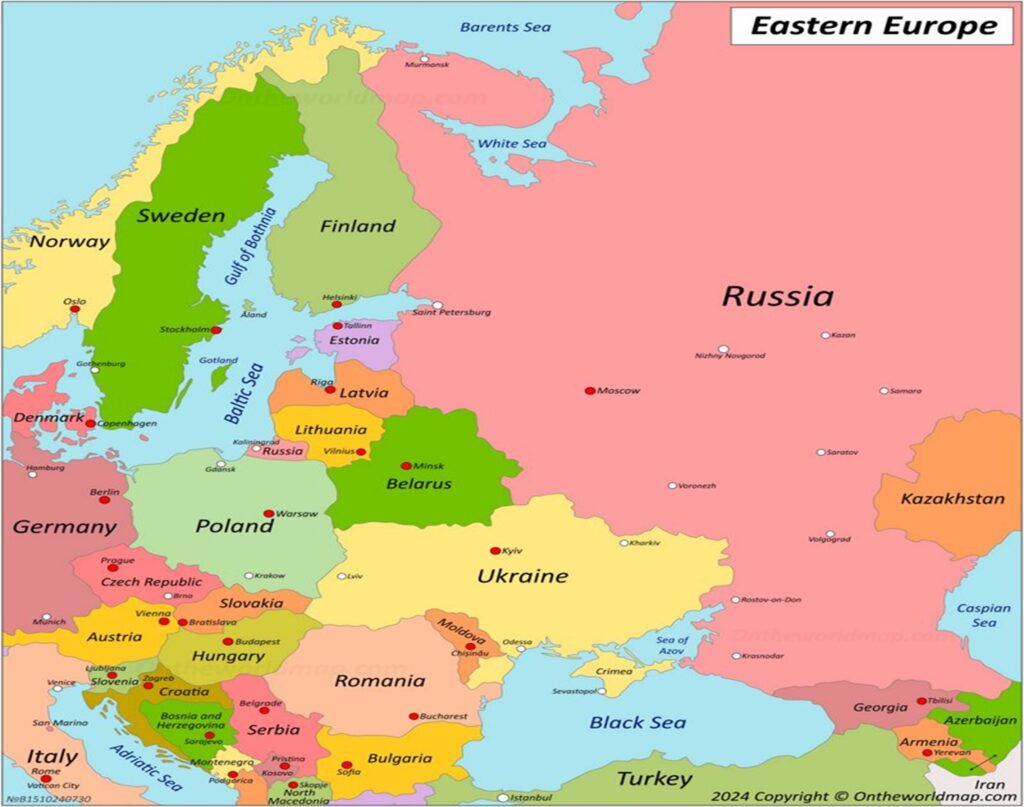
Then, comes Iran. Iran is even more important as a pivotal state. Were it to align with the West, it would give both families the means and the leverage to use Iran to restart the Sunni-Shia sectarian warfare. It can also be used to destabilize Russia’s soft southern underbelly. It can also stop all oil sales to America’s chief economic rival – China. It can also be used to control Hormuz, and use Hormuz to gain an even greater control over global oil flows. It can also be used to solidify the Petro-dollar system. The reverse also holds true. For these reasons, Iran is a more strategic prize for the Rockefeller family. With that, the understanding of why the US has sub-contracted the Ukraine project to London makes more sense.
8 Russia & Israel – Warfare Comparisons
As most readers recall, we have stated many times that the 2 families and their corresponding networks-of-power in Europe (the Rothschilds) and America (the Rockefellers) are joined at the hip in fighting both Russia as well as Iran and the Axis of resistance. In both cases, the Rockefeller Empire wants control of all oil everywhere. This includes Russia and Iran. While we know the Rothschild aim is to grab more land to satisfy their Talmudic mandate in the Middle East. With respect to Russia, the Rothschild family has inherited their ideological ancestors (the Pharisees/Talmudic crowd) grudges. One is a historical grudge dating back 1,000 years; the other is revenge on the Russian nationalist forces headed by Russia, who cut-down to size the Rothschild billionaire puppets in Russia. Below, is a report showing the mindset of the 2 families against their rivals.
The Russian Model: Calibrated Attrition
In May 2026, the global geopolitical landscape has been redefined by two divergent philosophies of violence. On one hand, the Russian Federation continues its slow-motion, attritional grind in Ukraine—a conflict defined by a cautious management of Western “red lines. Putin runs it as a “special military operation”, essentially a “limited war”. On the other, Israel has pivoted to a model of high-intensity “scorched earth” warfare in Gaza and Lebanon, characterized by the systemic dismantling of urban life and a total disregard for escalation control. The contrast is not merely tactical; it is a fundamental disagreement on the utility of restraint in 21st-century warfare. While Russia treats escalation as a dial to be calibrated, Israel treats it as a barrier to be smashed. By mid-2026, the Russian approach in Ukraine has evolved into a “war of attrition.” After the failed “lightning strike” of 2022, Moscow retreated into a doctrine of “strategic patience”. Russia utilizes a “creeping barrage.” Unlike Israel’s structural “urbicide,” Russian destruction is often a byproduct of a slow-moving front line. It has studiously avoided targeting civilian population and minimized losses of civilian lives. In its recent retaliation of Ukraine’s drone attack on Starobilsk Pedagogical College that killed 21 sleeping teenage girls in Luhansk on May 22, Russia launched over 600 missiles and drones at Ukraine that led to the death of only 4 Ukrainians. Clearly the attack was not designed to maximize civilian casualties. Russia’s “restraint”—failing to flatten Kyiv or Lviv entirely—is a calculated political choice. Moscow still harbors a sense of “Slavic brotherhood” and considers Kyiv the mother of all Russian cities and the birthplace of its statehood (Kievan Rus). It is trying to avoid “scorching” Ukraine into a rubble heap. Russia also wants to project an image that it is a responsible major global power.
However, Moscow’s sentimentality is not reciprocated by Ukraine, which has attacked Moscow with increasing frequency and stricken Russia’s deep interior, including its nuclear triad. Ukraine has also repeatedly stricken strategic early warning radar installations that form the backbone of Russia’s nuclear defense network, including the Voronezh-DM ultra-long-range radars. These radars have nothing to do with tactical battlefield operations in Ukraine. Their primary job is to scan the horizons for incoming nuclear ICBMs to prevent a surprise nuclear first-strike from NATO. Russian refrain contrasts starkly with the swift and decisive retaliatory actions taken by the Iranians against Israel and US vassals in the Gulf after they were attacked.
Comparing Russian refrain with Israeli and Western abandon
In stark contrast with Russia, the Israeli campaigns in Gaza and Southern Lebanon represent the Dahiya Doctrine taken to the extreme. The Dahiya Doctrine is an Israeli military strategy involving the deliberate application of disproportionate force and the destruction of civilian infrastructure to deter hostile groups. The core tenets of the Israel doctrine are – Disproportionate Force: The military explicitly rejects a symmetrical response, intentionally using overwhelming fire power to cause massive civilian devastation. The nature of force used by the two actors reveals a deep philosophical divide. Russia’s strategy is “sieved”, filtering territory through a slow attritional grind where destruction is a consequence of the front’s movement. Its end goal remains territorial annexation and political integration of a population it considers as “kin.” Israel’s strategy is “scorched earth”, focusing on the erasure of urban viability to ensure the enemy can never return. Its end goal is the removal of any perceived existential threats, often resulting in depopulation. It doesn’t consider Arabs as neighbors to live with but squatters to dispel and exterminate, if needed. Israel has given naked dismissal to any international laws, laws of war, and humanitarian considerations in its prosecution of the genocidal wars. It wears its pariah status as a badge of honor and cannot care less if everyone considers it an outlaw and a terrorist rogue state. As Putin stated: “If Russia had committed even 10 % of the atrocities Russia had done against Israel in Gaza, NATO would be at Moscow’s doorsteps right now. The West has taught us that human rights begin and ends at Israel’s borders”. Both the Russians and Iranians have essentially “tired” of Trump’s wiles and the US’s tricks in general, preferring to take their chances in war than continue the pointless bad-faith negotiations with a deceitful and decrepit American regime: More and more experts have remarked on the “limits of American power”, which have been so blatantly revealed of late. But this is not simply military power, it is soft power, political influence, and even everything in between. America has simply lost its time-honored credibility because its appointed agents of persuasion have increasingly been a most shoddy and reprehensible lot; you’re only as good as your global representatives. Knowledge, after all, is Power. And the best antidote to ignorance is fact-based truth. Our next and last article on the RIC series is Iran, titled “Iran & The Grand Chessboard “Stay tuned till then. Be pleasantly surprised when you discover the losses suffered by the US and its pathetic attempts to hide them from the world.