
1 David’s Corridor
2 Israel-America’s attack dog
3 Target Iran
With the failure of Israel to complete the takeover of Gaza – whose main aim is to consolidate the offshore gas fields into one single consortium. Israel was happy to do the job for the Rockefeller Empire as it dovetails into their own agenda- de-populating Gaza- by any means necessary. But, the Palestinian Resistance stopped this move by the 2 families. So, this strategy had to be tweaked. With Trump becoming Rockefeller’s new manager for its US division, a new strategy for the Middle East has emerged. Remember, we have discussed certain aspects of this in our article, Fortress America. The Rockefeller plan is to blow up Eurasia at three points on the chessboard – Ukraine, China and Iran. A successful execution of this plan will eliminate all of its economic and geopolitical rivals – Europe, China, and Russia. In this way, it could buy time to make the Fortress America plan to become a reality. It would be a replay of World War 2. At the end of this war, all of America’s rivals were destroyed, its economic landscape shattered. With its own infrastructure intact, and being the “victor”, it dictated terms on how to govern the world for generations. This period (1945-2020) has come to an end. America, in the quest for global power and domination, has destroyed its economy, finance and society with its own hands,
A key point to control the future destiny of its rivals and itself is the Middle East-both for its resources, wealth and geographical location, America needs to blow up the Middle East. Gaza was just the “starters”. The main course is Iran. Here are the key points in order to bring about the intended destruction of the Middle East:-
- Take down the Assad government in Syria
- Break-up Syria into several parts, so it doesn’t pose a threat to this new plan
- Turn Lebanon into a “friendly” nation by eliminating the influence and power of Hezbollah
- Form a “barrier” on the eastern region of Syria in order to block Iran or Iraq or any of the Arab oil exporters from exporting oil and gas to the Eastern Mediterranean-see map below
- Only allow “friendly” nations (Qatar) to export its oil and gas through Syria
- While this is being accomplished, then create a pretext for war with Iran
- And, finally, close down the Straits of Hormuz
- About 102 million barrels of oil are produced daily, of which around half is exported/imported. Exports through the Hormuz amount to some 18 million BPD- roughly 35 % of global exports. Were this to happen, then oil prices will shoot up, causing a global recession, followed by a collapse of the Western financial system. Banks shut down. Chaos emerges. At this point, the Rockefeller Empire will roll out the “ICE NINE” scenario. Then, its game over.(link here for the ICE NINE article).
- China’s oil imports are closed. China goes into recession. Maybe the CIA will unleash some color revolutions. This may force China to intervene militarily in the region to secure its oil.
- Finally, the turmoil could topple western-friendly monarchies and Arab governments.
- Whichever way one wants to look at these issues- it all points to chaos in the region, while America is safe-protected by two oceans- or so it thinks.
This are the plans of the Rockefeller Empire. And fully explained in our previous article called “Fortress America” (see here for the link).
But, the ultimate target of the Rockefeller Empire is Iran.

1 David’s Corridor – a Corridor of Influence and Blockage
David’s Corridor is a land link from Israel to the Kurdish areas of north-eastern Syria. Besides linking up with its proxy, the main aim of this corridor is to create a barrier, initially to keep Iranian influence and arms supply routes in check from helping its allies. But, no one is speaking about that and how to make this barrier a permanent structure. From Tel Aviv’s perspective, southern Syria is now a strategic vacuum: Syria’s army is weakened, Turkey is entangled in its own Kurdish dilemmas, and Iran is the target. This power void offers fertile ground for Israel to assert dominance, particularly if regional dynamics continue to favor decentralized, weak governance. Despite Washington’s reduced military footprint, the US remains committed to regime – change Iran. Key outposts on the Syrian – Iraqi border are instrumental in severing the so-called Iranian land bridge from Tehran to Beirut. Israeli Foreign Minister Gideon Saar openly for a federal Syria – a euphemism for fragmentation. Defense Minister Israel Katz vowed that Israeli troops would remain indefinitely in Mount Hermon and the Golan, and called for leaks of corridor maps have only fueled speculation. These moves have triggered outrage in southern Syria. Yet, the new Syrian leadership appears remarkably disinterested in confronting Israel, and Arab states remain largely indifferent, even as the project edges toward realization. Turkey, by contrast, stands firmly opposed to any Kurdish-led partition of Syria.
Geopolitical Stakes and Final Frontiers
Ultimately, David’s Corridor signals a broader Israeli project to reengineer Syria’s geopolitics: isolate the south militarily, binds the Kurds in alliance, shift the balance of power, and carve a corridor of influence through fractured terrain. Israel’s objectives are layered. Militarily, the corridor provides strategic depth and disrupts Iran’s land routes to Hezbollah. It enables the flow of arms and intelligence support to allies, especially Kurdish forces. Economically, it opens a potential oil pipeline from Kirkuk or Erbil – Kurdish-majority, oil-rich areas – to Haifa, bypassing maritime threats from actors like Yemen. Politically, it solidifies Israeli–Kurdish ties, undermines Syrian and Iraqi sovereignty, and advances the vision of Greater Israel, with the Euphrates as a symbolic frontier. Yet the corridor is not without risk. It threatens to deepen the region’s instability, antagonize Syria, Turkey, Iran, and Iraq, and trigger new fronts of resistance. Whether Israel can realize this project depends on the fluid regional calculus and its ability to maneuver within it. Many don’t realize the aim of this move. David’s Corridor may still be a project in the shadows – but its implications are already casting a long one across the region.
2 Israel-America’s Attack Dog
After its establishment in 1948, the first war Israel fought with its neighbors was in 1956. At that time, Nasser became the leader of Egypt, backed by the CIA. The US/Rockefeller aim was to evict the hated British from the oil-rich Middle East. Their first target was to force the British to give up control of the Suez Canal. Nasser was promised a World Bank loan to build the Aswan Dam through the Rockefeller’s World Bank’s financing of the Aswan Dam. When the US cancelled this loan at the last minute, Nasser nationalized the Suez Canal, hoping the revenues generated can pay for the construction of the Dam. Nasser was expertly manipulated by the US. With the nationalization, the Trinity (Israel, France and Britain) attacked Egypt. This infuriated the Rockefeller Empire. The family instituted an oil embargo, freezing the accounts of the Suez Canal and threatened more financial and economic sanctions. That did it. All three withdrew. The next war was in 1967. Nasser was posing a threat to Rockefeller oil interests in the region. He stated that – – “why should Arab oil be controlled in London, Paris and New York- why can’t we do it from Riyadh, Baghdad, Teheran or Abu Dhabi?” This statement sealed his fate. This time, the US gave a green light to attack Egypt, with specific instructions “break Nasser into a 1,000 pieces”. The Israeli success in this war brought about closer co-operation between Israel and America. Then, the 1973 October War between Israel and Egypt/Syria was carefully coordinated by Rockefeller side-kick, Henry Kissinger. The aim was to engineer an oil-supply crisis, thus pushing the oil price up by 400%- to the benefit of the big oil companies belonging to the 2 families. A year later, the petro-dollar was established.
Since those days, Israel has acted as America’s “attack dog “in the region. The reason for this has to do with the Rockefeller desire to control the region’s energy resources. The family has an obsession with controlling all the oil flows “everywhere”. No part of the planet is left out of their plans. Were the Arab oil exporters “left alone”, then the income generated would go towards improving infrastructure, generating huge surpluses which can then be used to expanding into western and other global markets, thus becoming a serious competitor on global economic and financial markets. The 6-decades long turmoil and wars in the region has set it back some $3 trillion-at least. This could have been used to build up the physical economies of the region-which would then dominate global energy and financial markets. In short, the Rockefeller family would lose control of the region, thus comprising its ability to influence events to its advantage. The 2008 financial crash and the fall in oil income hurt the Arab sovereign wealth funds. Now, imagine this on a much, much bigger level. With this in mind, we can better understand Rockefeller use of Israel as its proxy and attack dog in the region. It all makes sense now. And, Israel too, has its own agenda for the region- to expand the size of Project Israel, dominate its neighbors in a “master-slave” relationship, and drain the resources of the region to buttress its agenda and domination. Both the families share this crazy idea. So, Israel acts as America’s “unsinkable aircraft carrier” in the region. America uses Israel to project power in the region, as a means to control the oil policies of the Arab oil exporters.
With control of Iran and its 200 billion oil reserves plus holding the world’s second-largest gas reserves, the family will be in a position to dictate oil policy with Saudi Arabia, Kuwait, Iraq and Abu Dhabi plus Qatar (the last 2 in the British orbit). Remember Kissinger’s adage about oil he made back in the 1970s.
3 Target Iran
A personal hatred of Iran by David Rockefeller and his son-David Jnr. In January 1979, the MI6 and the CIA overthrew the Shah of Iran, replacing him with Ayatollah Khomeini. But, 2 months later, Khomeini double-crossed his western backers. This greatly alarmed David Rockefeller. In April, he opened a file called Project Alpha. The plan was to put pressure on Khomeini. The full story is told in our article, titled Iran: – A case Study (dated January 26, 2016 ); https://behindthenews.co.za/iran-a-case-study-part-1/. Thus, we find that since 1979, Iran has been on the Rockefeller hit-list.
The Negotiations
Currently, negotiations between Iran and the US are heading nowhere. This is deliberate. The US can blame Iran for the failure of these talks. The key demands of the US are
* No enrichment,
*stop supporting the other Resistance groups,
* terminate Iran’s missile program.
All these are red line for Iran. These talks are meant to fail, thus, giving the US a pretext for war. It’s all a big sham. War is the desired outcome of the Rockefeller Empire. Just as the negotiations are ongoing between Ukraine and Russia in Istanbul, plans were made and implemented by the CIA and MI6 to conduct a series of terrorist attacks in Russia, including an attack on strategic bombers at 2 Russian bases. This is one leg of Russia’s nuclear triad – a very dangerous move. So, expect a similar action against Iran- as negotiations are ongoing. Anything is possible by the 2 networks. Control of Middle Eastern oil by the Rockefeller Empire is the end-game. With this, we go back to Rockefeller sidekick- Kissinger’s mantra from the mid-70s: “who controls oil, controls the destiny of nations.” Currently, the Empire is losing control of many nations that were in its orbit, or are slipping out of its orbit.
The Financial Nuclear War
But, the most important reason is the impending collapse of the Western financial system. First came Covid, meant to shut down the global economy in order to save the banking system. Then, 2 years later, came the attack on Russia, in order to break it up and steal its resources in order to shore up its financial system. With no success in Project Ukraine, the US then turned its attention to Iran – all for the same reason. Remember, the famous quote from Zbigniew Brzezinski’ book, “The Grand Chessboard, published in 1997. Here is what he says about Iran: “The 3 grand imperatives of imperial geostrategy are to prevent collusion and maintain security dependence among the vassals, to keep tributaries pliant and to keep the barbarians from coming together.”
“But in the meantime, it is imperative that no Eurasian challenger emerges, capable of dominating Eurasia and thus also of challenging America.”
“A coalition allying Russia with both China and Iran can develop only if the United States is shortsighted enough to antagonize China and Iran simultaneously.”
It seems that the new group in Washington has ignored these advices, and now they are paying a price.
Of the 3 Eurasian powers (all are in BRICS), Russia, China and Iran, Iran is the weakest link. It does not have nuclear weapons, has been under sanctions for decades, and is more of a threat to Israel and the region’s oil than Russia or China.
Finally, there is the de-dollarization move of many nations in the Global South. The US needs some $3 billion daily, of fresh cash. When nations stop using the dollar, and conducts trade with its own currency, it means less usage of the dollar-hence “de-dollarization”. As less “new money” comes into the US, we find that inflation shooting up, as there is more cash chasing fewer goods. The Rockefeller Empire is making moves to reverse this trend by economic and trade sanctions, and as a last resort, through coups, assassinations and war. But, time has run out for the American/Rockefeller Empire. At the end of the day, it will be a race to see who can survive the coming collapse- the two western empires (Rothschild & Rockefeller), or the East.
Background
For much of the 20th century, the Middle East was kept within a fragile but functioning framework, largely defined by Cold War dynamics. Superpowers patronized local regimes, and the balance – while far from peaceful – was stable in its predictability. But the end of the Cold War, and with it the dissolution of the Soviet Union, dissolved those rules. For the next 25 years, the United States stood uncontested in the region. The ideological battle between “socialism” and the “free world” vanished, leaving a vacuum that new forces quickly sought to fill. Washington tried to impose the values of Western liberal democracy as universal truths. Simultaneously, two other trends emerged: political Islam (a MI6/CIA project), which ranged from reformist to radical, and the reassertion of authoritarian secular regimes as bulwarks against collapse.
Collapse of Balance
Everything changed after September 11, 2001. The terrorist attacks did not just provoke a military response; they triggered an ideological crusade. Washington launched its so-called War on Terror, beginning with Afghanistan, and quickly expanded it into Iraq. Here, the neoconservative fantasy took hold: that democracy could be exported by force. The result was catastrophic. The Iraq invasion destroyed a central pillar of regional balance. In the rubble, sectarianism flourished and religious extremism metastasized. Islamic State emerged from this chaos. As Iraq was dismantled, Iran rose. No longer encircled, Tehran extended its reach – to Baghdad, to Damascus, to Beirut. Turkey, too, revived its imperial reflexes under Erdogan. The Gulf States, meanwhile, began throwing their wealth and weight around with greater confidence. The US, the architect of this disorder, found itself mired in endless, unwinnable wars. This unraveling continued with the US-imposed Palestinian elections, which split the Palestinian territories and empowered Hamas. Then came the Arab Spring, lauded in Western capitals as a democratic awakening. In truth, it hastened the collapse of already brittle states. Libya was shattered. Syria descended into a proxy war. Yemen became a humanitarian catastrophe. South Sudan, birthed under external pressure, quickly fell into dysfunction. All of it marked the end of regional balance.
Collapse of the Margins
The end of authoritarianism in the Middle East didn’t usher in liberal democracy. It gave way to political Islam, which for a time became the only structured form of political participation. This in turn triggered attempts to restore the old regimes, now seen by many as the lesser evil. Egypt and Tunisia reimposed secular order. Libya and Iraq, by contrast, have remained stateless zones. Syria’s trajectory is instructive: the country moved from dictatorship to Islamist chaos and now toward a patchwork autocracy held together by foreign patrons. Russia’s 2015 intervention stabilized the situation temporarily, but Syria is now drifting toward becoming a non-state entity, its sovereignty unclear, and its borders uncertain.
Amid this collapse, it is no coincidence that the key powers in today’s Middle East are non-Arab: Iran, Turkey, and Israel. Arab states, while vocal, have opted for caution. In contrast, these three countries each represent distinct political models – an Islamic theocracy with pluralist features (Iran), a militarized democracy (Turkey), and a Western-style democracy increasingly shaped by religious nationalism (Israel). Despite their differences, these states share one trait: their domestic politics are inseparable from their foreign policy. Iran’s expansionism is tied to the economic and ideological reach of the Revolutionary Guard. Erdogan’s foreign escapades feed his domestic narrative of Turkish resurgence. Israel’s doctrine of security has shifted from defense to active transformation of the region.
Collapse of Illusions
This brings us to the present. The liberal order that peaked at the turn of the century sought to reform the Middle East through market economics, elections, and civil society. It failed. Not only did it dismantle the old without building the new, but the very forces meant to spread democracy often empowered sectarianism and violence. Now the appetite for transformation has dried up in the West and with it the liberal order itself. In its place we see a convergence of systems once thought irreconcilable. Israel, for instance, no longer stands as a liberal outpost surrounded by authoritarian relics. Its political system has grown increasingly illiberal, its governance militarized, and its nationalism more overt. The Netanyahu government is the clearest expression of this change. One may argue that war justifies such measures – especially following the October 2023 Hamas attacks. But these shifts began earlier. The war simply accelerated trends already in motion. As liberalism recedes, a new kind of utopia takes its place – not democratic and inclusive, but transactional and enforced. Trump, the Israeli right, and their Gulf allies envision a Middle East pacified through military dominance, economic deals, and strategic normalization. The Abraham Accords, framed as peace, are part of this vision. But peace built on force is no peace at all. We are witnessing the result. The Iran-Israel war is not a bolt from the blue. It is the direct consequence of two decades of dismantled norms, unchecked ambitions, and a deep misunderstanding of the region’s political fabric. And as always in the Middle East, when utopias fail, it is the people who pay the price.
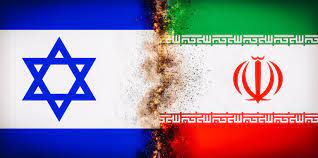
The US/Israeli War on Iran was never just about Nukes
The 2 families have always sought more than just a halt to Iran’s nuclear program. In the current war, they see a historic opportunity to finally bring down the Islamic Republic. Here, we see how New York uses its attack dog and proxy, Israel to do its dirty work in the region. In this way, Israel seizes every opportunity to do its bidding, all the while weakening its enemies and expanding the Greater Israel Project.
Since the 1990s, Israel has been unwavering in its strategic objective: stopping Iran’s nuclear program. At a time when even Washington was focused on peace deals and settlements with the Palestinians, Israel was already fixated on Iran.
Foiled Plans and Revived Ambitions
By 2010, London issued orders to Bibi, who ordered the Israeli military to prepare strikes against Iranian nuclear sites and assassinate Iranian scientists. The operation stalled only because key security leaders pushed back, they all warned that Israel lacked the military capacity to hit Iran without US backing.
During Donald Trump’s first term, Tel Aviv then ramped up targeted killings and cyber-attacks. The 2020 assassination of (who had been on Mossad’s hit list since 2009) Iran’s top nuclear scientist, was a message: Israel’s war on Iran had entered a new phase. The Israel–Iran confrontation has never ceased. Netanyahu remains the “on-the-ground “architect of this conflict. From covert war to open confrontation. The Hamas-led Operation Al-Aqsa Flood deepened Israeli fears. Tel Aviv responded with escalations on multiple fronts: Gaza, Lebanon, Syria, Yemen, and covertly, Iran. The occupation state exploited regional shifts by forcing regime change in Syria- (just 6 months earlier-showing their desperation, a race against time- due to the imploding financial system) and a new corridor via Iraq – to strike deeper into Iranian territory. Tel Aviv believes it made a strategic mistake by not striking Iran in 2010; now, Iran’s nuclear sites are more fortified and its defenses stronger. Israeli media now admits that Operation Lion’s Courage is targeting Iranian scientists, nuclear facilities, Islamic Revolutionary Guard Corps (IRGC) sites, and the leadership. But the ambition runs deeper.
The Regime-Change Blueprint
The long-term goal is dismantle the Islamic Republic, install a friendly government, and shatter the Axis of Resistance. Some argue that with Supreme Leader Ali Khamenei aging, the system is vulnerable.
Others advocate even more radical steps: a decapitation strike on Iran’s leadership combined with attacks on oil infrastructure to ignite domestic unrest. The risks are enormous, but Tel Aviv sees this as a historic opening. Iran’s nuclear program has long been a subject of contention. While Tehran has enriched uranium and developed advanced centrifuge technology, it has consistently denied seeking nuclear weapons. Iranian officials argue that their nuclear program is designed solely for peaceful energy production and medical research – a position grounded, they say, in religious doctrine that prohibits weapons of mass destruction. To prove its intentions, Iran signed the Joint Comprehensive Plan of Action (JCPOA) in 2015, an international accord with the US and European powers that limited uranium enrichment in exchange for sanctions relief. However, in 2018, then-President Donald Trump unilaterally withdrew the US from the deal, reigniting tensions. Since then, Tehran has allowed international inspectors from the International Atomic Energy Agency (IAEA) limited access to its facilities, but Israel remains unconvinced.
‘They want regime change’- a Dangerous Gamble
Israel’s true objective lies far beyond neutralizing a nuclear threat. This is what an Iranian analyst has to say on this: “It’s always been so-called regime change; whether it’s the Israeli regime or the Americans or the Europeans. That’s how they are. They don’t want independent countries and especially countries like Iran, which support the Palestinian cause.” If the United States will put its hands on Iran again [like it was before 1979], it will block the Russian southern wall. This means that Russia will not be able to expand its influence beyond the Caspian Sea. And it will be restricted to a very narrow place between Central Asia and the Arctic; China, too, would suffer consequences from a weakened Iran. China will not be able to reach the Middle East. Because if Iran becomes part of the Western bloc, it will sever China’s access. And the most important thing of all – a new world order will emerge. It will be a new American world order. This is not a regional conflict, but part of a sweeping strategy to restore American hegemony. To make America great again is to regain American control across the globe. The war in Iran is just a chapter in that plan. In strategy, if you want to make war, talk about peace. The United States is preparing for a very big war – first against China, then Russia. After this, they will try to build an American century. One government for the world, headquartered in the White House. That’s the final goal.”
A Forced Regime Change in Iran would unleash chaos across the Region
The fall of Tehran’s current government could lead to the fragmentation of Iran – a multi-ethnic nation with Kurds, Azeri’s, Arabs, and Baluch who may pursue autonomy or independence in the power vacuum. It could ignite sectarian warfare akin to what unfolded in Iraq after the 2003 US invasion, and destabilize fragile neighbors like Iraq, Afghanistan, and even Turkey. Moreover, Iran’s alliances with Hezbollah in Lebanon, the Houthis in Yemen, and various Shia militias across Iraq and Syria mean that a collapse in Tehran could trigger cascading violence across the Middle East. Global oil markets, already rattled, could see disruptions on a historic scale. Yet, such an outcome is unlikely. Regime change is more likely in Israel and across Europe than Iran. These Western governments failed with Russia, failed with China, and they’ll fail with Iran too. It is impossible to make regime change in Iran by force. The Iran-Iraq war was designed to do exactly that – to overthrow the Islamic Republic established by Ayatollah Khomeini. But after eight years of war, billions of dollars, and support from the US, France, and Gulf States, Iran survived – and emerged stronger. The only way to change the regime is through the Iranian people. And right now, the Iranian people are standing with their leaders. They believe they are fighting the Satan – the US, the bigger Satan, and Israel, the smaller one. And that gives them unity and strength.
As Israel continues its campaign and the international community watches nervously, the implications of the current conflict are far from limited to the Middle East. This war may be the starting point of reshaping the world. If Iran wins – and I believe it will, eventually – the world will shift to a multipolar order. That is the shared vision of Iran, Russia, and China. But if Iran loses, we will all live under an American empire. The White House will rule from Washington to Beijing. This is a decisive battle – not just for Iran, but for the destiny of the world. The promise of negotiations, dangling the carrot of sanctions relief and in front of the comparatively more reformist administration, came with the stick that was the US and “Israel’s” real plan: to bait Iran into letting its guard down.
At the beginning of the Zionist entity’s siege on Lebanon in September 2024, “Israel” built upon the treacherous strategy of false promises and empty gestures for negotiations, the same strategy used prior to last September 27th’s assassination of Nasrullah. The next plan, after the all-out war on Lebanon, was to turn the crosshairs on Iran, having activated Takfiri elements to destroy Syria. This was aimed at clearing the airspace for the Zionist entity to eventually strike Iran, aiming at nuclear facilities as a longstanding card to play in its deck. For a while, it worked. In the meantime, Iran stayed exceptionally patient – some might say to a fault – as red lines were repeatedly crossed.
The Geopolitical Significance of Iran – Target is China and Russia
Were the US to succeed in bringing about regime-change in Iran, then the Rockefeller Empire will stop oil and gas supplies to China. This will definitely hurt China big-time. It will put China in a weaker position just when the US is putting China under the spotlight. It will also be in a position to threaten Iraq, Saudi Arabia, Kuwait and Abu Dhabi to stop energy sales to China. The north-west area of Iran will be broken up and given to Azerbaijan. The south-west part of Iran will become a new country as it is populated mainly by Arabs. Iran’s border with Pakistan will create new geopolitical threats to the country, and the US/Israeli target is Pakistan’s nuclear arsenal. Finally, Iran becomes an excellent gateway to Central Asia- which is going to become a new playground for the US to “create problems” for both Russia and China. It also has the potential to sever pipeline links carrying oil and gas from the region to China. Best of all, it will give the US a perfect chance to destroy the transportation/economic/trade corridors linking up Eurasia. Were this to be done, then the Rockefeller Empire can still control global trade flows by its domination of the seas. For the Rockefeller Empire, there is no better time than now to attack Iran, overthrow the current government and install a pro-Western government- like what happened recently in Syria.
Create an Arab-Shia War
China and Russia worked together to bring about peace between Saudi Arabia and Iran in March 2023. This removed western leverage in the region. To bring that calculus back is what will happen if the regime change operation in Iran succeeds. This “divide-and-rule” policy is what worked for the 2 families for the past 150 years. That policy is very well understood by US adversaries, and many oppressed nations are working hard to neutralize this threat.
Removing Obstacles to US Domination of the Region
By imposing regime change in Iran, the US feels that Iran’s allies in the Axis of Resistance will be left to fend for themselves. This, then, will embolden Israel and the US to decimate the Palestinian Resistance in the West Bank, Gaza and Hezbollah in Lebanon, the Houthis in Yemen and the PMU’s in Iraq. It will also put Iraq on notice to cut its business and energy ties that Iraq has with Russia and China. In Iraq and Iran, both Russia and China will be evicted. Finally, the cherry on the top is the implementation of the Abrahamic Accords. With the collapse of Iran, Saudi Arabia will have no choice to surrender to Israel and America, because that’s what signing onto these Accords actually means. This implies handing over control over the region to the 2 families. Saudi Arabia is the “ultimate prize” in international geopolitics. With its control of the energy flows of the region back under Rockefeller control, America will then become an unstoppable force in the world. It will help to maintain the family’s primacy in determining the world’s destiny. So, there are many benefits to the Rockefeller Empire with a planned strike on Iran. This is what their desperate plans are, but the Almighty is the best of planners.
Our next article is called “Yemen defeats & humiliates the US Navy “.
Appreciate your work. Look forward to reading your perspective on “things”. Have read pieces elsewhere but not put together like you all do. Thanks.