4 Yemen Enters the War
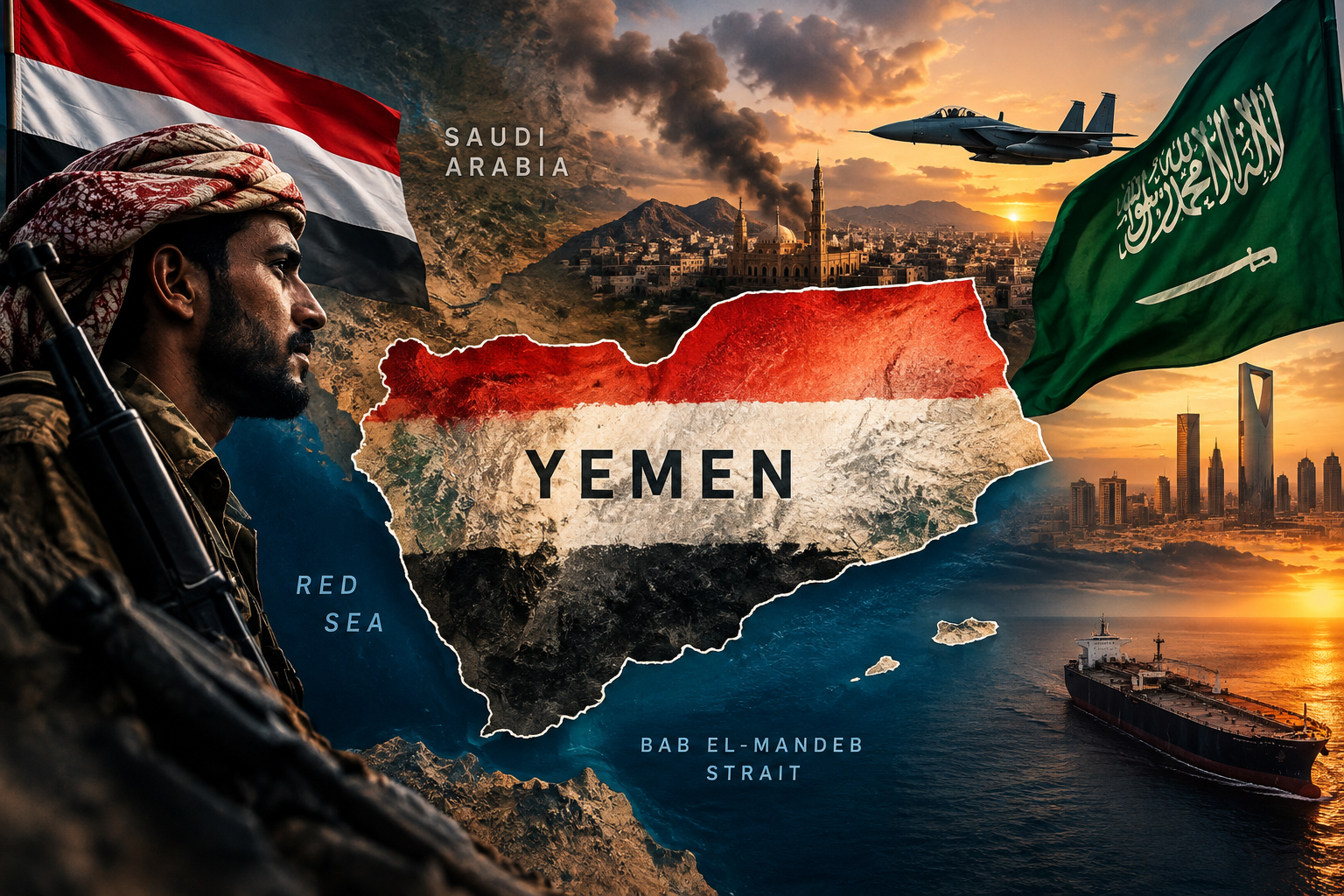
Yemen’s Armed Forces have carried out their first military operation since announcing readiness for direct military intervention in the ongoing on the Axis of Resistance, targeting military sites in southern occupied Palestine with a salvo of ballistic missiles. Yemeni Armed Forces Spokesperson Brigadier General Yahya Saree confirmed the operation on Saturday, stating that ballistic missiles struck “sensitive military objectives belonging to the Israeli enemy in southern occupied Palestine.” The strike follows a Friday warning from Saree that the Yemeni Armed Forces were prepared for direct military intervention should certain red lines be crossed. He named the formation of additional alliances alongside the US and “Israel” against Iran or Axis of Resistance states; the use of the Red Sea as a platform for hostile military operations against Iran or any Muslim country; and the continued escalation of the US-Israeli aggression. Ansar Allah leader Abdul Malik al-Houthi that the US and “Israel” are advancing a “scheme to reshape the Middle East and establish the so-called Greater Israel,” stressing that Yemen is “not neutral” but stands with the Islamic nation.al-Houthi affirmed that any developments requiring a military response would be met with full readiness, as in previous rounds, while reiterating that Yemen’s military activity targets. The Saudi port of Yanbu, which the kingdom is using to bypass the closed Strait of Hormuz for its oil exports, is well within the range of Houthi missiles. For now, the Houthis are likely to avoid targeting Saudi oil sites, New York-based political consultancy Eurasia Group said in a note to clients. The Islamist militants agreed a truce with Saudi Arabia in 2022, which has largely held and involved the Saudi government making some payments to areas under Houthi control. While the Houthis need to be seen as participating in the war effort, they remain inclined towards minimizing the downsides of further entanglement in the war and keeping their tacit understanding with Saudi alive . The Houthis may still target Saudi oil exports under pressure from Iran in case of escalation.
5 Iran
The US/Israeli combo is bombing Iran every day. Many cities, especially Teheran, have suffered damage to infrastructure, and other critical sites- such as hospitals, police stations, many apartment buildings, and so on. Many other IRGC and government sites have been destroyed. When the combo hit a fuel storage depot in Teheran, this resulted in the fire raging for many days which caused great ecological and economic disasters. For every hit, Iran has responded accordingly. Instead, the available figures indicate that. While early attacks saw a surge in activity, particularly on the first day, when more than 1,000 targets were reportedly struck, later data shows variations rather than consistent growth. Between March 9 and March 12, the number of targets struck increased by roughly 1,000, averaging about 333 strikes per day. From March 12 to March 16, the average dropped to approximately 250 strikes per day. CENTCOM has not released daily strike figures; instead providing updates every few days, which makes it difficult to track precise daily trends. The peak of strikes occurred at the beginning of the offensive, with over 1,000 targets reportedly hit on the first day. A steep decline of almost 60% was recorded only 3 days into the war on Iran.
- Between March 3 and March 6: approximately 433 strikes per day on average
- Between March 6 and March 9: approximately 666 strikes per day on average
- Between March 9 and March 12: approximately 333 strikes per day on average
- Between March 12 and March 16: approximately 250 strikes per day on average

Is Having No War Plan Trump’s ‘Plan’? –
The U.S.-Israeli stand-off air-strike model of waging war is being challenged by a quite different strategic asymmetric war – one first planned by Iran more than 20 years ago. This is important to understand when trying to judge where the war balance sheet truly lies. It is like comparing oranges with lemons; they are essentially different in character. The U.S. and Israel are dropping a lot of stand-off munitions at Iran. But, to what point and to what effect? We don’t know. We do, however, know that Iran has its asymmetric war plan. And it is only just starting, incrementally moving towards full implementation. The full armory of Iranian missiles has not yet been revealed – neither its latest missiles, nor its submersible drones and anti-ship-equipped missile speed boats that have yet to be deployed. So, we do not know Iran’s full potential – and we cannot say to what effect its full deployment might yet be. Hezbollah is now fully in the war and the Houthi’s are ready and waiting to blockade Bab el-Mandeb in tandem to the Hormuz blockade. The root to the move of this Iranian asymmetric paradigm arose in the wake of the U.S.’ utter destruction of Iraq’s centralized military command in 2003 – the result of a three-week massive air assault. The issue for the Iranians that arose in the Iraq war’s wake was how Iran might build anything resembling a peer air capability. And the U.S. could also look down upon the extent of Iran military infrastructure from their high-resolution satellite cameras. Well, the first answer simply was to have as little of the Iranian military structure out in the open to be observed from above – from space. Its components had to be buried, and buried deeply (beyond the reach of most bombs). The second answer was that deeply buried missiles could indeed, in effect, become Iran’s ‘air force’ – i.e., they could become a substitute for a conventional air force. Iran thus has been constructing and stockpiling missiles for more than twenty years. With Iran’s intense research focus on missile technology, it reportedly manufactures some 10-15 models of cruise and ballistic missiles. Some are hypersonic; others can deliver an array of explosive sub-munitions that are steerable (to avoid defense interceptors). The big missiles are launched from deep underground silos dispersed across Iran (which is the size of western Europe and is well endowed with mountain ranges and forests). Shore-to-ship missiles too, are honey-combed into Iran’s coastal expanse. The third response was to find a solution to the successful 2003 shock and awe decapitation of Sadam Hussein’s military command.
In 2007, the Mosaic Doctrine was introduced. The thinking behind the doctrine was to divide Iran’s military infrastructure into autonomous provincial commands — each with its separate stockpiled munitions, separate missile silos, and where appropriate, its own separate naval forces and militia. Commanders were given pre-delegated battle-plans together with the authority to launch military action at their own initiative, in the event of a decapitation strike on the capital. The battle-plans and protocols were to be triggered automatically upon the decapitation of a Supreme Leader. Article 110 of Iran’s 1979 Constitution gives command authority over the armed forces exclusively to the Supreme Leader. No one, and no institution, can override or rescind his directives. Should the new Leader subsequently be assassinated, the earlier pre-delegated instructions would then come into force, and would be irreversible by any other authority. In short, Iran’s military machine – in the event of a decapitation strike – operates as an automated, decentralized retaliation machine that cannot be easily stopped, or controlled. An additional major lesson that Iran took from the 2003 Iraq war was that the U.S. and Israeli ‘way of war’ is wholly centered on short aerial bombardments to decapitate leadership echelons and command structures. The vulnerability of having a centralized command structure was countered by the Mosaic structure that de-centralized and defused command widely and over multiple commands – so that it could not seize up in the event of a surprise decapitation strike. And a further strategic insight drawn by Iran from the Iraq war was that the West is militarily structured around short intensive air wars. The antidote in the Iranian analysis was to ‘go long’: The current Iranian leadership’s strategic decision to opt for a long war flows directly from this insight — that western militaries are built for the shoot-and-scoot approach – plus their conviction that the Iranian people have more resilience to bear the pain of war, than have either the Israeli or western publics. The mechanics for choosing to extend a war for longer than might suit Trump essentially comes down to logistics. The strategic confusion of the Centcom command, the collapse of the American and Zionist multi-layered defense network in the region , and the disruption of the US arms support system following the intelligent and artistic measures and blows by Iran’s armed forces have changed the equation in Iran’s favor.
The era of aircraft carriers is coming to an end. With its military ingenuity, Iran has proven that aircraft carriers are no longer “impregnable fortress” , but merely large and expensive targets. The failure of two aircraft carriers in this condition is the biggest blow to the reputation of the American military since the Vietnam War. The balance of power has shifted in Iran’s favor. This defeat will go down in history as “the moment Western naval dominance collapse”. US allies are horrified. If even America’s largest warships cannot protect itself against Iran, no one can rely on American protection anymore. Like CNN lamented: “How could a $13 billion asset be rendered ineffective within minutes? THE LEGEND IS DEAD!!
Assassinations
The killing of senior Iranian officials by the US and Israel will not cripple the government, Iranian Foreign Minister Abbas Araghchi has said. As for Israel’s strategy of continually whittling away Iran’s leadership, Araghchi responds:Iranian Foreign Minister, Araghchi on the assassination of Ali Larijani: “I don’t know why the Americans & Israelis still haven’t grasped this point. Islamic Republic has a strong political structure with established political, economic & social institutions. The presence or absence of one person doesn’t affect this structure. When the leader was assassinated, the system continued to function and immediately provided a replacement.” More decimation of Iranian top leadership, as Israel’s defense minister Israel Katz has announced Iran’s intelligence chief Esmail Khatib was eliminated in an overnight strike, which marks yet another alleged high-level hit as the tempo of targeted killings accelerates. “On this day, significant surprises are expected across all arenas that will escalate the war we are conducting against Iran and Hezbollah in Lebanon,” Katz warned in a military briefing, according to Israeli media. If confirmed, the reported hit would mark thethird top-tier Iranian figure eliminated in just 48 hours, following Israeli strikes that reportedly killed national security chief Ali Larijani, who was likely effectively running the war, and Basij commander Gholamreza Soleimani. Israel is doing this via two simultaneous strategies: first by eliminating all the “moderates” and rational people within Iran’s leadership to ensure that only hardliners remain who will push for maximum punishment against the region. And second, by crossing Iran’s “red lines” in hitting its most sensitive economic and energy sites in order to spur Iran’s retaliation against equally critical sites throughout the region to ignite as big a firestorm as possible which can engulf everyone and coerce the entire world into “finishing off” Iran once and for all. Israel had assassinated Iran’s Secretary of the Supreme National Council Ali Larijani in a strike that was said to have also killed upwards of 100+ civilians in the vicinity, as it leveled the apartment block he was in, and possibly even surrounding buildings. Iran reshuffles its security leadership, appointing Mohammad Bagher Zolghadr: he’s a former IRGC commander and replaces the assassinated Ali Larijani.
Mojtaba Khomeini Becomes Iran’s new Supreme Leader
On March 9, the Council of Elders appointed Khomeini’s son, Mujtaba as Iran’s new Supreme Leader. He was born in 1969, and was the liaison between the IRGC and his father. As a result, there is a strong bond between them. Remember, Israel had killed all the members of his immediate family. The first thing he said was Hormuz must remain closed. Brilliant, and far more determined than his father to sort out Israel and the US. When the “combo” assassinates leaders in Iran, their replacements are more anti-West. From the moment he assumed office, the intensity of attacks on the combo and its Gulf vassals increased.
From Defense to Offense – Iran has started the strategic destruction of Israel.
Iran is waging an almost perfect asymmetric war, absorbing attacks, strategically rendering the surrounding bases unusable, destroying radars, and maintaining control of the Strait of Hormuz while still preserving its missile launch capability. By Saturday, 21st March, 22 days into the war, Iran announced that the war from their side is has moved from a defensive posture to an offensive posture. By this time, most of the radars and air-defense systems of the combo had been significantly degraded. Firing older missiles, rockets and drones depleted the combos air defenses. Iran, thus, began using its more advanced missiles and began to strike even more significant targets across the region. The bottom line of the war is this: The US has nothing left to hit because Iran has gone “dark” and salted away its premiere systems, bunkered down its leadership, and only launches missiles from underground cities the US and Israel can’t penetrate because they’re deep inside Iran and would require establishing the “air superiority” that was said to have already been in place since day one. All the while, the reality sets in that US and Israel have vastly exaggerated the amount of Iranian launchers they destroyed. So, far, Iran has fired 700 missiles and 3,600 drones in the first 11 days of the war. Most of these missiles were produced 10 years ago. Many of the newly produced missiles have not yet been used in operations. Many of Iran’s missile depots remain untouched. The operational protocol: The launcher moves on rails toward an exit- Rises to the surface – Fires- Immediately retreats underground- The exit is sealed by armored airlocks. Iran’s launches remain steady as US and Israel no longer have any capability to suppress the remaining capacity without heavy risks to their most capable craft: The next problem is that given the USS Lincoln’s retreat to 1,000km+ from Iranian shores, most of the aerial assets on the carrier cannot even reach interior Iran as that requires a nearly 4,000km total combat range which none of the Lincoln’s attack craft (F-18s and F-35s) can even come close to. They get refueled near the Persian Gulf by aerial tankers right before entering Iran. But this vastly limits sortie counts and strains logistics, not least of which reason being that US’s KC-135 refueler fleet has also now faced accelerating attrition as we have seen earlier. Either way it’s a moot point because these craft are not going to penetrate interior Iran even if they could, simply because it’s far too dangerous and F-35s in passive/stealth mode can’t stray too far from their AWACS which they network and datalink with. Those AWACS definitely can’t get close to Iran’s shores, and now they too are being destroyed.
As you can see, the entire chain is being greatly strained which allows Iranian launchers to operate without much issue in the interior of the country, which debunks the US claim that that the majority of Iranian launchers are destroyed. The combo simply doesn’t have the capacity to destroy mobile missile launchers deep inside Iran. The combos attempt to strike missile launchers thwarted for the umpteenth time, but its air defense units responded. Over Shiraz a US F-16 fighter jet was struck in the southern Pars province and was destroyed before landing in Saudi Arabia. Such planes and drones keep getting shot down. Iran has been rolling out its various defense strategies and equipment very slowly. In the beginning, we find that Iran was being heavily attacked by US/Israeli standoff weapons. But recently, Iran has been unveiling air defense systems that are taking down many of the combo’s jets. The same is happening in Lebanon.
6 Losses by the “Combo”
*Iran’s Islamic Revolutionary Guard Corps (IRGC) said on 19 March it had successfully hit a US Air Force F-35 stealth fighter jet in central Iran’s airspace. The advanced warplane was struck at 2:50 am local time by Iranian air defense systems, using a modern and advanced air defense system belonging to the Aerospace Force of the Guard, and it was severely damaged. *All American military bases in the Gulf have been destroyed to a great extent- including those in Iraq, although some are still barely functioning. *An Israeli AWACS plane was shot down by a missile over the Eastern Med, using a boat to launch the missile or from Syria’s coast. This leaves Israel with 3 more AWACS. * Iran fired a missile at King Sultan airbase in Saudi Arabia, and destroyed 5 KC 135 refueling tankers. A second strike, days later, destroyed even more at another Saudi airbase. * Many other fighter jets belonging to the US and Israel, and other European countries have been destroyed in their fortified hangers, on runaways and in action. * The most valuable aircraft , such as KC-135 aerial refueling tankers plus the E-3 sentry, aka AWACS, have been destroyed. * About a total of 130 drones of all types have been destroyed by Iran, Iraq and Lebanon. * All radar, communications and spying equipment belonging to the US and Irael have been destroyed- leaving Israel and the US totally blind. * In Lebanon, Israel has lost more than 100 Merkava tanks, along with a number of D 9 bulldozers- in just 3 weeks. * Israel is now firing missiles that are 50 years old. Recent reports show that 30 % of all missiles landing in Lebanon and Iran are duds. This implies that Israel is running out of newer missiles. In short, they have run out of missiles. *Israel is unable to refurbish/repair tanks as most parts are coming from factories that are destroyed, or imports -which are having trouble reaching Israel. * Power plants are being regularly struck, resulting in ongoing blackouts. * Oil refineries, oil depots, gas producing platforms are being struck, in a tit-for-tat by Iran. * 1000s of Israeli skilled workers, technician and scientists are out of a job-due to the destruction of their enterprises, such as Dimona, and the MIC factories. *Just as Israel killed many Iranian nuclear scientists, Iran has done the same to Israel, in its attacks on these scientists’ residences in Arad, next door to Dimona. *Iran struck the central train station in Tel Aviv- Israel is a tiny country and has a single north-south rail line. This potentially incapacitated a major part of the country’s train movement in the entire country. Cutting the trains movement in the entire country. Cutting the train’s movements means Israel has no mass transit (the roads are heavily jammed) . This has far-reaching military consequences. The train is the main transportation solution for IDF troop and equipment. Moving this north or south becomes a logistical nightmare. The economic consequences of the train line being disabled are astronomical. Hundreds of thousands travel to work daily. * Due to the heavy use of aircraft, nearly a third of Israel/US fleet are out of action due to being maintained and serviced. One day flying time means 2 days in service. Then, there’s the “Khamsin” winds, which make flying/targeting difficult to do. *Iran’s armed forces said Thursday 26th March, that US forces have suffered significant losses across the region since Washington and “Israel” on February 28. Speaking on Iranian state television, armed forces spokesman Abolfazl Shekarchi said the scale of US casualties has been substantial. “I am only giving the minimum figures when I say that between 600 and 800 American soldiers were killed, and nearly 5,000 were left injured,” Shekarchi said. He added that 17 US military bases in the region had been destroyed, describing the US army as a “paper tiger” in the face of sustained Iranian retaliation. *Repeated Iranian missile and drone strikes have rendered several US bases across the region largely uninhabitable, forcing troops to disperse and operate from improvised locations, including hotels and office buildings. Large segments of the US military apparatus are now functioning in a decentralized manner, with some personnel relocated as far as Europe, while others remain in the region but outside traditional command structures. Key installations sustained significant damage, including airfields, fuel depots, communications systems, and radar infrastructure. The degradation of these facilities has complicated command, control, and coordination, reducing overall operational effectiveness. So now much of the land-based military is, in essence, fighting the war while working remotely, with the exception of fighter pilots and crews operating and maintaining warplanes and conducting strikes. Do you know what it does to your troops’ morale to have all your regional bases wiped out and garrisons abandoning ship and fleeing? People are underestimating the reverberations this will have on the Empire’s armed forces and ability to project them in the future. *As we have seen, the two aircraft carriers have flunked out of the Middle East- the Lincoln was hit 17 times, while the Ford also sustained serious damages. This would now make it 4 aircraft carriers damaged by the Houthi/Iran forces. *US bases are in ruins or deserted, and US strategic air defense radar installations have gone up in smoke. As others have noted, no adversary in history can be said to have achieved such an effect against the US—except maybe the Japanese at Pearl Harbor. *The United States has launched more than 850 Tomahawk cruise missiles in the first four weeks of the US-Israeli war on Iran, that has alarmed Pentagon officials and triggered urgent internal discussions on resupply. The long-range missiles, , have been central to Washington’s war on Tehran. However, with only a few hundred Tomahawks produced annually, officials warn that the current rate of use is straining global supplies. Officials described growing concern over the sustainability of current operations. * The US and the West have been de-militarized to a great extent due to the Ukraine and Gaza wars. Israel has found itself to be in an even worse position. * The last key infrastructure are the desalination plants- Iran is reserving these for later attacks. If these were struck, it will affect around 4 million Israelis. These Zionists won’t wait, they will flee the colony. * More strikes from Iran has targeted industrial facilities, ammonia nitrate plant, Israel’s largest solar hub
The “Combo” continues provoking Iran
Let me explain this point. The original plan was a quick strike on Iran, a decapitation and a massive bombing campaign, which would see a collapse of the Iranian state. That did not happen, to the frustration and consternation of New York and London. In anger, strikes were now directed to Iran’s civilian infrastructure-especially the critical ones. Iran has warned the combo that any strikes on its industrial and energy infrastructure will elicit a harsh response, and will even exceed it. Ignoring this, the combo struck four universities in Teheran, Isfahan and Qom. In response, IRGC has threatened to target American and Israeli universities for strikes on similar Iranian institutions. Staff, facility, students and nearby residents have been warned to evacuate areas within 1 km of such facilities. Then, the combo attacked Iran’s nuclear sites. A US-Israeli attack targeted the vicinity of Iran’s Bushehr nuclear power plant- for the third time, raising renewed concerns over the safety of peaceful nuclear facilities just after the plant was hit on – 27th March. The Bushehr incident comes amid a series of attacks across Iran. Iranian media reported that:
- A yellowcake production facility in Ardakan, was targeted.
- A mine linked to a cement factory in Firouzabad, southwest Iran, was struck.
- The Khondab nuclear power plant i was also targeted.
- The heavy water plant in Arak – a key infrastructure for producing plutonium for nuclear weapons – located in central Iran. Heavy water is a unique material used to operate nuclear reactors such as the currently inactive reactor in Arak, which was originally designed to have the capability to produce weapons-grade plutonium. These materials are also used as a source for extracting neutrons for nuclear weapons.
On Friday the 27th: The IDF attacked Iran’s two largest steel plants, in Isfahan and Ahvaz. Both plants are vital to Iran’s military industry and are partially owned by the Revolutionary Guards. The strikes on the plants are expected to cause billions in damage to the Iranian economy. Iran is the 10th largest steel manufacturer in the world. This could mark a new, expanded phase of the war as Israel goes after key defense industrial targets, which also serve central civilian infrastructure development. The US has still held off on pursuing more attacks on energy sites, but it seems Israel is maintaining a more gloves off approach – opting for total societal destruction, and going after industry. This seems to also be part of efforts to ensure ballistic missile production is degraded. According to a senior Iranian security-political source, the operations targeting Iran’s industrial and vital facilities reflect a state of desperation from the United States and “Israel”, highlighting that Netanyahu ignored warnings from top officials about the potential collapse of the IDF. The recent attacks on the country’s economic infrastructure have shifted the “response equation”, with Iran warning that “targeting Iranian industrial, service, and vital facilities changed the ‘eye for an eye’ equation. The next response will be unconventional and will exceed previous operations in size and impact”. The IRGC emphasized that Iran’s retaliation is no longer limited to the principle of “an eye for an eye.”
Escalating on all fronts, the combo then struck the IRGC HQ on all fronts; Iran signals expansion by naming UAE targets, hitting Kuwait ports and sending drones on Riyadh.Iran newly warning it will hit Gulf industry. Iranian media outlets said Tehran has issued a warning expanding its targets to include steel facilities in “Israel” and across Gulf states. According to Tasnim News Agency, Iranian sources said the new targets were selected based on field intelligence and an assessment of industrial infrastructure in countries aligned with the United States. Officials suggested that the scope of Iran’s response could extend beyond the steel sector alone. The commander of the Aerospace Force of the Revolutionary Guard, warned that targeting Iran’s infrastructure is “playing with fire”, adding: “The response this time will not be according to the eye-for-an-eye equation… so wait and see. “These attacks reflect an escalation in US-Israeli aggression against Iran’s industrial and nuclear infrastructure. Later, the IRGC issued a statement urging employees at industrial companies with US shareholders, as well as facilities linked to “Israel”, to evacuate immediately to avoid potential harm. The statement also advised residents living within one kilometer of such sites to leave until further notice. Iran wasted no time in responding. It launched attacks on both the UAE and Bahrain, and destroyed their aluminium plants-which were amongst the largest in the world. This takes about 1.8 million tons of aluminium a year off-line. This was followed up by strikes targeting several heavy industries belonging to the “aggressive American-Zionist enemy.” This was followed by a strike on a US force in Kuwait. The IRGC carried out a joint assault targeting Israeli and US forces in the Banda Shweikh Port, the Dubai coastline, and Dubai’s port facilities. of ballistic and Ghadr 380 cruise missiles against six US LCU (Landing Craft Utility) warships stationed at the Shweikh port on Bubiyan Island. According to field reports, three of these vessels were directly hit and sank, while the remaining ships were reported to be ablaze. This strike successfully neutralized multiple US military personnel, with the wounded transferred to hospitals in Kuwait. Field sources indicated that these hospitals were placed under full lockdown, restricting access for Kuwaiti patients while treating the wounded, which sparked protests among the local population. In addition, one hotel in Dubai which was housing US soldiers was hit.
As of this writing another major refinery in Bahrain has gone up in flames: The IRGC has finally finished off or burned down the largest oil refinery in the Middle East, located in Bahrain. There’s no place left to even assess the damage. The Bahrain Petroleum Company (BAPCO) has acknowledged that the plant has been completely burned out. BAPCO is essentially the foundation of the national economy and one of the oldest refineries in the Persian Gulf region. The Bahrain Petroleum Company (BAPCO) is Bahrain’s state-owned oil and gas company. The Bapco Refinery has a capacity of 400,000 barrels per day. The Aerospace Force and Navy of the IRGC carried out coordinated missile and drone strikes on two industrial complexes tied to the American military and aerospace sectors: the EMAL aluminum plant in the UAE and the ALBA aluminum plant in Bahrain. The EMAL facility houses the world’s longest aluminum production line, with an annual capacity of up to 1.3 million tons. Emirates Global Aluminium said its production plant sustained significant damage in an Iranian drone and missile attack on Abu Dhabi. The company had substantial metal stock offshore when the war on Iran began last month as well as in some overseas locations. Emirates Global Aluminium is owned by Mubadala, an Abu Dhabi sovereign wealth fund, and the government of Dubai. EGA is the Middle East’s largest aluminum producer and the biggest industrial company in the United Arab Emirates outside oil and gas. It is also the 5th biggest producer of aluminium in the world. The combined output of these two plants is about 2 million tons per year. The ALBA plant plays a key role in producing materials used in US military industries, including through investments and partnerships with American companies. Norwegian company Norsk Hydro slowed output at its Qatalum smelter in Qatar.
A funny thing happened the next day after Gulf countries made not-so-subtle threats against Iran. UAE in particular was quickly silenced by Iran’s blows. UAE Ministry of Defense reported major attacks against it: Which was quickly followed by a statement from UAE’s foreign minister which essentially walks back previous implied threats, claiming they had been “misinterpreted “. Now they seek a “political solution”. It seems ballistic missiles often have that effect.

Despite continued bombing of targets in Iran, the Iranians are showing no signs of weakening… In fact, they are intensifying their attacks, inspired by the continued slaughter of Iranian children.
In response to Trump’s various threats, a spokesperson for Iran’s Khatam al-Anbiya HQ recently said: ➡ He has threatened that if Iran doesn’t reopen the Strait of Hormuz, U.S. forces will target Iranian power plants. ➡Tehran insists the Strait is only restricted to hostile traffic and remains under Iran’s control; safe passage continues under strict rules. ➡If the U.S. strikes Iranian power plants, Iran will: Fully close the Strait of Hormuz until damaged facilities are rebuilt. Target all Israeli energy, ICT, and infrastructure assets. Destroy regional companies with U.S. shareholders. Target power plants in countries hosting U.S. bases. ➡Iran says it is ready for a major campaign to eliminate all U.S. economic interests in the Middle East. ➡While Tehran did not start this conflict, any attack on Iranian infrastructure will trigger relentless retaliation against U.S. and allied energy, oil, and industrial targets in the region.
The US and Israel ignored Iran’s warning and attacked… and, as promised, Iran responded forcefully. The upcoming week — March 30 to April4 — marks the fifth week of the war with no sign of an end in sight. The economic effects on the world economy are going to hit with greater force and will increase pressure on the US and Israel to stop the war. However, Trump will follow thru on his threats to try to capture some Iranian territory by deploying US military forces on the ground. If Trump does this, it will only expand the war and will dramatically increase the number of US casualties. This will not calm the financial markets… I it will have the exact opposite effect. The global economy is in a recession… Western economists are just now beginning to understand that reality. According to Haaretz, the success rate of Iranian missiles in Israel has reached 80%, and the missiles are not being intercepted. Iranian drone and missile strikes targeted the Prince Sultan Air Base in 27 March, wounding at least 12 US troops and damaging aircraft and buildings. And the most serious attacks were on US bases in Kuwait, Bahrein and in Saudi Arabia.
Additionally, the IRGC stated that it destroyed and severely damaged several US aerial refueling aircraft and the logistical support HQ in the Al-Kharj Base in Saudi Arabia, also as part of wave 84. But shocking new images have also now revealed that an E-3 AWACS plane worth nearly $300 million was also completely destroyed: In addition to the destroyed aerial tankers, 1 or 2 AWACS has also been destroyed in this attack. This is a very big deal. As well as the destroyed AWACS, Iran claims to have hit a P-8 recon craft, with other sources claiming multiple EC-130Hs destroyed: If true, together these represent major attrition to US’s “eyes in the sky” and ELINT fleets, which blinds US capabilities even further in the region. The AWACS were rushed in as replacements for the destroyed radars. Clearly, Iran knew what it was looking for. The IRGC emphasized that operations against US forces in the region would continue until they are fully removed from Muslim lands, claiming that ongoing strikes would remain strong and impactful

War Expands to Israeli Strikes in the Caspian Sea
The war has once again expanded geographically, as Israeli media is reporting fighting in the Caspian Sea. For the first time, theIsraeli Air Force is currently striking the Iranian navy in the Caspian Sea. The Israeli Defense Forces (IDF) on March 19 announced that it carried out a series of strikes at the Iranian port city of Bandar Anzal and in the Caspian Sea over the past day, destroying several vessels of the Iranian Navy, as well as naval infrastructure. These strikes aimed to disrupt a supply line between Iran and Russia, which was used for transferring military equipment, drones, and artillery shells. The operation marked the extension of the conflict into the Caspian Sea, a region previously considered a safe, active supply route between Iran and Russia. Israel said that the strikes destroyed an Iranian Navy corvette, four missile boats, and several auxiliary ships and guard boats, along with a command center and a shipyard. Iranian naval forces have so far lost more than 60 vessels. The number does not include those destroyed by the IDF in Bandar Anzal and in the Caspian Sea, nor additional vessels seen getting hit by U.S. strikes near the Strait of Hormuz in footage released by the command on March 19. While Iran appears to have lost nearly all of its largest warships, its anti-shipping capabilities are still very much in place thanks to a wide array of systems that can be launched from ashore, including cruise and ballistic missiles, suicide drones, unmanned boats, and even unmanned underwater vessels. This is evident by the status of the Strait of Hormuz that remains tightly under the control of the Islamic Republic, which has so far attacked more than 20 vessels, including tankers, that attempted to challenge its restrictions in some way or another.
Key Details of the Strike

The story continues in Part 3 – –