1 Israels Shooting Spree
2 Iraq
3 Lebanon
4 Yemen
5 Iran
6 Loses of the “Combo”
7 Gulf States on Receiving End
8 Inside Israel
9 Takedown of a Bully
10 Ceasefire & Negotiations
Our last article was dated the 15th March. It’s now 3 weeks later. Let’s go through the main developments across the region.
1 Israel’s Shooting Spree
The longstanding antipathy between Iran and the Israeli-American bloc needs little introduction. The first question is why now? To answer this, we need to remember the developments that precipitated the current war over the past few years, beginning with Hamas’s operation in Israel on October 7, 2023. In the years that have passed since then, Israel has gone on a geostrategic shooting spree against regional threats and rivals. These operations not only killed a slew of high value enemy personnel, but also trashed many of the hotbeds on Israel’s borders and put the Iranians squarely on the back foot. Taken as a whole, however, Israel’s recent successes are remarkable. Since late 2023, Israel has killed much of Hamas’s senior leadership, including Yahya Sinwar, Muhammad Sinwar, Marwan Issa, Saleh al-Arouri, and the head of the Hamas political office, Ismail Haniyeh, who was killed in Iran. They killed a variety of key Hezbollah personnel in Lebanon, including Hezbollah’s longtime leader, Hassan Nasrallah, senior commanders like Fuad Shukr, and the head of the Central Council, Nabil Qaouk – all to say nothing of the damage done to the field command structure in the infamous pager bomb operation. Finally, the Israelis have killed many high-ranking Iranian officers, including senior IRGC generals like Mohammad Bagheri, Amir Ali Hajizadeh, and IRGC head Hossein Salami, in air strikes on Iran last June. There was an incorrect report that stated that Ismail Qani -the head of the Quds Force was not a traitor. This was fake news issued by Israel.
Israel’s impressive decapitation run has coincided with the trashing of Gaza and the collapse of the Assad government in Syria. The latter was particularly significant, in that it not only took a key Iranian satellite off the board, but it hampered Iranian connectivity to proxies like Hezbollah, creating an inwardly turned failed state in between Iran and Lebanon. What is most important is that Israel has successfully hollowed out enemy leadership and rocked Iran’s strategic position at relatively low cost to itself. Iranian reprisal strikes in the Twelve-Days War failed to reset deterrence for Iran. Israel’s shooting spree not only put Iran on the back foot by throwing its allies into disarray, but also suggested a model for how Iran itself might be brought to the brink. So, why now? I think the answer is fairly simple: Iran appeared uniquely vulnerable in the wake of Israel’s shooting spree and the collapse of its position in Syria. Forced to choose between attempting a knockout blow on Iran now, with American weight behind it, and allowing the Iranian regime to reconstitute its strength, for the Israelis this was hardly a choice at all. The momentum of their recent successes carried them into this war.
Given the successes they have had over the last two years, decapitating and defanging Iranian proxies, observing the collapse of the Syrian state, and striking Iran itself without successful deterrence reset by the Iranians, the Israelis clearly felt that they had an opportunity to severely damage, or even destroy the Iranian state by decapitating the regime, destroying much of its strike capabilities and industry, and degrading or destroying its air defenses. Israel clearly communicated its determination to act in what it viewed as an important window of opportunity. Given the decision by the Israeli-American bloc to act and act now, the shape of the military operation itself begins to emerge. Broadly speaking, we can separate the initial strikes on Iran into two broad categories – regime and military targets – with the twin objectives of defanging and decapitating the Iranian state. Though it may not be immediately obvious, these two goals are closely connected and nominally support each other.
Strike activity thus far has been heavily focused on degrading both Iranian air defense and their ability to sustain strike volume: an effort which entails not only striking launchers, but also storage and production of strike systems. While the first few days of strikes – which entailed expending thousands of munitions – achieved immediate success in degrading Iranian air defense. Iran retains some intact defenses which deny air supremacy, generally defined by rendering the enemy incapable of interference with air forces in the operational area. More to the point, the destruction of Iranian strike capabilities is a war aim in and of itself, particularly for Israel, while the suppression of strike activity is an operational expedient in the service of other goals. Degrading Iran’s air defense and strike capacity will allow Israeli-American strikes on regime targets with impunity. On paper, a completely defanged and defenseless Iran, with no capacity to launch retaliatory strikes and no functioning air defense, can be struck at will, and the state can be pushed to the brink with ongoing strikes on personnel. The other side of this coin, of course, is that decapitation strikes are designed to disorder Iranian command and control and degrade orderly battle management, so that military targets can be systematically hunted and attrited. US-Israeli attacks on Iran have killed over 2,000 people and devastated civilian infrastructure across the country, damaging more than 90,000 homes, 300 health facilities, and at least 760 schools, according to reports compiled on 30 March.
The Iranian Red Crescent Society (IFRC) said the scale of destruction has intensified, describing widespread damage to residential areas, hospitals, and education centers. It warned that essential services have been crippled as strikes continue to hit facilities protected under international law. Iranian authorities say the pattern of attacks reflects a deliberate campaign targeting civilian life, with homes, schools, and medical centers having been repeatedly struck, placing millions under sustained pressure as Washington and Tel Aviv expand their assault beyond military targets.US and Israeli attacks have also hit critical infrastructure, targeting energy facilities, desalination plants, banks, and industrial sites, disrupting daily life and economic activity. In addition, strikes on oil depots, gas fields, and steel plants have forced production halts and caused environmental damage, with reports of oil leaking into urban areas. Despite the scale of destruction, Iranian institutions continue to function, with state services and the Red Crescent remaining active in rescue and relief operations. From the 11th, the main developments are as follows.
2 Iraq
Iraq’s security environment has entered a markedly more volatile phase since the outbreak of the US-Israeli war on Iran in late February 2026. Armed factions operating under the banner of the Islamic Resistance in Iraq have intensified attacks on installations linked to US military deployment and logistical infrastructure across several provinces. Resistance factions have announced the downing of a number of US military drones during the recent escalation, including described as playing a central surveillance role in American operations across Iraq and the wider region. In the days following the initial escalation, resistance factions reported a sharp acceleration in operations. Statements circulated through faction media channels spoke of 27 attacks within a 24‑hour period at the beginning of March. These figures were presented as evidence that the confrontation was evolving from sporadic harassment into coordinated waves of rocket and drone strikes directed at US military installations across several Iraqi provinces. According to faction narratives, these attacks spanned Baghdad, western Iraq, and parts of the Kurdistan Region, particularly around Erbil International Airport and Harir Air Base. In northern Iraq, tension has likewise centered on the vicinity of Erbil International Airport and nearby military facilities, which were subjected to regular, concentrated strikes using attack drones and Katyusha rockets, reflecting Kurdistan’s enduring strategic relevance as a logistical hub. According to field reports, the Islamic Resistance in Iraq succeeded in downing many drones in different areas, included targeting the MQ 9 Reaper, considered “Washington’s eye” in the region due to its assassination and surveillance capabilities. The most prominent strategic turning point came with the announcement that Iraqi resistance forces had downed a US KC-135 refueling aircraft in Anbar, killing its six-member crew. This operation was seen as a severe blow to US aerial support capabilities over Iraq. Iraq then closed off its airspace, with immediate effect. Which means that Israeli/US jets overflying Iraq are now targets of the Islamic Resistance.
Following the sharp rise in attacks claimed by factions operating under the umbrella of the Islamic Resistance, the US moved toward more concentrated strikes on sites linked to these formations. Airstrikes were reported in areas long associated with militia deployment and logistical depth, particularly south of Baghdad, Al-Qaim along the Syrian border, and the Akashat region in western Anbar. But, after intense attacks on the US forces in Baghdad, the US began withdrawing its forces from all over Iraq. Then, on the 24th, Baghdad announced that the government of Iraq has given the green light to the Iraqi resistance to evict “all foreign military “presence in Iraq. Furthermore, there are roughly 250,000 members of the Iraqi resistance, and they have united and are coordinating. The only exception is Iraqi Kurdistan, centered on Erbil. Even this won’t be around for long. The Us invaded Iraq in March 2003, and after exactly 20 years, they are on the way out. What Iran is planning can be indicated by the forces it is amassing on the borders of Kuwait, Syria and Kurdistan. Kuwait was at one time a part of Kuwait. In 1902, the British yanked Kuwait out of Iraq, made it independent. The Americans then took over control of Kuwait in the 1990/91 war with Iraq.

Regarding Syria. After assad was toppled, the country became a nest of the CIA/MI6 and Mossad, along with Turkish intelligence. Since the ceasefire with Lebanon in October 2024, Jolani has been making threats against Hezbollah. About 2 weeks into the war, Jolani began massing his militia on Lebanon’s borders, and again threatened Hezbollah. This time, Iraq warned Jolani that if he dares to enter Lebanon, then the Iraqi Islamic resistance will enter Syria, and take Jolani down. Finally, the CIA/Mossad/MI^ infrastructure, along with its military assets in Erbil and other parts of Kurdistan, is under constant attack. The West is working hard to make Kurdistan independent of Iraq. Were this to happen, the West will have a base to destabilize Turkey, Syria and Iran. So, all these parties are determined to crush this nest of vipers, along with its local vassals.

3. Lebanon
The Israeli occupation’s tactics, used throughout its genocide in the Gaza Strip, is now being rolled out across parts of Lebanon. Israeli forces are systematically destroying water and sanitation infrastructure, including strikes near sites that were being rehabilitated after having been destroyed or damaged in the last war. The occupation’s destruction of civilian infrastructure has not been limited to critical water facilities. Israeli forces have also destroyed electricity networks and bridges, cutting off vital supplies and services for entire towns and villages.
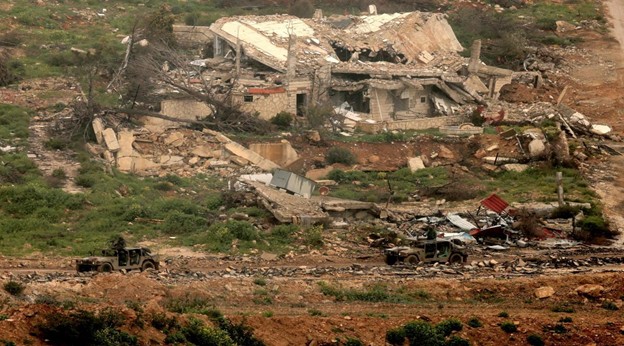
Israel is gradually seizing more territory in southern Lebanon. In the past two days, its army has advanced on ground in the eastern sector of the border, where on Thursday 26th , it was nearly eight kilometers deep inside Lebanese territory. This advance, achieved in just over three weeks, is much faster than the ground offensive in the fall of 2024, which lasted two months without the Israelis being able to seize as much territory. While most of the fighting is taking place in the eastern sector, the Israeli offensive is also accelerating in the central sector and in the western sector. At the same time, Israel is destroying bridges over the Litani River. On March 22, Israeli warplanes struck the Qasmiyeh Bridge, a key transit point connecting the southern and northern parts of South Lebanon. the strikes as a “prelude to a ground invasion.” The Litani River, Lebanon’s longest, is the country’s most vital freshwater resource. Its waters are impounded by the Qaraoun Dam, creating Lebanon’s largest artificial lake, a reservoir that supplies drinking water, irrigates tens of thousands of hectares of farmland in the Bekaa Valley, and generates hydroelectric power for the national grid. Israeli strategists have long coveted this resource. In 1919, Chaim Weizmann, a founder of the Zionist movement, argued that the future “Jewish state” must include the Litani River within its borders. David Ben-Gurion, “Israel’s” first prime minister, declared it the “natural northern border of the state.”
Today, that ambition is being pursued through military force. As Israeli troops advance into southern Lebanon, the stated objective is to push Hezbollah north of the Litani. But the destruction of water infrastructure serving the Bekaa, the region that feeds the Litani, suggests a broader strategy: the systematic dismantling of Lebanon’s capacity to control its own water resources. The timing compounds the crisis. Even before the current war, Lebanon was suffering its worst drought on record. Inflows to Lake Qaraoun during the 2025 wet season were less than an eighth of the annual average. The reservoir’s hydroelectric plants had already been forced to shut down. Pollution from untreated sewage and industrial waste had rendered much of the available water unusable. Now, Israeli strikes are targeting what remains: reservoirs, pipe networks, and pumping stations that sustain the people of the Bekaa. As Oxfam noted, the long-term impacts will be devastating for communities if they have no clean water when they return home.
Why Such Urgency Now?
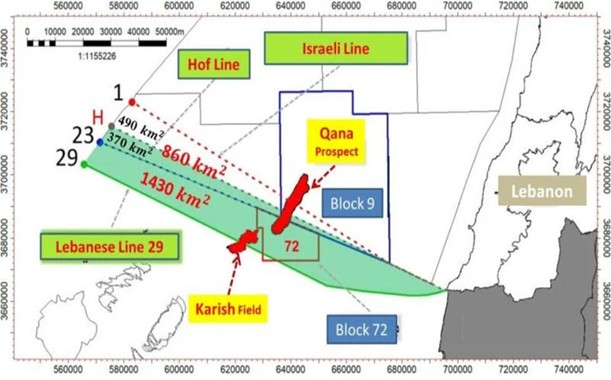
But, the primary reason as to why this invasion of southern Lebanon is taking place now has to do with the Karish gas field, located offshore southern Lebanon. See the map below.
The Karish gas field is an operating natural gas field in the Eastern Mediterranean, located off the coast of Lebanon and Israel. It was at the center of a maritime border dispute between Israel and Lebanon, which was largely resolved by a US-brokered agreement in October 2022. In essence, the US blackmailed and pressurized Lebanon in doing so. Here are the key details regarding maps of the Karish field and its maritime borders based on the 2022 agreement: The Agreement Boundary: Under the 2022 maritime deal, the border was finalized, recognizing Israel’s full ownership and control of the entire Karish gas field, allowing a Rothschild company, Energean to begin production. Contested Lines: Line 23: Previously defended by Lebanon as its southern maritime boundary, this line put Karish within Israeli territory. Line 29: Originally claimed by Lebanon during negotiations (extending further south), which would have divided the Karish field. This claim was dropped for the final agreement. Qana Field: The agreement designated the Qana gas field (also known as the Sidon reservoir) in Block 9 as being in Lebanese waters.
In abeyance for more than a decade, the dispute between the two countries’ maritime borders resurfaced in June 2020. After a floating production, storage and offloading unit belonging to the company Energean arrived on site, the problem was obvious: Israel and Lebanon have never drawn their borders. The Karish gas field where Israel is exploring is located in a disputed area of 860 km2 in the middle of the field. Any exploration, drilling or extraction work Israel carries out in the disputed areas would constitute a “provocation and act of aggression”, said a joint statement by Lebanese President Michel Aoun and outgoing Prime Minister Najib Mikati. However, the Israeli government sees the Karish gas field as part of its exclusive economic zone and therefore believes that it’s not relevant to its maritime dispute. “With the arrival of this platform, everything will go very quickly for the Israelis – the production and sale of gas will be able to start in three or four months, since contracts have already been signed with Israeli companies,” said Laury Haytayan, a Lebanese expert in the geopolitics of hydrocarbons in New York.
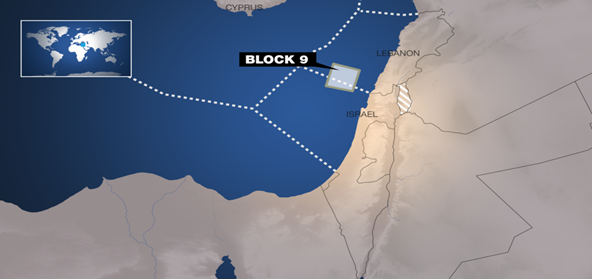
The timing of this gas project could make it especially lucrative for Israel, as the Russian invasion of Ukraine has left Europe scrambling for non-Russian sources of gas. Lebanon has been aware that the gas project was on the horizon since 2019, but its problem has been that its fractious ruling class lacks a unified position on the maritime border issue, meaning talks have been unable to proceed. Resolving this dispute is crucial for Lebanon – mired in an intractable economic crisis since 2019 – to be able to carry out its own exploration for hydrocarbons in the disputed area, where Block 9 of the Lebanese Exclusive Economic Zone is located. Found just off the shore of southern Lebanon, this area is considered one of the most promising in terms of natural gas resources.
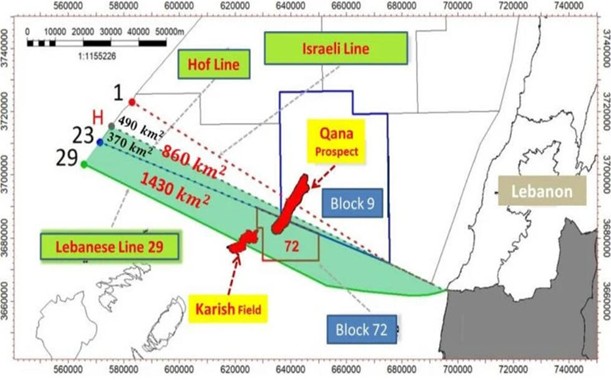
When the Lebanese authorities made a huge noise about it, a month later, Israel used a ship as a bomb, and detonated it in Beirut’s port. This was August 2020.A clear and blatant threat, directed at Lebanon as a whole – “play ball and sign the agreement, OR ELSE “. Two months later, Israeli-Lebanese talks aimed at resolving the maritime dispute started in October 2020, under the aegis of the UN and the US.US diplomat and mediator Frederic Hof, Washington’s point man on the issue from 2010 to 2012, divided the area into two parts. The “Hof line” attributed 55 percent of the area to Lebanon and 45 percent to Israel. The Lebanese side has not accepted this demarcation. At the end of a two-day visit to Beirut in February 2021, US envoy, Hochstein called on the Lebanese government to adopt a united position on the maritime dispute with Israel to allow it to move forward. He also dismissed Lebanon’s maximalist Line 29 proposal – thus implicitly giving Israel the green light to exploit the Karish gas field. As Haytayan, pointed out: “Do the Lebanese leaders want to negotiate from Line 23, the official position adopted in 2011, or do they want to go as far as line 29, a position they claimed in 2020 but never formalized with the UN? It’s time to decide! – If Lebanon wants to negotiate from Line 23, then the Karish field falls outside of the disputed area putting it in the Israeli zone. Making a decision about what Lebanon wants is the “only way to ensure that the people in the region can bolster their development” through natural resource extraction.”
Hezbollah has proclaimed itself the defender of Lebanese hydrocarbon resources, with Nasrallah repeatedly threatening Israel with bombing its installations in the event of unilateral exploration in disputed maritime areas. Now, due to the fact that this deal with the Lebanese government was signed under duress, both Hezbollah and Iran are determined to rectify this theft. This is the key reason for Israel’s invasion of southern Lebanon currently underway. This falls squarely in line with the Rockefeller game-plan to “consolidate” the gas fields of the Eastern Med, and be a major shareholder of this consortium made up of Rockefeller and Rothschild energy companies, along with the “junior partner” – Abu Dhabi, which would act as a cover for local Arab participation.
Military Operations
Hezbollah joined the fight on March 2. It has been preparing for this moment since the so-called ceasefire. Israel thought that Hezbollah was finished. Much to their surprise, Hezbollah has been launching attacks on key Israeli military, intelligence and strategic military-industrial targets. Besides it is facing the Israeli invasion of south Lebanon full on. As a result, losses are mounting for the IDF, losing equipment and soldiers. Between the 24th and 30th, , Hezbollah increased its number of operations significantly, with the daily number of operations rising from 30 to nearly 100 per day. These operations include firing long-range missiles deep into Israel, striking targets in Tel Aviv, Haifa and other key sites in Northern Israel. In close quarter battles and ambushes, the IDF lost more than 50 Merkava tanks plus D9 bulldozers, just in 48 hours!!! A total of 41 Merkava tanks destroyed in 2 days -24/25th of March. Since the start of the war with Hezbollah, a period of 30 days has passed. In that period, Israel has lost more than 100 Merkava tanks, plus a score of D 9 bulldozers, APCs and other equipment. The escalation saw Hezbollah break its own record, carrying out 87 operations in a single day. Over 60 rockets were fired toward the Galilee from south Lebanon on 26 March, as ground battles between the resistance and invading Israeli troops continued to intensify. A single ambush resulted in the destruction of 10 Merkava tanks and one D9 bulldozer, Hezbollah reported in a summary of operations on Thursday. As the fierce battles raged across south Lebanon, Hezbollah simultaneously bombarded positions and military bases across the border with rockets and drones. The ongoing ground operations in southern Lebanon fall within an asymmetric confrontation between the Israeli enemy’s army – as a conventional military force with air and technological superiority – and a non-conventional resistance that does not operate according to traditional military doctrine. Hezbollah does not rely on fixed territorial control or linear defense lines; instead, it employs a guerrilla warfare model based on operational flexibility, dispersion, ambushes, and concentrated strikes within a cumulative attrition framework targeting the Israel’s manpower and logistical capabilities. After approximately a month since the start of operations, Israeli forces remain positioned within the first line (border villages and the direct line of contact), without achieving a decisive breakthrough into deeper areas due to the ongoing attrition imposed by Hezbollah.
In contrast, the resistance adopts a tactic of allowing limited advances in certain front lines, then exhausting enemy forces from the second line through continuous fire or Unofficial field estimates indicate that the Israeli army has suffered significant human losses, estimated in the hundreds of killed and wounded (possibly reaching around 700), in addition to the targeting of more than 160 Merkava tanks according to data from the Hezbollah’s military media, as well as a number of vehicles and bulldozers. This level of losses would have been sufficient, under previous circumstances, to halt operations. Israel is fighting without a clear strategic vision, as its operations aim to secure northern occupied Palestine and establish a buffer zone for the same purpose. However, even reaching the Litani River does not guarantee the neutralization of Hezbollah’s missile capability, which continues to pose the same threat to the north. Hezbollah has demonstrated the continued effectiveness of its missile capabilities. It has also shown capabilities in air defense, having succeeded in several drones and even attempting to target Israeli warplanes and force them to retreat – particularly in the skies over Beirut, marking a first in the history of the resistance. In addition, Hezbollah maintains capabilities in anti-armor warfare and drone operations. The use of FPV suicide drones with and precision has become prominent, drawing on experience from the Russia–Ukraine war. Despite the enemy’s technological superiority and aerial dominance, the resistance retains strong reconnaissance capabilities, overcoming obstacles created by enemy fortifications and constant aerial surveillance.
Iran & Hezbollah Co-ordinate
The IRGC confirmed that strategic points and military centers in northern occupied Palestine were destroyed, in support of the Islamic Resistance in Lebanon – It added that the Israeli occupation forces (IOF)’s northern command in Safad, responsible for managing operations along the northern front, was directly targeted. The IRGC stated that this operation marks the beginning of a series of previously announced operations against the Israeli occupation entity, vowing that grouping of Israeli troops in northern occupied Palestine and the Gaza envelope will be targeted “without any reservation.”
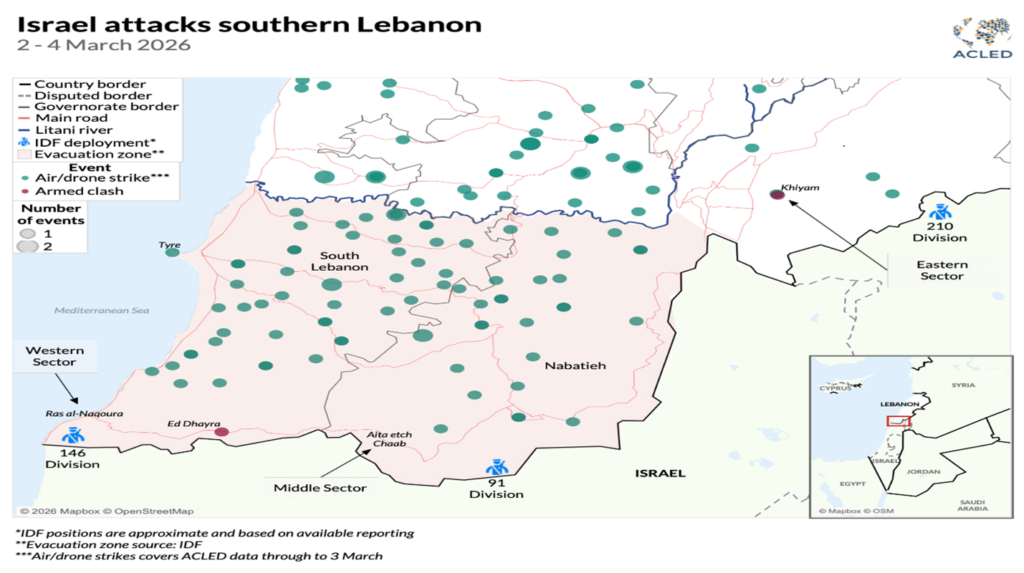
Finally, the level of coordination has increased between Iran and Hezbollah. Over the past week, strikes into Israel and areas ear the Lebanese border are being struck by both sides simultaneously. Israel’s northern frontier is on flames, and their invasion is stalled. Iran is not alone. Hezbollah also is fully engaged in fighting Israel. Hezbollah announced 70 operations on 29 March against Israeli forces, sites, settlements, and military infrastructure. The story continues in Part 2.