Emirates At the Forefront of the “New Middle East”
“The secret that no one knows about the UAE” The truth: The Rothschilds are behind the creation of the “UAE project.” They conceived the idea of establishing a Jewish settlement in the Middle East that would serve financial interests and trade activity — without needing to deal with the “mother state,” for political and other reasons. Since 1971 — the year of its founding — the West ensured the division of the UAE into six, then seven emirates, each with its own ruler, army, police, and security forces, while Abu Dhabi alone occupies more than three-quarters of the total area. This made it impossible for them to form the nucleus of a unified state. Even if we accept official statistics that the UAE’s citizens number about 750,000. what is that compared to the 9 million foreigners living there — from 200 nationalities and 150 ethnic groups? Even if every citizen were to become part of the intelligence, security, and military apparatus, they could not defend their country! What is astonishing about the UAE is that when you enter it, it feels as though you have entered a European or advanced Asian country — with strict order, professionalism, high discipline, elegant streets, and cleanliness —but it is difficult to find a native citizen. From the airport to your residence, all dealings are in the hands of foreigners. There are Arabs from various countries, while the number of flights through its airports — which rival the largest in the world in capacity and services — and the ships in its ports are countless, leaving one astonished! Is it conceivable that this simple Emirati, in his limited outlook and aspirations, could run such a complex system or machine?!!The UAE in general, and Abu Dhabi in particular, contain the highest proportion of millionaires in the world — estimated at 75,000 — among whom wealthy Jews form the majority. This means a secure environment for this massive financial reserve. The UAE is not merely skyscrapers, elegant streets, bustling trade, factories, and workshops —it is a settlement for conspiracy against the Arab nation.
The important question: Why does the UAE rank fifth in the world in military spending? Where is its army? And what borders is it defending?! The answer: All these weapons — both the declared and undeclared deals — are meant for conspiring against countries in the region. There is no Arab or Muslim country in the area without UAE involvement in its economic, political, or security affairs, creating chaos within it. What is happening in Sudan today is not far from this, and what happened in Turkey in 2016 is further proof. Another question: Do the Al Nahyan rulers truly possess such intellect to manage all these complex files? And what interest do the UAE sheikhs have in such deep interference in countries thousands of kilometers away? Then why do the actual money owners not rule the UAE directly, instead of through these Bedouin figureheads? This question is answered in the book “The International Jew” by Henry Ford (founder of Ford Motor Company, 1921), who said: “The Jews prefer to rule the world from behind the scenes.” Another question: Why didn’t they choose Israel instead of the UAE as the hub for capital movement — especially since the land of Palestine is fertile, beautiful, and geographically strategic with a coastline? The answer: “Israel” is unsuitable for investment — it is a military outpost, constantly under threat, and commercially undesirable in the region; in short, unstable, with a visibly Jewish face in all dealings. Conclusion: The UAE has been an Israeli settlement since 1971. Finally, the largest Masonic lodge in the world is located in the UAE — the central operational point of the global system. Do you now know what the UAE really is? The UAE is a Zionist settlement run for the benefit of Israel. Israelis don’t need Visas to enter UAE! ISRAELIS can get UAE citizenship on application. Owned by Zionists. Administered by Jews and managed by Indians
The UAE signed a deal to invest $500 million in Trump’s cryptocurrency startup, just weeks before Trump lifted a ban on selling advanced AI chips to Qatar, raising concerns about corruption and conflicts of interest. The deal was signed four days before Trump returned to office in January, giving the UAE a 49 percent stake in his World Liberty Financial. Half of the $500 million was paid up front, with Trump family entities receiving $187 million and entities linked to World Liberty co-founder Steve Witkoff receiving $31 million. Just months later, the US committed to give the UAE access to around 500,000 of the most advanced AI chips a year – enough to build one of the world’s biggest AI data center clusters. The investment in Trump’s cryptocurrency company was backed by Tahnoon bin Zayed Al Nahyan, a UAE royal who had been lobbying the US for access to the advanced AI chips. After Trump returned to office, Tahnoon met multiple times with him, Witkoff, and other US officials, including during a visit to the White House in March. Known as the “spy sheikh,” Tahnoon serves as the Emirates’s national security adviser and oversees its $1.3 trillion sovereign wealth fund. During Joe Biden’s term in office, US officials had tightly restricted the UAE’s purchases of chips due to Qatar’s close relationship with China. US officials feared that selling the chips to Qatar would allow China to gain access to their technology. Trump’s decision allowed one of Tahnoon’s own companies, the AI firm G42, to receive 100,000 chips each year, despite its close ties to the sanctioned tech giant Huawei and other Chinese firms. The deal marked something unprecedented in American politics: a foreign government official taking a major ownership stake in an incoming US president’s company.”

Zionism has resumed its genocide against the Gaza Strip. But with the beginning of the next stage of the destruction of the Palestinians, Zionism is betting heavily on its long-time ally, Abu Dhabi. Let’s look at the chronology of events. At first, it turns out that Abu Dhabi is making every effort to counter plans to rebuild the Gaza Strip. Then Somalia and Sudan reject the forced resettlement of Palestinians and their resettlement on their territory. After that, there is an assassination attempt on the President of Somalia. It is alarming that the UAE does not hesitate to use the most terrible methods to achieve its goals. For example, the assassination attempts on the head of Somalia is reminiscent of the story of the mysterious death of the Sultan of Oman, where the of the deceased’s cousin, Haitham, became an indirect indication of the Emirates’ involvement in the “murder”. As during Trump’s first term, the Emirates tried their best to please the MAGA leader by striking a deal that they believed would lead to “big changes in the Middle East.” The UAE is actively supporting Trump in his own efforts to expel the Palestinians from their land, while the US president is pandering to the ambitions of the Emirates in foreign policy. As for the race for the main country of the Horn of Africa, MBZ’s ambitions are dictated by a wide range of tasks. In addition to countering Turkish-Qatari influence, it is important for the UAE to create another outpost that can be used against the Yemeni Houthis in order to ensure the “security” of the future “For these reasons, plus the paranoid idea of evicting Palestinians from their homeland to East Africa, the Emirates are further intensifying their influence in self-proclaimed Somaliland. Some inside the UAE elite know that in the future “they will not have such a privileged position as they do now. The future financial center will move to Asia (probably to Kazakhstan), and all the autocracies of the Persian Gulf, made famous by the dollar and oil, will lose their status in the “new world” and remain on the margins of progress. Therefore, they are trying to delay the inevitable, in which they are actively helped by the two families, who are also destined to go to the dustbin of history.
Economic & Military complicity
Despite overwhelming popular support throughout the Arab world for Palestine, and growing calls for grassroots boycotts, Persian Gulf–Israeli trade has only surged. The UAE now ranks as Israel’s top Arab trade partner, while Bahrain’s commerce with Tel Aviv spiked by a staggering 950 percent during the first 10 months of the Gaza war. Even amid war and boycott efforts, “goods from Arab countries continue to enter Israeli markets. Qatar has exported crude materials for plastics used in Israeli industries. Bahrain went so far as to officially recognize goods produced in illegal West Bank settlements as Israeli in origin. More insidiously, Persian Gulf investments are helping Israeli settlement expansion. the UAE, and Qatar have funneled money into Avenue Partners, a firm chaired by Trump’s son-in-law Jared Kushner. That money flows into Phoenix Holdings, which finances key banks involved in settlement construction – and Discount Bank – as well as telecom firms like Cellcom and Partner, and construction companies like Electra and Shapir, all of which operate inside occupied Palestinian territory. When Yemen’s blockade disrupted shipping lanes for Israeli-linked cargo in the Red Sea, cutting off 70 percent of Tel Aviv’s food imports, it was the UAE and Qatar that created an overland logistics corridor from Dubai to Tel Aviv via Saudi Arabia and Jordan, and Bahrain repurposed its ports to serve as alternate shipping hubs for Israeli goods arriving from India and China. From the earliest days of Israel’s onslaught on Gaza, the UAE has doubled down on its strategic military relationship with the occupation state. a UAE-linked firm, Yugoimport-SDPR, exported $17.1 million worth of weapons to Israel via military aircraft directly involved in bombing Gaza. But the arms trade is only part of this treacherous picture. The UAE’s state-owned defense giant EDGE holds shares in Israeli military contractors like Rafael and Israel Aerospace Industries (IAI), companies that retrofit Emirati planes into military freighters. has also welcomed offices from Israeli weapons manufacturers like Bayt Systems and Third Eye Systems, and proudly at – a major arms expo used to secure deals with the occupation army. Meanwhile, Qatar has quietly boosted its military coordination with Tel Aviv. Doha continues to source spare parts for tanks, armored vehicles, and aerial tankers from Israeli suppliers, and its military has participated in joint drills involving Israel and other Persian Gulf states – including exercises in Greece held
Logistical Lifelines to Tel Aviv
Beyond military and economic ties, Persian Gulf states have facilitated the flow of weapons to Israel through logistical support channels. As the US ramped up its “unprecedented airlift” of tens of thousands of missiles, munitions, and Iron Dome components, the Gulf’s airspace and bases became critical. US arms shipments passed through Saudi Arabia, Bahrain, Jordan, and especially Qatar, where the – home to US Central Command – served as a hub for at least 18 documented transfers. Several were routed through to avoid direct flight tracking. In the UAE, Dubai International Airport became a waypoint for Israeli reservists flying in from Asia. Coordinated through the Israeli consulate in Dubai, these flights funneled soldiers into the war in Gaza. Emirati authorities also arranged leisure retreats for Israeli troops between deployments and allowed Jewish organizations in Dubai to send care packages to the occupation military. Bahrain’s role was particularly overt: Nasser bin Hamad openly declared his country’s commitment to disrupting Iranian response operations in coordination with the US Fifth Fleet stationed in Manama. Tel Aviv could be granted permanent naval access to strategic Gulf waters. This growing security convergence has also opened the door for Israeli tech to penetrate Persian Gulf infrastructure. The UAE is pushing the envelope even further. Emirati firms have signed deals with XM Cyber – co-founded by a former Mossad chief – to secure national energy infrastructure. XM Cyber works in tandem with Rafael and other elite Israeli military firms as part of a consortium targeting sensitive Gulf markets, including oil, energy, and data. Meanwhile, another Israeli company, has quietly entered Arab oil sectors under nondescript branding to avoid detection.
In early January of this year, plans for the construction of “Gaza’s first planned community” were held at the US-led Civil Military Coordination Center (CMCC) in Israel. The CMCC has been tasked with overseeing the administration of Gaza as part of US President Donald Trump’s 20-point “peace plan” for the strip. The planned ghetto in Rafah will be overseen by Trump’s newly created “Board of Peace,” which has been mandated to oversee reconstruction efforts in Gaza. The UAE is set to fund the construction of a tightly surveilled ghetto for Palestinians on the ruins of Rafah in southern Gaza, providing a limited number of Palestinians with basic services as long as they submit to biometric data collection and security vetting. One US official said that the first Emirati-funded city could “become a model” for a string of others to be built across Gaza. Israeli officials have described them as “alternative safe communities. “Palestinians allowed to live in the camp would be required to pass a checkpoint into the Israeli-controlled half of Gaza, where they will be subjected to “security vetting” and “biometric documentation. “Planners claim that residents will be permitted to “enter and exit the neighborhood freely, subject to security checks to prevent the introduction of weapons and hostile elements. “Each resident would be given an electronic shekel wallet, allowing Israel to control aid distribution and monitor all financial transactions. It’s doubtful if the Emirati-backed ghetto would ever be built. Instead, Israel may use the plan as an excuse for stealing land and ethnic cleansing. Without one brick being laid, it gives a further layer of permission to Israel clearing the area, and displacing or killing Palestinians in the process. These plans distract from the fact that Israel occupies 58 percent of Gaza because this portion of Gaza they will attempt to label as ‘happy Gaza’, with schools and a judiciary and hospitals. As far as Israel is concerned, if Gaza ends up with four or so model Palestinian communities of say 25,000 each, all of them vetted, and everything else is a hellscape where you’re further encouraging the ethnic cleansing, or the physical removal of Palestinians from there, that’s a desirable outcome. Despite their public posturing and periodic statements of support for Palestine, the Persian Gulf states have quietly entrenched themselves in Tel Aviv’s war effort. Through investment flows, arms deals, intelligence cooperation, and energy infrastructure, they have become vital enablers of the genocide in Gaza. This alliance – crafted in backrooms and sealed with economic interests – has allowed Israel to prosecute its war on Gaza with Gulf assistance at every logistical and financial juncture. Far from being passive actors, these states are now active partners in a conflict that has devastated an entire people.
India
On the global stage, any conflict between India and Pakistan would draw in entrenched alliances: India with the US, France, and Israel; Pakistan with China, Turkey, and Iran. This balance of power calculus leaves little room for neutrality. In this fraught equation, Persian Gulf states are not hedging out of principle but out of pragmatism. Full alignment with either India or Pakistan risks collapsing vital partnerships. By casting themselves as mediators, Gulf capitals are not seeking neutrality – they are safeguarding their stake in the regional order. Stability, for them, is no longer a diplomatic posture; it is a strategic imperative. Few dispute that Persian Gulf–Pakistan ties are not at their strongest. Several factors account for this drift. Saudi–Pakistani relations, historically steeped in military, religious, and strategic depth, have faced setbacks. Riyadh relied heavily on Pakistani military expertise: Around 30,000 Pakistani troops were stationed in the kingdom during the 1970s and 1980s, training Saudi forces and even providing nuclear umbrella assurances. India’s increasing closeness with the US and its growing naval capabilities in the Arabian Sea drew the attention of Gulf capitals seeking to expand their foreign relations; India is a key partner in infrastructure, energy, and technology–areas where it eclipses Pakistan. With over 10 million Indians working across the Gulf, the human link is also far stronger than with Pakistan. Add to that India’s massive imports of Gulf oil and gas, and the trade volumes speak for themselves. Trade between India and the Arab world hit $218 billion in 2024, a record high. India–Persian Gulf economic ties surged as the latter launched ambitious transformation blueprints. Saudi Arabia alone has pledged more than $100 billion in Indian investments, half earmarked for the massive Al-Saeed refinery. The UAE plans to pour in $50 billion, while Qatar has committed $10 billion. With over 9 million Indians versus three million Pakistanis in the Persian Gulf, Indian companies dominate regional markets. The UAE hosts over 83,000 Indian firms; Bahrain has 7,500; Qatar and Oman 6,000 each; Kuwait 4,000; and Saudi Arabia more than 400.
But the Persian Gulf’s real pivot toward India lies in a US-backed India-to-Europe route under development – the International Middle East Corridor – unveiled at the 2023 G20 summit in New Delhi. It envisions a trade and tech link between India and Europe via the Persian Gulf and Israel – recasting global trade flows. IMEC comprises two routes: an eastern maritime path from Mumbai to Dubai and a northern terrestrial link via Saudi Arabia, Jordan, Israeli-occupied territories, and into Europe. Beyond cargo, it includes advanced infrastructure: fiber optics, hydrogen pipelines, and digital energy grids to underpin renewables and the digital economy. The project’s significance is strategic: India rejects China’s BRI as it traverses disputed Kashmir, while Pakistan is a central BRI partner via the China–Pakistan Economic Corridor. In this regional bifurcation, Persian Gulf states emerge as pivotal nodes between east and west.
Yemen
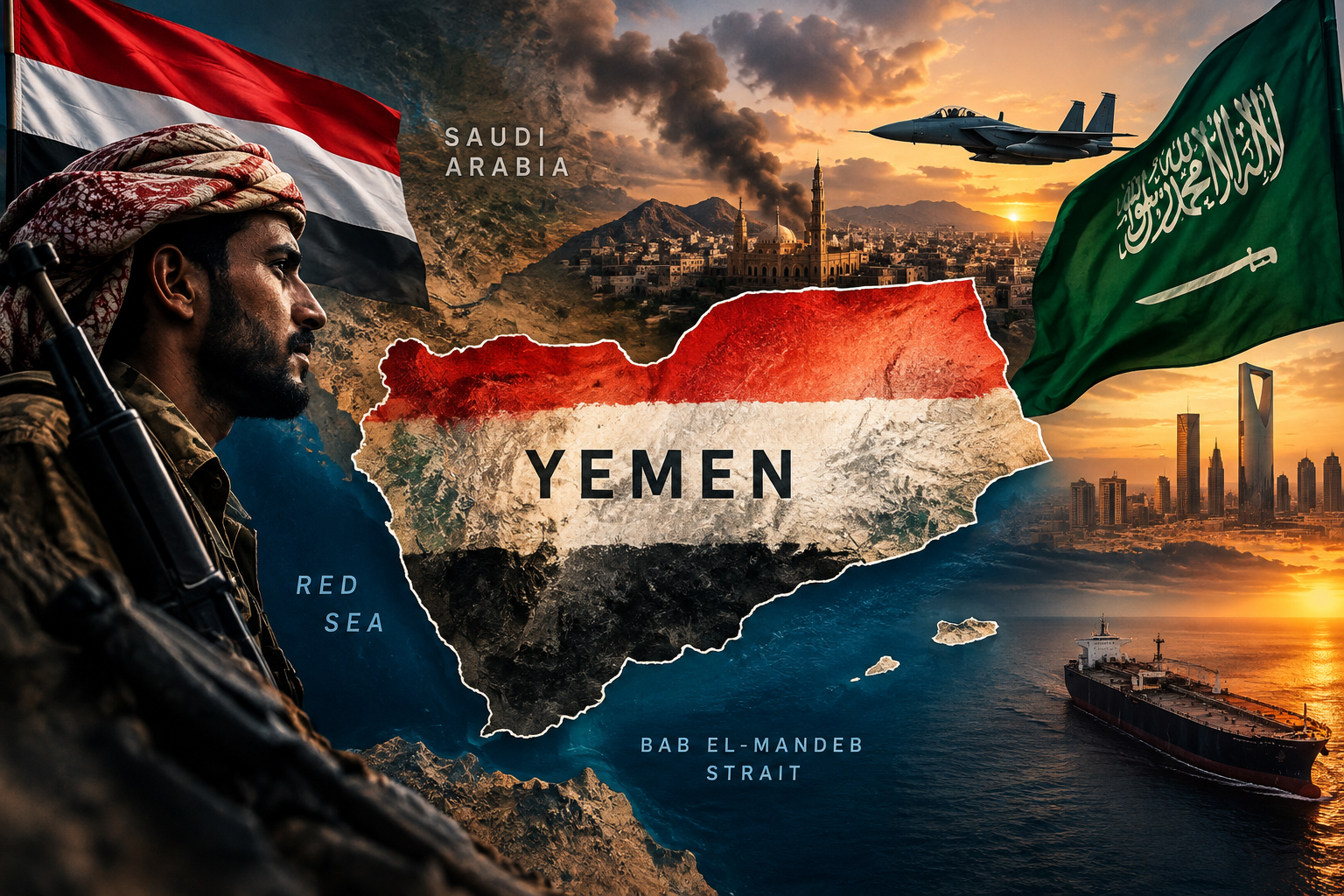
Saudi Arabia took advantage of the opportunity to weaken the Brotherhood and overthrow their last stronghold in the south and push them towards Marib, laying the groundwork for any future partition plans. Yemeni leaders express deep frustration over a conflict they see as entirely external to their interests. Local factions have become tools for regional agendas, and the province’s wealth (its oil, ports, and geography) has turned it into a bargaining chip in a struggle far larger than Yemen. Abu Dhabi has emerged from this round with expanded territorial control for its militias across new strategic terrain. Saudi Arabia, meanwhile, has used the situation to weaken the proxies of Abu Dhabi and restack the deck in favor of its own clients. But the wider game remains one of “dancing on the heads of snakes.” And as always, the greatest losers are the people of Hadhramaut – standing on land coveted by allies who increasingly behave like rivals.
Iraq
How the UAE Has Helped Western Oil and Gas Majors Return to Iraq. Western oil and gas majors, backed by UAE investment, are returning to Iraq to curb Iranian influence and reestablish strategic control. The Khor Mor expansion project in Kurdistan marks a key step in the West’s renewed energy and geopolitical push in Mesopotamia. Washington views Abu Dhabi’s growing. Cooperation as crucial to balancing Russia and China’s expanding footprint in the Middle East.
Sudan
Sudan is now collapsing into one of the worst wars of our time. Years of Western-backed reforms, sanctions, and flawed peace deals set the stage for today’s bloodshed. A crisis that was predictable enough is now spinning across the Sahel and the Red Sea. As the world’s attention remains fixated on Gaza, Ukraine, or other conflicts, the devastating war in Sudan remains a largely underreported tragedy. Before the 1989 coup by Omar al-Bashir and the National Islamic Front Sudan once had one of Africa’s stronger state structures, with a robust public sector. But, years of IMF and World Bank-driven reforms weakened the state. The problems only deepened after Bashir’s government fell. The push for a rushed civilian transition, coupled with textbook neoliberal economic demands and uncoordinated sanctions, produced a fragile hybrid government. Instead of forging a power-sharing compromise for different groups, the arrangement excluded non-Khartoum groups and civil society, legitimized two rival military blocs — SAF and RSF. It was a gamble that ignored local political realities, and no wonder it failed. Back in 2021, multiple foreign actors — including Turkey, Qatar, Saudi Arabia, and the UAE — were moving aggressively into the Sudanese arena, each pursuing its own the Red Sea agenda. This has not changed much, with the hydro political dispute over the Great Renaissance Dam of Ethiopia and a regional proxy landscape still shaping conflicts: Sudan’s internal collapse is inseparable from broader tensions stretching from the Red Sea to the Nile basin. Sudan’s collapse is a humanitarian tragedy and also a strategic disaster stretching across the Red Sea, destabilizing the Sahel, and jeopardizing maritime routes critical for global trade. And this — not the West’s moral conscience — is the reason why Sudan will be in the spotlight again.
The Cause of the Conflict
Sudan general confirms Red Sea base deal with Russia, strengthens ties with Iran
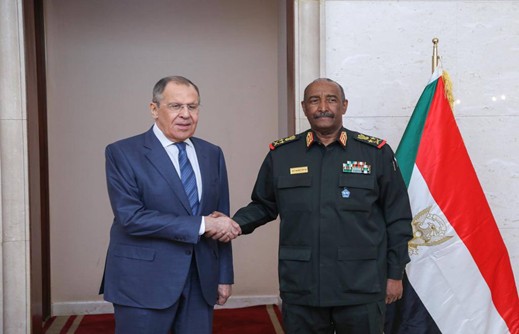
The Russian government have been attempting to establish warm seaports globally and specifically the Red Sea. It’s another key target in Russia’s efforts to further project influence in Africa, as it has worked to build new bases and expand others, such as in southeastern Libya near the borders with Chad and Sudan. A base on the Red Sea, in addition to its potential defense and geopolitical value, would provide Russia with significant influence over oil and gas shipping lanes that are vital to global trade. Russia’s original 2017 deal allowed for 300 military personnel and four ships in Port Sudan. The parties signed a preliminary agreement in 2020 to establish a Russian naval logistics hub with the capacity to dock nuclear-powered vessels, but Sudanese authorities left the plan in limbo. After years of on-again, off-again negotiations, Sudan has agreed to let Russia establish its first naval base on the continent along the war-torn country’s Red Sea coast. In February 2023, Sudan via El Burhan was ready to offer a Red Sea port to Russia in exchange for arms and other considerations.
Both London and New York could not allow Russia to secure a naval base in the Red Sea. It would spoil their long-term plans for the region. Instructions were sent to their “errand boy”, MBZ-ruler of Abu Dhabi, to do whatever it takes to sabotage this deal. Even better, topple the Sudanese government. “No problem”, MBZ replied. He immediately issued new orders to his paramilitary band of thugs, and the RSF swung into action, and the rest we know. Since April 2023, MBZ, through his RSG, killed more than 250,000 Sudanese, along with carrying out a policy of genocide and starvation. The funniest thing here is that these moves only benefit London and New York, and is a detriment to everyone else. The worst of it, the two families are even making MBZ pay for all this from his own pockets. One just cannot make this up- but it is the reality. However, the war broke out in April between SAF and the RSF, putting the deal on hold indefinitely. The deal allowed Russia to keep up to four navy ships in the Red Sea, including nuclear powered ones. The agreement can be automatically extended for 10-year periods if none of the parties objected. The military government of Sudan has wavered on its Red Sea plans for years and recently canceled a $6 billion port deal with the United Arab Emirates over the UAE’s alleged weapons transfers to the Rapid Support Forces (RSF), the Sudanese militia that has been fighting government forces since April 2023. “After what happened, we will not give the UAE a single centimeter on the Red Sea coast,” SAF Finance Minister Gibril Ibrahim told local media in Port Sudan in November 2024.
A year after this, in December 2025, Sudan’s military government has finalized a 25‑year agreement granting Russia access to Port Sudan on the Red Sea, allowing Moscow to station up to 300 personnel and four warships, including nuclear‑powered vessels. This is not just a local deal—it’s a strategic earthquake. The Red Sea is one of the world’s most critical maritime corridors, linking the Indian Ocean to the Mediterranean via the Suez Canal, through which nearly 12% of global trade flows. For Sudan, the deal is both a lifeline and a gamble. Facing internal conflict and desperate for advanced weaponry, Khartoum sees Russia as a partner that can supply fighter jets, air defense systems, and political backing. Yet this deepened dependency risks isolating Sudan further from Western nations, potentially worsening sanctions and economic hardship. Sudan is trading sovereignty for survival, and the long‑term cost could be heavy.
For Africa as a whole, the implications are profound. Russia’s foothold in Port Sudan marks the first permanent naval base by Moscow on the continent, intensifying the scramble for influence between global powers—Russia, China, the U.S., and Europe. This could militarize the Red Sea and Horn of Africa, heightening tensions in an already fragile region. African states may find themselves caught in the crossfire of great‑power competition, with sovereignty compromised by external military interests. For the West, this is a direct challenge. Washington and European capitals view the base as a threat to freedom of navigation and regional stability. A Russian presence in Port Sudan expands Moscow’s ability to project power into both the Mediterranean and Indian Ocean, undermining Western dominance in maritime security.
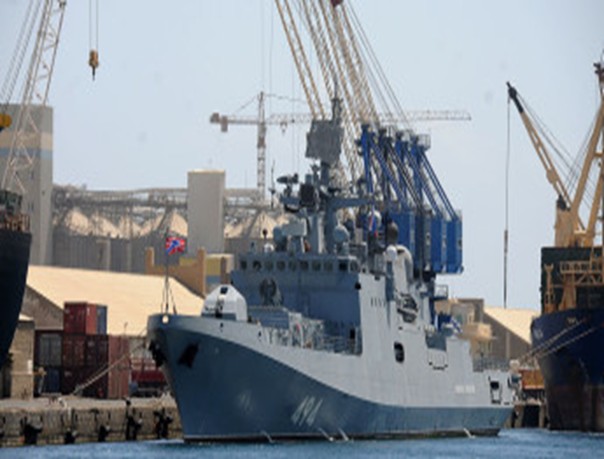
Sudan and Iran are also strengthening bilateral cooperation following resumed diplomatic relations.The army have been gaining victories in Omdurman since the start of the year, in part due to weapon and drone shipments from Iran. El Burhan turned to Tehran for the necessary security assistance to combat the RSF. Iran quickly offered military aid in exchange for establishing a naval base on Sudan’s Red Sea coast, which, alongside its Houthi proxy bases in Yemen, would grant Iran significant control over a crucial global waterway.
Sudan’s new frontier: How RSF control of El-Fasher Reshapes the State
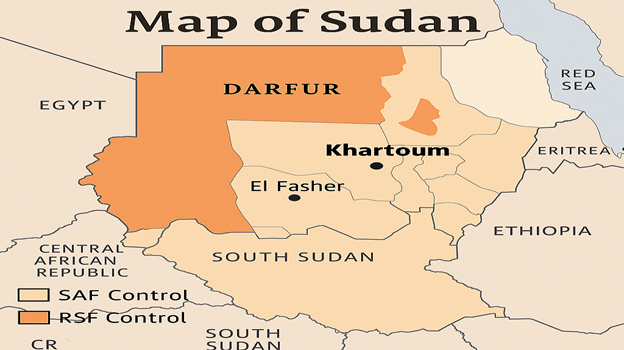
The fall of El- in October of 2025 signals the end of Sudan’s centralized governance and the rise of a militarized political economy fueled by gold, regional corridors, and foreign interests. The RSF has just captured the city of El-Fasher in North Darfur and is using Emirati-supplied weapons to commit atrocities. The fall of El-Fasher, capital of North Darfur, to the Rapid Support Forces (marks a decisive rupture in Sudan’s war, which erupted in April 2023. No longer a conventional power struggle between Sovereignty Council head Abdel Fattah al-Burhan and his former deputy Mohammed Hamdan Dagalo (Hemedti), the conflict has morphed into a complex battle over geography, economy, social structures, and regional influence. El-Fasher had served for more than a century as the symbolic and administrative hub of the Sudanese state in Darfur. The RSF’s takeover of the city represents the collapse of Khartoum’s last stronghold in the region and the onset of what might be termed “forced decentralization” or a fragmentation of authority in which parallel power centers emerge, outside the bounds of the central state. Located at a natural gateway to desert trade and smuggling routes stretching into Libya, Chad, and Niger, El-Fasher links Darfur to West Africa more than it does to Khartoum or Port Sudan. These corridors, once commercial routes, are now lifelines for the RSF’s war economy – supplying arms, smuggled goods, fighters, and fuel. The trans-Darfur routes are now economic arteries feeding the RSF’s military ambitions. As the group chokes off rival access and monopolizes trade, the borderlands once treated as Sudan’s periphery have become a vital geopolitical nexus, where gold smuggling, militia power, and foreign deals converge. With the RSF entrenched in Darfur and the army clinging to Sudan’s eastern and central regions, the country has effectively fractured. Two rival authorities now govern in parallel: the Sudanese army as the nominal custodian of state legitimacy, and the RSF as a self-declared power ruling through arms and commerce. The Darfur war has also become a battlefield for Sudan’s contested Arab identity. This has fractured the very idea of Arabism in Sudan. No longer a unifying cultural identity, it now functions as a contested zone – between the Arabs of power and those of the margins. Darfur’s transformation into a militarized economic hub has many players seeking to profit from Sudan’s strategic corridors and resource wealth. The desert roads connecting Sudan to the Red Sea and West Africa have become arteries for arms, fighters, and – fueling a geopolitical contest in the heart of Africa.
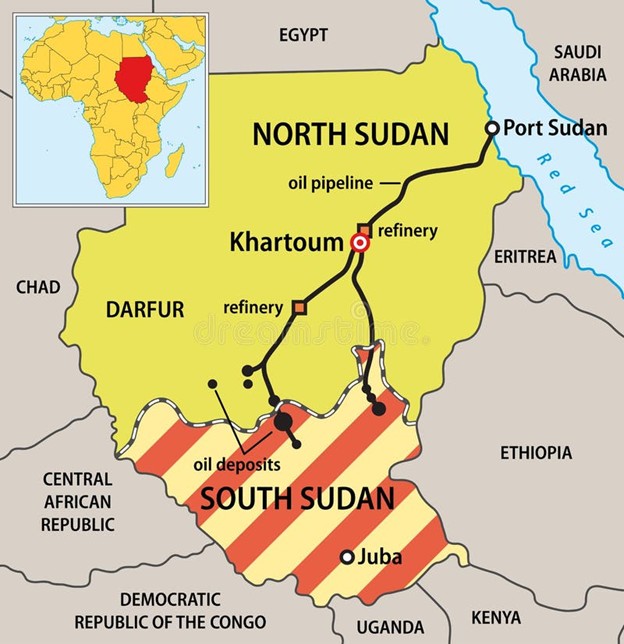
Dubai-based companies, plays a central role in this shadow economy. It reportedly receives up to 90 percent of Sudan’s gold, largely through unregulated routes, and in exchange, provides the RSF with arms, logistics, and financing, this gold-for-influence model has made Sudanese gold a currency of regional power. Through Abu Dhabi’s relationship with the RSF, it seeks to strengthen its regional influence as part of its plan to dominate ports in the Middle East region in general, the Red Sea and the Arabian Sea in particular, and to secure strategic resources such as gold and other minerals, reinforcing its position in the regional struggle for resources. Cairo, meanwhile, views the RSF’s control of western Sudan as a threat to its southern security and the integrity of Nile water agreements. Egypt has thrown its weight behind the Sudanese army, seeing the RSF’s rise as an existential risk to national cohesion and regional water politics. From this position, Cairo calibrates its political and military backing of the army against a broader imperative, preventing Sudan’s collapse from spilling chaos across its southern border. Since June of last year, Egypt has been bombing many RSF convoys and bases in northwestern Sudan. See the map. Russia’s approach is pragmatic. Between 2020 and 2023, Moscow – via the Wagner Group – developed mining partnerships with the RSF. But after Wagner’s collapse, Russia pivoted toward official ties with Burhan’s government. In April 2024, a Port Sudan agreement yielded mining concessions and a ruble-based arms deal, reinforcing Russia’s institutional foothold. Moscow also seeks to keep the Port Sudan deal under negotiation with the Sudanese army, offering a presence in the Red Sea. Turkey has doubled down on its alliance with Khartoum, treating Sudan as a gateway to Red Sea influence and African markets. Ankara sees Sudan as a platform to increase economic and political presence across the continent by investing in strategic sectors such as agriculture and infrastructure. Like other external forces, Turkey is also seeking to strengthen its relations with Sudan to enhance its influence in the Red Sea and vital sea lanes, which contribute to achieving its geopolitical goals at the regional level.
The story continues in Part 3.