
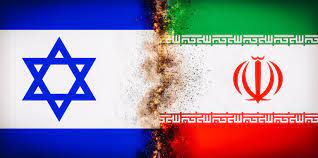
1 War Mobilization
2 Why is America attacking Iran?
3 De-dollarization
4 Reviving the Sunni-Shia conflict
5 Transportation Corridors
6 SCO & BRICS
7 Russia, China & Iran
8 Wall Street & The Repo Market
9 Negotiation to Detonation
1 War Mobilization
Iran prepares for US/Israeli attack
When Iran found itself surrounded by the US military, following US invasions of Afghanistan to its east, and Iraq to its west, it knew it was next. And, so Iran began developing its military to face a US invasion and bombing campaign. It has since been preparing for 23 years now. It has learnt lessons from US campaigns against Iraq, Afghanistan, Serbia, Libya, and taken notes. All-important infrastructure, supplies went underground. Multiple missile cities, production facilities, and even its air force has its own infrastructure-underground. These are Iran’s “ace in the hole”, wherein no US bombing will be able to destroy this.
What is Mosaic Defense?
Created in 2005 at the height of the War on Terror – when Iran faced threats of US aggression from both east and west, Defa-e Mozaik became the IRGC’s flexible, asymmetric defense posture, with no centralized command, designed specifically to take on a conventionally superior adversary. Mosaic Defense stipulates the IRGC’s division into 31 operational units – with the commander of each given free rein to act independently if central command is wiped out. When US-Israeli bombings killed IRGC chief and other IRGC and Armed Forces commanders, it had no impact on Iran’s retaliatory response, which began immediately thanks to Mosaic. In fact, the intensity, scale and unpredictability of Iran’s retaliation has arguably proven more dangerous for enemies than if more cautious central command structures been left intact. Other key tenets of Mosaic Defense: Radio and comms silence, designed to neutralize America’s powerful EW capabilities. Deployment of Basij volunteer militias (450k+ personnel) for internal security, plus ‘stay behind’ and defense in depth guerrilla warfare roles in the event of a (suicidal) enemy ground incursion. Equipment of each regional unit with everything needed for modern warfare, from missiles and drones to fast attack boats, coastal defense batteries and mines for the IRGC Navy. Decentralized integrated air defense posture allowing individual batteries to function as local air defense hubs.
The US & Israel Get Ready
The Pentagon has been pouring military assets into the region since January. More than 200 fighter jets, 2 aircraft carrier groups, air defense systems, ammunition, more than 160 air refueling tankers, and much more. This is besides what Israel has. Plus, the British are all in, in terms of air power, intel and logistics. So are the French. But the greatest mystery is that this Western military power is much less than that of February 1991 or March of 2023. For example, the US had 6 aircraft carriers in the region in 1991. Today, it has two. All of this just helps to reinforce our suspicions and analyses that the US has no intention of fighting a long war this time. It will create enough chaos n then LEAVE. Nothing else makes sense. The US and the West is being de-militarized through the Ukraine war and the Gaza genocide. Current missile stockpiles suggest a short war. The West just does not have enough offensive and defensive missiles. Plus, its navy is not in the best of shape, after having taken some strong hits by the Houthis last year.
2 Why Is the US Attacking Iran?
There are many reasons why the two families need to attack Iran, and bring the country into its orbit. We shall explain several of the key reasons. The first is that the Rockefeller family was double-crossed by Khomeini in 1979, when both London and New York toppled the Shah and replaced him with Khomeini. That 46 years ago. The second is that Iran is very rich in terms of energy resources. Oil is the lifeblood of the family, and they need to control ALL THE OIL EVERYWHERE, for them to become the dominant, uncontested ruling power in the world. Thirdly, the potential of causing a Sunni-Shia war, as a potential gun to the heads of MBS and other oil rich Arab states. Fourthly, is the ongoing slo-mo collapse of the dollar-centric western financial system. Fifthly, with Iran aligned to the US, the task of breaking up Russia, and containing China through energy blackmail, will be easier to achieve. Sixth, is the destruction of the Eurasian Land Bridge between East and West-through the BRI. This leaves only the sea to conduct trade. And with US dominance of maritime trade routes and chokepoints, global American dominance for the foreseeable future is assured. All of these will help to extend global dollar dominance. Lastly, With Iran under its control, it will make the task of its “attack dog” – Israel, much easier to “control” the region. By this, w mean that Iran’s allies – Hezbollah, Houthis and the Palestinian Resistance will be left without sponsors, and thus, much weakened and vulnerable to Israel.
The Weakest Link
Of the three Eurasian powers Russia, China and Iran, the weakest link is Iran. Wall Street and London tried their best to destroy and take over Russia over the past 4 years, but failed. Attention turned to Iran. This latest move to attack Iran by the 2 families is a last gasp effort to maintain global dominance. If they succeed, then it would make their task of destabilizing Russia and China through Iran much easier. Iran’s geographically strategic location has long positioned it as a bridge between East and West, as well as a key crossroads along the ancient Silk Road. Since 2013, when Chinese President Xi Jinping launched the Belt and Road Initiative (BRI), Tehran has publicly expressed its support for the project. In an increasingly polarized global context, Western sanctions appear not only partially ineffective but also act as a catalyst for strategic alignment among historically rival actors such as Moscow, Beijing, and Tehran.

3 DE-dollarization
On September 14, 2000, Iraq’s President Saddam Hussein emerged from a cabinet meeting and announced that, with immediate effect, Iraq would now sell its oil for the Euro, and not the dollar. He had just signed his death warrant. At that time, Iraq was producing around 2 m BPD- out of total global production of 80 m BPD. Of this total, about half was globally traded, or around 40 mBPD. Which meant that Iraq’s exports equaled to about 5% of globally traded oil. Over the course of the next 30 months, the dollar fell by 20 % against the euro-due to this one factor alone. The US invaded Iraq in March 2023, and by June, Iraq was back selling oil for dollars. If just 5 % of globally traded oil sold outside the dollar could bring the dollar down by 20 % in less than 3 years, now imagine what the current situation poses for the dollar. Today, global oil production is approx. 100 mBPD. Around 50 mBPD is traded globally. Of this, Russia and Iran account for around 7 million barrels- or around 14 %. And, this has been going on for the past 4 years. The dollar has lost value over that period. This is oil trades getting de-dollarized. Bad for the dollar. Bad for the Rockefeller Empire. The US and Britain tried very hard to destroy Russia these past 4 years, but failed. Now, they have turned their attention to Iran- the weakest link. If they could regime-change Iran, then Iran would be brought back into the dollar system.
Petro-Dollar Deal Ends
The 1973 war was choregraphed by the Rockefeller family, with Kissinger acting as the ringmaster. The aim was to replace the gold-dollar with the petro-dollar. By May 1975, the deal was done between Saudi Arabia and the Rockefeller family. The petro-dollar was born. This agreement had a 50-year time limit. That limit expired on May 2025. A few weeks prior to this, a cargo of oil was sold to China for yuan-the first time ever. It is NOT coincidental that the US/Israeli combo attacked Iran in June 2025. Going forward, the one factor protecting the dollar system was the US military. A weakened US military will find it hard to enforce this system. The Saudis will then be in a much stronger position to sell oil for yuan or any other currency.
4 The Sunni-Shia Conflict
In the modern era of geopolitics, we find that the Sunni Shia conflict began in 1979, when the Iranian revolution took place. The two families toppled the Shah and placed Khomeini as Iran’s new ruler. Khomeini immediately broke from them, and the conflict between the two sides have never been reconciled. Nonetheless, by the early 1990s, both the US and London deemed the situation to be perfect to create a Sunni-Shia conflict. This would give the US a perfect pretext to remain in the region and build up a strong military presence in the region. This all ended when Russia and China brokered a peace deal between Saudi and Iran in March 2023. Thus, neutralizing their principal tool of “divide-and-rule” for the region. Since then, much progress has been made between Saudi and Iran. But there are strong indications that the CIA/Mossad will create false flag operations to make Saudi and Iran fight. If that happens, then the Rockefeller/Rothschild Empires will win. Remember, the aim is to blow-up the Middle East. And, from there, the conflict will extend into Eurasia. This follows the pattern of World War 2, which ravaged Eurasia. The only winner was the US. If the US succeeds again, then, the family reckons they can prolong their global empire, safe and secure behind two oceans, in their “Fortress America”. On Sunday, Mossad agents hit the Ras Tanura refinery complex in Saudi Arabia. An obvious false flag. Iran denied any part in this, and it was subsequently found out that it was the Mossad. Saudi Intelligence caught some Mossad agents. So, this plan to create a conflict between the two failed. It was something that New York and London were desperately counting on. Had this succeeded, then the US would have won.
5 Transportation Corridors
Iran is strategically essential to China’s Belt and Road Initiative (BRI) as a vital land-sea bridge connecting East Asia to Europe and the Middle East, offering a crucial, secure route for energy imports and trade. Through a 25-year cooperation pact, Iran supports Chinese infrastructure projects, deepens Eurasian connectivity, and helps diversify China’s energy supplies. Strategic Geographic Location: Positioned at the crossroads of Central Asia, the Persian Gulf, and the Caucasus, Iran acts as a link connecting China to Europe, bypassing maritime bottlenecks. Energy security and supply: Iran is a major oil and gas supplier to China, aiding Beijing in diversifying its energy sources and strengthening its energy security in a region with 75 % of global reserves. Infrastructure Connectivity: Through the 25-year roadmap (valued at $400 billion), China is investing in Iran’s transportation, including railways, ports, and energy infrastructure, aiming to create robust, logistical corridors across Eurasia. Major ports like Bandar Abbas, facilitates China’s maritime trade routes through the Persian Gulf. On May 25, 2025, the first freight train from Xi’an, China, arrived at the Aprin dry port, Iran, marking the official launch of a direct rail link between the two countries. This new logistical artery significantly reduces transit times (from 30–40 days by sea to roughly 15 days by land) yielding a direct impact on transportation costs. The railway deepens Tehran’s integration into the Belt and Road Initiative (BRI) and offers Central Asian countries an access to Iranian ports on international waters. The advantages of this new infrastructure are not merely commercial. The route also circumvents vulnerable maritime chokepoints often patrolled by hostile actors, offering Tehran and Beijing a potential tool to bypass sanctions imposed by the United States and the European Union. Moreover, the railway presents a resilient alternative to contested maritime bottlenecks. As evidenced by the recent rise in shipping costs driven by instability in the Red Sea, key maritime chokepoints, such as the Suez Canal, the Strait of Malacca, and the Strait of Hormuz, are highly volatile and can severely disrupt global trade flows. The Strait of Malacca, is a critical chokepoint over which Washington maintains strategic control through a huge naval base and regional alliances, enabling it to close the strait at will. Against this backdrop, the China-Iran rail axis assumes crucial importance, offering both countries a structured alternative shielded from American military pressure. Finally, the China-Iran railway corridor inside the broader China–Kazakhstan–Uzbekistan–Turkmenistan–Iran–Turkey/Europe transport corridor, also ties into the International North-South Transport Corridor (INSTC) backed by Moscow, emerges as a potential alternative to the IMEC or India-Middle East-Europe Corridor – the Indo-Western project aimed at turning Israel into a strategic hub for commercial and energy flows in Western Asia. In the context of the 25-year Iran–China partnership agreement signed in 2021, Western primaryconcerns revolved around the potential for Chinese involvement in the Chabahar port, and the broader implication of Beijing securing a naval presence in the Western Indian Ocean . As of 2026, Iran remains a central component of China’s “drive west”, acting as a key partner in expanding economic and technological cooperation, including IT and industrial development.

6 SCO & BRICS
BRICS is an economic organization while the SCO is a security/military organization. These two entities have been built up to protect the Eurasian core (Russia, China and Central Asia) from the American/Rockefeller Empire. Started in 1995, it has evolved into a very protective shield against the US Empire. By destroying Iran, the US reckons that it would be able to destroy these two organizations from within. Remember, the formation of the SCI in June 2001, led to David Rockefeller instructions to the White House to invade Afghanistan following the 9/11 false flag op conducted by the CIA-a 100 % Rockefeller entity.
A Back-Door to Central Asia
Iran is a critical geopolitical and geoeconomics crossroads of Eurasia, functioning as a bridge between the Caspian Sea, the Persian Gulf, Central Asia, and South Asia. Its strategic position makes it an essential hub for transcontinental trade particularly in the context of emerging non-Western trade routes, such as INSTC. Iran’s position in Eurasia is unique, sitting at the junction of the Middle East, the Caucasus, and Central Asia. Its geographic location grants it extensive land borders, proximity to critical maritime routes, and deep historical ties to many neighboring states. Tehran’s strategic outlook in the South Caucasus and Central Asia therefore extends across economic, security, and geopolitical domains.

Coordination between Iran, Russia, and China has become a form of “structural synergy” that undermines Washington’s ability to isolate its rivals. This identifies Iran as a “central node” in the Eurasian landmass – one that prevents Russia’s geographical isolation while securing China’s energy needs beyond the reach of US naval control. Any serious destabilization of the Iran would not remain confined within its borders. It would translate into a dual strategic blockade targeting both China and Russia: reviving security chaos across Eurasia’s interior while striking at the financial and energy platforms that emerging powers increasingly rely on to loosen unipolar dominance.
7 Russia, China & Iran
For Moscow, Iran’s importance begins with geography. It offers Russia a vital geopolitical opening beyond its immediate borders. Iran’s significance lies in its function as the sole land bridge connecting the Eurasian heartland to the Indian Ocean via the International North–South Transport Corridor (INSTC). This route provides Russia with insulation from NATO’s maritime pressure in the Baltic and Mediterranean, effectively converting Iranian territory into strategic depth protecting Russia’s southern flank. Russia frames Iranian geography as a cornerstone of the “Greater Eurasia” concept, central to Moscow’s effort to dilute western hegemony across the continent. Cooperation with Iran has emerged as one of Moscow’s most important routes around SWIFT-based isolation. Tehran has increasingly functioned as a re-export hub for Russian technologies and goods, frustrating efforts to economically isolate Moscow.
For Beijing , energy has emerged as the primary point of leverage. As the world’s largest oil importer, Beijing remains sensitive to supply stability and pricing. In parallel, Washington has expanded its naval and coalition presence across key trade corridors stretching from the Indian Ocean to the western Pacific. This posture is framed not only as deterrence but as a persistent reminder that maritime supply security remains tied to US-led power balances. US engagement has also intensified across Central Asia and the Caucasus – regions that constitute strategic depth for Russia and critical corridors for China’s BRI. From Moscow and Beijing’s view, expanded security and investment ties in these areas represent an effort to geographically and weaken its role as Eurasia’s connective knot. For Beijing, Iran plays a comparable role within a different strategic equation. As US naval pressure tightens across the Pacific, China’s westward extension through Iran has become increasingly difficult to replace. The Rockefeller Empire identifies Iran as one of the most critical geographic nodes in the Belt and Road Initiative (BRI), providing Beijing with a land-based corridor into West Asia that bypasses US-controlled maritime choke points – from the Taiwan Strait to the Mediterranean approaches. Iran’s intermediate position between the Eurasian interior and open seas has therefore imposed durable ties between Tehran, Moscow, and Beijing. In this configuration, political alignment is driven less by ideology than by physio geographic necessity. Any attempt to destabilize the Iranian plateau would likely trigger a cascading shock across Eurasia’s interior, escalating a regional confrontation into a systemic blockade aimed at arresting the rise of rival power centers. From Beijing’s perspective, Iranian oil has become a form of strategic insulation. Data indicates that China purchases roughly 1.5 million barrels per day (bpd) of Iranian crude – around 13.4 percent of its seaborne oil imports – with close to 80 percent of Iran’s exports flowing eastward. Increasing settlement through non-dollar mechanisms, has further reduced vulnerability to US pressure. China’s reasoning is similarly grounded. Alternative energy suppliers remain embedded within supply chains that Washington can influence or disrupt. Iranian oil, by contrast, offers a higher degree of geographic and political autonomy. Its value lies less in price than in resilience.
The last barrier –therefore, Iran becomes more than a pivotal state. Much as Venezuela once represented the of resistance to US power in the Western Hemisphere, Iran now stands as the final geopolitical barrier to the consolidation of American hegemony across the heart of Eurasia. Its cohesion serves not only its own national interest but also the broader objective shared by Moscow and Beijing: constraining unilateral dominance and preserving strategic autonomy in their immediate neighborhoods.
Chinese Military Support
Beijing ramps up military teamwork with Tehran, creating a high-tech watch over American ships and planes in the Persian Gulf and Indian Ocean, potentially tipping the scales in any showdown. China’s Liaowang-1 surveillance ship acts as a floating high-tech spy hub that tracks US missile launches and naval movements in real time, while sharing intel that could provide Iran with an early warning system. Iran now has access to China’s vast network of over 500 satellites, which deliver crystal-clear views of US aircraft carriers like the USS Abraham Lincoln and help spot potential threats from afar. Iran has completely transitioned to China’s Beidou navigation system, abandoning US GPS to prevent interference, and it has already demonstrated reliability in recent military exercises while severing dependencies on American technology. This enhanced cooperation also involves potential deals for supersonic anti-ship missiles like the CM-302, along with additional spy vessels such as Ocean No.1 surveying the region, which could effectively blunt US strikes and reshape power dynamics in the area. China has also supplied China with fighter jets and other military equipment.
Russian Military Support
Russia’s immediate stake in the conflict is straightforward: any war that preoccupies the United States, depletes Western munitions stockpiles, divides alliance attention and forces Washington to prioritize the Middle East over Ukraine serves Moscow’s purposes. Every day the fighting continues, American attention and resources are split between two theaters. Every Patriot interceptor expended over the Gulf is one unavailable for transfer to Kyiv. Every week Washington is consumed by the Middle East is a week it is not pressing Moscow on Ukraine. Beyond this tactical windfall, Russia has a structural interest in Iran’s survival as a partner. Iran is one of a small number of states that shares Moscow’s interest in fracturing the U.S.-led international order and a node in the constellation of relationships Russia has cultivated to complicate Western strategy globally. An Iranian defeat, particularly one resulting in regime change or a forced strategic reorientation, would extinguish that partnership. Russia fears, above all, a post-war Iran reoriented toward the West. Russia therefore has strong reasons to raise the cost of the conflict for Iran’s adversaries and to prevent a rapid Iranian defeat. But it also has reasons for restraint: the risk of direct confrontation with the United States and Israel, the need to preserve the relationship as an ongoing asset rather than exhaust it in a single crisis. Unlike the United States’ expansive military backing of Israel after the Oct. 7, 2023, attacks, or the West’s sustained military mobilization for Ukraine in 2022, Russia will not come to Iran’s defense with troops or open confrontation with Washington. It will posture diplomatically and perhaps assist quietly behind the scenes, but it will not fight America over Iran. Russia’s position in Iran’s war is that of a well-equipped backstage partner with a clear interest in the conflict’s prolongation and a sophisticated, if selective, toolkit for achieving it. In April 2025, Russia clarified the nature of the comprehensive strategic partnership treaty that Russia and Iran had just formally ratified. It was not a mutual defense pact. If Iran were attacked, Russia will provide it with any assistance it asks for. Since July last year, much military help including fighter jets, air defense systems, and ISR equipment has been sent to Iran, especially since the beginning of this year.
Military Assets delivered from China and Russia to Iran
Russia and China have increasingly acted as Iran’s “eyes” by providing high-tech strategic assets that range from orbital surveillance to advanced missile guidance. This cooperation sped up significantly following the 12-day June War. Assets from Russia: Strategic Deterrence. Russia’s contributions focus on heavy military hardware and dedicated orbital reconnaissance. Khayyam Spy Satellite: Launched in 2022, this is a Russian-built resulted by a Moscow-Tehran joint project. It provides Iran with 1.2-meter high-resolution imagery, allowing Tehran to task the satellite to monitor specific US and Israeli bases. Su-35 “Flanker-E” Fighter Jets: S-400 Air Defense Systems Rezonans-NE Radar: A sophisticated over-the-horizon system provided by Russia that is capable of tracking stealth targets and ballistic missiles at long ranges. Assets from China: “Intelligence & Guidance”. China’s support is more “silent” but arguably more critical for Tehran’s precision strike capabilities. BeiDou-3 Navigation System: Iran has officially changed its military architecture from US GPS to China’s BeiDou. Unlike GPS, BeiDou includes a short-message service that allows Iranian command nodes to communicate even if local networks are down. The Edge: Iran has access to encrypted, high-precision military signals that are resistant to Western jamming. Real-Time Intelligence Sharing: China utilizes its fleet of 500+ satellites to provide Iran with constant SIGINT (Signals Intelligence) and terrain mapping. This support helps Iran track US naval movements in the Persian Gulf in real-time. CM-302 Supersonic Missiles: Tehran is in a deal for the CM-302 (the export version of the YJ-12). These are considered “carrier killers” due to their supersonic speed and 290km range, significantly boosting Iran’s ability to close the Strait of Hormuz. Anti-Stealth Radar (YLC-8B): China has supplied the YLC-8B, which uses low-frequency waves to negate the radar-absorbent coatings used by US stealth bombers and fighters.
Moscow and Beijing have transitioned from diplomatic allies to “technological anchors” by providing Iran with advanced S-400 air defenses, Su-35 fighters, and BeiDou-3 navigation to negate Western stealth and jamming capabilities. If Russia and China fail to move beyond technology transfers to active deterrence, they risk a “credibility deficit” that could signal the failure of the multipolar world order and alienate potential partners in the Global South.
8 Wall Street & the Repo Market?
In September 2019, a critical but obscure part of the financial system broke. Overnight borrowing rates in the repo market suddenly spiked from around 2% to over 10% in a matter of hours. Banks and dealers couldn’t get the short-term funding they needed to finance Treasury holdings or settle trades. Liquidity froze. Wall Street was caught off guard. The Federal Reserve quickly intervened, launching emergency repo operations to inject cash into the system The Fed pumped in an average of $75 billion a day for 2 weeks-for a total $700 billion. It was unprecedented in the history of the New York Fed. Within days, funding markets stabilized. Over the next few months, the Fed expanded its balance sheet, but to keep repo markets functioning. That quiet intervention helped fuel the final leg of the market’s rally into early 2020. It was this Repo Crisis on Wall Street that prompted David Rockefeller jnr to activate Operation Lockdown in March 2020. This Repo Crisis revealed some ugly truths about the dollar-centric financial system. That it is not capable of surviving in the long term due to many deficiencies of the US dollar system. In short, the dollar-based financial system is imploding, and is on its last legs. David Rockefeller knew that Wall Street would not survive beyond the 1st quarter of 2020 (March 31) if nothing was done. The solution was to lock down the global economy. This was realized through the announcement of a pandemic called Covid. It was a world-class con. But it served its purpose. The global economy was shut down so that t would not compete for scarce liquidity. The financial system was saved. Now, we are heading back to a similar scenario. Currently, we are seeing cracks reemerge in this previously unknown part of the financial system. Here, we will discuss what it is and why it matters. The “repo” market, short for “repurchase agreement,” sits at the heart of the financial system. Critically, and why it matters to the financial markets, is that it allows banks, hedge funds, and dealers to borrow cash by using high-quality securities, typically U.S. Treasuries, as collateral. The transaction is straightforward and is an OVERNIGHT transaction. It’s the lifeblood of overnight funding.
Why is this so important? Because TRILLIONS flow through this market every day, and most people have never heard about it. However, without it, Wall Street doesn’t open. When the repo market functions smoothly, short-term interest rates stay in line with the Fed’s targets. When it breaks, liquidity dries up fast. That creates ripple effects in credit, equities, and even Treasury markets. If repo transactions grind to a halt, it’s not because there’s a lack of collateral or cash, but because of fear. When institutions stop trusting each other, they stop lending to one another. That’s when the financial plumbing clogs, and the consequence of that “clogged plumbing” is rising volatility, strained liquidity, and falling asset prices. The repo market isn’t just important. It’s foundational.
A Redux of 2019? What Does It Mean for the Markets?
Currently, cracks are reappearing. The overnight repo rate is climbing as the use of the Fed’s Standing Repo Facility is increasing, and treasury bill issuance is ballooning. Sound familiar? It should. The current environment bears a striking resemblance to the lead-up to the September 2019 repo crisis. Back then, the repo rate suddenly spiked from around 2% to over 10% in a single day as Wall Street’s funding machine seized up. Today, we’re seeing many of the same ingredients. When stress rises in the repo market, it’s not a technical glitch, but rather a signal that the financial system is under pressure. It is important to note that fixing the repo market isn’t about bailing out Wall Street. It’s about restoring the basic mechanics of financial intermediation. For now, the repo market is the canary in the coal mine. watching the repo market, you gain insight into the financial system’s inner workings. So, there we have it. The key issue is liquidity. The Rockefeller Empire bought time for Wall Street to survive by imposing Covid-imposed shutdown of the global economy on the entire world. It succeeded then. Today, the global equation is vastly different than August/September 2019. The US was still calling the shots in many years. Now, six years later, we find that the US initiated 2 wars _Gaza and Ukraine- in which it has failed to achieve any of its objectives. The blowback from these ventures have exposed the US and the West as paper tigers. The economic, financial and military losses that the West has experienced since February 2022 has left it in a much weaker position. It is very much doubtful if they can pull off another Covid con on the world. People have caught up to their lies. The political and media elite in the West is a joke. Citizens in the West realize that there is a slow drift to martial law, censorship, assassinations of outspoken public figures, etc. In short, the West is declining at a frightening pace. Add to this, the panic-driven sanctions on its economic rivals, the theft and piracy of other nation’s oil on the seas, and so on. These are not the actions of a confident nation, but rather smacks of fear, panic and desperation. When leaders are in this situation, they tend to make moves that worsen things for everyone.
So, how is David Rockefeller jnr going to save his financial empire and the dollar-centric world? How is he going to save the financial system from imploding on 31 March 2026? By simply shutting down the financial system. In 2019, this Repo Crisis forced a shutdown of the global economy in March 2020. This time, David Rockefeller will shut down the financial system instead. It will be done by implementing some or all parts of ICE NINE. It would be advisable to read the article called ICE NINE, dated 10 February 2018, before you proceed to read further. Now that you have read and understood it, let’s see how this will be brought out. To bring about and implement ICE Nine- especially in the West, the US has to invade Iran before the end of March. This attack on Iran is meant to “blow-up” the Middle East. But first, Venezuela had to be brought back into the American orbit. Which is what happened at the end of December. With that over, the US Empire has now achieved a geographical zone, called Fortress America – safe and secure between two oceans. The only thing left to make it impregnable is to bring Canada and Greenland under its full and complete control. In the current scenario and global tensions, the US aims to light a bomb in the region AND LEAVE. They will not stay in the Middle East. They will be safe and secure within Fortress America. That’s what the advisors around David Rockefeller jnr are telling him. But here is the key driver of this attack. Once the conflict starts, some kind of false flag will be done and this could be used to trigger a financial crisis on wall Street, giving the Rockefeller Empire the opportunity to shut down the dollar-centric financial system, implementing some parts or all of Ice Nine. The US/Israeli attack can be conducted on Iran at any time over the rest of this year. But the imploding financial system has forced their hand in conducting this strike BEFORE the beginning of March. What has held their hand back as of writing are two factors. The first is the weather. The Khamsin is a hot, dry and dust-laden wind that blows across Egypt and the eastern Mediterranean in spring. Derived from the Arabic word for “fifty”, it refers to a 50-day period between March and May. It brings extreme temperatures and high-speed winds. These winds can reach immense speeds of up to 140 km/h, carrying immense amounts of Saharan dust and sand. They often cause hazardous, low-visibility conditions for travel. The second is the imploding financial system. Wall Street is dreading the end of the 1st quarter, which is March 31.
9 Negotiation to Detonation
Last Friday the Iranian team had agreed not to accumulate enriched uranium and offered “full and comprehensive verification by the IAEA.” This new concession was a “breakthrough that has never been achieved any time before. This is, I think, a big achievement.” Ayatollah Ali Khamenei – who already had issued a fatwa against doing any such thing, and had repeated this position year after year – called Iran’s Shi’a leaders and military chief to discuss ratification of the agreement to cede control of its enriched uranium in order to prevent war. But any such capitulation was precisely what neither the United States nor Israel could accept. A peaceful resolution would have prevented the long-term U.S. plan to consolidate and weaponize its control over Middle Eastern oil, its transportation and the investment of its oil export revenues, and to use Israel and al Qaeda/ISIS as its client armies to block independent oil-producing countries from acting in their own sovereign interests. Israeli intelligence apparently alerted the U.S. military to suggest that the meeting at the Ayatollah’s compound offered a great chance to decapitate the leading decision makers all together. This followed the U.S. military handbook advice that killing a political leader whom the U.S. deems to be undemocratic will liberate popular dreams of regime change. That was the hope of bombing President Putin’s country residence last month. The joint U.S.-Israeli attack makes it clear that there is nothing that Iran could have conceded that would have deterred the long-standing U.S. drive to control Middle Eastern oil, alongside using Israel and ISIS/Al Qaeda client armies to prevent sovereign nations in the region from emerging to take control of their oil reserves. That control remains an essential arm of U.S. foreign policy. It is the key to the U.S. ability to hurt other economies by denying them access to energy if they do not adhere to U.S. foreign policy. This insistence on blocking the world’s access to energy sources not under American control is why the U.S. has attacked Venezuela, Syria, Iraq, Libya and Russia. The attack on negotiators (the second time America has done this to Iran) is a perfidy that will go down in history. It was to prevent Iran’s intended move to peace, before its leaders could have disproven Trump’s false claim that Iran had refused to give up its desire to obtain its own atom bomb.
The markets last week were vastly underestimating the risk of closing the Oil Gulf. U.S. oil companies will make a killing. China and other oil importers will suffer. U.S. financial speculators also will make a killing, because their oil production is domestic. This fact may even have played a role in the U.S. decision to end the world’s access to Middle Eastern oil for what promises to be a lengthy period. The trade and financial disruption in fact will be so worldwide that I think we can think of Saturday’s February 28 attack on Iran as the true trigger of World War III. For most of the world, the imminent financial crisis (to say nothing of the moral outrage) will define the next decade of international political and economic restructuring. European, Asian and the Global South countries will be unable to obtain oil except at prices that make many industries unprofitable and many family budgets unaffordable. The rise in oil prices also will make it impossible for Global South countries to service their dollar debts falling due to Western bondholders. The U.S. attack (supported by Britain and France and Israel) had ended the U.S. unipolar order – and with it the dollarized international financial system. this is the inaugural real battle of World War III. The Iran conflict is escalating, with the Trump administration desperate to keep a straight face on things as American casualties and losses begin mounting. The other interesting aspect that has emerged from the conflict is the admission by Iran that the state military apparatus has gone into a kind of full-scale war survival mode, wherein various military regional commanders are tasked with responding autonomously without a central command. This was admitted even by Iranian FM Araghchi when he seemed to regret certain targets that Iran had struck because they were not targets chosen by a central authority but rather lone commanders, potentially even rogue ones. Our next article is called “Operation True Promise 4 – The War Starts”

Please upload The War Starts, (it did, 3 weeks ago), and thank you for your insights which can easily be understood.