

The story continues from Part 1
4 The Korean War (1950-1953)
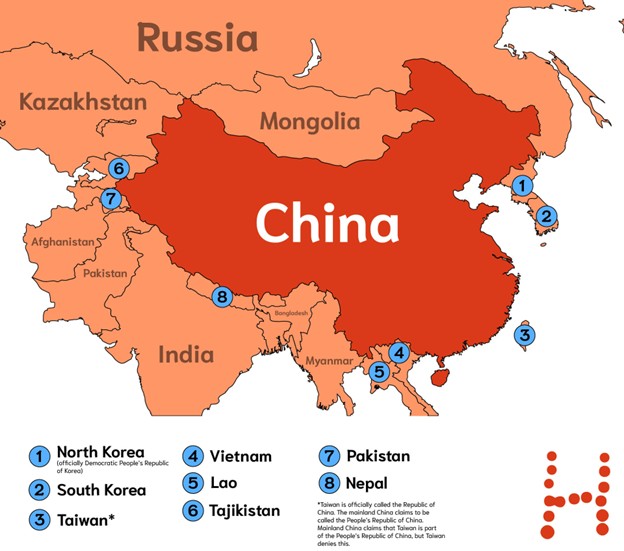
At the end of World War 2 in June/August 1945, America had become the dominant power on the globe. At the apex of American power stood the Rockefeller family-the uncrowned kings of America. This was the start of the “American Century “. Heading the family were the 5 Rockefeller brothers. A short while earlier, their father had “parceled” out the world: – John the eldest got Asia. Nelson got Latin America. Laurence was given Europe, while David got Africa. In October 1949 China was now an independent country. It would take time, but China would, once again, become the globes leading economy. That was not on the Rockefeller game-plan. The Rockefeller game-plan was to “dollarize” and establish a large military footprint in Asia. After China’s independence, the Rockefellers used their UN to initiate war on North Korea. The US invaded North Korea in 1950. The forgotten war in the 1950s is a blueprint for Iran. The Iran war is a stalemate. Maybe a deal will be reached. Maybe not. Maybe fighting will break out soon. Maybe not. Perhaps we can look back at history to find some patterns and lessons. A good example, at least for the Chinese, is the Korean War. For the Chinese, it is remembered as the watershed war after the founding of the People’s Republic. It is a defining moment of military victory and national rejuvenation. It is the first time in history someone has defeated the advances of the mighty US military and fought it to a standstill. After the war, China became the 3rd center of global power, after the US and USSR, despite its lagging economy and crushing poverty. The world knew China wouldn’t be pushed around. What happened in the war and how the two sides negotiated the armistice are highly relevant for the Iran War today. So are the strategic consequences. The Iran War is in a stalemate. Maybe a “deal” will be reached. Maybe not. Maybe fighting will break out again soon. Then maybe not. A good example, at least for the Chinese, is the Korean War. For the Chinese, it is remembered as the watershed war after the founding of the People’s Republic. It is a defining moment of military victory and national rejuvenation. It is the first time in history someone has defeated the advances of the mighty US military and fought it to a standstill. After the war, China became the 3rd center of global power, after the US and USSR, despite its lagging economy and crushing poverty. The world knew China wouldn’t be pushed around. What happened in the war and how the two sides negotiated the armistice are highly relevant for the Iran War today. So are the strategic consequences.
The Korean War
The Korean War broke out on June 25, 1950, when North Korean forces crossed the 38th parallel to invade South Korea for national reunification. North Korea was initially successful and captured most of South Korea quickly, including the capital city of Seoul. However, the US came to South Korea’s rescue with the landing of US-led UN forces in Incheon on September 15, 1950. This surprise amphibious invasion was officially called Operation Chromite. It was planned by US General Douglas MacArthur. The successful operation turned the tide by cutting off North Korean supply lines and allowing the US-led forces to recapture Seoul. By October 1950, UN forces under General MacArthur had crossed the 38th parallel and were rapidly advancing northward. American and South Korean troops entered Pyongyang on October 19, 1950, and some troops even reached the Yalu River by late October 1950. That is the border river between Korea and China. The war North Korea launched was blessed by Joseph Stalin but without consultation with China. Chairman Mao and the Chinese leadership had intense debates whether to intervene.
On one hand, North Korea was a member of the Communist bloc and shares a land border with China. Its defeat would leave China exposed directly under US military threat. On the other hand, the new People’s Republic was just established in October 1949 after 8 years of brutal war against Japanese invasion and 4 years civil war, which wasn’t finished yet after Chiang Kai-shek fled to Taiwan. The country lost between 20 to 25 million people during the war with Japan. It was depleted economically and impoverished with its economy accounting for less than 3% of the US GDP. Per capital GDP was less than 1% of the US. The new republic had no air force, no navy, and no armored ground forces. Its military was basically a light infantry force. When the US forces reached Yalu River, they bombed Chinese fishing boats as well as Chinese villages. This advance directly threatened China’s national security and prompted Chairman Mao’s decision to intervene. In contrast, the US was at its post-WW2 peak of global power – its economy was roughly 50% global GDP. It had the war’s most powerful and advanced military. It had nuclear weapons. The Chinese People’s Volunteer Army, led by Marshall Peng, crossed the Yalu River on October 19, 1950, to defend North Korea and push American forces back. China deployed approximately 260,000 troops in complete secrecy, marching at night and hiding during daylight to avoid aerial detection. Marshal Peng allowed US forces to advance northward while Chinese forces took up concealed positions in the mountainous terrain. On October 25, Chinese forces launched their first attacks against South Korean units in the Unsan area. The South Korean 6th Division was destroyed. Between November 25 and December 24, 1950, Chinese forces launched a massive offensive that sent UN forces into full retreat, recapturing Pyongyang. This was the famous “Chosin Reservoir” campaign and the most critical campaign during the war. At this start of this campaign, General MacArthur, still underestimating Chinese strength, launched his “Home by Christmas” offensive on November 24, 1950. UN forces advanced in two main columns: the Eighth Army in the west and the X Corps in the east. Peng had massed approximately 380,000 Chinese troops, far more than US intelligence estimated. The Chinese strategy was to attack the weaker South Korean units first, create gaps in the UN line, then pour through to envelop American forces. In the west, the Chinese 38th and 42nd Armies struck the South Korean 2nd Corps on November 25, shattering it within hours. This created a massive gap in the UN line. Chinese forces then turned westward to hit the American Eighth Army’s flank. The American 2nd Infantry Division suffered heavy casualties trying to withdraw through a narrow pass called “The Gauntlet.” Turkish forces sent to plug the gap were overrun.
In the east, the most famous battle occurred at the Chosin Reservoir. The Chinese 9th Army Group, approximately 120,000 troops from units accustomed to China’s southern warm climate, attacked the US 1st Marine Division and elements of the 7th Infantry Division in subzero temperatures that reached minus 30 degrees Fahrenheit. The Marines fought their way out in a fighting withdrawal to the port of Hungnam, but the Chinese 9th Army was virtually destroyed as an effective fighting force, suffering an estimated 30,000 casualties from combat and cold. Thousands were frozen to death. Despite the heavy Chinese losses in the east, the overall strategic result was decisive. UN forces were in full retreat by early December. General Walton Walker, commander of the Eighth Army, was killed during the withdrawal. Pyongyang fell to Chinese and North Korean forces on December 5, 1950. By December 24, UN forces had withdrawn south of the 38th parallel. Chinese and North Korean forces captured Seoul on January 4, 1951.
Subsequently, US forces under General Matthew Ridgway launched Operation Thunderbolt and Operation Killer, pushing Chinese forces back northward. By late March 1951, UN forces had recaptured Seoul and reached the 38th parallel. After this campaign, the front stabilized roughly along the 38th parallel, the original dividing line between north and south Korea, where it remained until the armistice in 1953. During the 3 years, the Truman and Eisenhower administrations faced growing domestic pressure to limit the war due to the high American casualties. Eventually, over 36,000 US soldiers were killed in Korea. China lost over 180,000. Between 2 to 3 million Koreans, mostly civilians, died in the war, accounting for 10% of the pre-war total population. MacArthur’s defeat and advocacy for expanding the war into China led to his dismissal in April 1951.
The Negotiations
The Korean War, from China’s perspective, lasted approximately two years and nine months. The Chinese People’s Volunteer Army crossed the Yalu River on October 19, 1950, and the war concluded with the signing of the Korean Armistice Agreement on July 27, 1953. The armistice negotiations were extraordinarily prolonged, lasting two years and seventeen days, or roughly 747 days, from July 10, 1951, to July 27, 1953. Premier Zhou Enlai once summarized this period: “We fought for three years in Korea and negotiated for two.” The negotiation process was fraught with interruptions. Talks were suspended for 63 days when the American side bombed the Chinese and North Korean delegation’s quarters in August 1951.Trying to kill the other side’s negotiators is not an Israeli invention. The venue changed twice, moving from Kaesong to Panmunjom. Throughout this period, there were 5 major suspensions of talks, 58 full delegation meetings, and 733 smaller sessions. The fundamental reason for this extraordinary delay was that the US could not accept a stalemate. American negotiators repeatedly made unreasonable demands, such as requiring Chinese and North Korean forces to withdraw 38 to 68 kilometers to “compensate” for American air and naval superiority. Simultaneously, they launched major military offensives including the Summer Offensive, Autumn Offensive, and Operation Strangle to exert military pressure on the negotiating table. It was only in 1953, when the US realized it could gain no advantage either on the battlefield or at the negotiating table, that it finally agreed to sign the armistice.
The most famous and brutal battle during the negotiations was the Battle of Shangganling, fought from October 14 to November 25, 1952. American forces committed over 60,000 troops, more than 300 artillery pieces, over 170 tanks, and 3,000 aircraft sorties, firing over 1.9 million shells. Both sides contested two hill positions covering just 3.7 square kilometers. The hilltops were blasted down by two meters, rock pulverized into powder. Chinese volunteer soldiers held their positions for 43 days. The American side suffered over 25,000 casualties and was forced to halt its offensive. This battle utterly destroyed American hopes for a breakthrough and significantly softened the American negotiating position. After Shangganling, American negotiators no longer pressed their unreasonable demands. The battle established both China’s national prestige and military credibility, and more importantly, it secured the initiative at the negotiating table. The final major engagement was the Jincheng Campaign, fought from July 13 to July 27, 1953. By this point, negotiations were nearing agreement. However, South Korean President Syngman Rhee suddenly sabotaged the process by forcibly detaining North Korean prisoners of war in an attempt to derail the armistice.
Sound familiar with what’s happening in Lebanon?
Chinese volunteer forces launched the Jincheng Campaign to strike a severe blow against South Korean forces. They broke through South Korean defensive lines, eliminated over 53,000 enemy troops, recovered 148 square kilometers of territory, and compelled the US to restrain Syngman Rhee. The victory directly facilitated the final signing of the armistice agreement on July 27, 1953. Other notable operations included the Operation Strangle, where Chinese forces resisted an American biological warfare, during which the US dropped biological weapons over North Korea and Northeast China in 1953.These battles collectively embodied the Chinese strategic principle of promoting talks through fighting. The victory on the battlefield earned China equality at the negotiating table. Without these military successes, there would have been no armistice agreement in 1953.
The Strategic Outcome
Despite heavy losses, the Chinese intervention achieved its core strategic objectives. What began as an American advance to the Yalu River was transformed into a stalemate at the 38th parallel. China preserved North Korea as a buffer state, preventing American forces from reaching the Chinese border. Furthermore, China became the 3rd center of global power besides the US and USSR after the war. Before the war, China was considered a Soviet satellite or a regional footnote by the US and much of the world. Yet it delivered the first real military defeat of the US in its history. The war transformed how the world understood China. Although China was still a member in the Soviet bloc, it became an independent sovereign that cannot be pushed around by anyone. Chairman Mao famously told his colleagues in the discussion whether to intervene that “the intervention is to prevent a hundred punches coming your way by throwing one punch at your enemy” The war perfectly achieved that goal. China earned a reputation and respect that a nation can only acquire on the battlefield. This directly led to a window of decades of peaceful development without external threats. So, the question now is “will Iran rise to become the 4th center of power besides China, the US, and Russia after the 2026 war?”I think it is very likely.
Lessons for Iran
Iran needs to understand the structural patterns of bad faith in American foreign policy. The historical pattern of fighting while negotiating, and the apparent willingness to break commitments, reflects deeper structural characteristics of American foreign policy rather than isolated incidents. Both Truman and Eisenhower administrations pursued opportunistic attacks while negotiations were ongoing and “ceasefire” was officially in place. The Iran nuclear agreement negotiated under President Obama was unilaterally abandoned by Trump, who launched surprise attacks on Iran during “negotiations” – twice, in 2025 and 2026. The Trump regime continues to violate the temporary ceasefire reached in early April. So does its partner in crime – Israel. International agreements lack institutional constraints on the American executive. American foreign policy discourse is saturated with references to a rules-based international order, yet American practice exempts itself from those rules. The paradox is that America is both the primary architect of international rules and its most frequent violator. Concessions made in negotiations can be withdrawn the moment they are deemed unfavorable or when a display of toughness is politically expedient. The 2026 strike against Iran reflects transactional thinking at its purest: using military pressure to improve negotiating position, or using negotiations as cover for military aggression. The deep ideological root of the US foreign policy is hegemony, the conviction that American interests are above those of other nations and there is no equal nation state with the US. This ideology produces two consequences. First, it creates unlimited objectives. There is no standard of “good enough.” The goal is always to fundamentally transform the other party’s regime to yield to the US.
Second, it instrumentalizes all means. Negotiations, agreements, and international law are merely tools to achieve objectives, not constraints with intrinsic value. This stands in sharp contrast to China’s negotiating position during the Korean War. Chinese objectives were clear and limited: an armistice along the thirty-eighth parallel, without seeking to occupy South Korea or overthrow the Syngman Rhee regime. This clarity of bottom-line produced consistency in negotiation. The American side constantly shifted its demands, unwilling to accept a draw and always seeking through negotiations to obtain what it could not win on the battlefield. The 2026 decapitation strike against Iran represents the latest manifestation of this logic: launching war while negotiations are ongoing, substituting assassination for diplomacy, and replacing multilateral rules with unilateral hegemonic action.
During the Korean War, America at least maintained the façade of multilateral framework of UN forces and the mechanism of armistice negotiations. The 2026 Iran War represents naked hegemonic unilateralism, abandoning even the pretense of international law. This signals a transition from hegemony constrained by rules to unconstrained domination. History teaches us when a nation deals with a bully and a hegemonic power, you don’t back down. You fight. And fight some more. The only way to get the hegemon to the negotiating table is to give it a bloody nose, preferably a broken one. The Korean War ended in 1953, with the defeat of the US. Korea remained partitioned. The US now had a excuse to establish a large military footprint in South Korea. The end of the Korean War brought about a recession within the US. Nelson and John D Rockefeller had other ideas. Their attention turned to Vietnam. The CIA backed and aided Ho Chi Minh to defeat the French in 1954. Soon US Special forces and the CIA were all over South Vietnam, preparing another war, which began ten years later. A highly unpopular war, fought with bank loans instead of taxes. To make the war less popular, Nelson and the Rockefeller media network started pushing the narrative about “communism being bad “ , and the “Red scare”. He built highways and bomb shelters to concretize this fear. It still wasn’t enough. So, Nelson and his CIA staff came up with another idea. Since Vietnam, Korea, China and Russia were far away, maybe their minds will change if the “communist danger” suddenly appears on their doorstep. Attention was turned to Cuba. It would make the perfect example to press home to the Americans that they should take the threat of communism seriously. Long story short, the CIA engineered the results desired by its owner and founder-Nelson. The whole set of alerts, the high drama of the failed (deliberately) Bay of Pigs invasion was a carefully choregraphed script. Including the nuclear threats. At the end of the day, Nelson’s plan worked. The American people fell into the lies by their rulers. The war in Vietnam lasted 119 years for the Americans – from 1956 till 1975. Even during the Paris peace talks conducted between the US and Vietnam, whenever the US team-headed by Kissinger- came up against a Vietnamese objection, the US bombings in Vietnam increased. Sounds familiar?
6 David Rockefeller & the gold deal with Mao – the Rockefeller Empire Seduces China
The period between the two world wars (1920-1939) was one of financial speculation, and a geopolitical contest between the British Empire and Wall Street. America and the Rockefeller Empire were determined to take over Asia from the British. They needed markets for their manufactured goods, as well as a source for raw materials. In this, the US was blocked by Britain. With America victorious in World War 2, Wall Street and Washington did everything possible to crush the British Empire, France and other European colonial nations. What was once under Rothschild control now fell under the sway of the Rockefellers. What we are going to describe, in the following pages, is a peek into the shadow-world of global geopolitics. This world is real, alive, and growing stronger decade after decade. The shadow world is the inter-face between the over-world and the underworld. But it is a world that very few people know of. It will give us an idea of how these 2 families operate, and how decisions taken in this world have impacted global politics and economics for the past 75 years. In 1945, US Intelligence officers in Manila discovered that the Japanese had hidden large quantities of gold bullion and other looted treasures in the Philippines. President Truman decided to recover the gold but to keep its riches secret. These, combined with Japanese treasures recovered during the US occupation, and with recovered Nazi loot, would create a worldwide American political action fund to fight communism. This, “Black Gold” gave Washington virtually limitless, unaccountable funds, providing an asset base to reinforce the treasuries of America’s allies, to bribe political and military leaders, and to manipulate elections for more than 70 years. In the closing months of World War 2 in the Philippines, while Japanese General Yamashita fought a delaying action in Luzon, several of Japan’s highest-ranking imperial princes were preparing for the future. They were busy hiding tons of looted gold bullion and other stolen treasures in nearby caves and tunnels, to be recovered later. This was the property of 12 Asian nations, accumulated over thousands of years. Expert teams accompanying Japan’s armed forces had systematically emptied treasuries, banks, factories, private homes, pawn shops, art galleries, and stripped ordinary people, while Japan’s top gangsters – the yakuza – looted Asia’s underworld and black economy.
Japan’s looting of Asia was overseen by Emperor Hirohito’s brother, Prince Chichubu. His organization was code-named Golden Lily. Lesser princes headed different branches of Golden Lily across the conquered territories. Golden Lily was driven by greed, but also by financial constraints. In 1937, Japan’s gold reserves had shrunk by half, paying for the military machine in China and Manchuria. It was at this bitter moment that Golden Lily was born. While Golden Lily was hard at work plundering China, and later the rest of Asia, so were Japanese tycoons like Sumitomo Kichizaemon, head of Japan’s immense Sumitomo conglomerate. Not to forget two of the largest players in Japan, who also had their share of loot, such as Mitsui and Mitsubishi. These companies used slave labor to work their mines and factories. In plundering Asia, the Japanese were far more thorough than the Nazis. It was as if a giant vacuum cleaner passed across East and South-East Asia. Much of the plunder reached Japan overland through Korea. The rest, moving by sea, got no further than the Philippines, as the US submarine blockade became complete in early 1943. The US Navy had perfected the torpedo, so no more loot could be shipped to Japan. Hiding the treasure there was crucial, so that if Japan lost the war, it would not lose financially. Overseen by the princes, 175 “imperial “treasure vaults were constructed throughout the islands. Early in June 1945, these 175 chief engineers were given a farewell party at one of these sites, tunnel 4, stacked with gold bars. The place was dynamited, and all these engineers were buried alive. No one could know the secret locations of these vaults, and each was very cleverly booby trapped! A few of these sites were found and much was recovered in the immediate aftermath of the war. Much more would be discovered by Marcos when he was President. According to a well-informed source in the Marcos family, “Bill Casey told Ferdinand the White House would keep him in power forever if he agreed to put his black gold in banks designated by the CIA”. One deal said to have resulted is the so-called China Mandate. Our Marcos family source insists that in 1972 President Nixon and Henry Kissinger made a secret deal with Premier Chou En-lai to keep China out of conflict with the United States over Taiwan, in return for access to a large quantity of gold provided by Marcos. We have not been able to confirm the political details. However, bank documents that have surfaced over the years clearly demonstrate that large quantities of gold bullion were moved into Chinese mainland banks during this period, including bullion accounts in the names of Santa Romana, Ferdinand and Imelda Marcos, and other members of their family and circle of rich cronies. Since all these people were loudly anti-communist, there is no plausible reason for them to transfer gold bullion to Chinese banks in the midst of the Cold War. For that reason alone, the story may well be true.
The China Deal
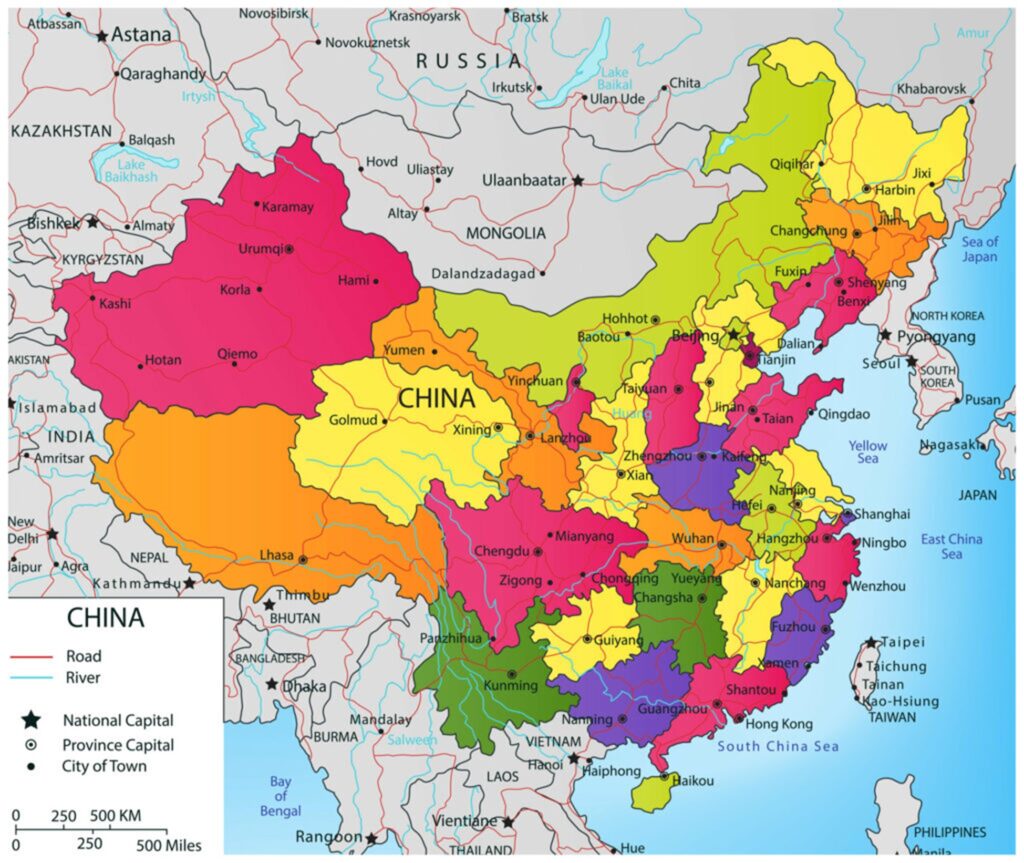
In 1971-1972 the economy of the People’s Republic was in very bad shape, its foreign currency reserves were flat, aggravated by the worldwide oil crisis and famine in the countryside. As pressure mounted on the Politburo, party hawks gained a stronger voice, pushing for invasion of Taiwan to gain control of its assets, (around $100 billion plus in bank deposits-the proceeds of the Golden Triangle drug scene- and this was CIA narco money) and as a much-needed distraction. CIA and Pentagon analysts concluded that Beijing was about to invade, while America had its hands full in Vietnam. This could lead to nuclear war. A way had to be found to defuse the situation, and a novel solution proposed by a CIA analyst was to help Beijing stabilize its economy with a huge infusion of black gold from Marcos, reducing the pressure for war. If America helped China out of this domestic crisis, it could bring a period of peace that would benefit the Philippines as well. Nixon and Kissinger secretly offered Beijing 30,000 tons, or $68-billion in gold (an amount they knew Marcos had), to be moved into PRC banks in a number of tranches over several years. This would not be an outright gift. It would be deposited incrementally in various PRC banks in Hong Kong and major cities inside China. There the bullion would remain as an asset base, earmarked for various purposes negotiated in advance. The Chinese banks would be strengthened, the PRC economy would be stabilized, moderates in the Politburo would regain their leverage, and hawks pushing for an invasion of Taiwan would be silenced. No U.S. funds were involved. “It was only Japanese war loot,” the source said, “recovered by Marcos, being put to good use.” Chou En-lai, ever a pragmatist, reportedly pushed it through. The temptation for Marcos to agree was great; he would be fully supported by Washington, and rewarded in many ways. The White House sweetened the deal by assuring Marcos that he and Imelda could make state visits to Beijing, which would enhance their stature throughout the world. Additionally, Beijing would reciprocate by providing agricultural aid to the Philippines. In 1974, Imelda and her son Bong-Bong did make a state visit to Beijing, where they were photographed grinning goofily with a startled and frail Mao Tse-tung clamped between them, one of the strangest photographs of Mao ever made. Ferdinand went to Beijing the following year, a curious thing for him to do as an outspoken Cold Warrior. In a subsidiary development, Imelda’s brother Kokoy Romualdez, noted more for his loyalty than for his intelligence, became Manila’s ambassador to Beijing.
7 Kissinger Goes to China
The China Mandate was the foundation for Nixon’s historic visit to China and establishment of diplomatic relations with the Peoples Republic. Documents do show that beginning in 1972 and continuing over a period of years, Marcos’s gold was moved to PRC-owned banks including Po Sang Bank and Bank of China in Hong Kong, and to other Chinese banks in Xiamen. Documents from those banks show very large accounts in the names of Santa Romana, Ferdinand Marcos, Imelda Marcos and others. Further evidence came in 2000, when Imelda was accused by Hong Kong government authorities of hiring a Chinese woman to obtain access to some of these gold accounts by bribing bank officials. In December 1999, according to Hong Kong government prosecutors, Imelda agreed to pay the bounty hunters 35 percent to recover $2.5-billion from accounts at Bank of China, HSBC, and PRC banks in Xiamen. Imelda’s lawyers said she was only trying to raise money to help the poor. When news then came of yet another secret Marcos bullion account at UBS in Switzerland, containing $13.4-billion, Imelda sighed, “I wouldn’t be surprised. I know we used to have money.” When the existence of these bullion holdings in China was revealed, nobody seemed at all curious how they came to be there, some since the early 1970s, when the Cold War was still on. Nobody connected them to Nixon’s 1972 state visit to Beijing.
8. “Let’s Do Business”
In 1960, Daid Rockefeller became chairman of one of the family’s key banks -Chase Manhattan. He then became an advocate for big business. His efforts were to change conditions for big business to reap more profits. One of the biggest hurdles to this in the industrial north was labor costs. In one of his many speeches, he pushed for big industries to move operations to the southern states, as it had lower labor costs, as well as not being unionized. The famous black leader, Martin Luther King Jnr was opposed to big business moving south and paying less than minimum wages. King managed to gain in popularity, until he was assassinated, thus paving the way for big business to move into the southern states. The Rockefeller family has never fully accepted the fact that the Chinese people, 20% of the human race, no longer purchase their goods and services. Especially for his father, who regularly visited Standard Oil facilities inside China. As early as 1955 (David was 40) he was saying it was “political foolishness” to pretend that 700 million (consumers?) didn’t exist.China held two advantages for David. It was run top-down, making it easier to deal with a few people as opposed to dealing with various interest groups in the West, when it comes to investments, taxes, profit repatriation, etc. Furthermore, 700 million consumers is too big a market to ignore. Lastly, if a “deal” could be worked out with Mao Tse Tung, then it may be possible to start manufacturing in China itself, and make super-profits by paying very little for Chinese labor. Anyway, work on getting into China had begun by the end of 1971.
9 The WTO Admits China
The WTO is the global trade rule-setting institution. Jointly set up by the 2 families to control global trade flows. It has 166 members, and all decisions are made unanimously. It promotes freer trade by requiring all members to adhere to certain principles, emphasizing low and predictable trade barriers. In exchange, members are guaranteed better deals with other WTO member countries. The WTO is an offshoot of a post-World War II trade agreement that countries such as the United States and the United Kingdom created to encourage economic ties and maintain a peaceful world—a world of international institutions that all promoted similar values. With the world’s sixth largest economy and a population of one billion people, China in 2000 was already a massive market and clearly a rising power. Before 1978, China had a socialist-planned economy and was largely isolated; since then, it had been gradually opening up its economy to the rest of the world. WTO membership would accelerate that process. China wanted to join the WTO because it would allow China access to new trading partners and better rates with current ones, raising prospects for improved living standards domestically and giving China a seat at the table in a globalizing world. The United States wanted something, too: for China to get on board with a U.S.-led, liberal-order. The United States thought it was directing the show when China acceded to the World Trade Organization. Instead, China wrote its own script. Politically, the result is less ambiguous: China did not conform to democracy in the way the United States had hoped. In fact, its vast economic gains have only legitimized the Chinese Communist Party (CCP), which President Xi Jinping believes is central to maintaining economic stability and enabling China to dominate technology-driven industries. China’s tight government controls extend to the internet, which was supposed to be a gateway to reform and innovation. China regulates internet use, limiting access to commerce and social media. China has blocked political organizing by threatening—and sometimes jailing—those who post critical comments online. The Chinese government also uses the internet to identify and track such people.
The WTO rules were not written with China, or its unique economic-political structure, in mind. China has elements of a capitalist system, but is still run by a communist government. There are many influential government-owned companies and even private companies are heavily subjected to government influence. In 2017 nearly 70 percent of the almost two million private companies in China Instead of conforming, China is using the WTO to its advantage. The twist is that China has benefited greatly from the WTO, taking advantage of the provisions that suit its interests while skirting less convenient restrictions. The country has reaped enormous benefits since joining: it now has an economy almost one hundred times larger than it was in 1978, and its middle class is growing. It has increased its international involvement without conforming to the playbook of a Western, democratic world order, and it is becoming a leader in its own right.Even if China was less influential, the WTO would unlikely be able to rein it in. The WTO’s relevance is waning, stemming from the fact that its rules have not been updated in more than twenty-five years. China has learned, quickly and effectively, how to navigate the rules so the global economy works for it, not against it.
10. The Oversea Chinese
When studying the Chinese diaspora, we cannot overlook their relationship with their “homeland”—China. Political and economic conditions have made Chinese people move to other countries over the past several centuries. Traditionally, the Chinese diaspora was seen primarily as traders. The ethnic Chinese (and their descendants) who emigrated from mainland China, Taiwan, and Hong Kong number 55 million globally. The largest overseas Chinese population is in Asia (34.6 million), followed by the continent of America (about 9.8 million). We can see growth in total numbers as well as in every continent. The most significant growth has been observed in Africa, with an increase from 0.24 to 1.2 million—a surge of nearly 500% in just twelve years. For more than 1,000 years the hard -earned wealth and stocks of valuable commodities made the merchants, shopkeepers, bankers and entrepreneurs targets of unscrupulous government ministers, bureaucrats and thieving generals. China’s rulers had nothing but contempt for people involved in business. They were to be used and discarded. Merchants were often rounded up and expelled from Norh China to settle “barbarian “lands, south of the Yangtze. It was an easy way to cancel debts the rulers accumulated, and to explain away whatever mistakes they had made in handling the economy. In this way, it was tyranny that caused thriving colonies of merchants to occupy secluded enclaves along the South China coast, where they began venturing overseas, and building the maritime trade networks that evolved into today’s great Overseas Chinese offshore powerbase. Subsequently, many built up large holdings all over Asai, and their experience at dealing with rapacious government ministers forced them into obscurity-as a way of life. This was to avoid showing wealth, and thus, not be targeted. This format was so effective that we find many super wealthy billionaire Overseas Chinese clans leading a simple public life.
When the 1990s began, the West was so spellbound by the economic threat of Japan that it took a while to realize that there were more important things happening next door in China. What was stirring in China was potentially the greatest consumer boom in history. Now, 3 decades later, China has become the largest economy in the world. While the West crawled through interminable depression, dramatic developments all over Asia made it clear that global changes were occurring in the balance of wealth and power. The force behind most of these changes, in China and around the Pacific Rim, was and is the enormous vitality and wealth of the Overseas Chinese. In fact, the Overseas Chinese are a separate world force, Offshore China, if you will. Offshore China is an empire of 55 million people, intricately interlaced by systems of guilds, tongs, etc., which together supply the connections and financial linkages that make the Overseas Chinese such a potent force.t is an empire without borders, national government or flag. It is deliberately opaque. In recent decades, more than 200 large conglomerates have emerged in South East Asia- not counting Hong Kong and Taiwan, nearly all owned by ethnic Chinese. They are run by the super-rich heads of secretive Chinese commercial syndicates. These are the Lords of the Rim. Chinese have much more successful outside China than inside. The mandarin bureaucracy of imperial China and the cadre bureaucracy of the communist suffocated economic activity. They dominate the economies of every country on the Asian side of the Rim, except Japan and the Koreas. They also have one of the deepest wells of liquid capital. Today, they control liquid assets exceeding $10 trillion, besides all the other assets they own. In the period after 1945, Western and Japanese investors alike discovered that they needed Overseas Chinese to gain access to South East Asian Markets. In country after country, the doorkeepers were Chinese, and nothing could be done without their intervention, at a price.
At the very moment that Asia began to emerge – in the 1990s-as the world’s most dynamic market, the revolution in information technology brought high-speed finance. Crucial changes came from falling regulatory barriers, falling telecommunications and transport costs, and freer domestic and international capital markets. Boundaries between national financial markets dissolved. As the barriers came down, Overseas Chinese financial syndicates with ancient networks already in place, were the first to turn the Rim into a borderless economy. Rather than rest on their laurels, the Overseas Chinese have been invigorated by the challenge of the opening of China. And, for the past 3 decades, they have worked with Beijing and both parties have benefitted from this. The central government of China has a long and dark history of extreme tyranny. It was this tyranny that created the Overseas Chinese in the first place. “Be so subtle that you are invisible. Be so mysterious that you are intangible. Then you will control your rivals’ fate “. So wrote Sun Tzu in the “Art of War “, and no group has taken his advise more to heart than the Overseas Chinese. They also know who was behind the “century of humiliation” that China suffered. The British and the financial power behind the British-the Rothschild family. They are deadly enemies to one another. The Chinese are on the rise. The Rothschild family are on the decline. Lert’s see how this works out in the future. We have now covered some parts of the history of China. And as well as some recent history of China. Now, we move into the current phase. Part 3 to follow.
I look forward to your posts. I learn a lot and your writing style is good, easy to understand. I wish your second or third parts would arrive not too far apart but it was mentioned earlier that internet connection not always available. Hope part 3 arrives soon!