

1 Background
2 Water wars
3 London & the “Gujarat Mafia “
4 When Hindutva meets Zionism
5 China’s BRI Project
6 Recent developments
7 Tensions on the brink
8 Indian mass delusion syndromes on full display
9 The Bangladesh threat to India
1 Background
At the end of World War 2, in 1945, the British Empire was broke. It could not afford to hang onto its vast colonial possessions. Under huge pressure from the US, it began granting “so-called independence “to many of its colonies, including India. Britain, devious as ever, left behind future ticking time-bombs in many of these areas. These could be used to sow discord and provide the British to cause conflict between neighbors’. Such was the case with Kashmir. The conflict between India and Pakistan arose out of the 1947partition of British India. The Partition established a Muslim-majority Pakistan and a Hindu-majority India and provided the diverse regions of Jammu and Kashmir the opportunity to choose which country to join. The maharaja (Kashmir’s monarch) was “persuaded” by the British, using MICE tactics and, he agreed to join India, triggering the Indo-Pakistani War of 1947-48. Millions of lives were lost in the ensuing bloodshed, based on religion. This was exactly what London wanted. It achieved it desired outcome. This laid the groundwork for future “time bombs” to explode in this region, following a British script. And, as per the geopolitical issues that challenged British/Rothschild outcomes issues. London and later New York manipulated the geopolitical chessboard in the Indian subcontinent.
A further, and extremely key point that needs some explaining, reflecting the very long-term plans of the overlords of the British Empire- the Rothschild family- and, who founded both communism in the 1830s, and later Zionism in September 1882. Knowing that the Indian subcontinent holds the largest Muslim population in the world, if Israel is established and goes to war with the Arabs, India could enter the conflict on the side of the Arabs. To avoid this scenario, it would be “safer” for Israel if India was broken up into two regions- one in which the Hindus would be the majority in the country, thus posing no future threat to Israel. And, thus, we find that this is the course that Britain took. From that point on, Britain, and very quietly, Israel began moves to ensure that India’s future leaders would not be hostile to Israel. More on this later.
The Karachi Agreement of 1949 temporarily ended violence in the Jammu-Kashmir region by establishing a cease-fire line (CFL). Then, in 1960, a territorial dispute between China and India resulted in a brief war between the two. China had won this round. Tensions simmered until a skirmish between border controls led to a full-blown war in 1965. From this point on, China backed Pakistan. In 1971, India and Pakistan fought another over East Pakistan, with Indian forces helping the territory gain independence, resulting in the establishment of present-day Bangladesh. This marked Islamabad’s most devastating loss. Pakistan’s navy was destroyed, over 90,000 troops were captured, and East Pakistan was severed to form an independent Bangladesh. India and Pakistan attempted to usher in a new era of bilateral relations with the established the (LOC). This provisional military control line split Kashmir into two administrative regions. However, in 1974, the conflict took on a new dimension. That year, India detonated its first nuclear weapon, triggering a nuclear arms race that would see Pakistan reach that same milestone two decades later. In 1989, Pakistan began a burgeoning resistance movement in Indian-administered Kashmir to undermine Indian control, reigniting tensions and beginning decades of tensions. Then the Kargill war broke out in 1999.
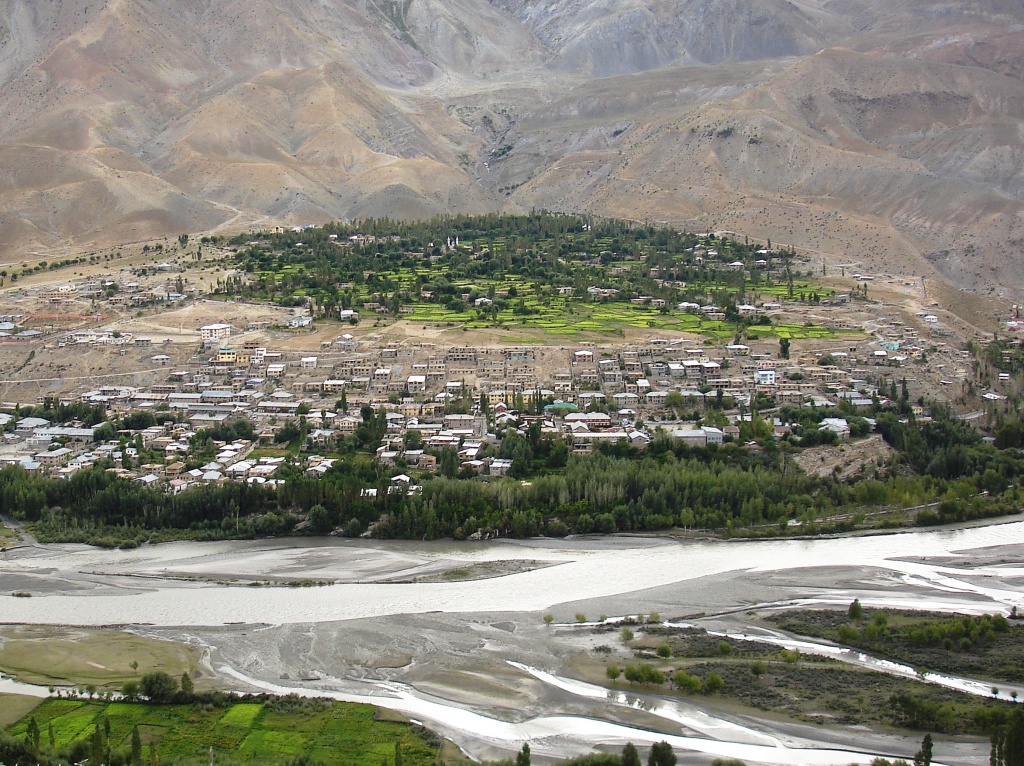
The blueprint of attack was reactivated soon after Pervez Musharraf was appointed in October 1998. During the winter of 1998–1999, some elements of the Pakistan Army were covertly training and sending Pakistani troops and paramilitary forces into territory on the Indian side of the LOC. The infiltration aim was to sever the link between Kashmir and Ladakh, and cause Indian forces to withdraw from the thus forcing India to negotiate a settlement of the broader Kashmir dispute. The main aim was to capture the Siachen Glacier, which was the headwater, or starting point of one of the 3 rivers flowing into Pakistan. The operation’s objective may also have been retaliation for India’s capture in 1984 that seized much of Siachen Glacier. Pakistan also believed that any tension in the region would internationalize the Kashmir issue, helping it to secure a speedy resolution of the conflict. The war lasted from the beginning of May till the end of July 1999, following a US-brokered ceasefire. Had the war lasted another month, Pakistan would have won, and kept the Siachen Glacier. But American pressure forced them to withdraw. In this war, India lost 2 fighter jets and a military helicopter. At one point, in mid-July, the Indian generals were debating amongst themselves which one of them would carry the white flag of surrender to the Pakistan side. At this point, India had run out of artillery shells, and was importing shells from South Africa and Sweden. Remember, that both South Africa and Sweden are Rothschild colonies. British pressure on Washington ended the war and forced Pakistan to give up its gains and withdraw. Not long after this, Musharraf, the army chief, took over Pakistan in a bloodless coup.
Then, 9/11 took place. The US invaded Afghanistan to stop the formation of the SCO (explained in previous articles). The US needed to use Pakistan as a base to wage this war, amongst other things. Pakistan refused to co-operate. Then, the US threatened Pakistan with the closure of the 4 rivers, originating from Indian Kashmir, flowing down into Pakistan. At this point, Pakistan gave in. Although both countries have maintained a fragile since 2003, they regularly exchange fire across the contested border. On November 26, 2008, fears that India and Pakistan would once again head towards direct military confrontation rose after militants laid siege to the Indian capital of Mumbai. In 2014, many hoped India would pursue meaningful peace negotiations with Pakistan after India’s newly elected Prime Minister, Modi. After a brief period of optimism, relations soured in August 2014 when the Pakistani high commissioner in India met with Kashmiri separatist leaders. This period was marked by an uptick in border skirmishes that began in late 2016 and continued into the present day. Within Kashmir, India began a brutal repression of the local population, and more than 20,000 have been killed since 1989.
A History Written in Skirmishes
Since their partition in 1947, India and Pakistan have fought multiple wars and engaged in countless skirmishes. The 1999 limited in scope – again ended along the LoC. Despite initial Pakistani gains, they were compelled to withdraw under US pressure. Another major standoff followed in 2001–2002.
A pattern is clear: These wars start and end on familiar ground, but Pakistan emerges diminished each time. Demographics, military stockpiles, economic capacity, and geography all weigh in India’s favor.
Crucially, Islamabad’s 1998 nuclear test failed to usher in the kind of strategic balance that Cold War deterrence once created. Instead, the two countries have settled into a precarious “gray zone” where short, sharp exchanges avoid crossing the nuclear line, but come dangerously close.
India enjoys in nearly every category – from hardware and troop numbers to domestic defense production. Its population stands at 1.42 billion compared to Pakistan’s 245 million. Its GDP is 11 times larger. These disparities enable higher arms procurement and more mature weapons manufacturing. India fields more than twice the number of active and reserve troops as Pakistan. To offset this gap, Pakistan leans heavily on its nuclear deterrent and focuses on maintaining parity in the air. While India holds twice the number of total weapons systems and 10 times more armored vehicles, the margin is narrower in airpower. That is no accident: Islamabad has prioritized air force capabilities, investing in quality aircraft, radar systems, and electronic warfare etc.
2 Water Wars
The day after the recent attack, India announced the suspension of the six-decade old Indus Waters Treaty, which shares water between the two countries and could be a flashpoint as tensions continue to boil. In response, Pakistan warned any Indian attempt to stop or divert the flow of water between them would be considered an “act of war.” The Indus Water Treaty, brokered by the World Bank in 1960, allows for sharing the waters of a river system that is a lifeline for both countries. Pakistan described it as a “vital national interest” and the treaty is essential for supporting agriculture and hydropower in the country of 240 million people. The treaty has survived two wars between the countries, in 1965 and 1971, and a major border skirmish in 1999. Its potential unraveling now marks a rupture with huge symbolic and strategic weight.
Islamabad, meanwhile, warned it could suspend the Simla Agreement, a significant peace treaty signed after the 1971 India-Pakistan war that ended in Bangladesh splitting from Pakistan and becoming an independent nation. Under that agreement, India and Pakistan established the LOC, previously called the Cease-fire Line, a highly militarized de-facto border that divides Kashmir between them. India has suspended the Indus Waters Treaty with Pakistan, a major water-sharing agreement brokered by the World Bank. The Indus Water Treaty – which was brokered by the World Bank in September 1960 – determined the rights and obligations of Pakistan and India concerning the use of waters of the Indus River system. The agreement has stood the test of time and has long been hailed as a rare example of cooperation between the two ideologically opposed nations. India’s unilateral suspension of the treaty is being called an “act of war” by Pakistan. The move came on April 23, within a day of a deadly shooting in Pahalgam, in the Indian-administered part of Kashmir, marking the first time the treaty has been paused since the pact’s inception in 1960. This agreement is an important part of the equation right now between the twocountries.The divides the six main rivers of the Indus basin between the two nations, with the three westerly rivers — Indus, Jhelum and Chenab — supplying Pakistan with water, while the three easterly ones — Ravi, Beas and Sutlej — feed India.
In addition to the suspension of the Indus Waters Treaty, India has also fast-tracked the construction of four new hydropower projects on rivers flowing into Pakistan and refused to share data on river flows with Islamabad. While India cannot completely stop the water flow to Pakistan in the near term due to its current infrastructure, it can stop the flow of information to its neighbor. The IWT requires the parties to share a good deal of data on project development, river flows, and hydrological conditions. By suspending the treaty, India can also cease data sharing, depriving Pakistan of flood warnings, for example, prospectively hampering the nation’s water management and potentially imperiling Pakistani lives and livelihoods. Observers cite concerns over India’s building of dams, including four which are on one of the westerly rivers intended to supply Pakistan, and flag the issue of what would happen to the flow of water to Pakistan if such infrastructure is expanded to enable more storage.
Pakistan is dependent on the rivers of the Indus basin not only for some of its population’s drinking water, but also for agriculture, which accounts for almost a quarter of the country’s GDP, as well as for power. The hidden battle New Delhi’s escalation over the Indus River isn’t just environmental – it’s strategic, existential, and signals a new front in the war of attrition with Islamabad. The crisis between is no longer limited to missiles or Kashmir skirmishes. Today, control over the Indus River system marks a new battlefield in South Asia’s evolving struggle for power. Modi’s that “Pakistan will not get a single drop of water that belongs to India,” wasn’t rhetoric – it was policy.
When Rivers become Weapons
This is not the first time water has been politicized in the subcontinent. After the 2016 Uri attack, Modi warned that “blood and water cannot flow together” – a line he revived in the current crisis. In 2019, after the Pulwama bombing, India’s water minister announced a halt to the flow of eastern rivers into Pakistan. Yet the planned termination of the treaty in 2025 marks an unprecedented escalation from rhetoric to reality. The Indus Waters Treaty, in 1960, divided control of six rivers between upstream India and downstream Pakistan. The Ravi, Beas, and Sutlej were allocated to India, while the Indus, Jhelum, and Chenab were reserved for Pakistan. Despite wars, coups, and political upheaval, the treaty endured as a symbol of minimal cooperation between hostile nuclear states. That fragile balance began to unravel in the early 2000s when India launched several hydropower projects on the western rivers. The Baglihar Dam was completed in 2008, followed by the Kishanganga project in 2018. Both projects sparked legal disputes, but international arbitration failed to curb India’s dam ambitions. This caused severe water shortages in Pakistan, while the Kishanganga conflict became emblematic of New Delhi’s aggressive water posture. India’s evolving hydro-politics now represents not only a breach of legal commitments but a direct challenge to Pakistan’s sovereignty and food security.
A System on the Brink
Over 80 percent of Pakistan’s agricultural land relies on the western rivers. The Indus alone sustains more than 20 percent of GDP and supports the livelihoods of nearly 68 percent of rural Pakistanis. Any disruption in flow devastates harvests, inflates food prices, and erodes rural employment. Punjab, Pakistan’s breadbasket is most vulnerable. Following India’s treaty suspension, some hydrological stations in Pakistan reported river level drops of up to 90 percent. Such shocks ripple across the economy, threatening food security and social cohesion. The collapse of rural livelihoods will deepen economic dependency and social fragmentation – fertile ground for unrest. The consequences extend beyond agriculture. As water dries up, rural populations migrate en-masse to overcrowded cities. Pakistan’s already strained infrastructure buckles under the weight of displaced communities and shrinking resources. Water isn’t just a resource anymore. It’s a trigger.Climate unpredictability gives India even more leverage – each dam and reservoir is now a potential flashpoint.
India’s Doctrine of Pressure
India’s shift isn’t limited to engineering, it’s strategic. India’s use of water fits this model: controlling river flows to pressure Pakistan while avoiding direct, hot war. This gradual strategy bypasses traditional deterrents. Since the 1998 nuclear tests, both nations have relied on mutually assured destruction to prevent escalation. But water pressure sidesteps that logic. It destabilizes without triggering alarms. The floodgate becomes a weapon. It is a form of statecraft that undermines without alerting, bleeds without blasting. Delhi no longer needs tanks or missiles to inflict damage. A dam valve will do. What began as an India-Pakistan issue is now part of a China – Pakistan’s closest ally – controls the Brahmaputra’s source in Tibet. Should tensions rise, Beijing could use this leverage to disrupt flows into northeast India. The emergence of multi-vector “water deterrence” means the next South Asian war may begin not with gunfire, but with a closed sluice gate. Hydrological warfare is no longer hypothetical. It’s happening. And India’s example may inspire others. In a region already destabilized by border disputes and economic inequality, the weaponization of water marks a new and dangerous phase. The Indus basin, once a symbol of improbable cooperation, is becoming the epicenter of South Asia’s next great conflict.
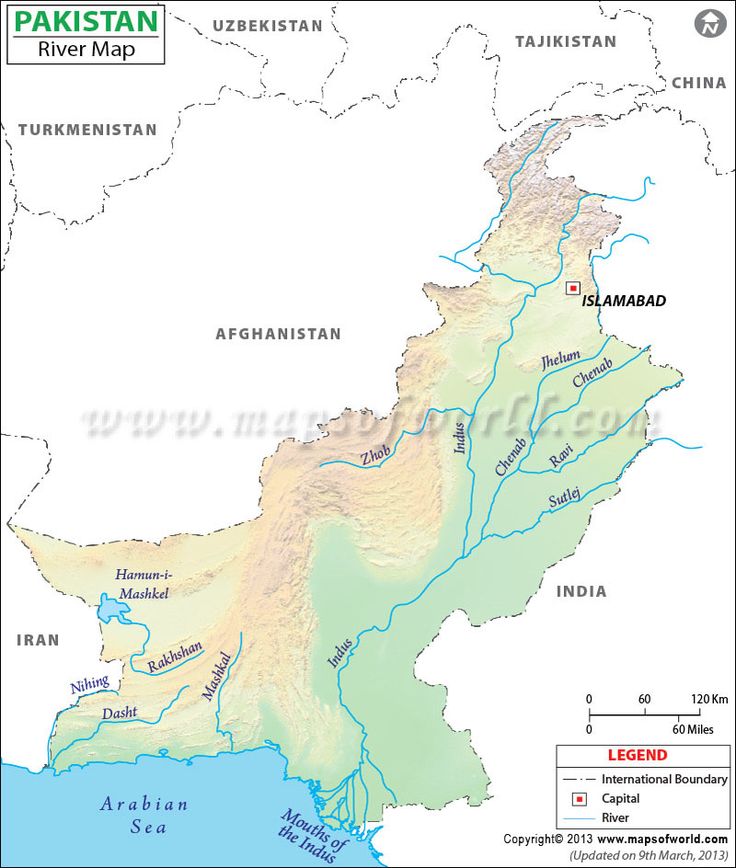
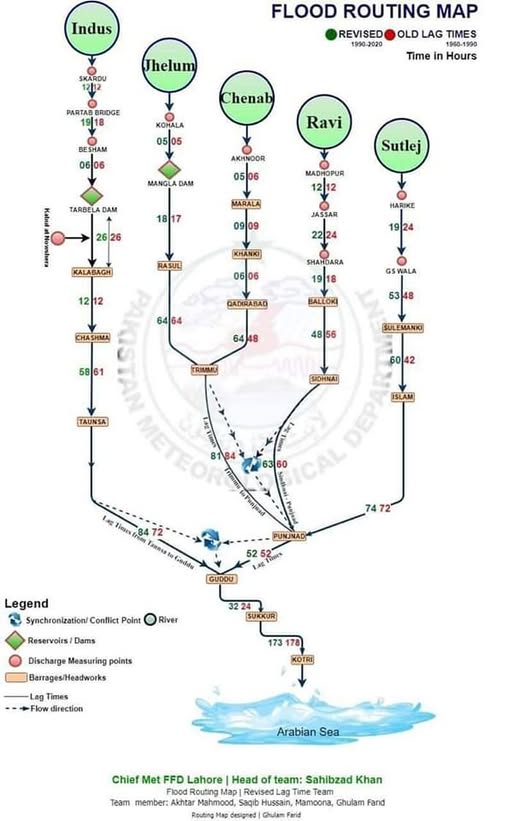
34.6 TWh of electricity in Pakistan was sourced from hydropower in 2022 (latest available data), all of which comes from the Indus basin. This makes it the second most important energy source for electricity in the country, following only after natural gas (47 TWh or around 27 percent). The next biggest energy sources are oil (16.6 percent), coal (15.9 percent and nuclear (15.6 percent).
Geopolitical strategists say the move by India is “calculated” – Any diversion of Pakistan’s water supply could trigger famine and civil unrest in the already unstable region. Internal strife has been simmering after Pakistan’s current government arrested former Prime Minister Imran Khan on charges of corruption. The arrest, perhaps not coincidentally, was executed not long after Khan accused a high-ranking Inter Service Intelligence official of planning an assassination attempt.

Khan’s arrest led to 2023 Pakistani protests by his supporters throughout the country. The nation has been in political turmoil ever since, on top of an already crushing inflation crisis. Loss of water resources would likely send the country into immediate collapse. While India does not have the infrastructure to block the rivers completely, they do have the ability to greatly reduce the flows to Pakistan, or divert much of the water to storage areas. They have also threatened to stop sharing vital flow data that could lead to a lack of flood warnings, thus destroying large swaths of farmland. India has begun restricting water supplies flowing from its territory to neighboring Pakistan, with more similar measures to come. India had blocked the flow of water through the Baglihar Dam on the Chenab River, and is planning to do the same at the Kishanganga Dam on the Jhelum River in the north of India-administered Jammu and Kashmir region. In an interview with RT on Saturday, Pakistan’s ambassador to Russia, Muhammad Khalid Jamali, warned that “any attempt to usurp the water of the lower riparian, or to stop it, or to divert it, would be an act of war against Pakistan and would be responded to with… a full spectrum of power.”
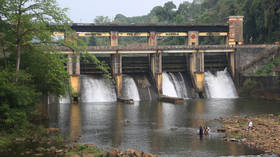
The Maniyar Dam and hydroelectric power station that are situated along the Kakkattar River in Maniyar, Pathanamthitta, Kerala, India, on April 6, 2024
The existential threat this development represents to the Pakistani government opens the door to otherwise unthinkable retaliation. Nukes are indeed on the table. Pakistan’s use of phrase “complete spectrum of national power means Pakistan can go to any limit, including the use of nuclear weapons.”
At the very least, Pakistan’s military will not hesitate to strike any infrastructure used by India to stem the water from the Indus rivers. Another factor that does not bode well is India’s overt superiority in terms of military power. India’s active military and reserve forces are twice the size of Pakistan’s. They have twice the air power, twice the tanks, and a far larger navy which boasts a number of nuclear submarines. The strength difference might compel Pakistan to use nukes immediately as a way to even the fight, or ensure the mutual destruction of India in a war Pakistan knows it will lose. In other words, the risk of a nuclear exchange is extraordinarily high. Pakistan is estimate to control at least 170 nuclear weapons of various yields. All of them have a range of fewer than 3000kms, but they are more than enough to wipe out all of India’s major population centers. Pakistan also has a “first use” policy; they hold that any war with a nuclear armed opponent means they have the option to fire nukes first.
India’s arsenal is comparable, with at least 164 nuclear weapons, though many have a larger yield and greater range.
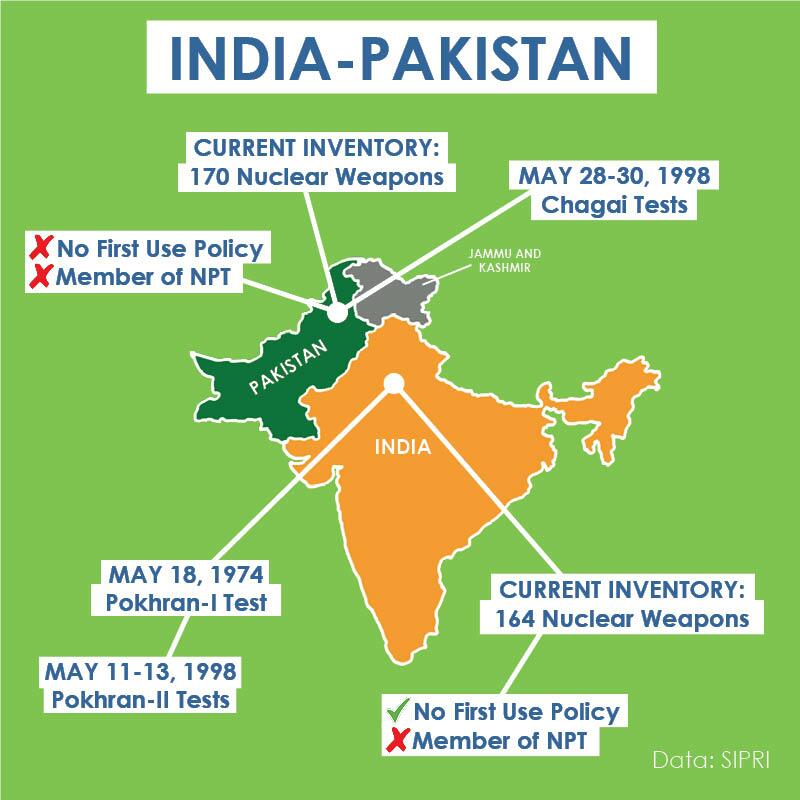
A nuclear exchange or full blown war also risks the potential involvement of nuclear armed China. China and Pakistan have increased defense ties over the years. China “reiterated its firm support for Pakistan in defending its national sovereignty, independence, and territorial integrity, and its support for Pakistan’s efforts to safeguard national security, stability, development and prosperity”. The three countries together represent around half the human population of the Earth. Radioactive fallout would do damage to the majority of the South Pacific. While theories of a “nuclear winter” are overblown and radioactive fallout from weapons generally dissipates to safe levels within three weeks according to US military studies, the effects on the global economy and food supplies in the East would be devastating, leading to a long term international crisis. The story continues in Part 2.


After the The Ukraine Endgame Part 3 article you put another article, but this can not be seen anymore.