

1 Who Controls Oil flows controls the Destiny of Nations
2 The US Blockades Hormuz
3 Military Operations
4 The Desalination Front
5 The GCC is finished
6 From the Petro-dollar to the US$
7 From Abundance to Shortages
History’s wheel is turning. China builds, India grows, BRICS+ surpasses the G7—while America punishes allies and empowers its “enemies.” In the West, the year 1492 is remembered for two episodes: first, Columbus’s arrival in the Americas, second, the fall of Granada, last stronghold of Moorish Spain. The larger consequence was geopolitical, the compass needle swung westward, ushering in a centuries- long reversal in global fortunes. Wealth that once streamed toward Asia turned into rivers feeding Europe’s ascent. Silver, gold, sugar, and spices from the Americas ignited like jet fuel. They powered science, industry, and empire. Spain, France, Britain, and the Netherlands—naval and commercial predators—rose on the tide, hollowing out the Ottoman world and diverting trade from India and China to the New World.
Today another hinge of history is swinging. Washington’s unspoken fear of a 21st century turn is no less dramatic: economic gravity shifts eastward, led by China and—critically—India. Beijing’s gamble in the 1990s—to let free markets breathe, to draw in foreign capital, and to pour trillions into domestic infrastructure—proved as consequential as a century of US industrial growth. The BRI, worth more than $1 trillion, is less an infrastructure plan than a circulatory system of steel and concrete veins, designed to reroute the lifeblood of trade across Asia, Africa, and the Middle East. By contrast, Washington failed to invest in fast sealift or high-speed rail, leaning heavily on rapidly obsolescent military power. For the last 25 years, America exhausted itself in deserts and mountains, fighting costly wars that drained trillions, cost thousands of U.S. lives—yet delivered little of enduring strategic value.
1. “Whoever Controls Oil Flows controls the Destiny of Nations “
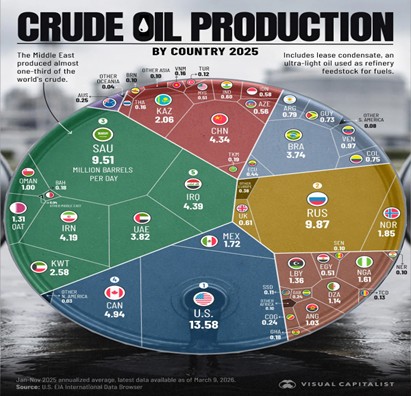
The above quote is attributed to Henry Kissinger in the mid-70s. The Rockefeller family has been in the oil business since 1863, just 4 years after the discovery of oil in America. Using the oil business as its foundation, the family expanded into finance and key economic sectors of the US first, and then later to the rest of the world, which push was intensified after 1945. The family knows the oil business cold. Fast forward to the present time. The Rockefeller Empire has been weakened greatly due to several factors-which we have written about in past articles. In his famous book, the Grand Chessboard, David Rockefellers geopolitical advisor stated that: “Potentially, the most dangerous scenario would be a grand coalition of China, Russia and Iran, an “anti-hegemonic coalition united not by ideology but by complimentary grievances. Averting this contingency, however remote it may be, it will require a display of US geostrategic skill on the western, eastern and southern perimeters of Eurasia simultaneously”. This was the American/Rockefeller nightmare. Were this to happen, then Eurasia slips out of US control. As we have seen, since 2008, the US has increased sanctions against these three. With the use of military force against Russia-through Ukraine, and now Gaza-Iran, these three nations have united to fight off the US and its allies from stopping Eurasian integration. The Petro-dollar is the first casualty of this unity. The second is loss of control over oil flows and its pricing and payment architecture. To avoid this, the US-Israeli combo attacked Iran, hoping for a regime change and bringing Iran back into the Western orbit. This gambit failed. The main thing was to stop the increasing use of the Yuan in oil transactions by Guld oil producers. That gambit failed. So, then, the next move was to take over control of Hormuz- and with it control of oil flows.
The US War for Energy Dominance Seeks Dominance Over Asia
Despite apparent military setbacks, the U.S. war against Iran may represent a broader strategy aimed at reshaping global energy flows and strengthening Washington’s geopolitical leverage.
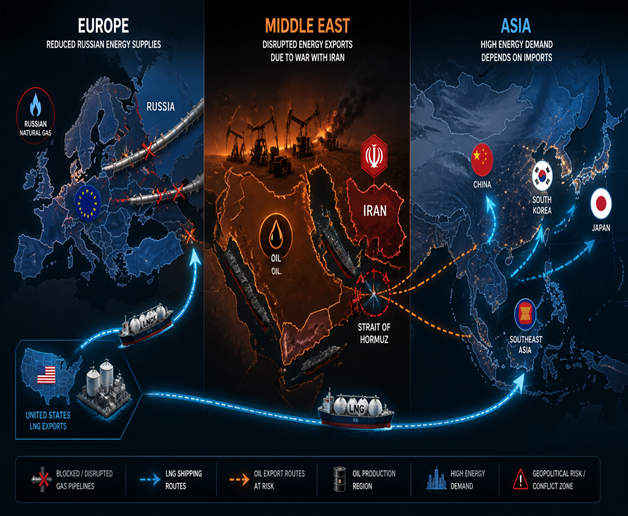
The US war on Iran — at face value — appears to be a catastrophic tactical and strategic US failure demonstrating the limits of its military power and further exposing the limits of its military-industrial capacity. However, just as with its still-ongoing proxy war on Russia in Ukraine, its inability to overwhelm targeted nations with outright military power distracts from the many ways the US is still advancing its geopolitical objectives by other means. In Ukraine, the US has categorically failed in defeating Russian forces through its support of its Ukrainian proxies. However, it has used the war to lock Russia into an expensive, prolonged, high-intensity conflict that has demonstrably compromised Russian interests beyond Europe — especially regarding the 2024 collapse of Syria. While the US does indeed face growing challenges in terms of its military power and its military industrial base, it is pursuing full-spectrum dominance using multi-domain warfare — spanning not just military force but economic and financial force. The war has also succeeded in cutting Europe off from cheap, reliable, and plentiful Russian energy and is placing Europe under increasing and likely irreversible energy dependence on the United States. This energy dependence on the US obviously benefits US-based energy corporations financially but also enhances Washington’s strategic leverage or even outright control over Europe. This control is being used to successfully create a united front across Europe against Russia. In a similar manner, the US is using its war on Iran to strangle energy exports from the entire Middle East to Asia to decouple Asia from cheap, reliable, plentiful gas and oil and place it under US energy dependence, thus providing the US strategic leverage over Asia to create a similar united front against China.
Decoupling Europe from Russian Energy Through War Was Planned
In the 2019 RAND Corporation titled “Extending Russia: Competing from Advantageous Ground,” a number of “economic” and “geopolitical” measures were laid out, designed to “extend” Russia and possibly precipitate a Soviet Union-style collapse like that which ended the Cold War. Under “economic measures,” the paper lists “hinder petroleum exports,” “reduce natural gas exports and hinder pipeline expansions,” “impose sanctions,” and “enhance Russian brain drain.” The paper first argues that one of the main methods of implementing these measures is to expand US oil and gas production and its export to Europe. However, under a section titled “likelihood of success,” the paper explicitly admits: Reducing European peacetime consumption of Russian gas has a medium to low likelihood of success. Diversifying away from Russia is expensive, and projects might be difficult to accomplish.” It should be remembered that at the time, the US was already investing in LNG export facilities and even exporting LNG targeting markets in Europe — at a time US policymakers complained that it made no financial or economic sense to do so. The paper admits that: “Expanding U.S. assistance to Ukraine, including lethal military assistance, would likely increase the costs to Russia, in both blood and treasure, of holding the Donbass region. More Russian aid to the separatists and an additional Russian troop presence would likely be required, leading to larger expenditures, equipment losses, and Russian casualties. The latter could become quite controversial at home, as it did when the Soviets invaded Afghanistan.”
In other words, by providing lethal aid to Ukraine — which the US did under the first Trump administration — the US would be knowingly attempting to provoke a war with Russia in Ukraine. Not only would the resulting war generate high costs for Russia militarily, it would also obviously transform the chief obstacle to reducing/hindering Russian oil/gas exports and expanding US LNG exports — that chief obstacle being “peacetime”— into unending wartime. Indeed, while sanctions began targeting Russia’s economy from 2014 onward, the war in Ukraine provoked by the US through its policy of militarily building up Ukraine on Russia’s borders resulted in the destruction of the Nord Stream pipelines and ever-tightening sanctions on Russian energy exports that have made otherwise irrational US LNG imports to Europe essential. To further tip the balance of energy dominance in America’s favor, the CIA and the US military began supercharging “a Ukrainian campaign of drone strikes on Russian oil facilities and tankers.” The US-provoked war provided the perfect means to decouple Europe from otherwise cheap, reliable, and plentiful Russian energy exports that had flowed during peace. While the process of decoupling has taken years and is still in the process of being fully implemented, it has proven successful — so much so that it is almost inconceivable that the Rockefeller Empire haven’t considered repeating that success regarding the Middle East and Asia.
Strangling China
US foreign policy papers spanning decades have discussed options, proposed policies, and guided actual weapons and force organizational seeking to strangle China economically through blockades — often specifically in the Asia-Pacific region but also at maritime chokepoints and ports. A 2018 Naval War College Review would list the obstacles facing such a policy and various means to overcome them. It focused on not only cutting off maritime shipping to China at chokepoints such as the Malacca Strait in what it called a “distant blockade” (a blockade imposed beyond the reach of most of China’s military capabilities), it also discussed severing China’s Belt and Road Initiative (BRI) projects built specifically to enable China to circumvent these chokepoints. At one point in the paper, it discusses the Myanmar-China oil pipeline, which allows China to offload Middle East energy at port facilities on Myanmar’s coast and pipe the energy across Myanmar directly into China’s southern Yunnan Province. The paper suggests: “A distant blockade also would need to interdict the Myanmar–China oil pipeline, which eventually could move as much as 440 kbd of crude oil from Kyaukpyu in coastal Myanmar to Yunnan Province in southwest China. Preventing tankers from offloading at the Kyaukpyu terminal would require few, if any, naval platforms to remain onsite. The area could be declared an exclusion zone for the duration of a conflict, and if the Myanmar authorities failed to comply, the facility could be disabled via air strikes, aerial mining, or other kinetic action. In short, US forces likely would be able to neutralize rapidly China’s overland routes for seaborne oil imports to avoid the Strait of Malacca and other choke points farther east and prevent them from diverting forces needed to seal other maritime ingress routes.”
Far from just theoretical proposals, the US has armed militants in Myanmar for years fighting against the central government. These militants have repeatedly struck the Myanmar-China oil pipeline and have, in recent instances, attempted to take over territory through which the pipeline crosses. In other words, rather than waiting for a US-China conflict to erupt before attacking the pipeline with US military assets, the US has instead used armed proxies to attack it before any direct US-China conflict even begins. Such attacks serve as evidence that the US hasn’t just considered the notion of a “distant blockade” on China but has already decided to incrementally impose them. The US has backed armed militants disrupting similar pipelines and economic corridors while the US itself continues growing its military footprint in the Asia-Pacific region to threaten maritime shipping near both Taiwan and in the South China Sea. However, the notion of a “distant blockade” isn’t restricted to just the Asia-Pacific region. The US war on Iran has created a de facto blockade much further from China still — in the Middle East. The war has not only impeded maritime traffic through the Strait of Hormuz through both Iranian and US-imposed restrictions, but US attacks on Iranian energy production facilities have resulted in retaliatory strikes on the energy production facilities of Persian Gulf Arab states hosting US troops. The reduced energy production across the entire region, coupled with disrupted maritime traffic through the Strait of Hormuz, has resulted in an energy crisis for nations dependent on the Middle East for their energy imports — especially Asia, including China.
Decoupling Asia from the Middle East
With production and exports disrupted by yet another US-provoked war, Asian states — instead of Europe — have now been forced to look elsewhere to meet their energy needs. And just as the US had done regarding its premeditated decoupling of Europe from Russian energy imports, the US has spent years proposing, investing in, constructing, and even bringing online LNG export facilities specifically targeting markets in Asia. With this capacity already partially online, it is now in place just in time to take full advantage of the energy crisis the US itself created in the Middle East, now threatening nations across Asia. Nations like Vietnam — for example — have been left with two choices: either leave tens of millions of their people without energy, including essential commodities like cooking gas, or buy the only alternative available to make up for disrupted imports from the Middle East. Vietnam’s state-owned gas major has purchased up to 66,000 tons of LPG (liquefied petroleum gas) from the US vs. 44,000 tons from the Middle East. It should be noted that this is the first year it has ever purchased US energy. Vietnam, of course, has close ties with Moscow and purchases part of its energy mix from Russia and also imports coal from China, but neither has sufficient capacity to immediately make up for the over 80% of Middle East energy imports Vietnam depended on that are now disrupted. Other nations have all likewise been forced to seek alternatives while the US has deliberately positioned itself as the only other alternative. It should be mentioned that the LNG export projects the US invested in over recent years to target Asian markets struggled to propose a viable business model during their early proposal and approval stages — just as LNG export projects targeting European markets had until the US proxy war on Russia began. Of course — now with the US war on Iran disrupting energy exports from the Middle East, projects like Alaska LNG have gone from poor business proposals to a desperately needed and perfectly positioned source of energy — all of it, just like with US LNG exports to Europe, by design. A recent Wall Street Journal, “U.S. Energy Exports Hit Records as World Adjusts to a Closed Persian Gulf” would note that “oil, and gas shipments have soared, but the U.S. will face obstacles turning wartime demand into a permanent boost.” But just as the RAND Corporation made clear back in 2019, any policy proposal like decoupling Europe from Russian energy that doesn’t work during “peacetime,” can be made to work by simply taking “peacetime” and transforming it into “wartime.” That is what the US did to Europe — it is now clearly repeating this process, targeting Asia.
It will be up to Russia, China, Iran, and the rest of the independent world — including nations across Asia and in particular South and Southeast Asia — to carefully navigate this dangerous trap that has been sprung by the US and avoid complete energy dependence on the US, as has been imposed upon Europe, which has already suffered what is likely irreversible political and economic damage from its political capture by the US and now its growing energy dependence on the US. Asia risks being likewise weakened by growing energy dependence on the US, making political capture much more likely by the US, then being transformed into a united front — this time against China rather than Russia — and used to wage war on the US’ behalf at the expense of the people, peace, and prosperity of Asia. The US has repeatedly demonstrated its ability to sidestep its growing military weakness relative to the rest of the world and leverage its political capture of nations around the globe, its monopoly over global information space, and now its growing weaponization of energy. The US is weaponizing energy both through the production and export of energy from the US and by carrying out a systematic attack on and seizure or destruction of alternative energy sources in Venezuela, Russia, and Iran, among others. The US is at a juncture faced with two choices. It can either manage a transition from global hegemon to a prosperous, peaceful nation working together as equals with all other nations, or it can double down on its continuation as a bankrupt, violent empire seeking continued control over all other nations.
However, before the 2024 US presidential elections and now clearly since the elections, the US had already committed to doubling down on domination. The US desire to “reindustrialize” was spurred not as a fundamental economic transition but as a geopolitical necessity to build the arms and ammunition required to fight increasingly powerful nations like China, and Russia, but also Iran, and many other nations increasingly tilting toward the multipolar worldview. Even within the pages of the 2025 US National Security Strategy, the US laid out continued ambitions to deter the rise of rival powers anywhere on Earth. The US is simply recognizing the rising costs of global primacy and outsourcing them to its various proxies — from Europe to the Asia-Pacific — allowing the US to continue confronting the potential rise of alternative centers of power at the expense of the nations in these regions the US has already politically captured. Examples of this include not only Ukraine but increasingly the rest of Europe vis-a-vis Russia, the Persian Gulf Arab states and Israel in the Middle East vis-a-vis Iran, and Japan, South Korea, the Philippines, and the island province of Taiwan in the Asia-Pacific region. Rather than retreat to the Western Hemisphere and seek a grand bargain with either Russia or China — and rather than building a functional peacetime economy — the US has simply doubled down on military industrial production at home as well as “friend-shoring” it to US proxy nations, and has adopted an all-or-nothing mindset that is clearly targeting and destabilizing the global economy for proxies and rivals alike.
The Potential Costs of “All-or-Nothing” Thinking
In the mind of David Rockefeller jnr, ruling over the ashes is preferable to the inevitable collapse of the Rockefeller Empire and the current US system because of its precarious dependency on the global reserve status of the US dollar and the rent-seeking nature of its economy versus the rapid rise of alternative economic systems built on purpose and production. Because of this, the US is rapidly approaching overextension abroad and accelerated decay at home. Historically, when a great power chooses supremacy over stability, the transition to a new international order usually happens through a major crisis — like a world war — rather than a “grand bargain.”US proxy war in Ukraine escalating through the attacks on Russian energy production, storage, and export facilities; the US targeting of tankers carrying Russian energy exports; the US war of aggression against Iran and its subsequent blockading of the Strait of Hormuz; and the US’ continued military build-up in Asia-Pacific off China’s shores and even within its internationally recognized borders (Taiwan) – we see that exact major crisis taking shape right now.They seek to rule the world through controlling global energy supplies. The longer the US can control the flow of oil through Hormuz, it reckons it can control the destinies of nations. Most of the wars in the past 100 years has been a fight over controlling oil flows and its transportation corridors. Just based on this last point, the fight to gain control over Russian and Iranian energy resources will not stop. Only time will tell if the multipolar world can adequately organize itself not just in the domain of military power but also in all other domains the US is waging war against them in.
2 The US Blockades Hormuz
The Treasury Department, through Economic Fury, has targeted Iran’s international shadow banking infrastructure, access to crypto, shadow fleet, weapons procurement networks, funding for proxies in the region, and independent Chinese “teapot” refineries that support Iran’s oil trade. Under Trump’s’ maximum pressure campaign, Tehran’s inflation has doubled and its currency has rapidly depreciated. Trump opted for economic warfare against Iran as it carried less risk, instead of resuming bombing or trying to exit the conflict. That’s the good news. However, he also instructed White House aides to prepare for an extended blockade on Iran. Then, on 13 April, the US blockades Hormuz. Iran retaliated by striking an oil tanker attempting to bypass Iran’s tollgate. The US blockade disrupts Iranian trade and energy flows. But it also places Washington’s Persian Gulf allies in a bind. A full closure of Hormuz would hit their exports directly. The IRGC warned that any breach by the United States will be met with an appropriate response. Hormuz is not a card Iran will give up. The announcement by Trump – specifically targeting Iranian ports and vessels entering and leaving them – pushes the confrontation with Tehran into a new phase, effectively layering a US naval blockade over a waterway Iran is in control of. This move reaches far beyond Iran and cuts into global trade flows. It is designed to pressure international rivals, particularly China. By transforming a localized conflict into a regional and international crisis, it forced Washington to step back, even if temporarily. Increasingly, Iran is being treated in policy circles as a major power. Not solely because of its position over Hormuz or its ability to leverage Bab al-Mandab, but because it possesses the military, security, and political capacity to sustain that pressure. At its core, this confrontation is that Hormuz and Bab al-Mandab are emerging as central nodes in a connected system of pressure. Washington seeks to confine the crisis, while Tehran expands it into a global contest where control of maritime flows translates directly into political power.
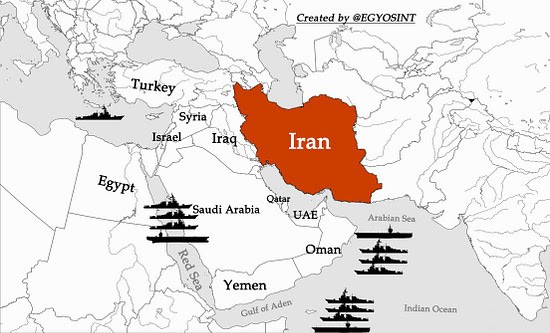
Iran is at the point in this conflict were trying to play a game of escalation management is counterproductive. If the US opts to resume its attacks on Iran, with or without Israel, Iran will have no choice but to go for the jugular from the start. To strike not only the energy production capabilities of the regional actors, like the United Arab Emirates, Saudi Arabia, Kuwait, and Bahrain, that continue to provide assistance to the US when it comes to the conflict with Iran, but also their water desalinization plants and power production plants. Denying these nations access to the very water they need to survive. And power they need to provide air conditioning to the skyscrapers that have defined their status as modern oases of civilization. The hot summer months approach. And if Iran eliminates water and air conditioning, then these modern Gulf Arab States become uninhabitable. Cities like Dubai and Abu Dhabi become uninhabitable. So, too, Kuwait City, Riyadh, and Manama. Everything the rulers of these Gulf nations have aspired to accomplish over the course of the past several decades will lie in ruins, ghost cities in place of thriving metropolises. And Iran would likely do the same to Israel, destroying the critical infrastructure the tiny Zionist enclave needs to survive as a modern nation states. Making the land of milk and honey uninhabitable for millions of Israelis who will have no choice but to go back to their homes of origin. These are all known knowns—there is no mystery about what the consequences of resuming military operations against Iran will bring. Albert Einstein is widely quoted as once noting that the definition of insanity was doing the same thing over again and expecting a different result. The US and Israel launched a surprise attack against Iran using the full strength of their respective air forces. And they failed.
Today, Iran stands ready to receive a combined US-Israeli strike which will match and exceed the destructive power of those initial attacks. And Iran will respond with missile and drone attacks which will exceed by an order of magnitude the targeted destruction of its previous retaliatory strikes. Iran will change the cycle of escalation by going straight for the jugular. The balance of initiative has shifted. Tehran has moved from absorbing pressure to producing it. The strait now operates as a lever, tightened or eased according to the course of confrontation.
Bab al-Mandab enters the battlefield
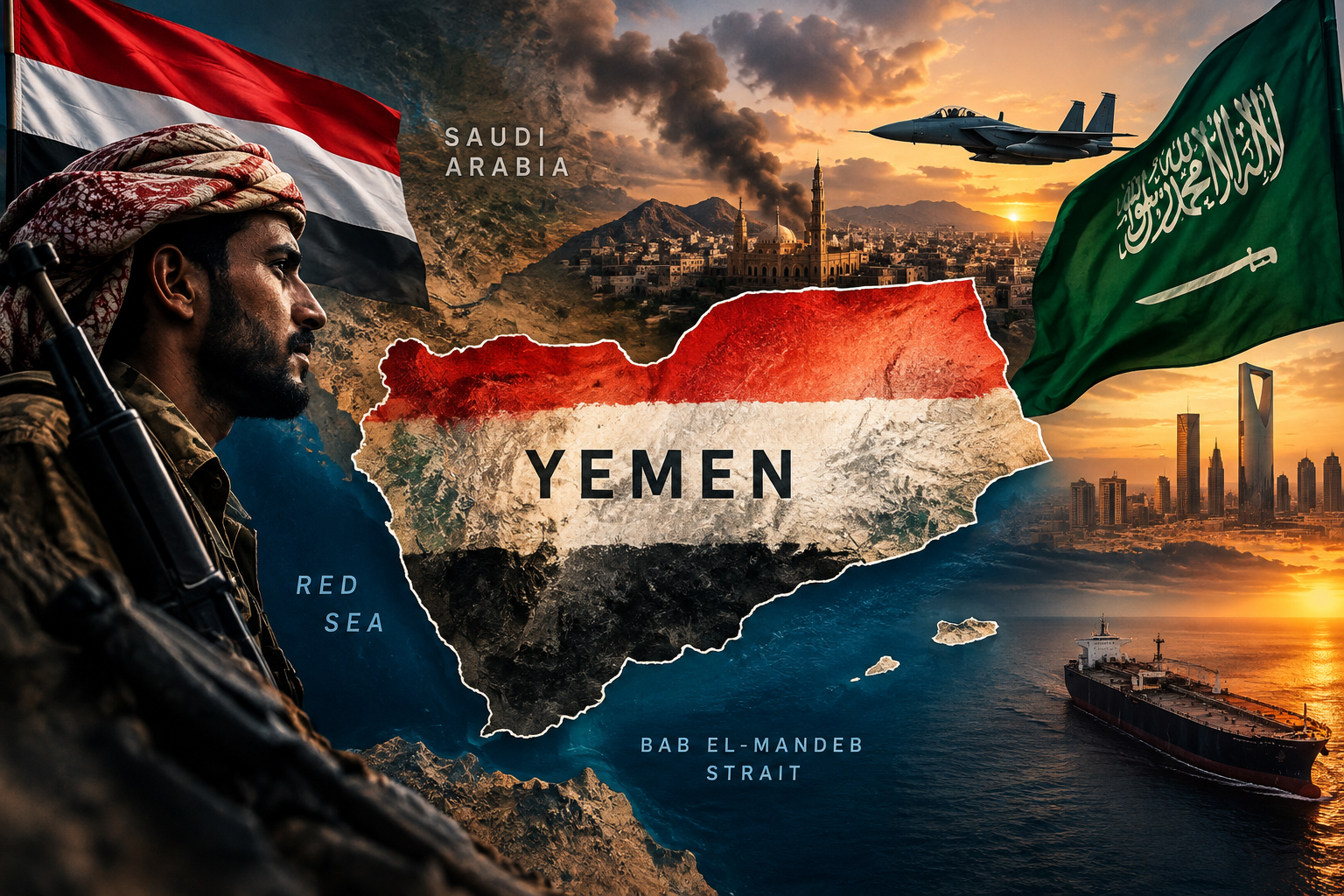
Iran’s signaling does not stop at Hormuz. The prospect of closing the Bab al-Mandab Strait in the Red Sea has emerged as part of a broader deterrence framework, one that extends pressure across multiple maritime corridors through allied actors. Recent Iranian statements show that Tehran’s approach goes beyond geography. Military signaling has followed suit. IRGC commanders have explicitly linked the security of Hormuz to suggesting that escalation against Iran could expand into other theaters indirectly. This effectively folds Bab al-Mandab into the same deterrence equation. Iran is therefore advancing a multi-layered deterrence model, with Hormuz as the core pressure point and Bab al-Mandab as an expandable front, transforming a regional confrontation into a global maritime crisis. The Houthis in Sanaa have already demonstrated their capacity to disrupt Red Sea shipping in support of Gaza, effectively turning Bab al-Mandab into an active front if pressure on Tehran intensifies. The story continues in Part 2.
Without a doubt Iran will be a nuclear armed state by July and will threaten Isreal and the Persian Gulf and any Americans still in the Gulf with final destruction unless they leave. This is going to happen.
Sorry, that’s a propaganda by Rockefellerian USA. No evidence to date. Just like Weapons of Mass Destruction of Iraq. They are there some where here and there or there, everywhere….by USA VP named appropriately as Dick.