
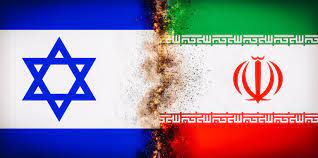
- How did Iran build a Sophisticated Missile Force?
- Planning
- Israel Attacks & Iran Retaliates
- Mossad & Terrorism
- Iran Victorious
- Revolution is not a Dinner Party
- Iran is not alone
- War-Between Wars
- Iran Expels the IAEA
- Zionists flee Israel
The Israeli rogue state added another of its neighbors to the long list of regional nations it is currently bombing. From Lebanon, Palestine, Syria, Iraq, Yemen, international waters, and now Iran—Israel now bombs them all with impunity while crying out about its own ‘security’.
Background
Since 1990, the US has been trying to “regime change” Iran. But, they were too busy with other juicy meals – such as Russia, Yugoslavia, and the looting of Asia. Beginning in the late 1990s, attention was again focused on Iran. Then 9/11 took place, and the Middle East became the focus of Rockefeller aims.
As Israel and the US battled various resistance movements in the region, Iran gained strength and aided other movements opposing Israel, such as Hezbollah, Yemen, and Palestine. Then, Covid was unleashed, in order to save the banking system. But, the system needed fresh income streams-and so an attack on Russia began. With the failure of the Ukraine Project, attention was then on Iran-the weakest link amongst the Eurasian Triangle (Russia, China and Iran). As previously explained, the Empire reckoned it could achieve success in Iran – major miscalculation. All the while the financial system is imploding – in slow motion.
The current plan to attack Iran was made in mid-2024, just as the decision to attack Hezbollah in Lebanon was made. It was to be a “copy & paste” operation for both countries. The go-ahead was given after Israel and the US attacked Beirut, Hezbollah, etc. in October last year. It worked for a while, as Israel used the “ceasefire” to its advantage. Both the US and Israel hoped to repeat the “Hezbollah model “in Iran. They forgot that comparing Hezbollah to Iran is like comparing an ant to an elephant. Israel’s attack on Iran, which began Friday June 13, is the culmination of nearly 25 years of relentless transformation across the Middle East. This war was not born overnight, nor can it be explained by simplistic moral binaries. What we see now is the natural outcome of a series of miscalculations, misread ambitions, and power vacuums.
1 How did Iran build a Sophisticated Missile Force?
From the War of the Cities to True Promise 3: Iran’s ballistic program and the path to networked deterrence
The Islamic Republic’s long-range missile doctrine is not just a tale of arsenal accumulation, but a four-decade transformation from survivalist improvisation to operational supremacy in the face of western and Israeli air dominance. Under a regional sky long dominated by US and Israeli air and intelligence superiority, Iran made a fateful decision decades ago. It would not attempt to match its adversary’s tank-for-tank or plane-for-plane, but would instead build an asymmetric deterrent from scratch.
Rather than chase the mirage of classical military parity, Tehran developed an indigenous ballistic missile arsenal that is now the largest and most formidable in the region. This was no short-term, tactical gambit. Iran’s missile doctrine was forged in an existential struggle, refined over war and siege, and ultimately transformed into a cornerstone of deterrence.
The War of the Cities: Birth under Siege (1980–1988)
The first phase of Iran’s missile journey began in the crucible of the devastating Iran–Iraq War, specifically during the infamous “ war of the cities “.As Baghdad launched Soviet-supplied Scud-B missiles deep into Iranian urban centers, it did so under the protective umbrella of western intelligence and funding from Arab states of the Persian Gulf. The intent was clear: to break Iranian civilian morale through systematic terror from the sky. Caught without a missile deterrent of its own, besieged diplomatically, and encircled by western-aligned forces, Iran turned to whatever resources it could muster. It secured limited quantities of Scud-B missiles from Libya, Syria, and North Korea. These early acquisitions, modest as they were, formed the embryonic core of a deterrent force placed under the direct command of the Islamic Revolutionary Guard Corps (IRGC). It was during this phase that Iran’s leadership came to the unshakable conclusion: without a retaliatory missile force, no psychological or strategic deterrence was possible. Alongside importing missiles, Iranian engineers began dismantling, studying, and maintaining the systems. They built smuggling networks, circumvented embargoes, and reverse-engineered technology. North Korea emerged as a critical partner, acting as a conduit for Soviet missile know-how. Iran had become capable not only of replicating but also of redesigning and expanding missile technology independently. Between 2000 and 2010, Iran pivoted from mass production to innovation, prioritizing accuracy, range, and operational readiness. The foundations of Iran’s ballistic doctrine were thus laid.
From Imitation to Innovation (1989–2009)
With the Imposed War over, Iran’s military establishment—spearheaded by the IRGC—began restructuring its defense priorities. The goal was no longer just to have missiles but to produce them independently and on a large scale. Iran transitioned from a user to a manufacturer. The Shahab-1 and Shahab-2 were enhanced variants of the Scud-B and Scud-C. But the real breakthrough came in 2003 with the boasting a range exceeding 1,300 kilometers—a capability that placed US bases in the Persian Gulf and occupied Palestine within striking distance. The most significant leap, however, came with the adoption of solid-fuel propulsion. During this phase, Iran undertook sweeping strategic steps: adopting solid-fuel for easier storage and rapid deployment, establishing underground and mobile launch facilities to avoid detection, building decentralized manufacturing to reduce vulnerability to strikes, and integrating missile research into academic institutions to develop a domestic cadre of experts. From 2000 to 2010, Iran’s program pivoted decisively from quantity to quality, enhancing range, precision, and operational readiness.
Smart Missiles and Precision Strikes (2010–2020)
By the 2010s, Iran’s goal had shifted from mass deterrence to precision deterrence. Engineers focused on guidance systems using inertial navigation paired with domestic GPS and anti-jamming technologies. The result was a suite of short- and medium-range guided missiles with enhanced tactical utility.
In January 2020, in direct retaliation for the US assassination of IRGC Quds Force General Qassem Soleimani, Iran struck the Ain al-Asad base in Iraq with Qiam and Fateh missiles. Satellite imagery showed sub-five-meter accuracy, hitting aircraft hangars and troop shelters. It was one of the most accurate missile strikes on a US facility in modern history.This decade marked Iran’s shift from “deterrent” missiles to “executive” missiles—systems where political power was expressed through precision. It was no longer about maximum range, but maximum effect. The missile became a scalpel, not a hammer, paving the way for Iran’s most advanced deterrent doctrine yet.
The Rise of Networked Deterrence (2021–2023)
By the 2020s, Iranian missiles were no longer stand-alone assets. They had become the final phase of a broader, integrated offensive system. Missiles now worked in tandem with kamikaze drones, electronic warfare units, cyber surveillance, and decentralized command structures. This was networked deterrence: a synchronized, multi-domain approach designed to penetrate and paralyze advanced air defense systems. Under this doctrine, Iran developed new missiles tailored for layered operations. The hypersonic missile (1,450 km, 500 kg warhead), most recently deployed in a multi-warhead configuration against the occupation state, exemplifies this evolution. Other critical systems include the Khorramshahr-4 (over 2,000 km), Raad-500 (solid-fuel, rapid launch), Zolfaghar Basir (optically guided, 1,000+ km), and Haj Qassem (1,400 km, 500 kg warhead)—all integral to Iran’s expanding offensive architecture. By 2023, Iran fielded around 30 missile systems with ranges spanning 200 to 2,500 km. These systems, guided by jam-resistant platforms and launched from mobile or underground sites, were designed to render preemptive strikes both difficult and strategically ineffective.

From Blueprint to Battlefield: True Promise 3 (2024–2025)
In June, Iran operationalized its missile power in True Promise III, a massive retaliatory strike against the occupation state and its US backers. Triggered by Israeli aggression and building on limited predecessors, the operation was a turning point. It marked the battlefield culmination of four decades of Iranian missile doctrine. What distinguished True Promise III was not just the firepower but the integration. Iran coordinated ballistic strikes, drone swarms, and electronic attacks into a single operational framework. For the first time, the world witnessed the seamless fusion of Iran’s missile and drone capabilities in a real war scenario. The outcome upended assumptions in Washington and Tel Aviv. The missiles that into Israeli territory were not just instruments of reprisal. They were shields for the program itself—offensive deterrents capable of defending Iran’s retaliatory power by disabling enemy assets before they could act. The strike was not just a response; it was a preemption of the enemy’s preemption. None of this can be divorced from Iran’s nuclear posture. The ballistic and nuclear programs may appear distinct, but they operate on the same doctrinal axis. The operation symbolizes sovereignty; the missile program enforces it. Together, they dismantled the western fantasy that Israel could neutralize Iran’s deterrent capacities in a single blow. That era is over. Iran’s missile shield is no longer just a threat. It is a reality, already in motion.
2 Planning
13th April, 2025 – Trump receives orders to prepare the bombing of Iran
14th April – Washington baits Iran with negotiations as a means to let their guard down ‘At this point, Trump threatens Iran, as he later proclaimed “I gave Iran 60 days to make a deal. Israel attacked on day 61.”
30th April – The U.S. Air Force conducted a large-scale transatlantic deployment of Boeing KC-135 tanker and Boeing KC-46 Pegasus aerial refueling tankers, with nearly 30 aircraft crossing the Atlantic overnight. While officially framed as part of NATO’s Atlantic Trident 25 exercises, the unprecedented number of tankers suggests a far more urgent strategic purpose, preparation for potential military action in the Middle East, amid escalation between Iran and Israel. The sudden movement of such a critical portion of the U.S. refueling fleet, a backbone of American air power, is a clear sign that Washington may be preparing for a major operation. Given that KC-135, with an average age of 52 years, are already worn out due to decades of heavy use, their mass deployment is highly unusual. The Pentagon would not risk overextending these aging aircraft without a pressing need. The next step may be the forward deployment of tactical strike aircraft closer to the Middle East.
Satellite imagery from Diego Garcia, a key U.S. base in the Indian Ocean roughly 2,000 miles from Iran, reveals a significant military buildup:
Four B-52H strategic bombers
Six F-15E Strike Eagle fighter-bombers
Six KC-135 tankers
A C-5M Super Galaxy transport aircraft
This concentration of heavy strike assets suggests that Washington is preparing for long-range bombing operations, should the conflict escalate further.Additionally, the second U.S. carrier strike group, led by the USS Nimitz, is now en-route to the region, joining the USS Carl Vinson and the British HMS Prince of Wales. The presence of multiple carrier groups significantly enhances U.S. force projection capabilities, enabling rapid airstrikes or missile launches against Iranian targets. Moreover, reported recent shifts in U.S. naval communications patterns indicate heightened readiness for Tomahawk cruise missile strikes. Reports confirm that ship crews are conducting real-time readiness checks, a procedural step that typically precedes potential missile launches. These developments suggest that the U.S. is not merely posturing but actively preparing for kinetic military action if the situation deteriorates. Given Iran’s larger military-industrial complex, a prolonged war of attrition could strain Israel’s resources, unless the U.S. intervenes directly.
To No One’s Surprise, UK Could Join Israeli Attack on Iran
To no one’s surprise, the United Kingdom (the father of Zionism) appears to be preparing to join the ongoing Israeli attack on Iran, following the footsteps of the United States. U.S. plans for an attack on Iran likely include bombers taking off from the British Diego Garcia air base in the Indian Ocean, or even from Royal Air Force (RAF) Fairford base in England. The U.S. could even use RAF Akrotiri base in Cyprus for its aerial tankers, to refuel the bombers. The UK is already taking steps to prepare for military operations in the Middle East. The RAF has already deployed 14 Typhoon fighter jets at Akrotiri, supposedly to protect its bases and forces and to help regional allies such as Cyprus and Oman if they come under attack. In addition, the Royal Navy HMS Queen Elizabeth aircraft carrier was spotted crossing the Suez Canal on June 19 on an unannounced deployment to the Middle East. The UK joined the U.S. in launching strikes against the Houthis in Yemen, a close ally of Iran, in response to the group’s attack on Israel. Thus, it will be hard to imagine London not providing support for any U.S. action against Iran, if not to also join the Israeli attack on the Islamic Republic upright. The Israeli strike plan was as follows:-
*Place 1000s of drones amongst its assets within Iran, and supply them with the means to conduct terror operations in the country.
*Use the Israeli base in Azerbaijan to launch drones equipped with missiles and rockets to attack targets within Iran
*Assassinate the military leadership
* Ditto for the political leadership
*Ditto for the nuclear scientists
*Destroy Iran’s nuclear program and facilities
*Destroy its state-run media
*Destroy its air-defense systems by bombing and conducting cyber warfare to hack various grids with the Iranian military.
*Bomb its oil-and-gas infrastructure
*eliminate its ballistic missile program
* Bring about regime change, and install a pro-west leader.
This was their plan. The final result would be that the people would rise up and regime changes the government, replacing it with a pro-west puppet- like what they did in Syria. On Saturday, 14th June, a day after the attack on Iran began, Netanyahu issued a statement to the Iranian people -the Iranian regime has never been weaker. This is your moment – Iranians – to rise up, make your voices heard. We stand with you.” In the vain hope that the people would rise up. That was the plan. What the 2 families got was a complete shock.
3 Israel Attacks Iran & Iran Retaliates in a Tit-for-Tat War of Attrition
A war between Israel and Iran began when Israel launched attacks on key military and nuclear facilities in Iran on 13 June 2025. In the opening hours of the war, Israeli air and ground forces assassinated some of Iran’s prominent military leaders, nuclear scientists, and politicians; and damaged or destroyed Iran’s air defenses and some of its nuclear and military facilities. Israel launched hundreds of airstrikes throughout the war. Iran retaliated with waves of missile and drone strikes against Israeli cities and military sites; over 550 missiles and more than 1,000 explosive drones were launched by Iran during the war. The Iran-allied Houthis also fired several missiles at Israel. The US, which defended Israel against Iranian missiles and drones, took offensive action on the ninth day of the war by Iran retaliated by On 24 June, Israel and Iran agreed to a cease fire after insistence from the US. Israel’s early morning blitz on Iran was the most brazen assault on Iranian soil in decades – and was designed to replicate its past successes in Lebanon. It didn’t work. This “shock and awe” blueprint found some success in Lebanon, where Israeli intelligence had achieved deep penetration. In Tehran, however, it met a far more resilient nation. While Trump loudly demanded Iran abandon its nuclear enrichment rights, he pursued a carrot-and-stick approach of ‘maximum pressure’ sanctions, military threats, and negotiations to try and persuade Tehran to accept his unilateral demands during indirect talks. This pattern had previously been repeated in the Ukraine–Russia conflict after negotiation deadlocks, involving operations deep inside Russia and attacks on Russian strategic bombers. For months, Tehran had calculated Israel’s Hezbollah strike model as one likely scenario for an attack on Iran. Accordingly, measures were taken to quickly replace commanders in such an event. At least tactically, however, Israel still managed to shock Iran with its attacks, mostly resulting from domestic operations.
What Did Israel Strike & Damage in Iran?
- Israel targeted military, political and scientific leaders in its intended “decapitation “strikes, which destroyed residential buildings in Tehran- a total of some 20 plus military commanders and about 8 nuclear scientists
- Israel launched a series of airstrikes on Iran’s critical energy infrastructure, targeting major fuel depots and oil refineries in Tehran and other areas. The energy strikes follow Israel’s Saturday attack on a section of one of the world’s largest natural gas reserves.
- Various air-defense launchers, radar sites, air bases and other military targets
- The nuclear sites at Fordow, Natanz and Isfahan.
- Iran’s TV station and headquarters
- Many sites bombed in northern Iran, by the Caspian Sea, with the aim of forming a “barrier” between Iran and Russia

.

Tehran Counters Swiftly
But Iran’s response was swift. Within 12 hours, Tehran had launched significant retaliatory operations. The country’s air defenses were restored, (after its grid was hacked by Israel), drone units re-engaged, and key command posts replenished. Images of Israeli targets struck by Iranian munitions soon proliferated online, signaling both Tehran’s operational recovery and strategic messaging. IRGC missile crews still feel so confident and safe that their launchers are firing in clusters. So much for Israeli air superiority. In truth, Israeli AD systems are being degraded. Iranian missiles increasingly strike with little interception. The myth of omnipotent Israeli defense is unraveling. Tehran views any Israeli aggression as inseparable from US support. It has long warned that Washington’s logistical, intelligence, and operational backing enables all of Tel Aviv’s military campaigns. Iran has clearly stated its strategy in case of a US attack: security for all or none, meaning maritime security, energy security, and the security of US bases in the region. “There is an old rule in the Persian Gulf, if our (Iran’s) oil facilities are seriously damaged, we will not allow any country in the region to use its oil.” There are many options Iran can employ to execute on that threat, such as closing the Strait of Hormuz could easily be one tactic on Iran’s agenda.
First, Iran’s military command is vast, experienced, and rapidly replaceable. Unlike Hezbollah, a non-state actor with more limited resources, Iran maintains depth and redundancy across its armed forces. Second, geography matters. Iran’s sheer size allows the strategic dispersal of critical assets. Israeli jets may have briefly penetrated key western nodes, but much of Iran’s infrastructure remains embedded in its eastern and central territories. The state’s military doctrine is built around such depth. Third, while Israel’s intelligence apparatus did succeed in penetrating Iranian command circles, it did not achieve full-spectrum dominance. Iran retains the capacity for counter-intelligence operations, and in the days since the attack, internal security has reportedly beefed up its operations. But perhaps Tel Aviv’s gravest misjudgment lay in its reading of Iran’s internal cohesion. Israel appeared to believe that a sudden external strike would activate opposition forces within Iran – unleashing separatists, militants, and government critics to destabilize the state. But Iran’s political unity in the face of external threats has been repeatedly shown to be strong. Even segments of society have been forged from the collective memory of wars, invasions, and isolation.
Israel Tried To ‘Turn’ Iranian Generals Against
It has become clear that Israel was engaged in a massive spying and espionage campaign to pave the way for its ‘Operation Rising Lion’ – which is intent on destroying Iran’s nuclear energy program, and possibly even accomplishing regime change. The Washington Post reports on what’s been revealed as one of the most brazen recruitment operations aimed at top generals. In the hours after Israel launched its first wave of strikes against Iran on June 13, killing top military leaders and nuclear scientists, Israeli intelligence operatives launched a covert campaign to intimidate senior officials with the apparent aim of dividing and destabilizing Tehran’s theocratic regime, according to three people familiar with the operation. People working for Israel’s security services who speak Persian, Iran’s primary language, called seniorIranian officials on their cellphones and warned them that they, too, would die unless they ceased supporting the regime of Khamenei,Iran’s supreme leader, according to the three people, who spoke onthecondition of anonymity to discuss clandestine operations. One of them estimated that more than 20 Iranians in positions of power were contacted. But what’s clear from all the reporting on this is that these generals were more loyal than expected – and this wasn’t met with success for Israeli intelligence. WaPo and others have republished an audio recording of one such call that took place June 13 – the day Israeli warplanes initiated their attacks:
According to one translated part of the transcript:
“I can advise you now, you have 12 hours to escape with your wife and child. Otherwise, you’re on our list right now,”an Israeli intelligence operative told a senior Iranian general close to the country’s rulers, according to the audio recording. The operative then suggested that Israel could train weapons on the general and his family at anymoment. “We’re closer to you than your own neck vein. Put this in your head. May God protect you,” he said. This is without doubt fueling IRGC efforts to root out Israeli spy networks, amid the general paranoia over potential compromise and Israeli penetration. Israel uses Iranian dissident groups, like the MEK group, which currently has its political leadership based in Europe.
What Did Iran Strike & Damage in Israel?


Despite the arduous efforts of Israeli censors to hide the devastation Iran inflicted on Israel with its barrage of ballistic missiles during the 12-Day War, information is emerging that destroys the myth that Israel had an impregnable air defense. Based on the videos of strikes in Haifa and Tel Aviv, this map below, portrays the massive scale of the Iranian attack. For the first time in its history, Israel took a major beating. According to various Israeli media reports, damage spanned residential buildings, scientific infrastructure (e.g., labs at the Weizmann Institute in Rehovot), the Israeli Defense Ministry complex, and commercial hubs like the Tel Aviv Stock Exchange. Iran also struck a military intelligence target near the Soroka Medical Center in Be’er Sheva. The medical center was hit by the blast wave, which caused extensive structural damage, a chemical leak, and dozens of injuries. The Zionists love to accuse Hamas of placing military equipment etc. next to /or under hospitals. These accusations have been proven to be false. As someone said “Israel likes to accuse others of whatever nasty it is doing – an accusation is a confession.” The Weizmann Institute, long linked to Israeli weapons research, was struck by Iran in response to its role in developing tools used against civilians.

A recent Iranian missile strike has inflicted extensive damage on the Weizmann Institute of Science in Rehovot, central occupied Palestine, a facility long considered a cornerstone of the Israeli occupation’s scientific and military-industrial infrastructure. Several buildings within the institute sustained direct hits, with one key laboratory complex entirely destroyed by fire. The targeted site housed advanced research in life sciences, artificial intelligence, and molecular biology, areas that have directly supported the Israeli entity’s development of surveillance, targeting, and across the region. Described by Israeli media as the “scientific and military brain” of “Israel”, the Weizmann Institute has played a pivotal role in the research and development of technologies underpinning airstrike coordination systems, drone warfare capabilities, and battlefield medical technology, all of which have been destroyed. Around 45 labs were destroyed at the Weizmann Institute, and an additional 20 sustained damage. Forty buildings throughout the campus were also impacted. The Iranian attack on the Weizmann Institute of Science caused around $570 million in losses, with video footage confirming the massive amount of damage to the site. Several universities in Israel were heavily damaged by Iran’s ballistic missile strikes
The strikes revealed the precision of Iranian missiles, which hit institutes directly associated with the defense and intelligence establishments.
On 14 June, Iran struck the Weizmann Institute of Science in the city of Rehovot, southeast of Tel Aviv, causing unprecedented damage. In the days that followed, Ben Gurion University in the Negev and Tel Aviv University were also damaged by Iranian attacks. Ben Gurion University in the Negev was also severely damaged by the missile that struck near the Soroka Hospital in Beersheba. According to estimates, up to hundreds of millions of shekels ‘ worth of damage was inflicted on Ben Gurion University.
“The entire medical school was damaged; we don’t know how we’ll return to teaching there. Six labs were completely destroyed. The shock waves reached the campus across the street and damaged 30 of the 60 buildings. Forty-two faculty members and students were evacuated from one of the apartment buildings that was hit next to the university,” said Chamovitz- head of Higher Education in Israel.
Chamovitz also notes that research was harmed in the attacks. “The first is the destruction of the labs and materials. A research building costs about $50 million. You need to add to this $50 million to $100 million for buying equipment. This is billions of shekels in total damage. There is electronic backup for everything, but we never imagined we would need backup for biological materials like bacteria, tissues, and DNA samples in case a building was destroyed. There were backups, but usually they were in other freezers in the same building.” “In some cases, dozens of research years have been lost. I don’t know what I’d do if I lost all the species of seeds I’ve collected for my research in plant science. It scares me to think about it,” he added.
Last month, Ben Gurion University announced that six of its labs were destroyed wiping out years of work. “All the air force pilots who were trained in the last 20 years are graduates of Ben Gurion University of the Negev. Almost all the senior officers in the intelligence units’ research divisions are graduates of the universities. Iron Dome, David’s Sling, and the rest of the air defense systems are the fruit of Israeli technology that comes from research that began at the universities,” Chamovitz said.
On June 20, Iranian missiles struck the Gav Yam Negev Advanced Technology Park linked to Israel’s technology and Artificial Intelligence (AI) research. Media reports also framed the operation as direct payback for the assassination of Iran’s nuclear scientists.
- confirm hits on Mossad, Aman, 8200 and Shin Bet HQs
One of the missiles reportedly hit a sensitive target in Herzliya, a coastal city known for housing key Israeli security and intelligence infrastructure. Simultaneously, military censorship has imposed a blackout on the location recently targeted and struck by Iranian missiles in the Glilot area. The facility is used for all logistical activities of the Israeli Military Intelligence Directorate, Aman. The Iranian military’s public declarations mark a significant shift in tone and intensity, signaling Tehran’s growing confidence in its ability to impose costs on Israel. With direct strikes now targeting intelligence and operational centers, Iran appears committed to a sustained campaign designed to degrade Israel’s military capacity from within.
- All 3 airbases from which the Israeli jets were launched- several Israeli defense system was destroyed , such as THAAD, Iron Dome, Patriot and Arrow- videos posted to social networks showed the explosion of what appear to be air defense systems blowing up in Nevatim Air Base in southern Israel.
- The petro-chemical, energy, gas and related infrastructure destroyed, including damage to the drilling platforms off-shore Gaza and Israel
- Israel’s largest oil refinery was forced to shut down on 16 June after an Iranian missile strike caused extensive damage to the Bazan Group’s Haifa complex, The Bazan complex supplies nearly 60 percent of Israel’s diesel and close to half of its gasoline. While Bazan’s primary activity is oil refining, it also manufactures raw materials for the plastics and chemical sectors.
- power plants badly damaged
- Iran planned and executed drone infiltration missions from the vicinity of al-Quds deep into the heart of the occupied Palestinian territories. All military/intelligence/research sites
- The US embassy
- The ports of Ashdod and Haifa badly damaged- no more containers or goods coming into Israel
- Furthermore, Israeli media reported that the Israeli Stock Exchange building in the Ramat Gan area near Tel Aviv was struck.
- Iran claims it attacked almost all scientific, research, and academic centers, factories and industries affiliated with Rafael and Elbit Systems, as well as other arms manufacturing and artificial intelligence factories. For example, Iran claims it destroyed Intel’s chip manufacturing plant, located in the occupied settlement of Kiryat Gat south of Tel Aviv. Facilities and factories of other US companies in Israel, which include Intel, Microsoft, Tesla, Google, and Apple also were targeted by Iran.
- Rafael and Elbit Systems are deeply integrated into Israel’s defense, academic, and industrial landscape. Rafael has strong ties with Ben-Gurion University and maintains multiple R&D and production sites across Israel, while Elbit Systems leads national research consortia and operates numerous factories, including those acquired from IMI Systems.
- Earlier, the Iranian armed forces issued an evacuation order for Israeli settlers in the Neve Tzedek neighborhood in Tel Aviv after an Israeli threat to Tehran’s District 18 ; the Zionist President said that Israel will burn Iranian cities-especially Teheran. Neve Tzedek is one of Tel Aviv’s oldest and most symbolically significant neighborhoods. It holds deep cultural, historical, and ideological value within the Zionist narrative and is often described in Israeli discourse as the “first Zionist dream. “ As the nucleus from which Tel Aviv later expanded, Neve Tzedek has come to embody the early aspirations of the Zionist project along the Palestinian coast. The neighborhood is also a major cultural and tourist destination, attracting thousands of visitors each year.
- The Israeli stock exchange
- The loss of 4 F-35 jets and the capture of a female Israeli pilot
- Further, even more photographic proof continues to emerge of Iran’s downing of Israeli heavy UCAV drones, like the Heron, Hermes, and Eitan series. Several new photos and videos showed previously unseen drones shot down and being recovered by Iranians, with one list put together claiming at least 7 confirmed heavy UCAVs
- US BURNED 15-20% of its THAAD missile interceptors(39 out of 200) to defend Israel in conflict with Iran which cost taxpayers an ‘unprecedented’ $800+ MILLION-this is in addition to other air defense systems being targeted and destroyed
- Israel’s Silicon Valley is no more- its skilled labor has deserted and fled the country

The Israeli military is grappling with a severe shortage of munitions, including critical missile interceptors and armored vehicles, amid an escalating dispute with the Finance Ministry over funding for military operations in Gaza and Iran. During the recent 12-day war on Iran, the Israeli and US militaries expended significant resources, leading to a shortage of Arrow missile interceptors. Israel’s Defense Ministry has requested a budgetary increase of 17.7 billion to cover the costs of the assault on Iran and the latest Gaza offensive, neither of which was accounted for in the 2025 budget. However, Israel is out of funds, reportedly delaying replenishment of key munitions and procurement of protected vehicles needed for Israeli troops occupying Gaza. A key source of contention is the rising cost of maintaining an expanded reserve force, which has been heavily relied upon for ground operations in Gaza and for civil defense needs. Monthly reserve force expenses have climbed to as much as $400 million, plus the bill to pay foreign mercenaries is about the same- 20,000 @ $20k per month = $400 m. The military has pressed for the immediate purchase of at least 500 armored Hummer vehicles for use in Gaza. Officers report that troops are currently relying on jeeps with over a million kilometers on them, many of which have already sustained damage from anti-tank missiles or explosives. While 632 new vehicles are in production, funding delays risk having the order diverted to other militaries.
US support during the Iran conflict also came at a heavy cost. The US used 15–20 percent of its global stockpile of THAAD missile interceptors – each valued between $12–15 million – costing over $800 million. Neither the US nor the Israelis can continue to sit and intercept missiles all day. Meanwhile, the economic impact of the Iran conflict continues to weigh on Israel. From media reports, the 12 day war incurred approximately $10 billion in costs, with daily military expenses reaching $725 million. Analysts estimate the total cost may surpass $40 billion when accounting for lost production and long-term economic disruptions. This figure excludes damage to military/intelligence sites as well as general infrastructure damage. More than 30,000 homes have been damaged in varying degrees. This was “collateral damage”, as these houses were next door to military sites/targets. The Rothschild’s will need to pump money into Israel to resolve the funding deadlock and attempt to restore the military’s operational capabilities. Since the family follows a policy – “what’s mine is mine, and what’s yours is negotiable”, they will most likely get the US to pay for these losses. In short, Iran did massively more damage than we were led to believe.

The story continues in Part 2.

One thought on “Operation True Promise 3 Part 1 (of a 2 Part Series)”