1 US attacks Yemen, again – Part 1
2 US defeated & a cease fire follows – Part 1
3 US losses – Part 1
4 US still pressures Yemen – Part 1
5 Israel attacks & Yemen imposes aerial blockade of Israel – Part 2
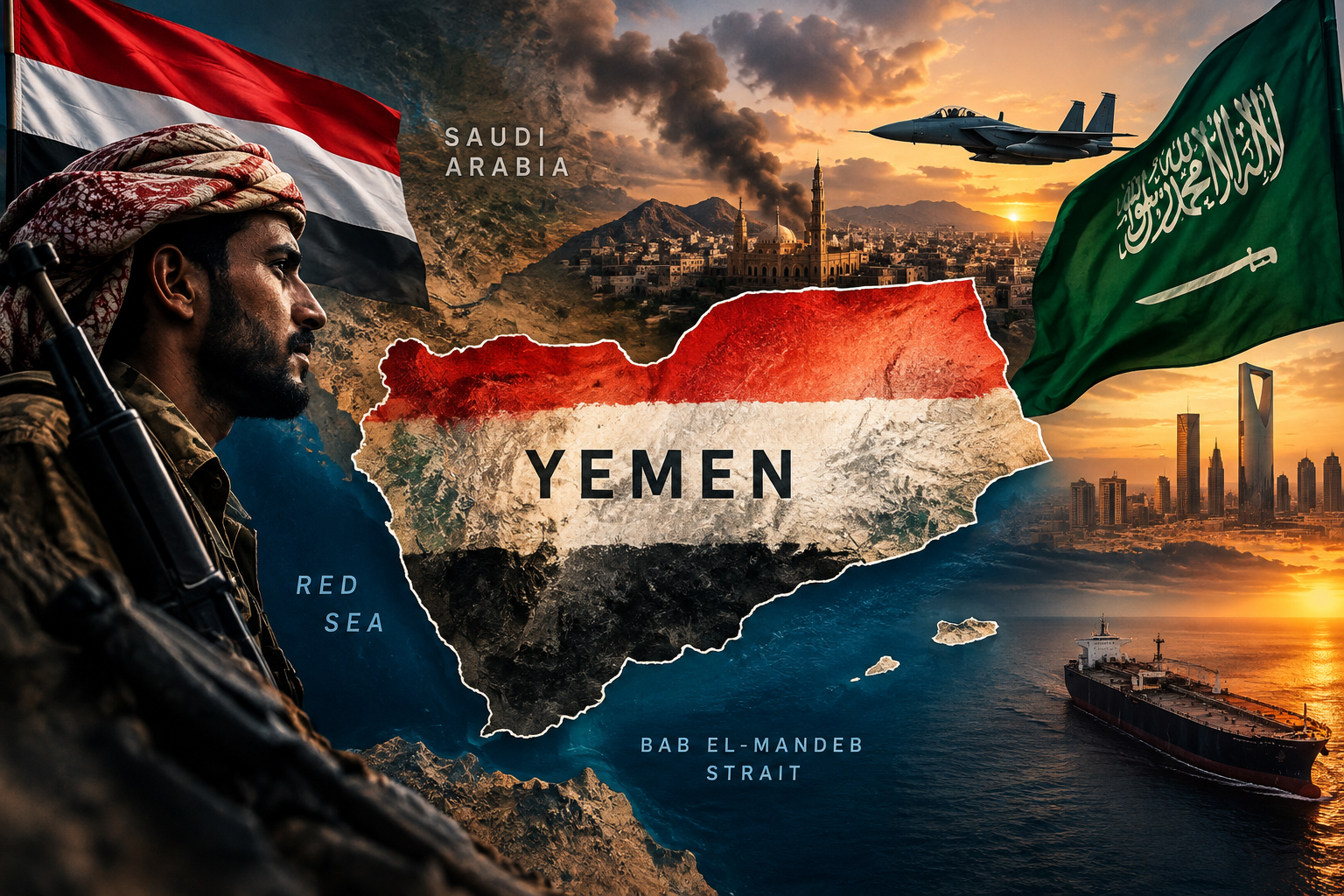
6 UAE/Saudi Rivalries in Yemen – Part 2
7 A Russian take on Yemen – Part 2
The story continues in Part 2
5 Israel Attacks Yemen
On May 28, Israel launched attacks on Yemen, roughly 10 days after it resumed operations following an Israeli strike earlier in May. On several occasions, Israel launched bombing attacks on Yemen. This was in response to Yemen hitting Ben Gurion Airport. This airport is Israel’s life-line for entry and exit for its people and tourists. Pure arrogance, hatred and jealousy are hallmarks of the Zionist state. Israel is facing one humiliation after another. And, its owners (Rothschild’s) and its backers (the US) is helpless against the Houthis. Israel targets Yemen’s port and airfield and airport. It gives the Zionists some small relief, but, in return, the suffering they are going through due to Ben Gurion being attacked almost daily, is “too much “for these settlers to take. In addition to the airport, Yemen is hitting vital “strategic targets” in central and southern Israel- including military bases, ports, plants and munitions factories. Obviously, all such news is heavily censored by the West. It is too much humiliation for them to handle, so they just lie, and as Putin called them- the “Empire of Lies”. Not only has Yemen instituted an aerial embargo on Israel,. It has now added the Haifa port as a “new target”, which will work to enforce a ban on shipping to Israel-similar to what Yemen did to the Eilat port, which bankrupted the Port Authority.
The Israeli military carried out on Tuesday 9th June airstrikes on the coastal province of Hodeida in western Yemen, targeting the docks of Hodeida Port. Israeli media claimed that the Israeli Navy attacked Yemeni ports for the first time, describing the strike in Yemen as distinct from previous operations. The media also noted that this marks the tenth Israeli strike on Yemen since the outset of the war on Gaza. Later, the Israeli occupation military confirmed in a statement that Israeli Navy missile boats launched strikes at the port of Hodeida.
Israeli Security Minister Israel Katz warned Sanaa that “if they continue to shoot at Israel, they will face a powerful response and be under a naval and aerial blockade – This is what we did today, and we will continue to do so in the future,” he added. When Yemen shot down 3 US fighter jets, and nearly shot down the F35 stealth jet, Israel decided it was too risky to attempt bombing by air. Also, they could not afford to send its navy to the red Sea, after witnessing how Yemen sunk a US destroyer, 3 supply ships, and severely damaged all 3 aircraft carriers. Just to satisfy their ego and blood lust, Israel sent 2 small boats- which fired 2 missiles at the Hodeida port, causing no real damage. Yemen was caught unprepared for this, but Israel won’t get a 2nd chance. Finally, the US has established a base across the Red Sea, in Africa, to re-arm and refuel its jets and bombers. Expect this to be an additional target, IF the US resumes its attacks on Yemen, or If Israel and Britain use this base.
6 Yemen Retaliates & Imposes an Aerial Blockade on Israel
Malik al-Houthi highlighted that the total number of Yemeni operations in support of the Palestinian Resistance since mid-March till end June , has exceeded 150, involving ballistic, cruise, and hypersonic missiles, as well as drones. He said this operation “exposed the occupation’s vulnerability to Yemeni missiles and the collapse of Israeli and American defense walls,” explaining that there were four defensive layers and several integrated systems protecting the airport, including the recently deployed American THAAD system. He pointed out that passenger numbers dropped, and the tourism and trade sectors suffered considerable damage. The strike also led to daily temporary shutdown of the airport and forced more than three million Israeli settlers into shelters, noting that the widespread fear and panic among Israelis “plays a significant role in applying pressure on the occupation.”
7 A Russian take on Yemen
The question posed to the people of Yemen is: Why do Saudi Arabia and the UAE spend more than $10 billion annually on their militias, deliberately prolonging the war, destroying the economy, and starving the Yemeni people? A Russian expert unmasks a surprise and reveals the conspiracy against Yemen!
*Saudi Arabia and the UAE are Yemen’s fiercest enemies and the footwear of the colonial powers*
A renowned Russian expert who teaches at Saint Petersburg University (Leningrad) in Russia has revealed a major conspiracy against Yemen to plunder its oil, gas, mineral, fish, and tourism resources by America, Britain, and Israel, via Saudi Arabia and the UAE, which entered Yemen to control oil and gas fields, gold and mineral mines, and occupy islands, ports, airports, and companies!
The Russian expert, who was involved in oil projects in Yemen and frequently visited Yemen, said in one of his documented interventions at Saint Petersburg University that more than $400 billion in oil revenues from undeclared areas in Yemen have been plundered in recent years from dozens of oil wells in the Rub’ al-Khali desert and dozens of offshore oil sectors in Yemen, including three sectors in the Red Sea: 22, 23, and 24, and four sectors in the Gulf of Aden: Sectors 46, 61, 62, and 63, and four sectors on Socotra Island: Sectors 93, 94, 95, and 96! The Russian expert revealed the existence of the world’s largest oil and gas reserves in Yemen, in the Rub’ al-Khali desert, which extends from Ma’rib, Shabwa, Hadhramaut, and Al-Mahra to Oman and eastern Saudi Arabia. He also revealed significant oil and gas reserves in the Gulf of Aden and the continental shelf of the Yemeni island of Socotra, estimated at more than 100 billion barrels of oil and more than 50 trillion cubic meters of gas. He also revealed that more than 1,000 tons of gold are located in six secret mines in the governorates of Hadhramaut and Al-Mahra, which are being smuggled to Saudi Arabia and the UAE!
The Russian expert stated that Saudi Arabia and the UAE have deliberately destroyed Yemen’s economy and starved the Yemeni people in order to recruit hundreds of thousands of mercenaries and form affiliated militias. They have recruited approximately 500,000 mercenaries within seven types of militias, comprising more than 100 brigades stretching from the West Coast, Bab al-Mandab, and the Gulf of Aden to the coasts of Hadhramaut and Al-Mahra, and a similar number in the Rub’ al-Khali desert. These militias protect oil and gas fields and control companies, ports, and airports. These militias spend more than $10 billion annually on salaries, supplies, armaments, and military and logistical support! As for fish resources, the Russian expert revealed that more than one million tons of fish are looted and stolen annually from the coasts of Yemen and Socotra Island, estimated to be worth more than $5 billion annually! The Russian expert concluded his remarks by stating that Yemen is one of the richest countries in the world in oil, gas, minerals, agriculture, fisheries, and tourism, and its plundered wealth is estimated at more than $100 billion annually. In addition, it occupies the best geographical location in the middle of the world, controls sea and air routes, and boasts dozens of ports and airports. If operated and developed, they would generate tens of billions of dollars for Yemen, and would also threaten the ports and airports of Saudi Arabia and the UAE. This is why they seek to destroy Yemen and plunder its wealth! This above, is in addition for securing an overland oil pipeline route to bypass the Straits of Hormuz!
UAE-backed Yemeni factions plan to take the port city of Hodeida from the Ansarallah-led Yemeni government in the wake of the US bombing campaign. With US support, UAE proxy militias in Yemen are planning a ground offensive to take the port city of Hodeida from the Yemeni government and its armed forces in a move that would reignite the country’s devastating civil war. Private American security contractors provided advice to the Yemeni factions on a potential ground operation, people involved in the planning said. The United Arab Emirates, (Abu Dhabi) which supports these factions, raised the plan with American officials in recent weeks. The ground offensive seeks to take advantage of the recent US bombing campaign targeting the Yemeni Armed Forces .While the Houthis controls Yemen’s most populous areas, including the capital, Sanaa, and the strategic port city of Hodeida, other parts of the country have remained in control of UAE and Saudi-supported factions since the end of the civil war in 2022. Under the plan being discussed, factions of the UAE-backed Southern Transitional Council (STC) would deploy their forces north to the western Yemeni coast and try to seize the Red Sea port of Hodeida. Capturing Hodeida would be a “major blow” to the Yemeni government, depriving them of an economic lifeline. If successful, the ground operation would push the Houthis back from large parts of the coast from where they have launched attacks on Israeli-linked ships transiting the Red Sea.
Officials from Saudi Arabia, which supports another Yemeni faction, the Presidential Leadership Council (PLC), have privately said they will not join or help a ground offensive in Yemen. During the civil war, the Saudi-led coalition, alongside the UAE, conducted a major bombing campaign in Yemen that killed 15,000 people, while the Saudi navy blockaded Yemen’s major ports, causing a humanitarian crisis that killed hundreds of thousands more.
In 2018, the Saudi Kingdom launched three operations against Ansarallah in an attempt to capture Hodeida, yet failed. Ansarallah forces retaliated by ballistic missile and drone attacks on Saudi cities. The YAF also responded to the UAE’s aggression on Yemen by launching its first drone and missile attacks on Abu Dhabi in January 2022, targeting three oil trucks and an under-construction airport extension infrastructure. Both the UAE and Saudi Arabia recruited fighters from the local Al-Qaeda affiliate, known as Al-Qaeda in the Arabian Peninsula (AQAP), to assist in their proxy war against Ansarallah.
Bypassing Hormuz: Saudi Arabia’s Pipeline Push in Yemen’s Al-Mahra
Through the use of Salafi extremists, Saudi Arabia seeks to revive a strategic oil pipeline through Yemen’s Al-Mahra to bypass the Strait of Hormuz and gain hegemony over its Arab neighbors. But fierce local resistance and international power struggles could derail Riyadh’s ambitions. Saudi Arabia’s renewed push to build an oil export pipeline through the Arabian Sea, via Al-Mahra, signals a new chapter in the global battle over energy routes and coastal control. This effort is more than an economic manoeuvre; it is a calculated geopolitical play aimed at reshaping power balances in the Middle East, with ripple effects far beyond Yemen’s borders.
Tensions are mounting in the strategically crucial Al-Mahra governorate, the country’s easternmost province, which shares borders with Saudi Arabia and Oman. In recent days, efforts have intensified against Saudi Arabia’s recruitment of hard-line Salafi militias under the banner of Dera’ al-Watan (Shield of the Nation), a force supposedly tasked with maintaining security. Simultaneously, US military trainers have landed at Al-Ghaydah International Airport – converted into a Saudi military base in 2017 – before being transported to Qishn Camp, where Riyadh is training its new armed units.
The importance of Al-Mahra is that it is the second-largest governorate in Yemen and shares borders with two countries: Oman via the Shahn and Sarfit crossings and Saudi Arabia via the Kharkhir border.
Saudi Arabia has long-standing ambitions in this governorate. It has repeatedly attempted and failed to exert control, using tactics such as recruiting local tribes and granting citizenship to many residents. The kingdom has also sought to build an oil pipeline through Al-Mahra to the Arabian Sea, insisting that the land the pipeline crosses be considered Saudi territory – a demand that local tribes have rejected.
Al-Mahra’s significance extends beyond its untapped oil reserves. Its location makes it a prime target for Saudi Arabia, which is eager to construct a pipeline that would reduce its reliance on the Strait of Hormuz – through which more than 80 percent of its oil exports currently pass. Riyadh previously tried to secure a 300-kilometer land corridor under the late Yemeni president Ali Abdullah Saleh’s rule, offering to manage its logistics and security. This plan failed, but the kingdom has not given up.
Now, it aims to extend oil pipelines from its fields in Hadramaut, reaching Al-Nashtoon Port in Al-Mahra and ultimately the Arabian Sea – providing Saudi oil exports a vital alternative route beyond Hormuz which is also the sole maritime outlet for Iraq, Kuwait, UAE, Bahrain, Iran and Qatar-Iran has built a 1m BPD pipeline bypassing Hormuz, and which was completed recently.
Popular Resistance
Saudi Arabia’s latest military gambit in Yemen is part of a broader campaign to tighten its grip on Al-Mahra. Having already seized control of the governorate’s coastline, Riyadh has established surveillance towers, commandeered Al-Nashtoon Port, and deployed naval patrols. Over the years, it has worked systematically to buy tribal loyalties – offering Saudi citizenship and financial incentives in exchange for local support, including for the controversial oil pipeline. Saudi Arabia is now funding and supporting Salafi groups, relocating them from various provinces to Al-Mahra to influence the local population, alter its demographic makeup, and spread sectarianism. Saudi Arabia’s strategy aligns with broader US and British interests in Yemen: Like any occupying power, Riyadh is using military intervention to push its own agenda. The internationally recognized Yemeni government – operating out of Riyadh – is entirely complicit, legitimizing Saudi control over Al-Mahra. The governorate, once a sanctuary for Yemenis escaping war, is now being dragged into geopolitical turmoil.
A Battle among the Persian Gulf’s Arab Powers
Saudi Arabia’s ambitions in Al-Mahra intertwine with regional rivalries, particularly involving Qatar and the UAE. While Doha shares Riyadh’s concerns about potential disruptions to oil shipments through Hormuz, the UAE has already secured an alternative export route via its Habshan-to-Fujairah pipeline, which connects its oil fields to the Gulf of Oman – making it less vulnerable to any blockade of Hormuz. The strategic value of controlling Yemen’s coastline was a key factor in the Saudi decision to intervene in Yemen’s war. Controlling Yemen’s coasts would allow Saudi Arabia to bypass the Strait of Hormuz entirely. Within this context, Riyadh aims to transform Al-Mahra and into semi-autonomous regions under its influence.
However, Saudi ambitions face resistance from the UAE, which has solidified its grip on Socotra island– geographically close to Al-Mahra – turning it into a strategic military hub. Riyadh’s response has been to increase its military presence in Al-Mahra as a counterweight to Abu Dhabi’s influence in Socotra. Saudi Arabia is replicating its military model seen elsewhere, such as in Libya and southern Yemen, by establishing Salafi-dominated military units like the Giants Brigades, Dera’ al-Watan, and the Security Belts – all directly serving Saudi interests. But Riyadh’s arrows are not all directed at the UAE. Oman, another key player affected by Saudi expansion in Al-Mahra, is also firmly within Saudi Arabia’s sights. Saudi control over Al-Mahra exerts significant pressure on Oman by securing its border with the sultanate. This creates a national security risk for Oman, as Saudi Arabia could use this leverage to exert political influence over Muscat. Saudi Arabia has long sought to steer Oman away from its traditionally neutral foreign policy, given Muscat’s key geographic impact on any Saudi attempts to blockade Yemen and Riyadh’s competition with the UAE and Qatar.
Power Struggles Extend Beyond Yemen
Saudi Arabia’s actions in Al-Mahra go beyond economic calculations – they reflect a deeper geopolitical agenda aimed at securing its oil exports, consolidating regional power, and outmanoeuvring the UAE. However, these efforts are meeting fierce resistance – not just from local tribes but also from competing Persian Gulf states and wary international players. The future of Al-Mahra remains uncertain. The region could become the site of prolonged struggles between foreign powers and local opposition, particularly as shifting regional dynamics threaten to redraw the geopolitical map of Yemen and the wider region.
Yemen’s Eastern Front: The new battleground for regional and global powers
As the war on Yemen escalates, the battle for influence in its eastern region has intensified, with Saudi Arabia and the UAE vying for strategic dominance, Israel expanding its covert military footprint, and the US intervening militarily on its behalf. The region is undergoing rapid developments that are reshaping the dynamics of the regional conflict, with Yemen emerging as a key player in the shifting balance of power. However, the repercussions of this escalation extend far beyond the maritime front. Inside Yemen, the battle for influence between Saudi Arabia and the UAE is intensifying. Controlling the eastern region means securing vital global trade routes across the Red Sea and Bab al-Mandab Strait while establishing alternative energy corridors that bypass the Strait of Hormuz. This makes the region a hotbed of competition between regional and international powers.
The Golden Triangle: A Renewed Struggle for Influence
An old struggle for influence has reignited due to the changes imposed by Yemen’s actions in support of Gaza. While Saudi Arabia has been expanding its presence in and Hadhramaut, deploying Salafi extremist militants into oil-rich areas, the UAE has intensified its grip on the strategically vital island of Socotra, which it has reportedly opened to Israeli troops and intelligence operatives. Since the start of the war on Yemen in 2015, the UAE has sought to impose control over Socotra Island, often described as the “jewel of the Indian Ocean.” Located at the confluence of the Arabian Sea and the Horn of Africa, the island sits near vital maritime routes connecting Bab al-Mandab and the Strait of Hormuz – an area known as the “Golden Triangle.” Initially, Abu Dhabi’s presence on the island was framed as a humanitarian aid endeavor, but it quickly devolved into demographic and military expansion.
What the UAE has done is not born of the moment, but is part of a prior plan that it has worked on since before the war. It naturalized a number of Socotra’s population, and through them bought land and farms. With the outbreak of the war in 2015, and the formation of the so-called Saudi-led Arab coalition, the UAE became involved in it and turned its sights towards Socotra to implement its plan to control the island. The UAE has tried to lease Socotra for 99 years, purchase strategic land, dominate the DSCOM tourist reserve, and establish a loyal paramilitary force known as the Socotra Elite. It has also launched service projects like a hospital and an Emirati telecom network to embed itself into daily life on the island. Developments in Socotra are closely linked to events in Al-Mahra and Hadhramaut, as they all form part of Yemen’s eastern region.
Arabia and the UAE are both racing for control. Riyadh dominates Hadhramaut and aims to control Al-Mahra, while Abu Dhabi holds the Hadhramaut coast and Socotra. Both have created loyal militias to replace Yemen’s national army and security forces, advancing their strategic goals. Riyadh has pushed to consolidate its influence in Al-Mahra by deploying military forces under the guise of counter-smuggling operations. It has strengthened its presence by building military bases, co-opting local tribal leaders, and supporting Salafi extremist groups that align with its ideological and strategic interests. This has led to heightened tensions with local communities who oppose the kingdom’s militarization of the governorate.
Popular Resistance to Foreign Influence
As Saudi Arabia expands its military footprint in Al-Mahra, protests have erupted against its presence. Simultaneously, Socotra is witnessing growing unrest, with residents condemning what they describe as an Emirati “occupation.” The protests come after leaked documents that the Minister of Transportation in Socotra agreed to hand over Socotra International Airport to the UAE’s Eastern Triangle Holding Company based on a secret deal signed the UAE representative and the Socotra Governor , who holds Emirati citizenship. This deal followed an agreement that sold portions of airport land to Emirati firms.
Beyond controlling the airport, the UAE has expanded its grip across multiple sectors. In partnership with Israel, it has altered Socotra’s demographic fabric, introduced intelligence operatives, and deepened its military presence. According to reports, intelligence figures, such as Salem bin Ali al-Shuwaihi are to open an Emirati mosque on the island. Amir al-Socotri, assistant secretary of the Socotra National Congress, a political group advocating for the island’s sovereignty, explains that: “The UAE’s influence strategy in Socotra is multifaceted – military, economic, and cultural. It aims to erase Socotra’s identity by spreading Emirati culture, raising its flag, altering school curricula, and encouraging students to study in the UAE. It portrays itself as Socotra’s main benefactor through local media. Militarily, the UAE has built bases, deployed loyalist forces like the Security Belt and the Southern Transitional Council, and stationed warships along its coasts. It secures tribal allegiances with financial incentives and recruits young men into Emirati security services.” He adds, “Economically, the UAE dominates vital services such as fuel and electricity through companies like ADNOC and Dixim Power, sidelining Yemen’s government. Infrastructure projects that seem beneficial often serve to entrench Abu Dhabi’s control. Even humanitarian aid is weaponized as a political tool.” Despite these tactics, Socotra’s population has resisted Emirati encroachment by organizing national movements advocating for sovereignty, staging protests, and rejecting external influence.
Israeli Involvement and Military Expansion
Since the war on Yemen began, the UAE’s control of Socotra has fit within a broader geopolitical agenda, backed by Washington and involving Israel. Military and ties between the UAE and Israel surfaced in 2020, when Israeli and Emirati intelligence officers visited the island. By 2021, the UAE had begun military facilities on Mayun and Socotra, including a runway for military aircraft. Reports later confirmed that the UAE and Israel had established a joint intelligence facility on Socotra, equipped with advanced sensors to track Iranian missile activity and monitor maritime navigation in the Red Sea and Gulf of Aden. Following Operation Al-Aqsa Flood in October 2023, construction on Abdul Kuri Island accelerated. A three-kilometer military runway capable of accommodating heavy aircraft was built, alongside a new 120-meter pier for large naval vessels. Israel is the primary beneficiary of the UAE’s control over Socotra, indicating that Israel plans to use Socotra as a forward base for operations against the Houthis. This positioning allows for cost-effective strikes compared to past Israeli offensives.
Between the power struggle among regional actors and the deepening entanglements between Persian Gulf states and Israel, Yemen’s eastern provinces remain engulfed in instability. With the conflict escalating on multiple fronts, the region is hurtling toward an unprecedented confrontation in both the seas and strategic trade corridors.
Conclusion
Yemeni are fiercely independent and can’t stand colonization. Yemen is called the graveyard of the invaders because they fought all those who tried to invade Yemen including the Turks. Aden was a protectorate of the English Empire, but to be able to rule, the British had to change the demographic of the city and bring in non-Arabs. At one point, the Yemeni population of Aden was only 20%.
Yemen is an old country with many civilizations that shaped the Yemeni people. Yemeni are kind and generous and learned to stand up for what they think is right. There is a proverb that says, if you don’t have a friend, get yourself a Yemeni friend. Another proverb says that who did not learn to behave by time, Yemen will teach him to behave. Tribal norms in Yemen are built on community, not individuals, which make the correcting of the wrong done to one person, the responsibility of the whole community. One of the main norms is to stand up to injustices, and for the people of Yemen, Palestine is a central issue because of the injustices that the Palestinians have been subjected to. Yemeni believes that you have to do something to counter injustices. Yemeni are proud of their heritage and therefore, are the least affected by Western propaganda and current western culture. They are good fighters and for them, honor is essential. They would rather die in a battle and stand for their principals than live in humiliation. These values are instilled in them as kids. Our next article is titled “ Operation True Promise 3”.