6 Intensification since the ‘Ceasefire’
The April 16 ceasefire has intensified the Israeli aggression against South Lebanon. Israeli media had reported in recent days that the ceasefire agreement, tied to the broader prevents “Israel” from striking Beirut and its Southern Suburb, effectively concentrating the full weight of its attacks on southern towns and villages. Israeli warplanes bombed 47 towns and villages across southern and eastern Lebanon on Monday,24th May in what a Lebanese military source described as the most massive single-day attack since the April 16 ceasefire agreement. The source said enemy aircraft hit 44 towns in the south and three in the east. A tally of the strikes covers towns and villages across seven districts, from the southern border to the western Bekaa. The attacks were carried out through a combination of airstrikes, artillery shelling, and drone strikes on vehicles. The next day, 21 people were killed by Israel in a single day – including three children and three women. Israel has now killed at least 120 paramedics since the start of Israel’s war on Lebanon in early March. These Israeli strikes include deliberate “double tap” that are aimed at maximizing casualties. The death toll as a result of the Israeli strikes across Lebanon since then currently stands at almost 3,100. Over a million have been displaced.
Beyond the ceasefire, US working to reorder Lebanon from within.
What began as talk of containment, diplomacy, and buying time has hardened into a political and security course shaped in Washington to reorder Lebanon from within, tighten the siege around Hezbollah, and push toward the end of the resistance’s military role. Washington is examining mechanisms through which the Lebanese army would announce control over Hezbollah-linked facilities as part of the broader disarmament file – a formula that would move the confrontation with the resistance from Israeli firepower to Lebanese state institutions. Hezbollah sees any such agreement as an attempt to insert Lebanon into a security architecture that directly serves Israeli interests under US command. In practical terms, this would mark a transition from pressuring the resistance to encircling it from within. Any effort to impose such a pact could open the door to a wide internal escalation. The Israeli project is effectively to turn the first line of southern villages into an advanced settlement–security belt. Its purpose would be to protect the northern settlements, secure the depth of the Galilee, and impose new demographic and military facts on the border. Under this reading, Israel treats Lebanon’s border villages as part of the security equation of its own north.
The Israeli army has begun pushing beyond its so-called “Forward Defense Line” in south Lebanon, on 26 May – marking a significant escalation that coincides with Tel Aviv’s continued failure to prevent deadly Hezbollah drone attacks. The IDF have been carrying out targeted intelligence-based raids both beyond the forward defensive line and north of the Litani River, focusing on areas where Hezbollah maintains infrastructure and operational footholds. At the start of the ground operation, the Israeli army failed to achieve the stated goal of occupying Lebanese territory up to the Litani River. Israeli forces were unable to fully capture the strategic and symbolic city of Bint Jbeil, which remains inhabited by resistance fighters despite efforts to besiege the city and carry out a scorched-earth policy. Israel bombed the Lebanese capital on 28 May for the first time in weeks, marking the second attack on Beirut since the so-called ceasefire, coinciding with an unprecedented escalation against south Lebanon. The attack hit a building in the Choueifat area of Beirut’s southern suburb. The target of the Israeli strike in the Beirut area a short while ago is Ali al-Husni, the head of the missile force in the Imam Hossein Division. the new strike on Beirut was approved by Washington. The US has reportedly given Israel permission to carry out only “targeted” air raids on the capital. The last strike on the Beirut suburb took place in early May.
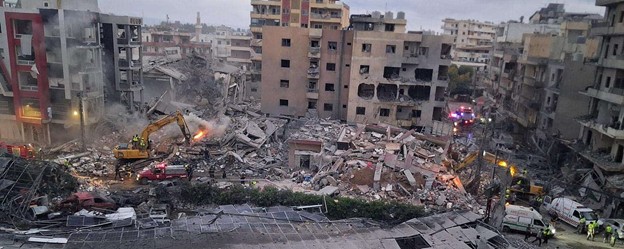
Meanwhile, brutal and deadly Israeli airstrikes have caused massive destruction across southern Lebanon’s Tyre and elsewhere since Tel Aviv’s latest forced displacement orders hit the entirety of south Lebanon. Footage circulating on social media on Thursday showed the scale of the destruction, with entire neighborhoods flattened. Mass displacement has intensified since displacement orders were issued against Tyre and the surrounding Palestinian refugee camps and neighborhoods. Bombings on the more than 4,000-year-old city persisted into Thursday after a massive bombing campaign the night before. At least a dozen airstrikes have targeted Tyre since then. The rest of the south is under heavy Israeli fire as well, while Israeli forces are attempting to expand ground raids deeper beyond their so-called “Forward Defense Line. “The strikes are being described as the heaviest since the start of the latest war in early March. The escalation is a response to the Lebanese resistance’s campaign of fiber-optic FPV drone attacks, which have inflicted heavy losses on occupation troops in south Lebanon and Israeli forces in bases and settlements on the border. Hezbollah fighters are also waging a fierce campaign on the ground aimed at the Israeli army from expanding its occupation of the south.
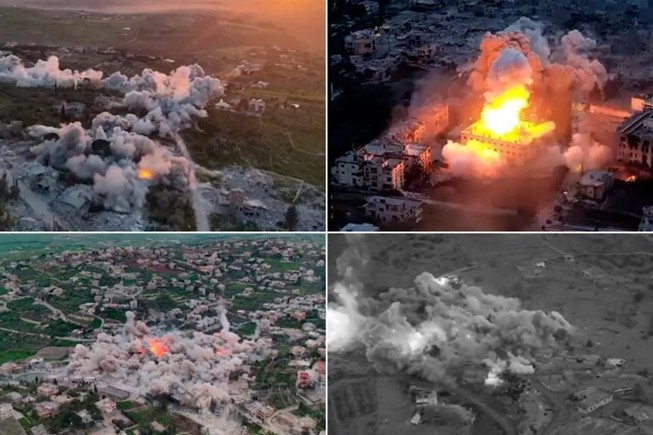
Mohammad Bazzi, the mayor of Bint Jbeil, told Al Jazeera that the extensive destruction reflects an organized campaign targeting civilian architecture and identity. He noted with alarm that these systematic demolitions have proceeded unabated even after the announcement of a ceasefire, suggesting a long-term strategy of territorial erasure rather than immediate tactical necessity. Bint Jbeil has emerged as the epicenter of this devastation, functioning as a concentrated model of Israel’s border strategy. Half of these catastrophic explosions were focused squarely within the Bint Jbeil district, systematically flattening entire blocks in the towns of Bint Jbeil, Beit Lif, and Ainata. while a single significant demolition was recorded further west in the coastal town of Naqoura.
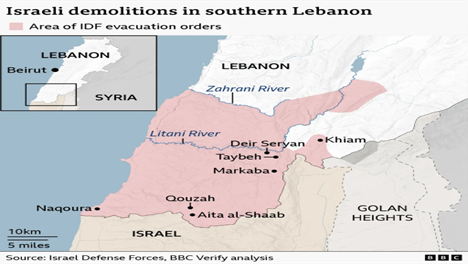
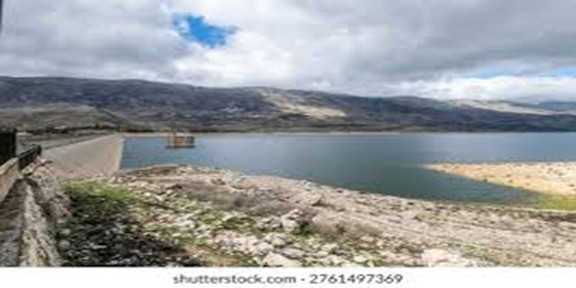
These figures underscore a methodical blueprint to dismantle civilian infrastructure – more than 80 percent of the city has been destroyed and 10 percent partially damaged, bringing the affected urban footprint to more than 90 percent. Approximately 3,000 housing units have been levelled. The demolitions have been heavily concentrated in the city’s commercial center and its oldest, most historic neighborhoods. The destruction has stretched far beyond residential buildings to the city’s eastern and western outskirts, targeting power stations, water networks, schools and hospitals, including Salah Ghandour Hospital. Even agricultural land has been razed and subjected to incendiary weapons and white phosphorus munitions, describing the scorched-earth tactics as a “compound crime” under international humanitarian law, which strictly prohibits the intentional destruction of civilian property and livelihoods. Lebanese hilltop border towns and villages are now hard to recognize. Once characterized by their winding streets lined with stone buildings overlooking sweeping valleys, verified videos now show how they have turned grey from dust and debris of explosions. The deliberate demolition of structures is not a new Israeli military tactic. Israel’s “extensive destruction of residential areas, particularly in Southern Lebanon but also parts of Beirut” appeared to violate international humanitarian law. Shia Muslim communities make up the vast majority of the southern Lebanese population, but other groups including Christians live there too. In places the pattern of attacks appears aimed to ‘cleanse’ predominantly Shia villages and populations from the south, collectively punishing civilian populations within which Hezbollah fighters may be mingled. Israel is deliberately targeting the Shia in southern Lebanon and in southern Beirut. On May 26 and 27, 2026, the IDF carried out airstrikes near the Lebanon’s largest water reservoir, located in the eastern Beqaa Valley. While the strikes hit an adjacent road and scattered debris into the lake, they caused no direct structural damage to the dam itself. The National Litani River Authority warned that any direct damage to the structure could trigger widespread flooding along the Litani River, threatening critical infrastructure and downstream populations. The World Bank Group noted that strikes on the facility threaten vital public works, including irrigation, power generation, and water transfers to Beirut.

7 Iran Enters the Picture
For the Rothschild family, all that matters is Israel and the regional equation. For the Rockefeller family, their interests are global. These two points have clashed multiple times in the last 8 decades. It has come to a point that the US dominates Israel’s strategy since the 1967 war. But this point was cleverly hidden from the public all these years, but recent events have brought this out in the open. This move into Lebanon was under the instructions of the US. This was meant to show that Iran “cannot dictate terms to us, and that we will threaten and instigate Iran’s allies until Iran is provoked to attack Israel”. In short, keep on provoking until Iran reacts. When Hezbollah began striking targets in northern Israel, Bibi threatened to strike Beirut. Iranian officials have warned that Israel’s escalating attacks on Lebanon and ongoing hostilities in Gaza threaten to derail the ongoing ceasefire negotiations with the United States. Foreign Minister Abbas Araghchi suggested that the mounting Israeli invasion of Lebanon and its strikes on the country, alongside the continued US siege of Iranian ports, constitutes a violation of the ceasefire. Iran’s chief negotiator and Parliament Speaker Mohammad Bagher Ghalibaf made the same point. “The naval blockade and escalation of war crimes in Lebanon by the genocidal Zionist regime are clear evidence of US noncompliance with the ceasefire,” he wrote on social media. Iran responded and warned that – “if one building falls in Beirut, then expect one building to fall in Tel Aviv. “Later, the IRGC offered threats that it would open “new fronts” and keep the Strait of Hormuz closed unless Israel’s military action halted, according to state media. “Iran considers crossing the red lines in Lebanon and Gaza to mean direct war “- IRGC. The US has been trying to separate the war between Israel and Hezbollah in Lebanon from the broader conflict with Iran. But Tehran has insisted that Lebanon and Gaza must be included in any future deal.
The key reason as to why Israel is bombing southern Lebanon is to create millions of displaced Shia. These internally-displaced people have no choice but to move north to find accommodation elsewhere, mainly in the Dahiye suburb of Beirut-a predominantly Shia suburb. Many have also fled Dahiye, and have moved to other areas=such as Sunni, Druze and Christian. It shows a strength of unity. With the exception of two right-wing Christian groups who have set up barricades to stop any Shias from entering their areas. These two groups are funded by the Gulf Arab states of Qatar and the UAE. This move is meant to spark a sectarian crisis- which in turn, has the potential to ignite into a civil war. Since not enough Shia were going to Dahiye from the south, Israel then began bombing other Shia towns in the south to increase the flow of refugees to Beirut. That’s why Tyre and other cities are being bombed. Fortunately, Iran has seen through this move by the combo. In order to stop a potential civil war igniting, Iran began to warn the combo. It was at this point that Trump called Bibi. Trump’s increased intervention was also followed by a heated phone call, during which he erupted at Netanyahu. Trump accused Netanyahu of ingratitude and lashed out directly, saying, “You’d be in prison if it weren’t for me. I’m saving your ass. Everybody hates you now. Everybody hates Israel because of this.” At one point, Trump reportedly shouted, “What the f*** are you doing?” The call reportedly came as tensions surged on the Lebanese front and as Iran threatened to withdraw from negotiations with Washington over Israeli threats to bomb Beirut and its southern suburbs. Trump told Netanyahu that advancing plans to strike Beirut would further isolate “Israel” internationally and undermine ongoing diplomatic efforts, the sources said. The exchange underscores growing strain between Washington and Tel Aviv amid escalating violence in Lebanon and fragile US-led diplomatic efforts tied to Iran negotiations. Since that call, Israel has increased its destruction of infrastructure and the murder of civilians.
So far, Tel Aviv has not moved into an open confrontation without limits. It remains bound by Washington’s calculations. The Trump administration has given Israel the green light to pursue field gains that could improve the terms of ending the battle before a possible US–Iran agreement closes the current window. The occupation army is also pursuing a slow-bite policy, attempting to expand its area of control, secure troop positions, and protect supply and evacuation routes. Its aim is to occupy the Al-Shaqif–Ali al-Taher ridge, which lies beyond the ‘Yellow Line.’ If it manages to stabilize there, it would gain fire-control advantages over exposed areas under its observation. The main military objective remains the severing of supply routes and the isolation of resistance fighters into separate combat pockets. Alongside this, Tel Aviv has publicly identified loitering attack drones as a strategic threat. It is also seeking territorial gains that could improve its position in any future security arrangements with the Lebanese state. The resistance is managing the battle through flexible tactics rooted in terrain, multiple engagement axes, and sustained attrition. Engineering have become a central tool for disrupting ground advances, alongside direct fire, precision strikes on moving forces and supply routes, and loitering attack drones. Hezbollah’s approach focuses on breaking the logic of gradual Israeli advance by hitting supply lines and unsettling field deployments. This prevents stable control points from taking shape. It also keeps every combat axis under pressure, turning each attempted incursion into a prolonged clash and limiting Tel Aviv’s slow-bite strategy. Field data points to a mixed resistance doctrine in this phase. Flexible defense, street fighting, mobile ambushes, and constant repositioning are being used alongside linear defense in some areas, where the goal is to block direct breakthroughs and hold engagement lines. This reflects a battlefield doctrine between the defensive preparations south and north of the Litani following the 2024 ceasefire agreement. North of the Litani, combat infrastructure and fortifications appear more complex and varied. Every Israeli advance deeper into the area increases the cost of attrition. The occupation army still relies on encirclement and isolation, trying to bypass or surround towns rather than storm them directly. Clashes on forward axes, therefore, do not automatically mean that villages behind them have fallen. In many cases, the fight is shifted to other prepared lines and positions. Israel can still achieve limited tactical penetrations. Holding stable operational control is another matter. Its forces are struggling to entrench themselves in several positions, including points inside frontline villages. This gives the military campaign a political dimension: a search for a quick image of victory, even if the image is hollow. Field realities show that Tel Aviv has still failed to impose full and uncontested control over the areas in south Lebanon. The project to deepen the buffer zone and push beyond the Litani has so far failed to meet the objectives Tel Aviv set for it, despite more than 90 days of aggression and the hostile actions that preceded it during the ceasefire period. Israeli forces now face a complex battlefield shaped by resistance tactics that disrupt the slow-bite strategy, drain advancing forces, and inflict losses that have pushed the Israeli command into confusion.
The resistance, meanwhile, still holds strength and surprises in the field. Its ambushes and loitering drones continue to impose what Tel Aviv itself describes as a strategic threat. Alongside those capabilities, the high morale of the fighters remains one of the central weapons in the battle. Israel’s escalation in Lebanon continued to pick up pace on 3 June – following Washington’s unilateral ceasefire announcement, which has seen Tel Aviv intensify carpet bombing and indiscriminate strikes across the country’s south and elsewhere. The continued Israeli attacks came on the second day of direct Lebanese–Israeli talks in Washington, which are being conducted in violation of Lebanese law. Late on Monday, Trump unilaterally announced a ceasefire in Lebanon – hours after Israel issued displacement orders against the entirety of Beirut’s southern suburb, threatening a wave of strikes against the capital. Tel Aviv ended up in meltdown after Natanyahu cancels Beirut strike from the planned attack, following US pressure prompted by Iranian threats to end talks with Washington and resume strikes on Israel. Washington and the Lebanese embassy in the US claimed Hezbollah have agreed to a US proposal calling for a mutual cessation of attacks, under which Israel would refrain from bombing south Beirut in exchange for Hezbollah refraining from attacks on northern Israel. Hezbollah and Lebanese Parliament Speaker Nabih Berri have rejected the proposal and are calling for a comprehensive ceasefire across Lebanon. Israel has threatened to go ahead with a planned wave of attacks on Beirut if Hezbollah operations do not cease. Tel Aviv also demands “freedom of action” as part of any ceasefire agreement, which Hezbollah rejects.
8 Israel Bombs Lebanon as Hezbollah rejects ‘Shameless Surrender’
Naim Qassem has accused Washington of seeking to force Beirut to accept a humiliating Israeli occupation.
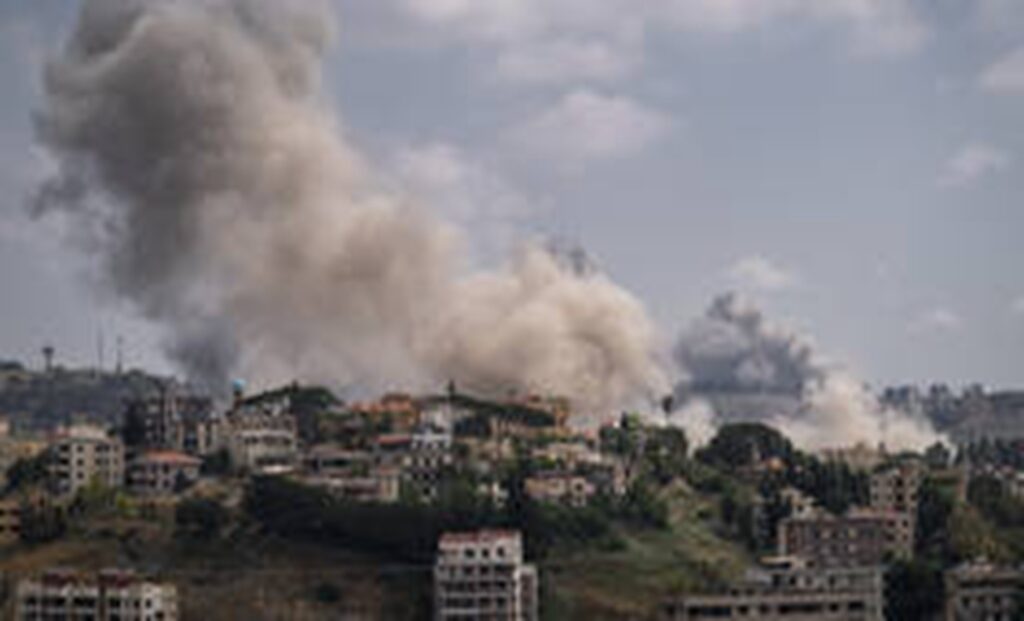
Israeli strikes in southern and eastern Lebanon have injured and killed dozens of civilians, less than 24 hours after West Jerusalem and Beirut agreed to a US-mediated ceasefire proposal. The US State Department said on Wednesday that Israel and Lebanon agreed to implement a ceasefire contingent on “a complete cessation” of Hezbollah fire and the evacuation of its fighters from the South Litani Sector. The statement said the two sides also agreed to advance “pilot zones” where the Lebanese Armed Forces would eventually take exclusive control, “to the exclusion of all non-state actors.” The parties said these measures are intended to pave the way toward a broader security and political agreement between Lebanon and Israel. The statement contains no explicit Israeli commitment to halt attacks on Lebanon. The arrangement effectively requires Hezbollah to withdraw under continued Israeli fire. Hezbollah was not a party to the Washington talks and has said any arrangement that demands its withdrawal while Israel keeps troops in southern Lebanon would reward occupation rather than end the conflict.
Hezbollah leader Naim Qassem called the Washington-backed arrangement a “shameless” attempt to force Lebanon into surrender, saying it amounts to a “roadmap to annihilate part of the Lebanese people.” Qassem said Hezbollah would not leave southern Lebanon while Israeli forces remain in the country, and warned that northern Israel would also remain under threat as long as Lebanon is bombed. The Lebanese resistance has repeatedly vowed that it will not return to the November 2024 deal or any agreement allowing Israel to attack at will and maintain an occupation in Lebanon. Qassem said his resistance group would only accept a comprehensive ceasefire across all of Lebanon – while vowing the “settlements will not be safe” as long southern Lebanese villages remain under Israeli bombardment. “We will fight the invaders until we expel them from our land and end their aggression, relying on Allah’s assistance and support, the courage of the resistance fighters, the embrace of our great and exceptional people who have made enormous sacrifices,” he said. He added that the only acceptable truce is one that guarantees Lebanese sovereignty. Qassem said attacks must completely end by land, air, and sea, and that Israel must withdraw its troops from south Lebanon and release all Lebanese prisoners. All residents must be allowed to return to their villages, he added. He also rejected the linking of a ceasefire to Hezbollah’s immediate disarmament. Qassem reiterated Hezbollah’s long-standing position that the weapons of the resistance are an internal matter and can only be dealt with through internal dialogue and the formation of a “defense strategy.”
Additionally, the resistance leader slammed direct talks between Lebanon and Israel, which have been ongoing for several months and were elevated to higher-level negotiations during the war. These talks violate Lebanese law. The secretary-general called the talks “futile, humiliating, and disgraceful for Lebanon, and which are rejected in their entirety by broad segments” of Lebanese society. Implementing the deal agreed to between Washington, Beirut, and Tel Aviv would be a “surrender, defeat, and achieving the enemy’s goals, we have given no commitment to anyone that we will refrain from resisting aggression or responding to it. As long as aggression continues, we will confront it with all the power at our disposal and strike wherever we decide and are able, as long as our villages remain unsafe, bombed, demolished, and our people are being killed, the settlements will not be safe, and [Israel] will witness our strength and determination.” After Qassem’s speech, drone sirens rang in several settlements near the border. In Shlomi, an explosion was reported following the drone warnings, which were 30 minutes after Netanyahu was visiting the area. Rocket launches were also reported.
9 Hezbollah Attritions the IDF
Hezbollah is conducting an asymmetric guerilla-style warfare in southern Lebanon. A war of attrition. The IDF has no place to hide from the FPV drones. It began conducting night movements, but Hezbollah outwitted them by deploying drones equipped with thermal imaging. Hezbollah is destroying the invasion/occupying force with attacks running 24/7. Besides the use of various types of drones, including FPV’s, Hezbollah is also using anti-tank missiles to destroy tanks, APC’s, various military vehicles. Many of its drone missiles carry fragmentation rockets and missiles. These target command- and -control centers, soldiers on foot, assembly areas, and so on. Daily, multiple ambushes take place. After a patrol or invading force is attacked, the rescue force that comes to their aid is ambushed as well. The battle around Beaufort Castle is telling. Israel had a difficult time to reach it. Hezbollah then allowed them to take it over, which made the demon soldiers an easy target for the Resistance. For the past 4 days (Monday-Thursday 4th June, the IDF lost more than 20 armored vehicles, including about 12 Merkava. Just on Thursday the 4th of June, Hezbollah destroyed 6 Markkaa tanks in the vicinity of Beaufort Castle. At the start of this new round -on 2 March, Israel had about 1,200 Merkava tanks. These are mostly the older versions as most of the latest versions have been destroyed. Of these 1,200, the IDF has lost more than 350 tanks in south Lebanon from 2 March to 5th June-nearly 3 months!!! Add in other vehicles such as APCs, we find the IDF losing about 5 tanks and APCs a day, on average. For how long can the IDF go on at this rate?
Besides such ground attacks, Hezbollah has also launched strikes into northern Israel- striking multiple military targets. These happen on a daily basis. This gives the IDF no time to consolidate. More terrifying for the IDF is that Hezbollah is targeting senior commanding officers in south Lebanon. In the past 3 months, the IDF has lost about 15-20 high-ranking officers. Morale is plummeting as a result. Lack of senior officers on the ground is turning the IDF into an organization that’s running around like headless chickens. Finally, more than 20 Iron Battery systems were destroyed- with each one costing more than $ million each. This has left Israel with practically no viable air defense in the north. In addition, most of Israel’s “eyes and ears” in northern Israel and the Golan heights region have been destroyed-rendering Israel blind. Senior IDF generals are bemoaning their positions. They cry about fighting on 3 fronts – Gaza, West Bank and Lebanon with not enough troops. To continue this war of genocide and expansion, the generals say they need “another 6 or 7 more IDF’s”. Hezbollah’s success on the battlefield has calmed the other Resistance groups, as they find that Hezbollah can manage escalation dominance in the South, and that the IDF is losing too much equipment and men. The IDF is suffering around 100 casualties a day – including both dead and wounded. Hospitals can’t cope with more than 60 wounded per day. Many are now being transferred for treatment to hospitals in Europe.
Conclusion
Across Lebanon, hospitals, homes, schools and centuries-old communities continue to absorb the shockwaves of a conflict that was supposedly paused weeks ago. The language of ceasefires remains active in diplomatic communiqués; the language of destruction remains active on the ground. The current campaign risks following the same tragic arc witnessed in Gaza: security goals expanding into a humanitarian calamity. The seizure of positions such as Beaufort Castle and the expansion of military operations past the Litani River may create temporary tactical advantages. Military victories rarely remain military. They become social, economic and generational realities. The broader regional implications are even more alarming. Iran has explicitly linked the continuation of attacks on Lebanon with the future of wider diplomatic negotiations. This matters because Lebanon is no longer merely a Lebanese theatre. It sits at the intersection of virtually every major fault line in the contemporary Middle East: Iranian influence, Israeli security concerns, Gulf calculations, American credibility and the future of regional order itself. The danger is no longer a contained conflict. The danger is escalation by accumulation. Every strike increases pressure on Iranian-aligned actors to respond. Every response creates pressure for retaliation. Every retaliation narrows the diplomatic space available to regional and international mediators. The result resembles less a managed crisis than a system steadily exhausting its own safety mechanisms. From Beirut’s southern suburbs to the villages scattered across the country’s south, communities are being forced to absorb shocks that no political process has successfully contained. Hospitals cannot function on diplomatic statements. Families cannot return home on the basis of future negotiations. Children cannot rebuild their lives around promises of eventual de-escalation. The real crisis is not simply that war continues. It is that the institutions designed to stop it are steadily losing the race. Lebanon now stands alongside Gaza as a stark warning to the world: when diplomacy becomes reactive, humanitarian catastrophe becomes inevitable. Because once diplomacy loses its ability to protect civilians, it loses its most important purpose. And when that happens, wars do not merely continue. They accelerate beyond anyone’s control. What makes the situation particularly striking is the relative silence across much of the Arab world. Yet silence carries costs. For many Lebanese, the perception is increasingly one of abandonment.
Our next article is called “The Calm before the Storm “.