The story continues from Part 2
5 Stealing Iran’s money
We Outright Grabbed the Wallets’: Bessent Boasts $1BN In Iran State Crypto Seized to Date
Washington’s economic war on Iran and its ‘shadow’ banking network continues, as on Friday Treasury Secretary Scott Bessent announced the US has seized $1 billion in Iranian cryptocurrency assets. The billion-dollar figure represents the running total seized to date, building on prior milestones in the conflict, particularly a recent major April 2026 of $344 million in USDT on the Tron blockchain. By close of April, $500 million total had been seized. And so clearly with the addition since then of some half-billion dollars more in seized digital assets, the US Treasury program has only greatly accelerated in the last several weeks. For ordinary Iranians – roughly one in six of the population – crypto served as a vital lifeline. Facing relentless rial depreciation, chronic inflation and frequent power blackouts or internet shutdowns during protests, citizens turned to Bitcoin and stablecoins like U.S. dollar-pegged stablecoins (USDT) on the Tron network to hedge savings, facilitate remittances, and move value when traditional banking failed. Spikes in Bitcoin withdrawals to personal wallets often coincided with domestic unrest and regional conflicts. Yet this parallel financial system has also become a powerful tool for the state. The IRGC steadily tightened its grip on Iran’s crypto flows. IRGC-linked addresses received more than $3 billion in 2025—up from over $2 billion in 2024—with their share rising to more than 50 percent of total Iranian crypto inflows by the end of 2025. These figures represent conservative lower bounds based only on identified and sanctioned wallets.US Treasury Secretary Bessent announced on X Thursday morning that Washington is moving forward on a plan to compensate America’s Gulf regional allies for damage sustained during Iranian counterattacks on their energy and civic infrastructure. He made clear that any damage to Gulf allies would be paid for with frozen Iranian funds, which Tehran leadership has long blasted as blatant theft. According to Bessent’s latest announcement: Any tolls paid to the Persian Gulf Strait Authority will be offset by funds extracted from their accounts.Washington holds Iranian money from the 1970s, when Iran paid for military equipment, jets and industrial plants, etc. Many of these items were not delivered, but they held onto the Iranian funds. Add to this that only a part of Iran’s bank deposits was returned as part of the hostage deal conclude in December 1979. Money from the sale of oil to many countries was also seized in the past decade. Add it all up, and the total figure is above $100 billion. Iran wants the return of all these funds, plus interest. The problem is that the money has long been used up by Washington and Rockefellers banks. This is one more reason why the US won’t quit attacking Iran.
5 Iran-Oman Hormuz Deal
Iran has continued to target vessels in the strait’s southern corridor, notably those transiting near the Omani coastline. There is no gain for the US in the US/Iran Memorandum of Understanding which the US did not already possess before starting the war. It is the formalization of US defeat: a surrender document. Iran has refused to make any concessions to the US. All the while, the US has resorted to outright begging and making every possible concession to avert the humiliation of accepting a Hormuz with tolls. The U.S. and Oman are looking for ways to break Iran’s insistence on charging tolls for ships to pass through the Strait of Hormuz. Their chief lever in indirect talks was a promise to unfreeze some of the $100 billion in Iranian funds held overseas. The White House offered a trade-off to Iran – relinquish its claim to control the strait and renounce toll payments in exchange for billions of dollars of unfrozen funds. Iran told them to “go fly a kite- you want to bribe me with my own money”. Iran and Oman are negotiating a plan to gradually substitute the existing northern and southern shipping routes with a unified central corridor. Under the proposed framework, ships would initially enter through the northern lane near Iran and exit through the southern lane near Oman. Eventually, all traffic would be redirected to the central corridor, with Iran overseeing inbound traffic and Iran and Oman jointly managing outbound traffic. Transit charges would potentially be based on services like insurance, bunkering, and environmental work, plus a percentage of cargo value. These are Iran’s “new rules” for the Strait of Hormuz.These measures involve banning vessels from the US, Israel, and other “hostile countries,” restricting ships engaged in actions against the Axis of Resistance, denying passage to countries that have harmed Iran until compensation is made, and imposing fines of up to 20 percent of the cargo value for violations. But while Iranians are saying that, at this point, talks are limited to Iran and Oman, it goes without saying that the US is a key factor. We’ve got a report that even if a deal were reached today, there won’t be a reopening of the strait. One of the key points of concern for the Iranians regarding the strait is the removal of the naval blockade by the Americans. They have been constantly saying that this is one of the pre-conditions. US sanctions and “restrictive insurance clauses” will create severe compliance issues for international oil and shipping firms seeking to traverse the Strait of Hormuz. Central to the concerns are reports in western media that say Tehran seeks to charge “fees of between 5 percent and 7 percent of the price of cargoes from ships using the strait,” which would trigger US sanctions unilaterally on the Persian Gulf Strait Authority (PGSA). “Any payment to the PGSA could lead to asset freezes,” Reuters quotes unnamed industry sources as saying.
Iran & Oman
Iran and Oman have been allies for centuries. That continuity is now under strain, as the US-Israeli war on Iran and Washington’s pressure on Muscat begin to test the terms of the relationship in the narrow waters of the Strait of Hormuz.Iran’s complaints over what it calls an illegal corridor, reportedly made operational under US pressure has hindered efforts to establish a joint mechanism – have created a dilemma between Tehran and Muscat, whose relations have long been defined by trust, mutual respect, and good neighborliness. On 11 July, Iran’s FM visited Muscat to coordinate between the two Persian Gulf coastal states and administrative measures regarding the passage of vessels through the Strait of Hormuz. The talks, attended by Qatar, did not yield the outcome Tehran had expected, with Oman requesting a third passage through the strait, toll-free, which Araghchi rejected and referred back to Tehran for review. That hesitation soon gave way to escalation, as US and Iranian forces resumed attacks on each other’s positions, with Tehran targeting vessels escorted by the US Navy through the so-called Omani corridor. A day after Araghchi returned from Muscat, Iran said it had bombed US aircraft carrier support and refueling platforms at the port of Duqm. In the early phase of the 40-day war and the subsequent closure of Hormuz, Oman maintained “neither endorsing nor opposing “Iran’s plans to impose transit fees on vessels. That position shifted by late May, as US pressure intensified, including from Trump that Washington would “blow up Oman” if it became involved in disputes over transit fees.
Oman under Pressure
Iran did not expect Oman to allow the US to open a rival corridor in its waters. Iranian Foreign Ministry spox said: “In the last round of talks in Muscat, we tried to reach a mechanism to guarantee the safe passage of ships through the Strait of Hormuz, in consultation with Oman. Unfortunately, we did not reach that objective due to hidden and clear pressures from the US on Oman. Oman is not a powerful player in this region and Americans would never allow it to have a say about the critical waterway. Americans put immense pressure on Oman and activated one of its inactive military bases in Duqm – – – That military installation had no activity against Iran before, but was recently used by the American army in strikes against Iran. Iran had spared Oman from attacks for months, but now makes no exception anymore, it will strike back at any military base used as a platform for attacks, and Duqm was one of them – – – Oman does not have military capacity nor a prosperous economy to withstand sanctions, neither its citizens can resist economic sanctions. Up until now Muscat has refused to allow Israelis and Americans to use its airspace or land bases for attacks on Yemen or Iran. It cannot hold out more than that.”
Tehran’s Next Steps
Iranians have seemingly decided not to expect much from Oman. Member of the National Security and Foreign Affairs Committee at the Iranian Parliament Ali Khedhrian. “Iran with or without Oman, will not step back from this strategic waterway. It will exert its power. The Sultanate of Oman can cooperate with Iran in this matter but if it decides not to cooperate or (even worse) help the enemy behind the scene, it would be not spared from Iranian missiles.” He suggests “Iran must use soft military power, including strikes on the American base in Musandam or depositing naval mines in the Omani side of the strait. That would eventually rescue Omanis from Washington’s pressures. “Oman has some (legitimate) concerns regarding its neighbors such as the UAE and other countries. Muscat’s alliance with Tehran reduces those concerns, as well.” As we know, both the UAE and Israel are desperately trying – by hook and crook to steal the Musandam Peninsula from Oman. Musandam is geographically separated from Oman making it easier to wrench it out of Omani ownership. See the map. Musandam is at the northern tip, marked in red.
Iran has already adopted this strategy. In addition to targeting the port of Duqm, the IRGCNavy has targeted America’s long-range air surveillance radar and maritime detection radar sites in Oman. The space for mediation, however, is narrowing. A channel once managed through quiet coordination between Tehran and Muscat is now exposed to direct confrontation, with decisions driven by events on the ground rather than negotiated understandings. The Strait of Hormuz has shifted from a controlled passage to a pressure point, where each escalation risks pushing the confrontation further. When Oman signed the agreement with Iran, Trump saw that his own allies are deserting him, he threatened to bomb Oman – not once but twice.
7 The US Blockade
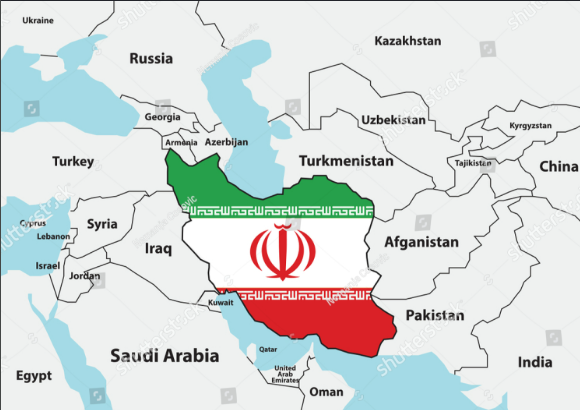
When Washington imposed its blockade of Iran, it could only be a sea blockade. But foolish Washington forgot geography. They should have looked at a map of Iran and understood that Iran shares land borders with several countries. There is a land bridge that bypasses the blockade entirely. On April 25, 2026, Pakistan” opened six overland transit corridors linking the ports of Karachi, Port Qasim, and Gwadar to Iranian border crossings. The routes were a direct response to the US blockade of Hormuz. The corridors allow goods from third countries, including China, to reach Iran by road, entirely outside the reach of a naval blockade. A blockade cannot stop a truck in Baluchistan. Washington believes its strongest card is the blockade. A naval blockade is an instrument for controlling the sea. The moment Iran’s partners open overland routes — to Russia, China, Pakistan and Central Asia, the blockade becomes a wall with the flank turned. Pakistan’s land bridge did not appear despite the blockade; it appeared because of it. There is a further problem, and it is physical rather than conceptual: the US Navy may not have the logistical depth to sustain a comprehensive blockade indefinitely, whatever its commanders assert. A blockade is one of the most resource-intensive missions a navy can undertake — it requires keeping warships continuously on station, which means keeping them continuously fed, fueled, and armed. That job belongs to the Combat Logistics Force, and it has been hollowed out. The fast combat support ships- the multi-product vessels that carry fuel, ammunition, and provisions together and can steam inside a carrier group — have been cut from four to two since the mid-2010s, precisely the ship type a distant, sustained blockade most needs. The rest of the replenishment fleet has stayed flat in numbers while aging, and its recapitalization runs years behind.
The shore infrastructure that once compensated for that thinness is now gone. For decades, Naval Support Activity Bahrain concentrated the Fifth Fleet’s warehousing, piers, maintenance, and resupply functions a short sail from Gulf operating areas. In the opening days of the war, Iranian missiles and attack drones destroyed much of that base — and with the UAE’s Fujairah and other regional ports sitting inside Iranian missile range and unusable for secure replenishment, the Navy was forced to relocate its principal logistics hub to Diego Garcia, a British-administered island roughly 3,00 kms from where the carrier strike groups operate. A short Gulf sustainment network became a vulnerable maritime supply line overnight. The loss of Bahrain created major backlogs that forced the fleet to prioritize food deliveries. The carrier USS Abraham Lincoln became the visible symptom, with reporting describing shortages of food, hygiene supplies, mail, and working plumbing and laundry, and, in the worst accounts, unrest and attempted suicides aboard. When the Navy cannot reliably feed the crew of its flagship carrier over a 2,200-mile line, the claim that it can enforce a hermetic blockade of every Iranian port “indefinitely” collides with the arithmetic of its own supply fleet. A blockade is only as durable as the logistics sustaining it, and those logistics are stretched to the point of failing at the galley. The US has 20 ships to enforce this blockade, when the required number is 250 ships. The result is the blockade has many leaks. The USS Benfold is the latest US Navy vessel to leave its crew deprived of basic necessities. A US Navy destroyer spent four days without power in the South China Sea last month, depriving its crew of hot meals, flushing toilets, and air conditioning. The Benfold lost the ability to maneuver on its own, and lost galley services, toilets, air conditioning, and drinking water. At the time of the incident, temperatures in the South China Sea averaged between 32 and 37 degrees Celsius.The USS George Washington has since been ordered to redeploy to the Persian Gulf to relieve the USS Abraham Lincoln, whose crew have been at sea for almost nine months. have deteriorated, with toilets reportedly out of order, food running short, and multiple sailors attempting suicide. The Pentagon already rotated one aircraft carrier – the USS Gerald R. Ford – out of the Persian Gulf after it suffered repeated Iranian attacks. The Ford, which is the only vessel in its class and the most advanced aircraft carrier in the US Navy’s fleet, is now undergoing repairs at Norfolk Naval Shipyard in Portsmouth, Virginia, and is expected to be out of commission for around a year.
The Unravelling of an Empire
The summer of 2026 will be recorded not as the moment American hegemony was challenged, but as the precise instant it fractured beyond repair. What began in Washington as a calculated campaign of “maximum pressure” has metastasized into a strategic catastrophe of historic proportions, exposing the hollowness of a military machine that can no longer secure its own decks, let alone dictate the fate of nations. The Persian Gulf, once the exclusive domain of the United States Fifth Fleet, has become a graveyard of American credibility. The reported mutiny aboard the USS Abraham Lincoln—said to be a bloody internecine clash leaving seven sailors dead—is not an isolated incident of fatigue; it is the screaming symptom of a force pushed beyond its breaking point, confronting an adversary that refuses to break. As the carrier group retreats and the Strait remains effectively closed despite White House proclamations to the contrary, the disconnect between American rhetoric and strategic reality has never been more absolute. From the emergence of Iran’s terrifyingly efficient hybrid missile systems—capable of piercing any known defense grid—to the quiet but seismic shift of global finance towards the BRICS bloc, the balance of power has irrevocably tipped. the narrative emerging from the deck of the USS Abraham Lincoln and the corridors of Tehran suggests a rather different reality—one where the emperor not only has no clothes but appears to have misplaced his entire wardrobe. The internal collapse of the USS Abraham Lincoln represents a catastrophic failure of command that transcends mere disciplinary breakdown, allegedly evolving into a full-scale mutiny born of exhaustion and despair. his incident lays bare the human cost of Washington’s strategic overreach; a fleet stretched so thin that its sailors are forced to endure unprecedented deployments, only to find themselves enforcing a blockade that their own leadership cannot sustain militarily. The Abraham Lincoln has become a floating prison of its own making, where the greatest threat to American sailors is no longer the Iranian missile batteries on the horizon, but the violent despair festering within their own berths. This incident is not merely a tragic accident but a symptom of a deeper malaise—a morale crisis within a navy that has been stretched thin by years of overreach and now finds itself facing an adversary that refuses to break. The image of a US carrier, the symbol of global reach, paralyzed by internal violence while anchored in a contested zone, serves as a potent metaphor for the broader strategic impasse.
In this new order, the Western narrative of Iranian isolation looks increasingly like a projection of Western desires rather than a reflection of reality. The irony is hardcore: in seeking to enforce its will through maximum pressure, Washington has only succeeded in revealing the limits of its power. The Strait of Hormuz remains closed, the Fifth Fleet cowers in the Arabian Sea, the once fearsome US military has run out of ammo, and have now resorted to killing each other instead of Iran. The “vacuum” described by the IRGC is not just a physical absence of ships; it is the gaping void left by a sinking superpower whose ability to shape events has finally, and irrevocably, begun to wane. The mutiny on the Lincoln is the screaming headline, but the silence of the rest of the fleet is the deafening conclusion.
The Air War Trap: America’s Final Showdown at Sea.
How the destruction of regional bases by Iran is driving the U.S. power towards an inescapable naval defeat. A multi-billion-dollar projection of power, now caught in an asymmetric bottleneck. When the Islamic Revolutionary Guard Corps (IRGC) Navy recently declared that U.S. Central Command naval units were under total surveillance and rapidly approaching “zero hour,” America’s naval presence, thanks to constant Iranian attacks, had not only been significantly neutralized but, more importantly, trapped in a box of Iran’s choosing. To understand how the United States fell into this trap, however, one must look at the essence of Iran’s grand strategic goal: to place Washington in a dilemma where it would either go bankrupt by staying in and lose, or leave the theater completely, humiliated but financially, though weaker, intact. This strategy was based on a dual track of economic and military attrition where the intertwined relationship of the two would not only ensure the collapse of American hegemony in the region but also shift the regional balance of power from the American-Israeli-Arab alignment directly towards the Asian-Islamic power. In the case of economic attrition, the strategy began with the closing of the Strait of Hormuz, where the maritime blockade would paralyze the world’s most critical energy chokepoint. The shockwaves, including spiking oil prices and exploding war risk insurance premiums that effectively halted commercial shipping lanes, rippled instantly across the global markets. Washington quickly found itself in a situation where its mere presence in the waters of the Persian Gulf exacerbated the very economic crisis it was attempting to eliminate. To deal with this problem, however, Washington did exactly what Iran had anticipated: it relied on the Strategic Petroleum Reserve (SPR) as a macroeconomic numbing agent to hide the inflation from the public. However, by manipulating the market, Washington severely wounded its own long-term economic security. That is, it was forced to deplete the SPR to an unprecedented, dangerously low level, completely exhausting its domestic insulation while the crisis raged on.
Yet, controlling the Strait of Hormuz was only one facet of Iran’s long-term strategy. The potential closure of Bab el-Mandeb by the Houthis served as an additional lever, deliberately employed to systematically choke off the remaining regional trade routes. Through this coordinated economic squeeze, Iran inflicted pressure on global markets that the United States could simply not absorb. This calculated strategy, however, also served as the exact mechanism to expose the vital organs of America’s network. That is; by continuously striking regional installations, the Iranians were able to tear apart the very fuel needed to sustain American air supremacy. From striking the “brain” in Qatar to paralyze Central Command to choking the logistical “arms” in Kuwait by destroying critical desalination, power grids, and runways to shattering the “wings” via the runways in Jordan, and to crushing the missile defense “shields” across Saudi Arabia, the Iranians neutralized any major tactical threat from those installations. This localized collapse, in turn, reduced Washington largely to a total reliance on long-range B-52 bombers flying from distant strategic hubs outside the theater. Yet even though these heavy bombers were able to hit some targets from the sky, they could not compensate for a shattered regional network that was once essential to American air superiority and military hegemony. Furthermore, as ground support vanished, the bombers themselves faced extreme operational risks without a secure regional safety net. Therefore, Washington’s distant airstrikes provided only a fleeting, temporary impact before being forced to shift the burden of defense out to the sea, effectively setting the stage for the next and most likely final phase of the military conflict: the inescapable naval warfare.
Long recognized as the undisputed master of global blue-water dominance, the United States finds its position challenged for the first time. Stranded in the confined waters of the Persian Gulf without fuel or a secure land lifeline, the fleet is effectively immobilized in a box of Iran’s choosing as it executes a highly coordinated dual strategy to dismantle the American naval power both beneath the surface and upon it. Beneath the surface, the tactical imbalance is striking. While the United States might rotate only a half-dozen or so submarines through the broader region, Iran commands an asymmetric fleet of 2,000 purpose-built coastal and midget submarines, such as the Ghadir, and Fateh classes, engineered for shallow, narrow waters of the Gulf. In addition, Iran operates subsurface weaponry, like the high-speed Hoot supercavitating torpedoes, which in turn creates a lethal underwater perimeter that neutralizes traditional American defenses. For Washington, this underwater saturation directly compounds the vulnerabilities waiting on the surface where American warships face strict limitations, particularly the finite interceptor magazines. That is, because these ships rely on defensive missiles that cannot be replenished at sea without secure land bases, a continuous series of attacks rapidly depletes both their defensive and offensive capabilities. Furthermore, because the American Navy platforms, particularly its crown jewels, the USS Abraham Lincoln and Gerald Ford, are massive 20th-century ships not designed for shallow green-waters of the Persian Gulf, their greatest assets become their ultimate vulnerability. A single strategic strike to a flight deck, delivered by Iran’s advanced surface-strike arsenal, can instantly paralyze the carrier’s entire launch-and-recovery system. It is this simultaneous combination of underwater saturation and surface-level vulnerability that turns the multi-billion-dollar carrier into an ineffective floating platform, transforming America’s mismatch blue-water dominance into an inescapable naval defeat. Ultimately, this maritime trap is far more than a tactical defeat for a stranded strike group. It is a structural collapse of American power projection in the Middle East. By systematically dismantling regional networks and turning the Persian Gulf into an asymmetric bottleneck, Iran has broken the foundational formula of Washington’s unchallengeable hegemony. Thus, as the conflict shifts from paralyzed ground installations to a trapped sea, the balance of power irreversibly changes, closing a historic chapter and leaving American strategy adrift in waters it can no longer control.
8 False Flags & The Abu Dhabi Bribe
Tehran had reached an understanding with both Qatar and Abu Dhabi weeks ago: Iran would not bomb them in exchange for the release of frozen Iranian funds. Same with Riyadh – in exchange for improved diplomatic relations. Around the 15th or so, Abu Dhabi sent several plane loads of cash ($3 billion) and gold (2 tons) to Iran, as a bribe. This didn’t work. Iran took the money, and told MBZ that if he still uses the US-approved route, and ignoring Iran’s new rule regarding transit through Hormuz, its ships will still be attacked. And they have been attacked and ships seized as well, these past 3 weeks. In any case, the recent incidents confirmed that Iran maintains tight control over the Strait of Hormuz. The U.S. appears to be unable to challenge Iran there. that the Pentagon has concluded that no existing military plan can guarantee the safe passage of shipping through the waterway. Nonetheless, the White House was livid at MBZ for giving Iran the money. It then conducted a false-flag operation, on the 17th (the day the MOU expired), by lobbing 2 missiles at the UAE. Emirati officials reported no damage, saying two ballistic missiles fell into the water. MBZ panicked, knowing that America is now targeting him. Iran’s state broadcaster Press TV claimed that the barrage bore the hallmarks of an Israeli “false-flag operation.” Following the incident, Abu Dhabi announced a halt to all trade and financial transactions with Tehran. Shortly after the UAE’s military provided the update on its assessment of the alleged attack, the Foreign Ministry announced a halt to all trade and transactions with Iran over the incident. “In light of the regional escalation that undermined regional and international peace and security, all activities, trade exchanges, and financial transactions with Iran have been suspended until further notice,” the ministry said in a statement.
From this, we can see that the most-anti-Iran Gulf state is now trying to make amends with Iran, in order to survive as a state- or they will be erased from the dustbin of history. I am sure that many of America’s vassals in the region have seen the handwriting on the wall, and are calculating how to get out from under the US/Israeli/British vassalage. Time will tell how this plays out. To make sure that these Gulf Arab states remain hostile to Iran, the Mossad/CIA combo have conducted multiple false flag operations targeting the energy infrastructure of the Gulf states, for which Iran has been blamed. Fortunately, this game has been overplayed for so long that these don’t work anymore. Many have caught on to the tic tac toe of these 2 families.
9 Re-building the Gulf States Energy Infrastructure
Even if everything opened up today and traffic was flowing through the Strait of Hormuz, the repair and maintenance work requited to get the systems functioning again is going to be delayed by weeks and, quite possibly, years. Some of the infrastructure, such as Qatar’s LNG facility at Ras Laffen, will take at least three years to rebuild and return to full operations. The Strait can reopen in a day. The repair ecosystem cannot. The GCC states and companies that control compatible spares, complete records, qualified people, fabrication capacity, OEM factory slots, secure logistics and allocation authority will recover. The others will remain impaired long after the conflict disappears from the headlines.
Iran Re-Builds
We are witnessing the Iranians rebuild everything that’s destroyed in short order while continuing to attrit US assets and capabilities in the region. Now Iran has been proudly demonstrating its ability to build back after US strikes. A multitude of videos have hit the networks showcasing Iran rebuilding its various bridges and tunnels which were hit by US strikes. Iranian officials even stated that many of their missile cities did not even need to be tapped during the war because the US and Israel failed to put a significant enough dent into the main operational ones being used: Iran’s former head of the missile forces, Amir Ali Hajizadeh, visited North Korea and drew lessons from its underground missile siloes, realizing that by utilizing such a tactic Iran wouldn’t require few air defenses as enemy aircraft simply have nothing to bomb because all the important infrastructure is so far underground. bomb empty desert—or civilians, which only works in Iran’s favor as it leads to massive societal solidarity against ‘the Great Satan’. Iran’s air defense systems, which sustained damage during the war, have since been repaired. At a moment US official as well as media headlines have been voicing alarm over depleted US missile stockpiles – something which Trump sought to bat down as false – Iranian leaders have been busy boasting that their domestic defense production has not only kept pace but even expanded on the local production front. Mohammad Reza Naqdi, Senior Advisor to the IRGC Commander-in-Chief, has been featured in state media as that the production rate of ballistic missiles exceeds their operational launch rate, which comes on the heels of Tehran saying that it used the ceasefire with the US – which stretched from April into the summer months – to boost its weapons arsenal. : “We are currently producing, and this process is unending.”Naqdi warned further that “The enemy should not assume that Iran’s missile stockpiles will run out one day. There are many capabilities we have not deployed because we are managing the war with missile power.” He added that Iran does not rely solely on existing stockpiles, as defense equipment manufacturing remains continuous. Naqdi claimed that even if the war continues for years, ballistic missiles will still be manufactured in Iran and supplied to the armed forces on the final day of the conflict. Highlighting the country’s industrial capacity, the senior advisor noted that, in addition to hundreds of industrial complexes, Iran houses approximately 950 industrial towns where defense equipment production is actively underway across various regions. “We have to attain deterrence so that the enemy never dares to attack us, so we can live with security. One way is to prolong this war until we get to the next term of the presidency and cause attrition, so that if anyone else wants to attack Iran, they will know there is a cost.” Prior US (and Israeli) bombing campaigns since the start of Operation Epic Fury took direct aim at Iran’s defense industrial sector. While it can be estimated that perhaps dozens or possibly even hundreds of missile sites as well as manufacturing locations were hit, damaged, and destroyed – Iranian officials say that hundreds more are still intact, scattered across the country.
Last week, a separate Iranian army official voiced: “We have made maximum use of the opportunity of the memorandum of understanding and every moment of the ceasefire,”. He said attempts were made to induct existing equipment into the armed forces and import new equipment, as well as repairing and recovering damaged systems or manufacturing new systems. Last month, Iran’s acting Defense Minister said that missile and drone production had”not stopped for a single day”and that drone production had reached three times its pre-war levels. But he did not provide any figures. Iran says the US military is weaker than expected “The longer this war continues, the more experience we gain. We have never had a war like this to gain real experience and learn how to fight America. Over these five months, we have learned this. We have also seen that the US armed forces are weaker than we thought.” At the moment, more and more details indicate that the conflict between Iran and the US will drag on for a long time. Iran believes the U.S. was also only buying time for a future attack. Therefore, over the past 60 days Iran reportedly ramped up production of missiles and drones and tapped hardline figures for key positions. In the days leading to the end of the 60-day period, the U.S. has also signaled its intention to escalate against Iran. The US is repositioning naval assets and maintaining its naval blockade of Iranian ports. There have been reports that all kinds of “historic-level” mass airlifts from the US toward the Middle East have been ongoing since April, and intensifying in August. There is a “strategic shift” among Iranian leadership to “get their forces ready to widen the war.” Majlis Speaker Ghalibaf said “The era of one-sided deals is OVER “.
Iran’s supreme leader vows revenge against US and Israel
Iran’s new supreme leader, Mojtaba Khamenei, has vowed to avenge his father and predecessor, Ali Khamenei, who was killed in US-Israeli airstrikes on his compound in Tehran on February 28. Khamenei made the statement after his father was laid to rest. In a sweeping overhaul of the government’s top echelon,Iran named seasoned hard-liners to run the country’s security policies and institutions of repression. It marked the most significant government reshuffle under Mojtaba Khamenei, who hasn’t been seen in public since the war began. Iranian officials say he was injured but in good health. The appointments signaled Khamenei’s determination to hold fast in a showdown with America, Israel and Abu Dhabi over the Strait of Hormuz. Iran is preparing for a more confrontational posture at home and abroad, Iran will act more aggressively in the future. Mohsen Rezaei, one of the longest-serving figures in Iran’s Islamic Revolutionary Guard Corps, has returned to the heart of Tehran’s national security establishment, after Supreme Leader Mojtaba Khamenei appointed him secretary of the Supreme National Security Council. Iran’s FM Araghchi also chimed on in on Thursday with a similar theme of Washington miscalculation. He said that the United States has “has long miscalculated due to intelligencefailures,”especially when launching its war on Iran. Iran’s “enemy” is seeking to fracture the country through economic pressure, but that its plan did not succeed. “American military actions in the Strait of Hormuz were “an even bigger miscalculation,” Araghchi stated on X. “Worse than fake news is fake intelligence”.
10 The last US moves against Iran – Foiled
July 25/26 was the last strike by the US on Iran. Another strike was planned on Iran, but at the last minute on 2 August, after and Saudi Crown Prince MBS expressed concern about Trump’s plans for massive strikes on Iran, Trump stated that he and Israel had called off the attack. MBS had previously told Trump that US forces cannot use Saudi bases or overfly Saudi airspace for any further attacks on Iran, as the consequences have to be borne by Saudi. This was not acceptable to MBS. Trump was stuck between a rock and a hard place. If the US could not take control of Hormuz away from Iran, then Iran will swing all the exports (including non-energy products) to be paid in Yuan, whether it was sold by any Gulf state. This would then be the “kiss of death” for the Petro-dollar, America and the Rockefeller Empire. This move by Iran had to be stopped at any cost- as it represented an existential threat to the Rockefeller Empire. The US-Israeli combo tried 4 times to bring Iran down- and all failed. Now, one more try-this time using tactical nukes. Who knows what would happen after that?
Operation True Promise I, April 2024, https://behindthenews.co.za/true-promise-2-irans-nasrallah-response-part-1-of-a-2-part-series/
Operation True Promise II, October 2024, https://behindthenews.co.za/true-promise-2-irans-nasrallah-response-part-2-of-a-2-part-series/
Operation True Promise III, June 2025, https://behindthenews.co.za/operation-true-promise-3-part-1-of-a-3-part-series/
Operation True Promise IV, February 2026
Operation True Promise V, July 2026
Trump is Humiliated again when attempting to Bribe the IRGC head
The White House was caught trying to do the “Venezuela Bribe” in Iran. Trump contacted Pakistan’s Amry Chief, Asim Muneer, to talk to Ahmed Vahidi, the IRGC head, and offered him billions to repeat the Venezuela model in Ian. He was turned down flat by Munir. Trump then turned to the Barzani clan of Iraqi Kurdistan, who immediately offered to call Vahidi. This is what loyal servants do when instructed by their master. Vahidi coldly rebuffed Barzani, and informed him that he’s not a traitor. Vahidi then relayed the info up the chain of command, and Mojtaba told the FM to relay this message to the Pakistani mediators. At every turn, the White House hits a blank wall! As we have written many times in our articles, the US needs to blow up Eurasia in order to hold onto its global power and empire. And, the best way to blow up Eurasia is by blowing up the Middle East. Since the US failed to defeat Russia, and since time was running out (the impending financial collapse), the US-led attack on Iran was meant to hurt Russia, China and the Arab world. New York was hoping to regime-change Iran this year, and start with China next. But this plan backfired- just like all other moves in the past few years. Of the 3 major BRICS countries – Russia, China and Iran, Iran was the weakest link for the Empire to regime change. Were this to succeed, the task then to take down Russia and China would have proceeded much faster. The US would then use Iran to destabilize southern Russia and Central Asia. The Rockefeller Empire would then use Russia to destabilize and regime-change C1hina. Had that succeeded, then the world would enter a period of slavery and extreme injustice. It would cement the Empires global domination. Furthermore, the Axis of Resistance (headed by Iran) would be weakened, allowing Israel to expand its Zionist Project and make the Arab states slaves to the new reality through the Abrahamic Accords. But that plan too is failing spectacularly. Sources have described an embattled atmosphere inside a White House consumed by crises, and the Trump’s unhappiness as he searches for scapegoats. “He is in such a foul mood. He is so annoyed at White House staff because everything is going wrong.” this is a reflection of the panic and desperation that is happening in the offices of the Rockefeller and Rothschild families in New York and London, respectively. And this is being communicated through the chain of command all the way down to the White House. Remember, the 60-day grace period of the MOU expired on the 17th. This leaves Iran free to charge tolls -which will have to be paid in crypto, gold or Yuan -EVEN EUROS! Iran is doing Euros to “divide the enemy”. A cornered Trump then threatened Iran with the destruction of its energy infrastructure. In his mind, Iran will not be able to export any oil for Yuan, thus eliminating the danger to the Petro-dollar. Iran responded that if its oil assets are targeted, then EVERY SINGLE energy asset in the region will get destroyed, – this includes also power and desalination plants. An Armageddon scenario. This threat by Iran put that plan on hold- for now. This desperation and a 90% de-militarized Pentagon have forced the Rockefeller Empire to turn to the use of nuclear weapons. This is the reasoning of Daid Rockefeller Jnr: “I rather blow up the world than lose my empire!”
11 Going Nuclear
Will Trump’s last resort of a tactical nuclear strike on Iran fails and triggers immediate hyper-escalation and global conflagration? When America’s conventional deterrence, proxy networks, and air interdiction campaigns collapse against an asymmetric wall, the theoretical appeal of a “single-strike resolution” inevitably re-emerges in war rooms. The scenario of a tactical nuclear decapitation strike against the Iran represents the absolute apex of military-strategic desperation. The most worrying sign came, however, from former U.S. Congresswoman Marjorie Taylor Greene, who claimed on August 17 that high-level strategy meetings are underway to discuss the potential use of nuclear weapons against Iran. “I’m not speculating, I know. And its pure evil,” Greene wrote on X. Greene alleged that the administration was considering lowering the threshold for nuclear weapons use. Such an escalation could trigger a global “nuclear holocaust,” leading to an economic depression and unprecedented casualties. This suggest the U.S. is opting to increase economic pressure on Iran, the administration has a long history of using deception to sedate Iran before a major escalation. With all traditional military options having failed to subdue Iran so far, a tactical nuclear strike is not completely impossible. Such a strike won’t win the U.S. the war. On the contrary, it would force Iran to adopt a more hardline stance. Iran says it is prepared for nuclear strikes as it is a very large country-it can absorb such hits. Iran then said that if it is attacked again, then Israel will be totally destroyed, along with its Gulf Arab allies.
Conclusion: The End of an Empire
In this new strategic reality, Iran has emerged as a pivotal power, capable of shaping the destiny of the region. Its ability to withstand the combined pressure of the US and its allies, while projecting power and influencing regional dynamics, is a testament to the success of its strategic vision. The battlefield equation has been rewritten, with resilience, innovation, and strategic depth proving to be more decisive factors than raw military might. The pressure equation has been defeated, proving that sovereignty and dignity cannot be bombed into submission. It is becoming ever clearer, that the old order, lorded over by the 2 families, is giving way to a new era, one where the voices of the Global South are louder and more assertive than ever before. The tapestry of conflict woven across West Asia in this sweltering summer of 2026 is not merely a chronicle of ballistics and diplomacy; it is the autopsy of a delusion. The United States, in its frantic attempt to resurrect a unipolar ghost, has found itself entangled in a quagmire of its own making, bleeding resources and credibility with every bomb dropped on the soil of Iran. all point to a singular, inescapable truth: the era of imperial impunity is over. The ‘Israeli’ entity, that artificial colonial construct propped up by Western bayonets, watches with growing trepidation as its protector stumbles, realizing too late that its own existence is tethered to a sinking ship. The strategic miscalculation of Washington is of epic proportions. Believing that “shock and awe” could break the will of a civilization thousands of years old, they have instead forged a unity that transcends sect and ethnicity. They sought to degrade Iran’s capabilities but ended up exposing their own vulnerabilities. They attempted to isolate Tehran but found themselves isolated on the global stage, with only a handful of sycophantic regimes clinging to their coattails. And as for the ‘Israeli’ terrorist entity, that colonial cancer festering in the heart of the Levant, its future has never looked more precarious. It huddles behind its barriers in Gaza and it refueling planes in Tel Aviv, mistaking the pause of the storm for safety. But the storm is not passing; it is gathering. The resistance, emboldened by Iran’s defiance and armed with the lessons of this conflict, is no longer asking for permission to exist. The earthen walls in Gaza are not fortifications; they are the foundations of a prison that is about to collapse. Iran is defeating the US and Israel on the way to a global revolution, decolonization, and liberation; the beginning of the end for white supremacy, western colonialism, and Zionism. It is virtually impossible and futile to focus on anything else than the greatest historic shift in 5 centuries, which is currently taking place. Because Iran defeating the US is the most consequential human event in 500 years. Bigger than both world wars and all. Maybe history will prove this statement right. Nothing in the world will be the same after Iran completes its victory. Absolutely nothing. The American empire has finally met a foe it cannot bully, cannot buy, and cannot break. As the sun sets on this chapter of history, the American colossus staggers away from the ruins, left to carry only the weight of its shame and its destruction. Our next article is titled “RIP the petrodollar & its consequences”.