

1 The War Continues
2 The Failed Raid
3 Trump’s Desperate Threats
4 The Ceasefire
5 Supreme Leader’s Statement
6 Hormuz
7 Trump just lost Saudi Arabia
8 Lebanon
9 Targeting China’s BRI
10 Between war & industrial breakdown
11 India’s Failed Bet
Iran was a great civilizational power. It still is a great civilizational power, but it is no longer a great power. And what we are seeing is the process, and this is part of the plan: to change the whole paradigm in West Asia, and to restore the Persian power, By securing control of the Strait of Hormuz and proposing that energy exported through it be paid for in Chinese renminbi, Iran is simply undermining the foundations of dollar hegemony and the financialization of the economy: “It is the end of the petrodollar.” This new regional configuration could even have beneficial effects for BRICS in the medium and long term, despite the obvious contradictions that the war has brought to the fore. Faced with the possibility of these decisive shifts in the region’s political and economic balance of power, the prospect is nothing less than a return of Iran to its position as a global power, a role it held for centuries. Its loss of power in recent decades was largely due to the alliance between the US and its allies in the region — a predominantly Sunni one — who worked to “weaken and transform Iran into a vassal state”. While it did not become a vassal, the country ceased to be a “major global power”, something it had been for centuries. However, the war initiated by the imperialist-Zionist axis would enable Iran to “change the entire paradigm in West Asia and restore Persian power”.
The Iranians will do this. And what they’re also saying, and underlining, is that Gulf states, if they want to export their petroleum products or other products — aluminum, fertilizer, whatever it may be — they have to do it by agreement with Iran, and only Iran is able to give them the security for this trade. At the moment, there is huge indignation in the Arab states, in the Gulf states, saying this is outrageous, that they will never accept it. But since they won’t be able to dislodge Iran from Hormuz, and America won’t be able to dislodge it either, then surely in time they will begin to understand that if they want to continue to exist as an economic entity, they have to work with Iran. So, it’s not as if Iran has to last for years to impose its new demands. Now, the Iranians understand this fully, and they understand the economics. And of course, they will allow vessels to pass through Hormuz, but they will be controlling the volume. And therefore, who controls the volume controls the price. So, America will lose control over the price of energy. So, they lose the control of pricing, and therefore the control of energy supply. And this has been the basis of the whole construct to destroy the BRICS.
BRICS is nothing more than a forum. People write papers, they talk, and they have conferences, and things like that, but they do not operationalize their space. Why, because you’ve got states like India, which has likes to try and keep one foot in one camp, and another foot in another camp, and will not commit to anything. Brazil too, to a certain extent. Emirates maybe won’t be participating in BRICS in the future, who knows? This is the sort of kickstart that BRICS needed to start thinking. It needs a security strategy, just for a start. Not a Russian one, separate, and a Chinese one, separate, but some larger principles of what is the frontier between the NATO sphere of influence and the Asian sphere of influence? And that was further sort of compounded by the fact that at the same time that the cost of a gigawatt of energy in China is currently one-sixth of that in the United States. So, with their data centers and AI, they would have to devalue the dollar by about 145% to be competitive in terms of the power input, because AI is all about gobbling power. And it’s six times more expensive in the US. So, the competitive element is almost impossible. You’re going to have to manage this paradox of the Chinese are rising and the West is becoming uncompetitive.
The War Continues
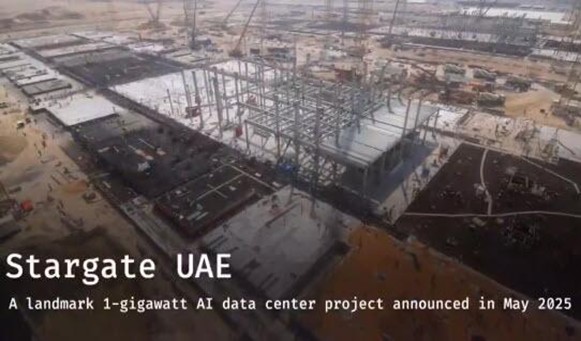
Having suffered non-stop attacks on its military, economic, tech and energy infrastructure, the White House finds itself in a dangerous corner. Not having achieved any of its objectives, it began targeting civilian infrastructure. Iran is huge in size, and these attacks are like pinpricks. Not only that, the Trump boast of having degraded Iran’s air defense and missile capability has proven to be false. Iran made a wise move by placing real-life looking decoys made in China. These decoys-viewed from a satellite, showed Iran’s key military assets out in the open. To make it even more realistic, hidden within these decoys was a gadget that emitted heat, so sat photos would show heat emissions from these decoys. It worked so well, that we find Trump crowing about the destruction of Iran’s missiles and air defenses. This is not to take away from the fact that Iran did suffer many military losses in terms of naval losses and losses to its ancient fighter jets. None of any new planes were destroyed. But Iran doesn’t need an air force. Its air force is its missiles, drones and rockets. The bulk of the damage to Iran rested mainly on its civilian infrastructure- schools, universities, hospitals, power plants, oil storage depots, chemical and steel plants, along with damage to energy infrastructure.Bottom of Form. Specifically, IRGC spokesperson Brigadier General Ebrahim Zolfaghari threatened the “complete and utter annihilation” of U.S. and Israeli facilities, with Stargate’s $30 billion “hidden” AI datacenter in Abu Dhabi singled out as a juicy target for Iranian destruction later in the video. The threats come on the heels of Iran reportedly delivering enough damage via rocket strikes to some Amazon AWS data centers that they have shut down. The threat comes after the IRGC targeted Oracle’s data centers in Duba.
On Sunday 4 April, Trump threatened to strike Iranian power plants and bridges, setting a Tuesday evening deadline for Iran to open the Strait of Hormuz and agree to US terms for a deal. “Tuesday will be Power Plant Day and Bridge Day, all wrapped up in one, in Iran. There will be nothing like it! Open the fuckin’ strait, you crazy bastards, or you’ll be living in hell – JUST WATCH. Praise be to Allah,” he said. Tel Aviv and Washington launched attacks on major petrochemical sites in Iran on 6 April, a day ahead of US President Donald Trump’s deadline for Iran to agree to his terms or face “hell.” US-Israeli strikes hit the Marvdasht petrochemical complex operated by the Shiraz Petrochemical Company. Earlier on Monday, the Jam and Damavand facilities of the petrochemical complex in Asaluyeh were attacked. Power outages were reported across the South Pars petrochemical facilities, forcing a halt to production. In response, Iran struck Neot Hovav industrial zone in the Negev on 5 April, following attacks on US-linked energy and in the Gulf.
US and Israeli strikes have hit Iran’s Sharif University of Technology in Tehran (SUT), the country’s leading technological and engineering university, damaging key facilities and targeting Iran’s national artificial intelligence (AI) infrastructure on 3 April. Subsequent reports said the strike targeted the university’s data center, which functions as a core infrastructure for Iran’s national AI platform. The facility supports thousands of integrated systems and research projects, forming the backbone of the country’s AI network. Founded in 1966, SUT was established in Tehran as a public research university specializing in science, engineering, and technology, originally under the name Aryamehr University of Technology. SUT ranks as the top university in Iran, and within the top 400 globally.
Israel attacks petrochemical plant at South Pars Gas Field on Monday 6th, attacking two utilities companies in Assaluyeh which have cut off electricity supply to petrochemical units. Later Israel claimed a second attack on another chemical plant in Iran. Pars Petrochemical is safe and has not been damaged. Previous strikes have already disrupted key industrial sectors. Attacks on the Mobarakeh Steel complex have affected steel output, while strikes on the Bandar Emam petrochemical facility have hit production of PVC and cable materials, with black market activity emerging as a result. Then, on Tuesday 7th, US and Israeli strikes hit Kharg Island — the departure points for roughly 90% of Iran’s oil exports — along with bridges, downtown Tehran, and a historic synagogue, as Trump’s 8 p.m. EST deadline expired. The IRGC issued a significant escalation warning, saying restraint toward Gulf Arab states hosting US military assets was now over and that “all such considerations have been lifted.” The IRGC also put American partners in the Persian Gulf and beyond on notice, saying that restraint shown toward neighboring states “out of good neighborliness” was now over and that “all such considerations have been lifted” — a signal that Gulf Arab states hosting US military assets could become direct targets. The statement marks a shift in Iran’s stated position. While Tehran has previously struck targets in several regional countries, it had until now maintained that those states themselves were not the intended enemy — a distinction it appears to be threatening to abandon. Meanwhile, Iran struck Tel Aviv, Eilat and other sites.
3 The Raid that went Wrong
The White House ordered a raid to snatch nuclear material from a site in Isfahan region.
Iran’s air defense system succeeded on Friday, April 3, in downing a US F-15E over Iran. There is some dispute and confusion about the exact location. The pilot and the WSO (i.e., Weapons System Officer) both successfully ejected but were separated. The pilot was quickly rescued by the Combat Search and Rescue and the two Pave Hawk helicopters ferrying him back to safety were hit, but managed to make it to Kuwait — despite trailing visible black smoke. A large-scale US rescue operation for the second crew member (weapons systems officer) of a downed F-15E Strike Eagle has effectively confirmed the first official U.S. “boots on the ground” inside Iran followed. What the US presented as a straightforward combat search-and-rescue (CSAR) mission involved significant special operations forces penetrating deep into Iranian territory, resulting in heavy US losses of aircraft according to Iranian reports and open-source evidence. The “rescue” narrative may have served as cover or coincided with a broader objective: the operation was centered precisely in the area where Iran stores significant enriched uranium and nuclear-related materials.
Now let me tell you what I think happened. The shoot down of the F-15 was an unlucky event for the pilot and the WSO. Given the rank of the WSO, a colonel — and the highly classified knowledge he has about US operations in the Gulf and in Iran — recovering him became a top priority. This whole fiasco may be a blessing in disguise. The loss of a number of key air assets and the exposure of the remote airfield within shouting distance of Isfahan may compel the US commanders to cancel the planned raid to capture nuclear material from Iran. While the US forces, like chess pieces, had been assembled and were in place on Friday, April 3rd, to carry out the mission against Isfahan, the Commanding Admiral at CENTCOM may be having second thoughts and is communicating his concerns about the Op-Sec compromise to the Chairman of the Joint Chiefs of Staff. A US attempt to infiltrate one of Iran’s key nuclear sites in Isfahan was thwarted due to a “trap” laid by Iranian forces. “The failed raid was carried out after the enemy conducted extensive aerial reconnaissance operations in the days leading up to the attack. The US and possibly the Zionist regime lost a significant number of aircraft, including at least one A-10 Thunderbolt II and two Black Hawk helicopters,” the Press TV report said. Zero Hour for the failed Isfahan operation was set during a secret meeting at the White House under the direct supervision of the US president himself,” the Iranian news outlet added. “This operation had no connection to the claimed rescue of a downed F-15 fighter pilot … The real objective was to infiltrate and attack one of Iran’s nuclear facilities in Isfahan. The landing site for C-130 transport aircraft, chosen based on previous reconnaissance, was an abandoned airstrip located dangerously close to one of these nuclear sites,” Press TV added. Press TV went on to say that Iranian forces were waiting for US troops. Iranian troops “initially did not show a serious reaction to the landing of the first C-130, which was carrying dozens of special forces commandos.” Once the second aircraft approached, Iran targeted it and forced it to make an emergency landing.
“The White House situation room made a critical decision: the main operation to infiltrate the nuclear site was changed into a desperate rescue operation for the dozens of US commandos trapped under Iranian fire,” the report explained. US jets managed to extract the trapped soldiers after heavy bombing, creating a 5-kilometer “line of fire” and destroying equipment to prevent Iranian forces from taking it. The Press TV report comes a day after Iran’s Foreign Ministry made a statement saying that the operation to rescue a downed pilot may have been part of a deception to steal enriched uranium. All in all, a total of 12 US airplanes, helicopters and drones were destroyed in this operation over a 2 day period.
A. Losses During the Isfahan Operation
Data emerging from Iranian military statements and associated reports indicate that US forces during the April 5 operation. These include:
- At least two MC-130J Commando II aircraft
- Two UH-60 Black Hawk helicopters
- Two C-130-class support aircraft
- One Hermes 900 unmanned aerial system
- One MQ-9 Reaper drone (Four since the start of April)
- C. Larger airpower attrition (Operational context)
According to compiled data, these include: Fighter aircraft:
- 3 F-15 aircraft (including one confirmed downed and others reportedly lost under contested circumstances)
- 1 F-35 heavily damaged or crash-landed (not going back to service anytime soon according to NPR)
- 1 F/A-18E sustaining damage
Attack aircraft:
- 2 A-10 aircraft (one shot down over the Strait of Hormuz, another damaged and crashed in the northern Gulf)
- Aerial refueling and support aircraft (KC-135):
- 1 shot down
- 1 damaged in mid-air collision
- 1 destroyed on the ground
- 1 heavily damaged on the ground
- 3 additional aircraft damaged on the ground
- 2–3 further units reportedly damaged
Airborne early warning and electronic warfare:
- 1 E-3 AWACS destroyed on the ground
- 1 E-3 AWACS reportedly damaged
- 2 EC-130H aircraft reportedly destroyed
Rotary-wing assets:
- 1 UH-60 Black Hawk struck by a drone
- 2 HH-60 helicopters (one crash-landed, one damaged)
- 1 CH-47 heavily damaged on the ground
Transport and special mission aircraft:
- 2 HC-130 aircraft destroyed on the ground
- 4 MH-6 helicopters destroyed on the ground
Unmanned aerial systems:
- Approximately 20–30 Hermes-900 drones
- Around 10 Heron-family drones
- Approximately 20–24 MQ-9 Reaper drones
Additional losses are believed to have occurred at regional bases, including in occupied territories and while the full extent of these losses remains contested, the cumulative effect suggests increasing operational strain on US airpower in regional airspace. The, on Thursday,9th April the US lost another drone over the Persian Gulf. One of its most expensive drones, costing some $550 million was shot down by Iran. And, finally, the human toll. Both Israel and the US have lost 1000s of casualties – both KIA and wounded. But, due to censorship, these losses are hidden. What remains indisputable is that the April 5 operation was not a simple rescue. The scale of deployed assets, the choice of insertion zone near nuclear infrastructure, and the reported losses all indicate a mission with objectives extending far beyond personnel recovery. Whether a failed probe, a botched extraction, or a deliberate test of Iran’s defenses, the outcome has delivered a clear message: deep-penetration operations inside Iranian territory carry prohibitive risks, and the US military’s airpower advantage is no longer a guarantee of success. As the confrontation grinds on, the push for a decisive exit strategy may drive even riskier gambles, with consequences that will reverberate far beyond the skies over Isfahan.
In reality, the US special forces walked straight into a trap set by Iran’ armed forces. Soldiers and officers abandoned their equipment and ran for their lives. How can a country with no air defenses or army shoot down this many fighters and aircraft, and keep adding to their score? The first C-130 landed at an abandoned airstrip near Isfahan’s nuclear site. The second C-130, filled with troops was hit before landing, and crash landed. Once trapped, the White House situation Room changed the mission from nuclear infiltration to commando rescue. Us troops fled so fast they left equipment and officers ID documents behind. US jets then bombed their own equipment to keep them from falling into Iranian hands. Little Bird helicopters never even got airborne – – destroyed on the ground and inside the C-130. This defeat could be the worst US military defeat in the last 40 years. An Iranian commander stated on the 4th April that Iran has developed new indigenous methods and equipment to target enemy 5th gen fighter jets and advanced drones. He said his forces had shot down several advanced enemy fighter jets and more than 160 drones and dozens of cruise missiles. He said this outcome was possible by advanced tactics, modern equipment and the innovative use of air defense systems, which threw the enemy into confusion. Finally, Iran’s Speaker of the Parliament informed his Pakistani interlocuters that Iran still has 15,000 missiles and 40,000 drones in reserve. And, that production of these is ongoing. Tat should give Israel and the US nightmares.
Israel may continue to intensify its campaign in Lebanon because it has not yet achieved the result it wants. Iraqi militias may continue attacking Western targets while preparing politically for a wider war. Ansar Allah may increase the use of maritime pressure because it understands that chokepoints can generate strategic effect far beyond Yemen itself. Iran, for its part, will keep trying to turn every enemy move into a trigger for wider overextension. It does not need to win in one dramatic moment. It only needs to ensure that its adversaries cannot close the conflict on their terms. That is the central lesson of the present moment. Military superiority does not automatically translate into political success, especially in a region where allied non-state actors can open multiple fronts with relative flexibility. The US and Israel retain enormous destructive capacity. But destruction is not the same thing as control, and control is not the same thing as victory. In that sense, the strategic initiative is no longer defined only by who can strike harder. It is increasingly defined by who can force the other side to fight on too many maps at once. Iran and its allies appear determined to do exactly that. They are trying to stretch the conflict in time, to stretch it across geography, and to erode the ability of their adversaries to maintain focus. For now, that strategy is working far better than many in the US and Israel hoped for.
4 Trump’s desperate threats
Trump: A Whole Civilization Will Die Tonight
The disaster appeared to send an unhinged, tilting Trump into an absolute paroxysm of witless rage, and he posted this, saying: “Tuesday will be Power Plant Day and Bridge Day, all wrapped up in one, in Iran. There will be nothing like it!!! Open the Fuckin’ Strait, you crazy bastards, or you will be living in Hell – JUST WATCH! Praise be to Allah. PRESIDENT DONALD J TRUMP”. Yes, that is a real post from the sitting President of the United States. That’s on top of the fact reports claim US is now begging Iran for a 48-hour ceasefire, which Iran rejected. This likely had something to do with the “rescue operation”. Trump seems to be openly announcing plans for genocide – saying he’s going to annihilate an entire civilization. What else do you call this? “A whole civilization will die tonight, never to be brought back again. I don’t want that to happen, but it probably will,” he threatened in a Tuesday Truth Social Post. “However, now that we have Complete and Total Regime Change, where different, smarter, and less radicalized minds prevail, maybe something revolutionarily wonderful can happen, WHO KNOWS?” Trump announced the deadline of 8 p.m. EST on April 7, warning the “the entire country” of Iran “could be taken out in one night. The US failure to achieve any of its objectives is driving Daivid Rockefeller Jnr nuts. This rage goes down the chain of command, until it reaches Trump. This then brought forth a chilling threat from Trump, by warning that Iran will experience a “civilization ending” war. What he meant was that the US was prepared to nuke Iran, if Iran did not agree to a ceasefire!!!
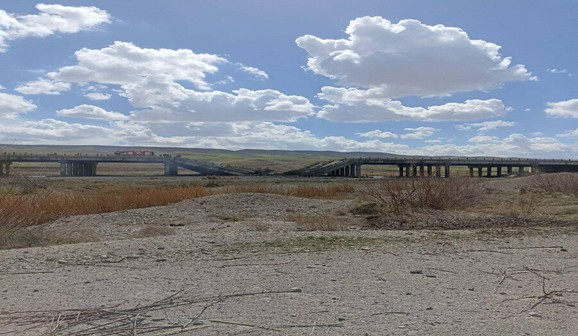
Iran’s response fell short of what Washington demanded. Tehran submitted a 10-point peace proposal through Pakistani mediators, but the plan rejected a temporary cease-fire and instead called for a permanent end to hostilities. It also included conditions unlikely to be acceptable to the United States or Israel. Iran’s defiance was on open display. Mahdi Mohammadi, a senior adviser to Parliament Speaker Mohammad Baqer Qalibaf, posted on X that Iran had “clearly and openly won the war” and would only accept an outcome that established “a new security order in the region. “He added: “It is Trump who has around 20 hours to surrender to Iran or his allies will be sent back to the Stone Age. We will not back down!” The threat to Iranian infrastructure is drawing warnings from inside the country. Mahdi Masaeli, secretary of Iran’s electricity industry syndicate, said on April 7 that attacks on power plants, transmission lines, or substations could trigger “widespread blackouts.” While Iran’s grid — with a capacity of around 100,000 megawatts against current consumption of less than half that — has some capacity to reroute power, Masaeli warned that serious damage would be a “turning point” in the conflict. “The problems would not double,” he said. “They would grow exponentially.” An Israeli strike hit the Yahya Abad railway bridge in the city of Kashan, in central Iran. The Deputy Governor of Isfahan has said that the strike killed two people. As the subcontractor to the US, this rail operation is being done only by the Israeli side of the bombing campaign. Images posted online show damage to a highway bridge in the northwest of Iran, following apparent Israeli strikes.
Over 2,000 Iranians have been killed by the US and Israel since the start of the war in late February. The attacks have also impacted more than 90,000 homes and nearly 1,000 schools. Hundreds of medical facilities have been damaged or destroyed. The story continues in Part 2 – – –


Wasn’t that precisely the unspoken objective of this war, launched by the globalist faction seeking global restructuring, economic and financial collapse… and a devastating regional war… It hasn’t worked so far, but Iran—whether it likes it or not—and the BRICS countries are playing their part to the fullest, and the United States and the petrodollar are, in reality, the unofficial targets… So the plan may not be unfolding as intended, but not at all for the reasons cited…
It is time to be honest and stop telling half-truths…