3 The Ground Realities
In tandem with its relentless land annexation in the occupied West Bank, Israel has systematically severed connections between the Palestinian Authority’s (PA) security forces and West Bank resistance groups.
Jenin – A divide-and-conquer Strategy
This paved the way for PA President Mahmoud Abbas to give the Palestinian Authority Security Forces (PASF) orders to launch an armed crackdown on the Jenin Brigades resistance groups. The decision sparked dissent among PA officials who viewed it as a strategy orchestrated by the US and Israel.
Under Israeli military supervision, the PA forces are attacking the Resistance in Gaza, cutting water and electricity, and enforcing a curfew that confined residents – many without food – for days. Within days, the operation resulted in significant civilian casualties, including the deaths of a teenager and a senior Jenin Brigades commander. The UN humanitarian office accused the PA of commandeering part of Jenin Governmental Hospital for military purposes, detaining eight individuals from within the health facility.
The crackdown provoked a response in Jenin and a general strike against the military incursion. A PA Security Force member reveals that the US and Israel were behind the raid, pressuring the PA into compliance. “This is not just the PA attacking Palestinians. This is the US and the occupation working together to force the PA into this situation,” he says, claiming that while some initial PA actions sought to protect fighters, connections with Hamas were deemed a redline.
“When Abu Mazen [Mahmoud Abbas] ordered the operation, most of the officials disagreed, and although most of us working with the authority disagreed, it was ordered anyway,” the source continues.
“This is what the US wanted from us for two years, then when Israel began attacking Jenin, pay attention to who they killed and how that changed the connection with the PA and the armed groups, they wanted to divide the people.”
This timeline aligns with Washington’s controversial “plan first proposed in January 2023 to the PA during a visit to Ramallah by Blinken. The plot was drawn up by the US and sought to use a US-trained PA unit to crush the Palestinian resistance groups that had been emerging in the northern West Bank since 2021. There were then two follow-up meetings hosted in Egypt and Jordan, held between PA, Israeli, US, Egyptian, and Jordanian officials.
The PA’s elite 101st Unit, trained by the US spearheaded the Jenin crackdown. US officials provided logistical support, including “ammunition, helmets, bulletproof vests, radios, night vision equipment, explosive disposal suits, and armored cars.”
Mahmoud Mardawi, a member of the Hamas political bureau who is based in the West Bank states that “What the PA is doing in the city of Jenin is to be condemned and rejected. This targeting came because the city and its camp have become a center for resistance in the West Bank. We support the calls of the wise from all factions, political forces and dignitaries in the city of Jenin, who tried with all their might to contain the escalation scene.” However, PA Interior Minister Reeh has defended the crackdown, Jenin Brigade fighters as “outlaws” and drug dealers, to which Mardawi responded: “What was stated by Reeh, confirms that what is happening in Jenin is not a passing event but a “response to a transgression committed by the sons of the Jenin Battalion against the PA, but rather a political conviction of the leadership of the Authority to end the state of resistance as an extension of the Axis of Resistance and Iran. This diagnosis intersects greatly with the Israeli propaganda against the resistance in the city of Jenin.
On 3 July 2023, the Israeli military launched a two-day military assault on Jenin Camp, dubbed “during which it killed 12 Palestinians, injured dozens, and destroyed crucial infrastructure. Immediately following the two-day assault that had included the use of attack helicopters and drones to launch airstrikes in Jenin, the PASF launched their own raids and picked up when Israel left Jenin. Protests erupted, and senior PA officials were expelled from public events in Jenin. Efforts to restore PA control through President Abbas’s did little to alleviate tensions.
The PA is currently waging an indiscriminate, Israeli-backed siege and assault against the Jenin resistance and its popular cradle inside the city’s refugee camp. A general strike that was called in Jenin earlier this month continues across the city in protest against the PA siege. The PA operation against the Jenin Brigade of the Palestinian Islamic Jihad (PIJ) movement’s Quds Brigades was officially declared on 14 December, although by Monday the 22nd December marked the 18th day since Ramallah’s security services began attacking and besieging the Jenin camp. A PA security officer was killed on 22 December during the clashes with the resistance in Jenin. As a result of the all entrances to the camp have been shut, and residents have been left without water, electricity, or the ability of free movement.
The Quds Brigades’ Jenin Brigade has vowed not to surrender. The PA’s Fatah party stated that it is preventing Qatari media outlet Al Jazeera from operating in the West Bank, accusing it of incitement against Ramallah. “To all Al Jazeera employees working in Palestinian territories, we hope you reflect on your actions and resign from this biased channel that has destroyed and continues to destroy the Arab world,” Fatah said.
“Al Jazeera floods the media with lies, especially in Palestine, siding with a group of hostile mercenaries in the Jenin camp and trying to present them as heroes resisting the occupation,” the party added.
Fierce clashes between and Palestinian Authority (PA) forces continued on 23 December in the occupied West Bank city of Jenin, where Ramallah’s security services maintain a brutal siege against the city’s camp. According to photos circulating in Israeli media, PA security forces are using RPG launchers in their ongoing assault on the Jenin camp and its resistance. “Our fighters continue to confront the occupation forces storming several axes in the town and are showering the occupation forces with heavy volleys of bullets. Our heroes in the engineering unit were also able to detonate a number of anti-personnel and anti-vehicle bombs against infantry soldiers and military vehicles, achieving confirmed casualties,” the Jenin Brigade said on Sunday.
According to an Axios, Washington has asked Tel Aviv to approve US military assistance to the PA to bolster its assault against the resistance in Jenin. The Israeli military establishment has signaled that it would support such a move. Yet Palestinian security services remain “chronically underfunded and ill-equipped to take on the responsibilities that Washington envisions for the West Bank,” reported on 23 December.
The PA is coordinating with Israeli forces for its siege against the camp. In other areas of the city, the Israeli army continues its raids and attacks. Since then, the PA has intensified actions against resistance groups across the West Bank, often targeting fighters and dismantling explosives meant for Israeli incursions. The PSF (Palestinian Security Force) believes that Israel’s strategy allowed resistance groups to emerge only to justify eliminating them, a theory lacking concrete evidence but widely accepted within PA circles. As the Israeli plot to pit the West Bank Resistance against the PA, Israeli raids, arrests, and assassinations had worked to sever relations between the PA and the resistance groups. From the outset, the resistance groups were pluralistic and included fighters from varying political parties, many of whom were either active duty PASF officers or were related to PA officials.
In fact, a large portion of the fighters, who owed allegiance to the Fatah-linked Al-Aqsa Martyrs’ Brigades, were closely linked to their local PA forces. Take the group that emerged from the Old City of Nablus; while its founders included a member of the Popular Front for the Liberation of Palestine (PFLP) and prominent Hamas member , it was led by a PASF officer named Oday al-Azizi. The PA initially appeared to tolerate the presence of Palestinian Islamic Jihad (PIJ) within resistance groups in the West Bank, even as it firmly rejected any involvement from Hamas. However, this stance shifted dramatically with PSF spokesperson Anwar Rajab labeling all resistance fighters as Iran-backed “accusing them of serving “the agendas of external forces that were responsible for the destruction of Gaza, Lebanon, and Syria.”
Tulkarem
An Israeli drone strike targeted the occupied West Bank’s Tulkarem on 24 December after Tel Aviv announced a large operation in the city overnight – invading it with heavy reinforcements. At least one person was killed in the airstrike on the Al-Hamam neighborhood in Tulkarem camp, one of the city’s main refugee camps. Meanwhile, Palestinian resistance factions announced targeting the Israeli forces invading the camp.
“Since the early hours of dawn, our fighters have continued to confront the occupation forces on the fighting fronts in Tulkarem camp, targeting the enemy forces and military vehicles with heavy volleys of bullets, achieving confirmed casualties,” the Tulkarem Brigade of the Palestinian Islamic Jihad (PIJ) movement’s Quds Brigades said in a statement on Tuesday. Earlier, the Al-Aqsa Martyrs’ Brigades said its fighters “discovered a Zionist special force” infiltrating Tulkarem camp’s Hadaida neighborhood, and “engaged in fierce clashes with them using machine guns and explosive devices.” Israeli troops raided Tulkarem camp at dawn on Tuesday. As a result, one Palestinian was shot dead by the army as they entered. The troops prevented ambulances from reaching the victim, according to news agency. The bulldozers inflicted heavy damage on infrastructure, destroying public and private property and damaging the water network. Walls were knocked down, and shops were decimated.
“Violent confrontations took place in the camp, with the sounds of huge explosions being heard. The Palestinian Authority has been acting resolutely against the Hamas and Islamic Jihad fighters over the past several weeks, army and Shin Bet sources said, but the Israeli officials expressed the hope that their effectiveness could be enhanced”, WAFA stated. Israel has warned the PA and its leadership that the “deadline” to finish up the operation against the Jenin resistance is nearing. Israeli officials have long scrutinized the PA for what it perceives as an inability to confront and rein in Palestinian resistance groups in the West Bank – which Ramallah refers to as “Iranian gangs.”
5 The PA’s Existential Dilemma
Amid these claims, Israel has intensified its actions, accelerating violence and signaling imminent annexation plans that threaten the very existence of the Ramallah-based PA itself. Since October 2023, Israeli settlers have established ethnic cleansing on a bigger scale in the West Bank, actively participating in the ethnic cleansing of more than 26 villages and communities.
“Here, the question of timing emerges from the campaign carried out by the Authority,” says Mardawi. He questions why the PA would “fight the resistance in light of the threat of the Israeli enemy government to annex the West Bank and decide its fate.”
“Is it reasonable for the Authority to end the resistance that protects our people and prevents the encroachment of settlers? There have been dozens of settler attacks in which Palestinian homes were burned, the latest of which was a mosque in the village of Marda, and dozens of Palestinians were martyred in these attacks, and the Authority remained silent and unable to defend the Palestinians in the face of settler aggression.”
A former senior PA official in Ramallah, speaking anonymously, describes the PA’s precarious situation: “The Palestinian Authority is in a crisis. It wants to assume control of the Gaza Strip, it wants to look strong for the Trump administration, and it wants to be part of Saudi Arabia’s deal with Israel.”
The official suggests that the PA is unwilling to align with resistance efforts, fearing it would jeopardize its standing with the US and Israel. With the occupation state likely to annex significant portions of the West Bank and settlers poised for more aggression, the PA faces the grim choice of either embracing resistance or fading into irrelevance.Public sentiment reflects this discontent. Polling from the Palestinian Center for Policy and Survey Research shows increasing support for armed resistance groups and declining approval for Fatah, which leads the PA. By December 2023, 90 % of Palestinians polled wanted President Abbas to resign. With consistent disapproval rates for the PA hovering at new lows, its leadership is viewed as corrupt and ineffective. As Israeli occupation forces and settlers carry out state, and state-backed violence, the West Bank’s economy deteriorates, while the PA’s survival seems increasingly uncertain. Its crackdown on the Jenin Camp has fueled internal dissent, raising questions about whether the PA can withstand the mounting pressures or if it is indeed on the brink of collapse.
6 Detentions and Raids in Occupied West Bank
In a related context, Israeli occupation forces also raided Wadi al-Qelt in Areeha, in the occupied West Bank, closing roads and streets near the Aqabat Jabr refugee camp with earthen berms. The forces stormed the town of Idhna, west of al-Khalil, raiding and searching several homes and vandalizing their contents. The town has been under a strict siege for 121 days, with the occupation closing its main entrance with an iron gate and blocking all side dirt roads with earthen berms. The occupation forces also continue to block entrances to towns and refugee camps in al-Khalil, while intensifying military measures in the alleys of the Old City. In Tulkarm, Jenin and other areas in the West Bank, Israeli forces raid, arrest, shoot, kill and destroy property, farmland and orchards.
Concurrently, Israeli occupation forces prevented students in the West Bank from reaching their school in al-Khalil. Students at Ziad Jaber Elementary School were also barred from accessing their school in the Jaber neighborhood of the Old Town of occupied al-Quds due to the road being blocked with barbed wire. The IOF typically close the street and prevent students from accessing their schools during Jewish holidays to secure the passage of settlers to the Ibrahimi Mosque.
Meanwhile, the IOF tightened its closure of the gates and entrances to the city of Al-Khalil and its surrounding towns, refugee camps, and neighborhoods in the Old City. There have been 1,490 attacks by IOF and settlers in the West Bank during October, adding to the more than 7,000 attacks since October 7th. According to the commission’s monthly report, titled “Occupation Violations and Colonial Expansion Measures,” Israeli forces were responsible for 1,130 attacks, while settler gangs conducted 360 assaults. The majority of these incidents were concentrated in the Nablus governorate, with 307 attacks, followed by al-Khalil with 280, and al-Quds with 179. These attacks ranged from armed assaults on Palestinian villages to the imposition of facts on the ground, including extrajudicial killings, land destruction, tree uprooting, property confiscation, and the establishment of closures and checkpoints that disrupt the geographic continuity of Palestinian territories. Settlers also engaged in 245 acts of vandalism and theft against Palestinians, which included 26 incidents of olive crop theft, 22 cases of olive-picking equipment theft, and the theft of 15 tents and caravans belonging to Palestinians, as well as three instances of vehicle theft.
7 Storming the Al Aqsa Compound
Every few weeks, we find that the rabid Zionists storm the Al Aqsa compound. It first started with Sharon doing it in 2000. Since then, the storming occurs regularly, especially during times of violence; or when Israel wants to draw a reaction from the Palestinians, in order to shoot them. The “problem-reaction-solution” applies perfectly here.
Israeli settlers stormed the courtyards of the Al-Aqsa Mosque in occupied al-Quds on Sunday 18th August, under the protection of the Israeli occupation police. During the incursion, dozens of settlers conducted provocative tours and rituals on the mosque’s grounds all while being escorted by the Israeli occupation police. A fortnight ago, Israeli settlers stormed the courtyards of the al-Aqsa Mosque compound, performing Talmudic rituals under the protection of Israeli occupation police. This incursion coincides with the fifth day of the Hanukkah holiday, the Jewish festival of light, during which settlers have called for increased incursions into the mosque, which continues until the end of this week.
The occupation forces tightened restrictions on the entry of Palestinian worshippers to al-Aqsa, imposing stringent military measures at all the mosque’s gates, as well as around the Old City of al-Quds and its entrances.
8 The Future Hangs in the Balance
Despite concentrated efforts to eliminate resistance strongholds, ethnic cleansing, mass displacement, and escalation of violence; will the West Bank witness a Third Intifada?
On the cusp of West Bank annexation and a settler-militia war on Palestinian civilians, the future of the territory will ultimately be determined by the course of grassroots resistance to Israeli conspiracies. While the Zionist Entity will likely soon see a territorial gain, its project could tremendously backfire. As the Genocide in Gaza, the war on Lebanon, and regime change in Syria have stolen the headlines over the course of the past 14 months, the West Bank has also experienced a period of hardship that may soon land it top news story status. Since October 7, 2023, the Israeli occupation army and its allied settler militants have murdered over 720 Palestinians across the West Bank, making it the deadliest period there since the Second Intifada (2000-2005). In addition, hundreds of thousands of jobs have disappeared in the territory, as the local economy has continued to decline. Making things even worse is the fact that Israeli settlers have established over 60 new settlement outposts on Palestinian lands, while they also worked alongside the occupation army to ethnically cleanse at least 26 villages and communities. Settler violence is at a historic high, as the Israeli regime continues to arm their extremist militias, has set up the Desert Frontier settler extremist military unit as part of their army, and allowed for continual assaults against Palestinian property, farmlands, and lives.
Meanwhile, the Israeli military has installed hundreds of new roadblocks, walls, and gates, while maintaining a more imposing presence throughout the territory and adopting a very aggressive posture towards West Bank civilians. This has meant that traversing even small pockets of the territory has become more dangerous and challenging for Palestinians.
Palestinians now must act with great caution at checkpoints and makeshift roadblocks that are set up for them, where they could be randomly robbed of various items, deprived of the ability to travel to work, or worse, face arbitrary detainment, humiliation, beatings, and execution. Civilians have grown increasingly cautious about traveling at night due to the high likelihood of random settler attacks, against which they receive no protection. Palestinians living in the West Bank endure financial, physical, and psychological torment, compounded by a heightened sense of horror over the events unfolding nearby in the Gaza Strip. Many West Bank residents have remained relatively quiet during the Genocide in Gaza, driven by a sense of hopelessness and fear – a situation influenced by various factors that are poised to change dramatically. So far, the refugee camps in the northern West Bank have proven to be the real centers of resistance and revolutionary action. The Jenin Camp, Nour al-Shams Camp in Tulkarem, and refugee camps like Balata and al-Ain in Nablus, have been isolated islands of armed resistance. However, without popular action, their capabilities remain confined to defensive maneuvers within their own camps.
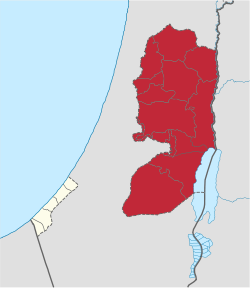
With US support, the Palestinian Authority (PA) is intensifying its crackdown on the Jenin Brigades resistance groups, signaling a concerted effort to eliminate resistance strongholds in the West Bank. This crackdown coincides with a critical moment for the PA, as it faces an existential threat from “Israel’s” looming pledge to annex the territory. The Zionist regime seeks to conquer areas C and parts of area B, inside the West Bank, aiming to establish de jure governing control over these regions, placing around 70% of the territory under their civil control. If this scenario unfolds, the Palestinian Authority will be confronted with three viable options: dissolve itself entirely, transform into a resistance movement, or attempt to strike some sort of deal that would keep it afloat as a mere contractor that manages the major Palestinian enclaves.
As the PA currently enjoys recognition at the United Nations as the representative of the State of Palestine and is poised to play a role in any post-war Gaza scenario, it still retains some relevance. Yet, without the ability to pave the way to a Palestinian State in the West Bank, East Jerusalem, and Gaza through negotiations, it will face the inevitable challenge of pursuing armed resistance as its only option, which the PA has denounced for now. Israeli annexation will inevitably destabilize the West Bank and the PA’s President Mahmoud Abbas has already named a transitional-phase successor, indicating that his old age will soon prevent him from fulfilling his duties. If Hamas succeeds – through a prisoner exchange – at liberating senior figures of the Fatah movement, which rules the Ramallah-based PA, it is possible that they could play a constructive role in unifying the Palestinian movement from abroad and paving an alternative path forward.
Another factor could be the potential unrest that could occur within Jordan, along with the unpredictable emergence of Palestinian resistance groups from the volatile climate inside Syria. However, the Israelis understand well all of these elements and will seek to prevent any regional developments from working in the favor of the Palestinian people. Therefore, these possibilities should be acknowledged, but the primary focus here must be placed upon the inevitable response of the West Bank’s population at large. With a severely weakened PA, escalation of violence, ethnic cleansing of villages, and inevitable mass displacement of civilians, amidst Israeli annexation, the people of the West Bank could be forced into a predicament that necessitates a Third Intifada. If the PA collapses altogether, this will force the Israeli army to deploy into the major Palestinian cities, which will lead to daily conflicts on a much larger scale than has been witnessed for decades.
A mass popular revolt from the West Bank will be needed to thwart Israeli plans at further land confiscation and ethnic cleansing, which will then plunge the entire territory into chaos. The main question is whether the Zionist Entity is capable of dealing with such a situation for a long period of time if a full-scale revolt occurs. Dealing with this scenario could require the deployment of army personnel, private security, border and police officers, totaling in the hundreds of thousands. Not only would this be a massive financial burden, but would also pose a potential security risk in the event that other fronts again activate in the future. As an example, at various points in the war against Gaza, the Israeli military had actually deployed more soldiers to the West Bank than it had been operating in the Gaza Strip.
The Zionist regime has never declared its borders for a reason, as it has always sought to further occupy territory at the expense of neighboring nations, a goal it is currently achieving at a rapid pace. While it is succeeding in the short term, the ultimate fate of this usurper project will be determined by the will of the masses.
Our next article is focused on Yemen.